Bigger lending plan comes with an unexplained funding gap
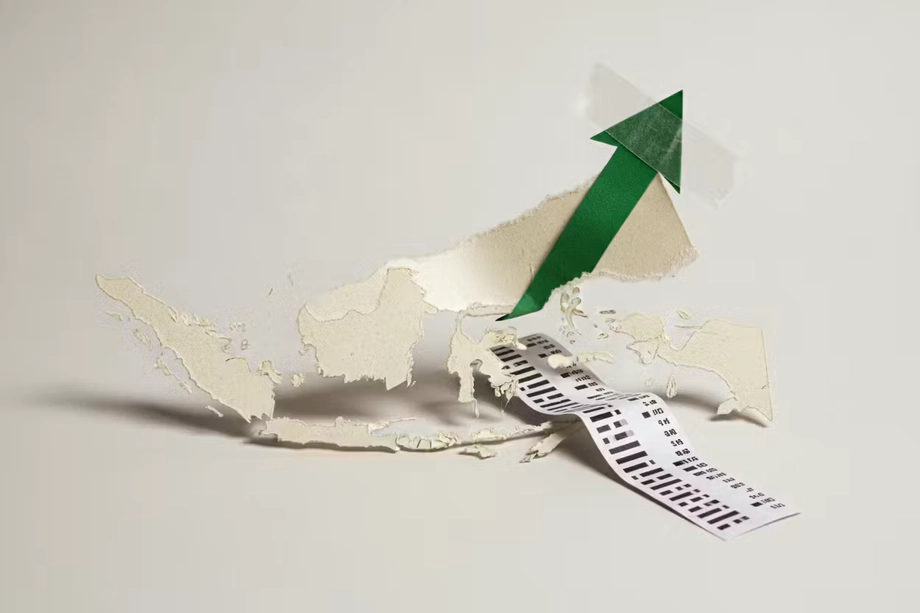
Indonesia has set a Rp394.2 trillion target for government credit programs in 2027, including Rp325 trillion for People's Business Credit, or KUR, and special relief for borrowers affected by earthquakes in East Nusa Tenggara. The decision raises the stated total by Rp57.2 trillion, about 17%, from the Rp337 trillion allocation for 2026.
Contents
- Bigger lending plan comes with an unexplained funding gap
- Where the 2027 credit would go
- How much lending has already reached borrowers?
- Earthquake victims would get cheaper loans and more time
- Housing credit reaches beyond home purchases
- Which banks and regions are receiving housing finance?
- Bank Indonesia and OJK would support delivery
- Fishers, intellectual property and access to customers
- What would make the expansion effective?
- Key Points
Coordinating Minister for Economic Affairs Airlangga Hartarto announced the plan after a meeting of the KUR Policy Committee in Jakarta on November 11, 2026. The package covers small businesses, agriculture, industries that employ large numbers of workers, housing and women in disadvantaged communities.
The five allocations he listed add up to Rp387 trillion, leaving Rp7.2 trillion of the headline target unexplained. Airlangga's announcement was also described as totaling Rp386.9 trillion, while another breakdown used Rp392 trillion. The government has yet to reconcile those figures or identify what accounts for the gap against Rp394.2 trillion.
The amounts describe planned lending under government programs. Borrowers receive loans that must be repaid, while public support helps make financing more affordable. The budget cost of subsidizing interest is a separate issue from the amount banks lend.
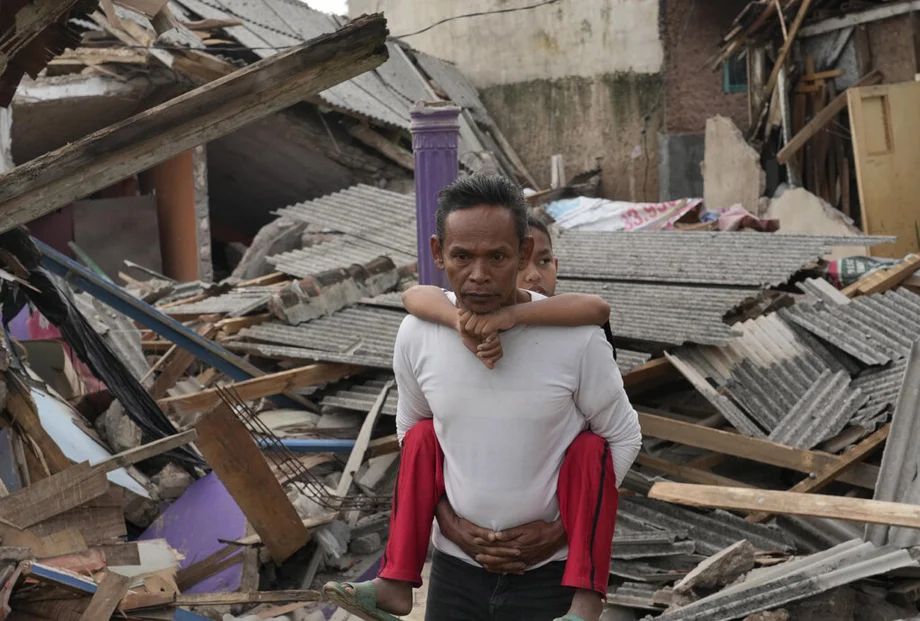
For borrowers recovering from earthquakes in East Nusa Tenggara, the announcement brings a more immediate change: eligible KUR loans will carry interest or margin of 0% in 2027 and 3% in 2028. The Financial Services Authority, known as OJK, is preparing restructuring arrangements lasting up to three years across eight affected regencies.
The package therefore combines expansion with recovery support. Some businesses would gain access to more financing, while eligible disaster victims would receive cheaper borrowing and changes to existing repayment arrangements.
Where the 2027 credit would go
KUR remains the largest part of the plan. Its Rp325 trillion target represents about 82% of the stated Rp394.2 trillion total, with housing and financing for disadvantaged women receiving the next largest allocations.
- People's Business Credit, or KUR: Rp325 trillion.
- Housing Credit Program: Rp30 trillion.
- Credit for women in disadvantaged communities: Rp30 trillion.
- Agricultural business credit: Rp1.4 trillion.
- Credit for industries that employ large numbers of workers: Rp600 billion.
The KUR target rises by Rp30 trillion from Rp295 trillion in 2026, an increase of about 10.2%. That increase accounts for just over half of the Rp57.2 trillion rise in the headline program total.
The Rp600 billion allocation for industries with large workforces amounts to about 0.15% of the stated total. Yusuf Rendy Manilet, an economist at the Center of Reform on Economics, or CORE, questioned whether that allocation was large enough given the sector's role in creating formal employment.
How much lending has already reached borrowers?
Government program credit reached Rp294.6 trillion for 4.24 million borrowers by October 27, 2026. KUR accounted for Rp265.9 trillion and 4.12 million borrowers, showing how heavily the wider package depends on that program.
Those figures put KUR disbursement at about 90.1% of its Rp295 trillion target for 2026. Across all program credit, the Rp294.6 trillion disbursed was about 87.4% of the Rp337 trillion annual allocation. These comparisons measure progress toward lending targets; the next challenge is whether the financing helps businesses earn more and employ more people.
Since 2015, cumulative program credit disbursement has reached Rp2,440 trillion through 58.1 million agreements as of October 2026. Agreements count loan transactions, so a business borrowing more than once can appear more than once in that total.
Production sectors received 68% of financing, while the nonperforming loan ratio stood at 2.14%. A nonperforming loan is a loan with serious repayment problems. The ratio gives lenders and officials a way to monitor how much lending is running into difficulty as the program grows.
Earthquake victims would get cheaper loans and more time
East Nusa Tenggara borrowers affected by earthquakes are being offered two forms of assistance: reduced KUR interest costs and restructuring of existing loans. Airlangga said restructuring had already been carried out during 2026, with further support planned for the following years.
OJK Chair Friderica Widyasari Dewi said restructuring could extend for up to three years and cover eight affected regencies. Restructuring means changing repayment arrangements so borrowers have a more manageable schedule while their businesses recover.
The 0% interest or margin planned for 2027 would reduce the financing cost for eligible borrowers. A 3% rate would follow in 2028. Borrowers would still have the principal, the money originally borrowed, to repay under their loan arrangements.
The announcement gives the following sequence of implementation:
- 2026: The government carries out restructuring for borrowers affected by earthquakes in East Nusa Tenggara.
- November 11, 2026: The KUR Policy Committee agrees on the expanded credit targets for 2027.
- 2027: Eligible affected KUR borrowers receive interest or margin of 0%.
- Second half of 2027: Airlangga says the housing credit allocation could be increased.
- 2028: KUR interest or margin for eligible affected borrowers rises to 3%.
For a shop, workshop or fishing business recovering from disaster, smaller financing costs can leave more cash for replacing equipment and restarting sales. A longer repayment schedule can also spread payments over a more manageable period.
Housing credit reaches beyond home purchases
Housing and Settlement Areas Minister Maruarar Sirait put the housing credit target for 2027 at Rp30 trillion. The program supports households renovating, buying or building homes, as well as businesses supplying construction work and materials.
Airlangga said the allocation could be increased in the second half of 2027. An earlier timetable placed that possible increase in the second half of 2026, but his November announcement specified 2027.
Maruarar described business financing of Rp5 trillion for housing developers, Rp3 trillion for building material traders and Rp1 trillion for construction service providers. Those listed components total Rp9 trillion, compared with his broader description of about Rp10 trillion for the business side of housing.
Household financing was put at about Rp19 trillion. Maruarar cited approximately 95,000 renovations, 11,000 purchases and 10,000 new home constructions, and gave a combined figure of about 117,000 homes. The three individual counts add up to 116,000.
Maruarar described those housing figures as activity already supported by financing, with about Rp30 trillion disbursed by November 10, 2026, and approximately 120,000 people benefiting. The experience provides a picture of how the program operates as officials prepare the allocation for 2027.
Renovations account for roughly four fifths of the individually listed housing activities. That makes repairs and improvements to existing homes a central part of the program, alongside help with purchases and new construction.
Which banks and regions are receiving housing finance?
Bank Rakyat Indonesia, or BRI, was the largest distributor of housing program financing, with about Rp13 trillion disbursed. BTN, BNI and Bank Mandiri also participated, according to Maruarar.
Central Java led the regional figures he presented with Rp6.7 trillion, followed by East Java at Rp4.8 trillion and West Java at Rp4.6 trillion. Together, the three provinces accounted for Rp16.1 trillion in the cited financing.
Maruarar also described loans of up to Rp100 million that could be offered without collateral at interest of 0.5% per month. Collateral is an asset pledged as security for a loan. Removing that requirement can help a small business owner who has income to repay a loan but few assets to pledge.
The monthly rate matters for borrowers comparing costs. Interest of 0.5% each month equals 6% over 12 months by simple addition; the actual amount paid depends on how the lender calculates interest and schedules repayments.
The housing program links household needs with local business activity. A renovation can create orders for a materials shop and work for builders, while financing for a contractor can help pay for supplies before a customer settles the bill.
Bank Indonesia and OJK would support delivery
Bank Indonesia has provided about Rp84.3 trillion in liquidity support for financing micro, small and medium enterprises, or MSMEs, and Rp65 trillion for housing, according to central bank official Destry Damayanti.
The support works through a macroprudential liquidity policy. In simple terms, banks can gain access to more of the money they would otherwise keep at the central bank, giving them greater room to lend to designated sectors.
These figures describe support for bank lending capacity alongside the government credit targets. Banks still need to assess applications and arrange loans with borrowers.
OJK plans to support implementation with data from its Financial Information Services System, known as SLIK. The system provides information about borrowers' credit records and obligations, helping lenders assess applications.
Friderica also said OJK would coordinate regional MSME programs through Regional Financial Access Acceleration Teams, known as TPAKD. She cited work on inclusive financial services in fishing villages and further cooperation with ministries to expand access.
The November meeting brought together economic, industry, MSME and housing authorities, alongside Bank Indonesia and OJK. Their responsibilities span lending capacity, borrower information and the business sectors the government wants to reach.
Fishers, intellectual property and access to customers
Airlangga said officials discussed expanding KUR use among fishers and developing financing connected with intellectual property ownership. Intellectual property means legal rights over creations such as brands, designs and inventions.
The discussion points toward financing that responds to different kinds of business assets and income. A fishing enterprise may need equipment or working capital, while a creative business may hold valuable rights rather than extensive physical property. Lending rules for these proposed arrangements have not been announced.
Deputy Trade Minister Dyah Roro Esti Widya Putri said her ministry would support the program by widening domestic and international market access for MSME products. That work addresses what happens after a business obtains financing: finding customers and bringing in enough revenue to repay it.
A larger loan can help a producer buy materials or equipment. A dependable buyer gives that producer a reason to increase output. The credit and trade initiatives address those two different needs.
What would make the expansion effective?
CORE economist Yusuf Rendy Manilet said the economic effect would depend on who receives the credit and how it is used. He proposed measuring new borrowers entering the financial system, business growth, higher turnover and jobs created, alongside the volume of loans disbursed.
Yusuf said lending repeatedly to existing borrowers or replacing old loans could produce a smaller increase in economic activity than reaching businesses previously excluded from financing. His proposed measures would show whether the larger target broadens access and helps firms grow.
Consumer demand is another constraint. Yusuf cited retail sales growth of only 0.6% in September and a continuing rise in informal employment as signs of pressure on household purchasing power. A business facing weak sales may hesitate to borrow even when interest is cheaper.
Yusuf recommended pairing credit with stronger household incomes, more formal jobs, business guidance, training and supervision of loan use. He also proposed wider purchasing opportunities through government procurement, local products used in priority programs such as free nutritious meals, and partnerships with large companies as regular buyers.
Stable food and energy prices would help protect household spending, he said. He also pointed to the cost of KUR interest subsidies for the state budget at a time of limited fiscal room.
Indonesia's larger lending target gives banks and public agencies more ambitious goals for 2027. Its practical value for households and small businesses will be measured in affordable repayments, dependable sales, improved housing and jobs, while officials still need to clarify the arithmetic behind the headline allocation.
Key Points
- Indonesia announced a Rp394.2 trillion program credit target for 2027, about 17% above Rp337 trillion in 2026.
- The five listed allocations total Rp387 trillion, leaving a Rp7.2 trillion gap requiring clarification.
- KUR would rise from Rp295 trillion to Rp325 trillion, an increase of about 10.2%.
- Eligible earthquake victims in East Nusa Tenggara would receive 0% KUR interest in 2027 and 3% in 2028, with restructuring available for up to three years.
- Housing credit and financing for women in disadvantaged communities would each receive Rp30 trillion.
- Bank Indonesia liquidity support and OJK credit information would support lending, while proposed expansion includes fishers and businesses holding intellectual property rights.
- Economist Yusuf Rendy Manilet recommends judging results through new borrowers, business revenue and jobs, alongside lending totals.