New agreement covers about C$400 million in Canadian exports
Canada and China agreed on November 17, 2026, to expand tariff relief for approximately C$400 million in Canadian pork, fish and seafood exports, while Ottawa will extend exemptions for certain Chinese steel and aluminium products by two years and add 32 product categories.
Contents
- New agreement covers about C$400 million in Canadian exports
- Which pork and seafood products are covered?
- What Canada is giving Chinese metals producers
- A trade reset built through several meetings
- How large is the trade relationship?
- Carney looks beyond the United States
- Finance and online sales enter the agreement
- Flights, scholarships and environmental funding
- Political differences remain part of the relationship
- Key Points
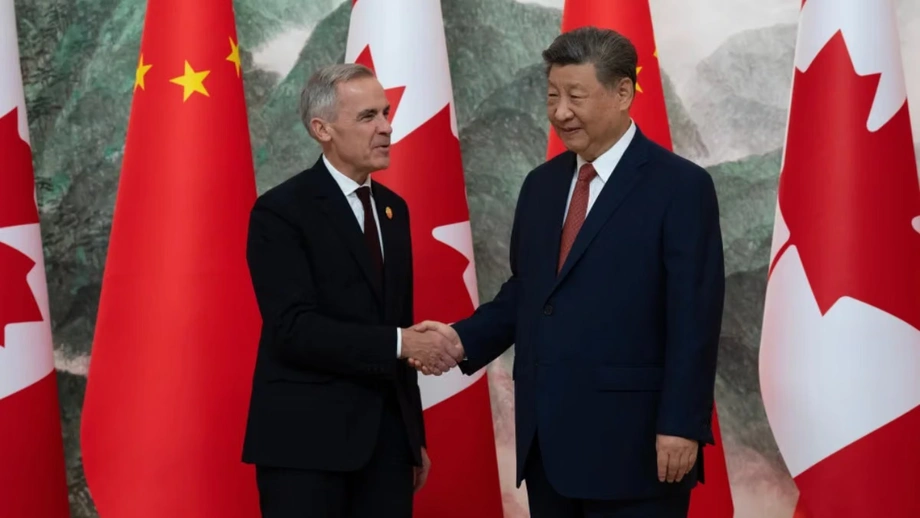
Prime Minister Mark Carney and President Xi Jinping reached the agreement in Shenzhen ahead of the Asia-Pacific Economic Cooperation summit. It builds on their January trade arrangement and gives Canadian farmers and seafood harvesters greater access to China as Carney seeks to reduce Canada's reliance on the United States.
The Canadian prime minister's office said its government had already restored market access for more than 90% of Canadian trade previously affected by tariff action, representing nearly C$7.5 billion in exports. Its November 17 statement sets out both the latest tariff measures and a wider package covering finance, education, travel and environmental cooperation.
The immediate exchange is specific: China will provide additional relief for Canadian agricultural and seafood products, while Canada will extend and broaden relief for Chinese metals that Canadian businesses cannot obtain in sufficient quantities at home.
Tariffs are taxes charged when goods cross a border. Lower duties can make an imported product cheaper for buyers, helping exporters compete for orders. A tariff remission gives relief from duties that would otherwise apply, allowing selected products to enter on more favourable terms.
Which pork and seafood products are covered?
Ottawa identified C$116 million in exports of frozen pork cuts and C$285 million in fish and seafood exports for additional tariff relief. Seafood accounts for about 71% of those two listed categories combined, making it the largest part of the new Canadian export package.
The seafood coverage includes certain frozen cold water shrimp and prawns, including Pacific spot prawn; certain molluscs, including geoduck; sea cucumber; and Greenland halibut. Naming the products matters because the agreement targets particular goods rather than giving every Canadian seafood export the same treatment.
Canadian fish harvesters in British Columbia and Atlantic Canada are among the businesses whose access to Chinese customers is being improved. Pork producers also gain another opening in a large overseas market, broadening the benefits beyond the crops covered by earlier negotiations.
The new package follows a two year extension of tariff relief for Canadian canola meal, peas, lobster and crab announced earlier in November. Canola seed had also received tariff relief following Carney's January visit. Together, the measures extend the trade opening across several parts of Canada's agricultural and seafood industries.
What Canada is giving Chinese metals producers
Canada will extend existing remission measures for certain Chinese steel and aluminium products by two years. Those measures had been scheduled to expire at the end of 2026, so the extension carries the relief through the end of 2028.
Ottawa will also expand coverage to another 32 steel and aluminium tariff items for which Canadian supply is insufficient or unavailable. A tariff item is a category used by customs authorities to classify a product and determine the duties charged on it.
The supply condition explains the domestic purpose of the Canadian concessions. Companies using these metals need access to materials that suppliers in Canada cannot provide in adequate amounts. The expanded remissions allow more of those inputs to receive tariff relief.
China's Ministry of Commerce said the countries had reached a supplementary arrangement after several rounds of negotiations. It said China would adjust measures applied to some Canadian agricultural and aquatic products under its laws and regulations, while Canada would broaden its steel and aluminium exemptions.
Both governments still have domestic procedures to complete. No precise starting date or complete schedule of revised tariff rates was announced for the new measures. The ministry said the countries would work to put the results into effect promptly and use their joint economic and trade committee to address problems and manage disagreements.
A trade reset built through several meetings
The Shenzhen talks were Carney and Xi's third meeting since Carney became prime minister. They met at the previous year's APEC summit in South Korea, then in Beijing in January, when they launched a new strategic partnership.
That January visit was the first trip to China by a Canadian prime minister since 2017. It produced an exchange of agricultural tariff relief for easier access to Canada's market for Chinese electric vehicles.
- 2018: Relations deteriorated after Canada arrested the daughter of Huawei's founder on a US warrant, followed by China's detention of two Canadians on espionage charges.
- 2025: Carney and Xi met at the APEC summit in South Korea.
- January 2026: The leaders launched their strategic partnership in Beijing and agreed to ease selected trade barriers.
- Early November 2026: Tariff relief for Canadian canola meal, peas, lobster and crab was extended by two years.
- November 17, 2026: The leaders agreed in Shenzhen to expand relief for Canadian pork and seafood and Chinese steel and aluminium.
Under the January vehicle arrangement, Canada allowed annual imports of 49,000 Chinese electric vehicles at a tariff rate of 6.1%. The annual quota is set to rise to 70,000 over five years. Chinese automakers BYD, Geely and Chery have since taken steps to enter the Canadian market.
How large is the trade relationship?
Canada and China traded C$125.6 billion in merchandise in 2025, an increase of 5.6% from 2024, according to the Canadian government. Canadian merchandise exports to China accounted for C$35.1 billion of that total.
The remaining C$90.5 billion was merchandise moving from China to Canada. That means Canada bought about C$2.58 in Chinese goods for every C$1 in goods it sold to China, illustrating the scale of the export growth Carney is seeking.
Carney said Canada was ahead of schedule toward its goal of increasing exports to China by 50% by the end of the decade. During the talks, he welcomed what he called greater predictability and stability in the relationship.
The new measures reach beyond products covered by tariffs. Canadian crude oil shipments to China rose about 37% in 2026, according to a calculation using LSEG data. The leaders also discussed cooperation involving oil and gas, renewable energy and nuclear energy.
Investment adds another substantial connection. China's stock of direct investment in Canada stood at C$43.4 billion in 2025, making it Canada's fourth largest investor country. Canadian direct investment in China stood at C$15 billion. Investment stock measures the accumulated value of investment holdings rather than spending during a single year.
Carney looks beyond the United States
US tariffs have given Canada's search for other export markets greater urgency. President Donald Trump imposed heavy duties on Canada's automotive sector in 2025 and has repeatedly said vehicles sold in the United States should be made by American workers.
Carney walked away from trade talks with Trump in August, although Ottawa and Washington have sounded more optimistic in recent weeks about reaching an agreement. Canada's parallel negotiations in Asia aim to give businesses more destinations for their goods.
On the Saturday before the Shenzhen meeting, Carney announced that negotiations for a free trade agreement with the Philippines had concluded. He also said a broader agreement was being pursued with the 11 member Association of Southeast Asian Nations.
Carney described the purpose of those negotiations in terms of expanding Canada's choices:
part of a strategy of developing a dense web of reliable partners to create more opportunities... and reducing our relative reliance on the United States
China also faces trade friction with Washington. That shared pressure helps explain why both governments are pursuing a more stable commercial relationship despite their unresolved political differences.
Finance and online sales enter the agreement
Canada plans a major trade mission to China in 2027 to connect Canadian businesses with Chinese industry leaders. The countries also designated 2027 a Canada-China Year of e-Commerce, with the aim of helping smaller Canadian companies sell through Chinese online platforms.
Online marketplaces can give a smaller exporter a route to customers without first building an extensive network of physical stores. The initiative places those sales channels alongside the tariff negotiations as another way to expand Canadian access to China.
The leaders endorsed outcomes from the second Canada-China Economic and Financial Strategic Dialogue, including cooperation between financial regulators, monetary authorities and officials responsible for broader economic policy. China's commerce ministry also identified progress on discussions about Chinese banks establishing branches in Canada and improving conditions for businesses.
A memorandum of understanding will create a Canada-China CEO Roundtable, jointly chaired by the Canada-China Business Council and the Bank of China. It is intended to provide a regular forum for businesses from the two countries to exchange views.
Xi's proposals for the relationship covered four broad areas: political trust; established and emerging economic sectors; exchanges between people; and coordination in international institutions. Carney identified investment, new energy, agriculture, artificial intelligence and tourism among areas for closer cooperation.
Flights, scholarships and environmental funding
Air Canada plans to launch flights between Vancouver and Guangzhou in May 2027, while Chinese airlines will also increase services. More direct connections would support business travel, tourism and the educational exchanges announced alongside the trade measures.
Canada committed C$850,000 in scholarships under the Canada Learning Initiative in China to support 850 Canadian students studying at Chinese universities. Dividing the total by the number of students gives an average of C$1,000 per student.
The University of Ottawa and Shanghai International Studies University also signed a memorandum of understanding to develop an undergraduate dual degree programme. It would combine Ottawa's work in international studies and modern languages with the Shanghai university's strengths in French studies and diplomacy.
Canada announced an C$8 million contribution to the China Council for International Cooperation on Environment and Development. The funding will support international expertise, including Canadian researchers, in developing recommendations for environmental policy.
Five Canadian arts and culture companies signed commercial agreements worth more than C$15 million during the visit. The combination of cultural contracts, flights and student exchanges shows how the relationship is expanding beyond the movement of goods.
Political differences remain part of the relationship
Canada's rapprochement with China follows years of diplomatic disputes, reciprocal tariffs and security concerns. Canadian intelligence believes China interfered in at least two federal elections. Beijing denies the allegation.
The leaders presented their cooperation as a way to work through differences while expanding areas of agreement. Xi, China's president, described the lesson he drew from the countries' difficult recent history:
The development of China-Canada relations over the years has taught us important lessons: we must respect each other, uphold equality and mutual benefit, and seek common ground while reserving differences,
Carney, Canada's prime minister, framed the partnership as part of a wider effort to strengthen Canada's economic choices. In the statement issued by his office, he said:
Canada is building our strength at home and diversifying our relationships abroad so that we have the freedom to live our lives as we choose.
The next scheduled steps include the 2027 trade mission, the e-commerce initiative and Air Canada's planned May flight launch. For exporters and importers, the immediate practical task is completing the procedures that will make the latest tariff relief available.
Key Points
- Canada and China agreed on additional tariff relief covering approximately C$400 million in Canadian pork, fish and seafood exports.
- Canada will extend selected Chinese steel and aluminium remissions by two years and add 32 tariff categories.
- Ottawa says nearly C$7.5 billion in Canadian exports has regained market access under the broader trade reset.
- The governments must complete domestic procedures before the new measures take effect.
- A Canadian trade mission, an e-commerce initiative and expanded flight connections are planned for 2027.
- Carney is pursuing closer Asian trade ties while seeking to reduce Canada's relative dependence on the United States.