A decisive round puts Malaysia's older gamers on top
Nahar Johari, 52, was the last Malaysian player standing against three Japanese opponents. Playing remotely because health concerns prevented him from travelling to Singapore, he eliminated all three, winning a crucial round that helped Malaysia's Old Guards claim the Counter-Strike 2 championship at Silver Showdown 2026.
Contents
- A decisive round puts Malaysia's older gamers on top
- How Johari won a round against three opponents
- Meet the five Malaysian champions
- From a reality show to an international final
- Why meeting in Singapore mattered
- Coaching gives beginners a way into competition
- Senior esports already stretches beyond Asia
- More games are being considered
- Key Points
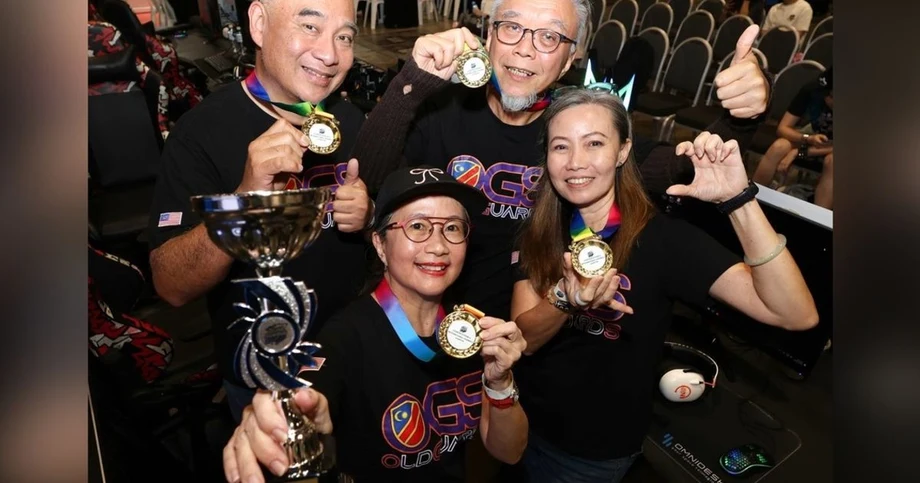
The five Malaysian champions, aged 52 to 64, defeated Japan at the Suntec Singapore Convention & Exhibition Centre in a competition open to players aged 50 and above. Singapore's Golden Aces finished third in the event, which brought together 20 players from four teams.
The final took place on November 14, 2026, although November 15 has also been given as the date of the victory. The official Silver Showdown programme lists November 13 and 14 as the event dates. The international field comprised Malaysia, Singapore, Japan and Chinese Taipei, rather than China as first described.
Organised by the Singapore Cybersports & Online Gaming Association (SCOGA), Esports Academy and social service agency Lions Befrienders, the competition expanded a Singapore event launched in 2025 into an international meeting for older gamers.
Old Guards, also known as OGS, reached the championship after regular online practice, competitive matches and encouragement from their families. Their journey began with a Malaysian reality show in 2024. Two years later, a team of three men and two women had won a regional title in a game that demands quick decisions, careful communication and coordinated play.
How Johari won a round against three opponents
Counter-Strike 2, often shortened to CS2, is a shooting game played by two teams of five. Players see the action through their character's eyes and work together to complete objectives, defend positions or eliminate the opposing team. Choosing equipment and knowing the routes through each map are part of the contest.
Johari, who plays under the name Sithlord888, faced what gamers call a clutch situation: he had to try to win after his teammates had been eliminated from the round. With three Japanese players still active, he had little room for error.
His successful response gave Malaysia a crucial round in the final. Winning a clutch can also lift a team's confidence, because a position that appeared likely to be lost becomes a point gained through one player's decisions and execution.
Coach Nellydia described the moment as emotional after the effort and exhaustion of preparing for the tournament. Johari's contribution was especially striking because he was competing away from the venue while the event brought most participants together in Singapore.
Japan's Yuko Yamamoto, 75, also competed remotely because health concerns prevented her from travelling. Their participation gave both players a way to remain part of the international contest despite being unable to attend in person.
Meet the five Malaysian champions
Old Guards brought together players whose ages spanned 12 years. The winning lineup was:
- Jon Yap, 64.
- Linda Tee, 58.
- Johan Sopiee, 57.
- Trish Lim, 57.
- Nahar Johari, 52.
The five players came through Boomers2Gamers, a reality show launched in 2024 to find members of Malaysia's first official senior esports team. The show attracted 298 applicants aged over 50, giving the eventual players a route into organised competitive gaming.
OGS now practises online almost every other day. Its players compete in CS2 and Valorant, another shooting game built around team coordination. Online practice allows the members to play together regularly without gathering in the same place for every session.
The team also makes room for dad jokes during matches. That mix of serious practice and humour is part of its identity: the players prepare to win while keeping the social enjoyment that brought them into gaming.
Their families celebrated the championship, and the team encouraged other older people to try gaming. Their message was that age need not limit someone's enthusiasm or willingness to learn a new game.
From a reality show to an international final
Malaysia's victory followed several stages of development, from recruiting older beginners to establishing a regular team and then facing opponents from abroad. Silver Showdown followed its own progression, beginning as a domestic competition before opening to international participants.
- 2024: Boomers2Gamers attracted 298 applicants over 50 in Malaysia, providing the starting point for the Old Guards players.
- 2025: Silver Showdown began as a national competition in Singapore.
- November 13, 2026: Singapore held the domestic competition used to select its players for the international event.
- November 14, 2026: Old Guards defeated Japan in the international CS2 final, while Singapore finished third.
The teams arrived with different amounts of experience in CS2. The Chinese Taipei side, fielded by the Chinese Taipei Esports Association with Cheng Shiu University, had about three months of experience in the game. Most Japanese players had started in September or October 2026.
Japan's team was backed by the Akita branch of the Japan Esports Union. Those routes into the tournament show how older players are finding competitive opportunities through entertainment programmes, educational institutions and esports organisations.
For Malaysia, the title turned a television recruitment project into a concrete sporting achievement. For the newer teams, Singapore offered an opportunity to compete internationally within months of learning the game.
Why meeting in Singapore mattered
Singapore's Golden Aces fielded players aged 50 to 77. Their captain, Philip Tang, 71, had already experienced international competition online, including matches involving players from Finland. Gathering at a venue added something that playing from home could not provide: time to meet opponents beyond the screen.
Tang explained why the personal contact mattered to his team:
Here, we can interact and get to know them as well. It is a good experience to compete and continue to play more comfortably with each other.
SCOGA president Dennis Ooi described the gathering as evidence of growing participation among older adults and a broader view of active ageing:
Bringing these teams together in person shows how quickly senior e-sports is growing across Asia, and that active ageing can look very different from what we are used to.
Active ageing means helping people remain involved, connected and engaged as they grow older. At Silver Showdown, that took the form of learning maps, communicating with teammates, handling competitive pressure and meeting people from other places.
The event was described as Asia's first live international senior esports tournament. Its format combined a physical gathering in Singapore with remote participation for Johari and Yamamoto, keeping the competition accessible to two players who could not travel.
Coaching gives beginners a way into competition
Singapore's support for senior gaming extends beyond the tournament itself. The OCBC-Lions Befrienders Senior E-sports Programme, launched in June, aims to provide 2,400 coaching sessions for 200 seniors at gaming facilities in Bishan, Pasir Ris and Jurong West.
OCBC committed $100,000 and 800 bank volunteers to the programme, while SCOGA supplied coaches. The planned totals amount to an average of 12 coaching sessions per participant, calculated from 2,400 sessions for 200 people. Individual attendance may vary.
That structure offers older beginners a place to learn the controls and rules before they face competitive opponents. In a team game such as CS2, players must also learn how to share useful information and coordinate their actions rather than simply aim at targets.
Several Singapore participants prepared through national programmes. NTUC Health has also introduced esports through Nintendo games at its active ageing centres and held gaming competitions during its inaugural Active Ageing Centre Day on October 1, 2025.
The different programmes provide more than one entry point. Someone unfamiliar with a computer shooting game may first encounter organised gaming through a console activity at a community centre. A player who wants more structured competition can seek coaching and team practice.
Senior esports already stretches beyond Asia
Silver Showdown's international expansion joins an existing network of competitions for older players. In June 2019, Sweden hosted the first Senior Counter-Strike World Cup, with four teams from Sweden, Finland, Germany and the United States.
Since 2023, the International Senior League has run online CS2 competitions for players aged 50 and above. Teams from Malaysia, Sweden and Ukraine have participated, among others. Those online contests allow players to face overseas opponents without the cost and physical demands of travel.
Japan has developed another model through Care Esports, a nonprofit organisation that has held tournaments twice a year since 2019 for older people living in nursing homes. Hisako Sakai, 92, won its 12th tournament in 2025, playing the fighting game Tekken 8.
These events involve different settings and games. A nursing home tournament, an online international league and a competition at a Singapore convention centre each create a distinct way for older adults to participate.
Old Guards' success belongs within that wider movement while adding a Malaysian achievement of its own. The team progressed from a recruitment show to regular practice and an international title, with one of its decisive performances delivered remotely.
More games are being considered
The official Silver Showdown programme lists CS2, Street Fighter 6 and Exergaming, alongside senior esports competition, international friendlies and a prize presentation. Exergaming refers to games that involve physical movement, giving participants a different activity from playing with a keyboard, mouse or conventional controller.
Street Fighter 6 was included in the local competition, and SCOGA is exploring further titles, including Valorant. No date has been announced for adding Valorant or for the next international edition. Ooi has called for more partners to support future senior competitions.
Adding games would create different competitive choices. CS2 centres on teams managing equipment, positions and objectives. Fighting games such as Street Fighter 6 place two opponents directly against each other, demanding knowledge of character moves and timing.
For Old Guards, the immediate achievement is a championship earned through repeated practice and a decisive performance under pressure. For prospective players, their story offers a practical starting point: find a game, learn with others and build the confidence to compete.
Key Points
- Malaysia's Old Guards defeated Japan to win the senior CS2 title at Silver Showdown 2026 in Singapore.
- The final was held on November 14; November 15 was also given as the victory date.
- The five Malaysian champions were aged 52 to 64 and came through the 2024 reality show Boomers2Gamers.
- Nahar Johari won a crucial round against three opponents while competing remotely for health reasons.
- Singapore's Golden Aces finished third in a field that also included Chinese Taipei.
- An OCBC and Lions Befrienders programme plans 2,400 coaching sessions for 200 seniors.
- Organisers are considering more games, including Valorant, for future senior competitions.