A tiny target and just 10 hours to find it
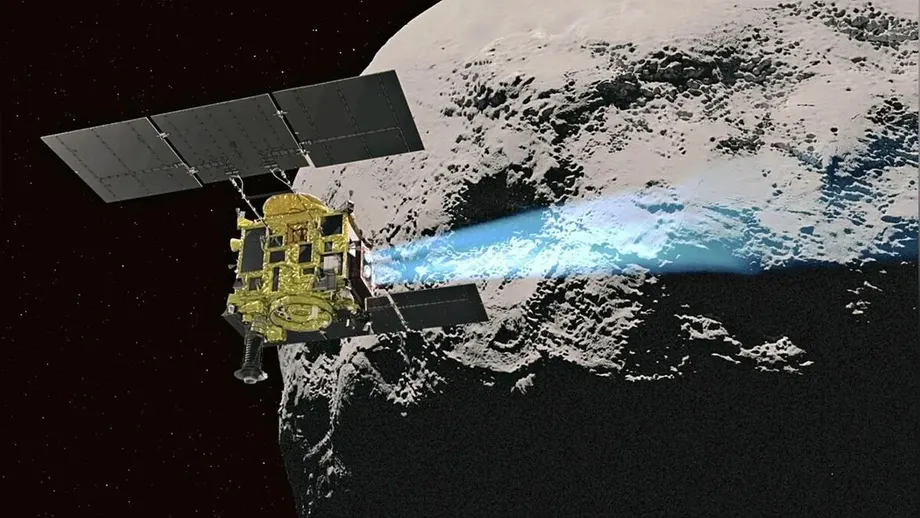
Japan's Hayabusa2 spacecraft will attempt to pass within a few hundred meters of an asteroid just 17 to 74 meters across in April 2028, after engine failures forced the Japan Aerospace Exploration Agency (JAXA) to abandon its planned arrival at another asteroid in 2031.
Contents
- A tiny target and just 10 hours to find it
- Why the original destination became unreachable
- What went wrong with the engines?
- Why observing 2015 BM510 will be so difficult
- How the new encounter compares with Torifune
- A different kind of asteroid to investigate
- From Ryugu samples to an extended mission
- What the flight could contribute to planetary defense
- Key Points
The new target, 2015 BM510, presents an unusually difficult challenge: the spacecraft is expected to be able to identify it only about 10 hours before its closest approach. Hayabusa2 will pass at a relative speed of about 6 kilometers per second, leaving little time to observe the small, dark object at close range.
JAXA announced the revised mission on November 17, 2026, a day after presenting its decision to a subcommittee of the Cabinet Office's Space Policy Committee. The change follows an August malfunction in the last of the spacecraft's four main engines that had still been operating normally.
Yuya Mimasu, leader of the extended mission, described the challenge facing the team:
Because it is a dark, small asteroid ... it will be one of the world's most difficult flyby missions,
The plan replaces an intended landing on asteroid 1998 KY26 with a flyby, in which a spacecraft gathers observations while passing its target rather than stopping beside it. JAXA is choosing a destination reachable with the propulsion still available, while taking on a demanding task for its cameras and navigation systems.
Why the original destination became unreachable
Hayabusa2's engine trouble affects its ability to reshape its path through space. Reaching 1998 KY26 in 2031 required a carefully arranged encounter with Earth, using the planet's gravity to redirect the spacecraft toward its destination.
This maneuver, called a gravity assist or swingby, depends on reaching the right place at the right time. The engines must first adjust the spacecraft's course so that Earth's gravity sends it along the intended route.
JAXA concluded that the remaining propulsion was insufficient to carry out the necessary course changes. The team therefore searched for an asteroid that Hayabusa2 could reach sooner without that Earth swingby and selected 2015 BM510.
The former target, 1998 KY26, was expected to be about 300 million kilometers from Earth when Hayabusa2 arrived in 2031. The revised mission brings the next main encounter forward to April 2028, though no exact encounter day has been announced.
Mimasu explained why the team changed its plan:
we decided to revise the plan to one that could be safely implemented,
Safety here concerns what an aging spacecraft can reliably execute. The new route reduces the propulsion demands, while the small size and darkness of the asteroid make the final observation much harder.
What went wrong with the engines?
Hayabusa2 carries four ion engines, which produce thrust by expelling electrically charged particles. Their gentle push builds up over long periods, allowing a spacecraft to change its path while using relatively little propellant.
Three engines already showed substantial deterioration before the remaining normally functioning unit developed a problem in mid August 2026. The engines had been designed to support the original mission through the return of asteroid samples to Earth, completed in 2020.
JAXA believes an internal component that expels ions suffered a short circuit, and that part of the power supply probably also failed. Engineers had been flowing more propellant than usual to prolong the life of another deteriorating component, a measure thought to have increased the strain.
The team switched to an arrangement called cross operation, combining usable components from two damaged engines. This technique had helped the first Hayabusa spacecraft return to Earth and was also possible in Hayabusa2's design.
The workaround allowed operations to continue, but did not restore enough thrust for the original trajectory. Attempts to recover useful engine performance left JAXA seeking a mission that matched the spacecraft's reduced capabilities.
Why observing 2015 BM510 will be so difficult
2015 BM510 combines three difficult features: a small size, a dark appearance and a rotation period of about 49 minutes. Its estimated diameter ranges from 17 to 74 meters, so even the upper estimate describes a very small target for a spacecraft moving past at high speed.
The asteroid is expected to become identifiable by the spacecraft only about 10 hours before closest approach. That gives the mission team a short final window to refine where the target appears and prepare the observations around the encounter.
At a relative speed of 6 kilometers per second, Hayabusa2 will cover 60 kilometers relative to the asteroid in just 10 seconds. This simple comparison shows why timing matters: the best views from close range will come during a brief part of the approach and departure.
JAXA aims to bring the spacecraft within a few hundred meters of the surface. The team is also considering whether it can pass closer than the roughly 400 meters achieved during its July encounter with asteroid Torifune.
The target's 49 minute rotation adds another factor to planning. Its visible surface will change as it spins, so the images obtained will depend on both the spacecraft's passing trajectory and the asteroid's orientation during the encounter.
How the new encounter compares with Torifune
Hayabusa2 successfully flew past Torifune in July 2026, obtaining clear images while passing about 400 meters from its surface. JAXA described that encounter as the closest approach yet recorded for a mission of this kind.
Torifune measures about 840 meters along its long axis and 340 meters along its short axis. The new target's entire estimated diameter, 17 to 74 meters, is much smaller than either dimension.
Even at the largest estimate of 74 meters, 2015 BM510 is less than one quarter of Torifune's 340 meter short axis. At the smallest estimate, its diameter is one twentieth of that dimension. The comparison helps explain why repeating a close flyby will require a different level of precision.
JAXA describes the proposed encounter as potentially the first flyby of an asteroid measuring only tens of meters across. Success would extend the mission's observations to a size range beyond the much larger Torifune.
A different kind of asteroid to investigate
2015 BM510 is classified as a D type asteroid. This category is associated with dark material and properties described as lying between those of comets and primitive asteroids, objects that preserve material from the early solar system.
The target is thought to contain substantial organic material and water. Organic substances are carbon based compounds that can be relevant to the chemistry from which life developed. The asteroid's actual composition remains a subject for investigation.
A close view could give researchers surface details unavailable from distant observations. JAXA says the target belongs to a type that has not previously been observed by a spacecraft, adding scientific value to the change of destination.
The revised plan calls for observations during passage. Hayabusa2's earlier mission at Ryugu involved landing and collecting material, whereas the 2028 encounter centers on gathering information as the spacecraft speeds past.
From Ryugu samples to an extended mission
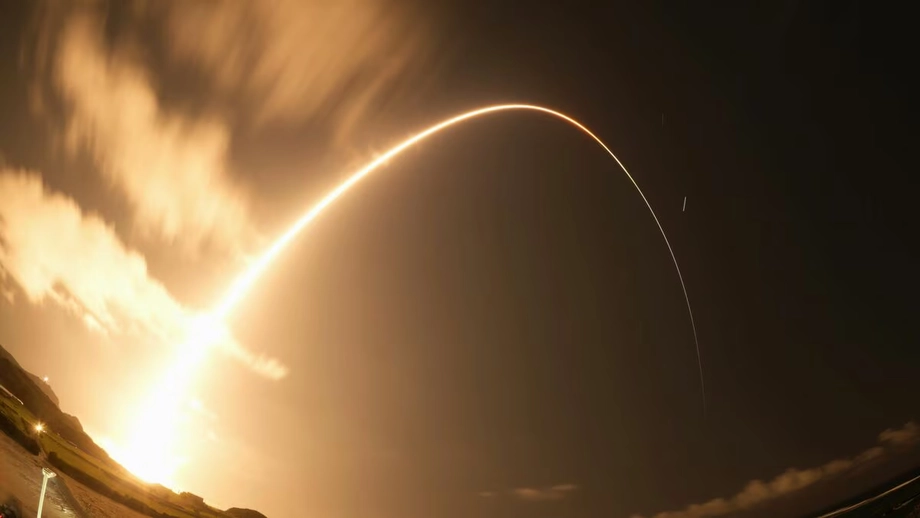
Hayabusa2 launched from Tanegashima Space Center in Kagoshima Prefecture in December 2014. It completed its original task in December 2020 by delivering a capsule containing material collected from asteroid Ryugu to Earth.
Those samples have supported research into the early solar system and chemistry connected with the origins of life. With the spacecraft still in good condition and fuel remaining after the capsule return, JAXA began an extended mission.
By the November 2026 announcement, Hayabusa2 had spent almost 12 years in space, roughly twice its original design period of about six years. The sequence shows how the mission progressed from its main success to its current limits:
- December 2014: Hayabusa2 launched from Tanegashima Space Center.
- December 2020: The spacecraft delivered Ryugu samples to Earth and continued into an extended mission.
- July 2026: Hayabusa2 completed its close flyby of Torifune.
- Mid August 2026: The last normally functioning main engine developed a fault.
- November 16 and 17, 2026: JAXA presented and publicly announced the change of destination.
- April 2028: The revised plan targets a flyby of 2015 BM510.
What the flight could contribute to planetary defense
Mimasu said the revised operation could help future planetary defense missions aimed at deflecting asteroids that might collide with Earth. Such missions need to locate small objects accurately and guide spacecraft toward them.
Hayabusa2's task brings those practical demands together: finding a faint target, refining its apparent position shortly before arrival and directing observations during a rapid encounter. Experience gained from that work could inform the planning of later asteroid missions.
For JAXA, the immediate goal is to obtain useful science with the equipment that remains operational. The mission trades an unreachable landing destination for a tiny asteroid within reach, making the most of a spacecraft that has already completed its original assignment.
Key Points
- Hayabusa2 now aims to fly past asteroid 2015 BM510 in April 2028 instead of reaching 1998 KY26 in 2031.
- Engine deterioration and an August 2026 failure left insufficient thrust for the original route.
- The new target measures an estimated 17 to 74 meters across and rotates once every 49 minutes.
- The spacecraft aims to pass within a few hundred meters at about 6 kilometers per second.
- The asteroid may become identifiable only about 10 hours before closest approach.
- The encounter could provide new asteroid observations and experience useful for future planetary defense missions.