Families pay while detainees are sent to serve
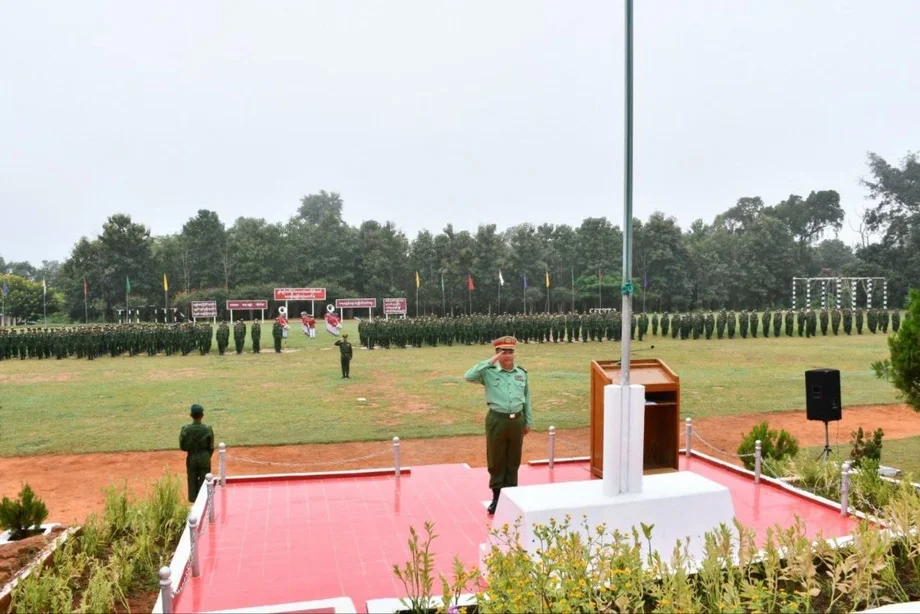
At least 11 men aged 18 to 35 were transferred directly from police custody into military service in Laputta Township, Ayeyarwady Region, according to local residents, as Myanmar's military began its 30th nationwide conscription intake on November 16.
Contents
- Families pay while detainees are sent to serve
- How the alleged Laputta arrangement worked
- A documented payment trail in Shwebo
- What military leaders have acknowledged
- Rising quotas increase pressure on local officials
- Payments were reported from the draft's early months
- The law and the dispute over female recruits
- A recruitment drive surrounded by threats and violence
- Key Points
The men had been detained and charged with theft, robbery or burglary. Residents said ward and village tract administrators arranged their transfer through a scheme that allowed other families to pay to keep their sons out of the armed forces while officials filled recruitment quotas.
Families seeking an exemption or delay collectively paid administrators approximately 20 million kyat, about $4,065 at the conversion used in their account. Administrators allegedly kept some of the money and passed the rest to police officers, who supplied detainees as replacements.
The allegations describe a recruitment system in which money can shift the burden of service from one household to another, including onto men already in police custody. They also follow an official acknowledgment of a separate substitution payment in Shwebo Township, where the Ministry of Information identified officials who shared money collected from a young man's family.
Myanmar's military activated the People's Military Service Law on February 10, 2024, as it sought recruits amid battlefield losses. The law covers men aged 18 to 35 and women aged 18 to 27, with ordinary compulsory service lasting two years. The military has not published a cumulative total of people inducted since enforcement began.
How the alleged Laputta arrangement worked
Laputta residents said the substitution practice began around the 24th intake on April 27. Their account describes two connected transactions: families paid administrators to spare their sons, and administrators paid police to provide other men to satisfy township recruitment requirements.
A recruitment quota is the number of people an area is told to supply. Under the alleged arrangement, officials could meet that number even when a person originally selected did not serve, because someone else was sent in his place.
The approximately 20 million kyat was described as a collective payment. Families did not give a breakdown showing how much each household paid or how the money was divided between administrators and police. The fate of the criminal cases against the transferred detainees, including whether proceedings continued, was also not explained.
For the affected households, the immediate consequences were different but connected. Families paying officials sought to avoid two years of compulsory service for their sons. The detained men were moved from police custody into military service through an arrangement residents attributed to local officials.
A documented payment trail in Shwebo
The Ministry of Information's January 27 statement describes a separate case in Shwebo Township in 2025, including the amount demanded, the recipients and the return of the money.
According to the ministry, officials conducting household registration checks took 24 year old Kyaw Min Khant to the township administration office at about 7 p.m. on January 24. He had been staying in Ward 4 without registering as a guest. Officials said he would be entered into the military service register.
District administration clerk Thurein Nyunt then contacted his parents and said another person could replace their son if they paid 13 million kyat. His father, Ko Ko Lay, paid the money at about 3 p.m. on January 25, the ministry said.
The ministry gave the following breakdown:
- Township police chief Than Zaw received 2.5 million kyat.
- Senior township administration clerk Kyaw Khine Latt received 2.5 million kyat.
- Junior district administration clerk Thurein Nyunt received 3 million kyat.
- Thant Soe Htaik, the proposed substitute, received 5 million kyat.
The ministry said the full 13 million kyat was returned to the family at 9:30 p.m. on January 26 and that those involved would face legal action. Its statement gave no date for a court hearing or final outcome.
What military leaders have acknowledged
The Shwebo statement said recruitment bodies should follow the law and prevent demands for money and substitutions. It also asked members of the public to report recruitment practices that departed from legal procedures.
Vice-Senior General Soe Win, the military's deputy commander in chief, separately acknowledged financial corruption and failures by recruitment committees in a speech. Describing problems within the recruitment process, he said:
Some recruitment committees have not followed legal procedures, leading to financial corruption and difficulties for some conscripts,
Soe Win said the problems were being addressed and instructed military personnel to report wrongdoing by recruitment committees to the relevant authorities.
His remarks and the Shwebo statement put official acknowledgment alongside residents' allegations from other areas. In Shwebo, the ministry publicly described a payment and its return. In Laputta, residents describe an alleged arrangement involving police detainees and money from families seeking to avoid the draft.
Rising quotas increase pressure on local officials
Ward administrators in Mandalay Region were reportedly ordered in September to increase their monthly recruitment quotas from two people to between five and ten per intake. That represents an increase to 2.5 to five times the earlier requirement.
Such targets place administrators between military demands for recruits and families trying to keep relatives out of service. Early accounts of the draft described officials resigning under that pressure, while others sought payments to arrange replacements or remove names from selection lists.
The military initially announced a target of 5,000 recruits per monthly batch and 50,000 during the first year. Military spokesperson Major General Zaw Min Tun also said about 13 million people were eligible, citing population figures he described as coming from the 2019 census.
The Myanmar Defence and Security Institute, a network of military defectors, said in August that Naypyidaw had steadily increased intake quotas. The institute estimated in March that conscript numbers had approached 100,000 and later put the number above 140,000.
The opposition National Unity Government said in September that it had documented 135,080 men forcibly recruited across the first 27 intakes. That works out to roughly 5,003 men per intake, close to the military's original monthly target of 5,000. The nationwide average sits alongside reports of much higher demands in particular wards.
Payments were reported from the draft's early months
Accounts published on April 22, 2024, described demands ranging from 500,000 to 50 million kyat, with prices varying by location and recruitment requirements. The accounts show that families were being asked to pay for avoidance or substitution near the beginning of enforcement.
In Hinthada Township, also in Ayeyarwady Region, a young man said the regional governor asked him for 3 million kyat to arrange a substitute after he was selected through a lottery. A man in Yangon's North Dagon Myothit Township said he paid 1.4 million kyat to have his name removed from that year's list.
In a village in eastern Bago Region, an administrator allegedly demanded 2.5 million kyat from each of eight people selected for service. Those selected reportedly included a man aged 59, above the ordinary eligibility range for men.
Other residents described recurring monthly payments to avoid recruitment or payments to secure the release of arrested relatives. These demands made the cost of avoiding service uncertain: a household could face another payment after already paying once.
The financial burden could reach far beyond a family's savings. In Daik-U Township, Bago Region, a friend of one family said a widow borrowed 50 million kyat to spare her son, then borrowed another 3 million after officials demanded more. The friend said her son later died by suicide while distressed about the debt.
The law and the dispute over female recruits
The People's Military Service Law was enacted in November 2010 but remained inactive until February 10, 2024. Its ordinary age ranges are 18 to 35 for men and 18 to 27 for women, with two years of service. Longer obligations can apply under provisions governing emergencies.
The Ministry of Information's January statement said authorities were then calling up only men aged 18 to 35 and described recruitment as taking place through township committees under legal procedures.
The Myanmar Defence and Security Institute later said a second batch of female conscripts began training in August at a facility in Hmawbi Township, Yangon Region. The military denied that claim.
The distinction matters for families assessing who faces an immediate call to serve: women fall within the law's stated scope, while the military and the defector network give conflicting accounts of whether the reported training took place.
A recruitment drive surrounded by threats and violence
Local administrators have faced violence over their role in preparing lists, recruiting residents and collecting money. A compiled tally recorded 108 ward and village administrators killed by anti military forces between February and September 2024 in connection with conscription activities.
Two further administrators were killed in Bago Region in late February, bringing that reported tally to at least 110. Families, meanwhile, have described young people leaving cities, moving to areas outside military control or leaving Myanmar to escape recruitment.
The Laputta allegations add police custody to this picture of coercion, financial pressure and competing demands. The Shwebo case shows that the military authorities have publicly identified and promised action against at least one substitution payment. Residents' accounts from several regions describe payments continuing to shape who serves and who is spared as the intake cycle advances.
Key Points
- Laputta residents say at least 11 detained men were transferred from police custody into military service through a substitution scheme.
- Families allegedly paid local administrators about 20 million kyat collectively to spare their sons.
- The Ministry of Information documented a separate 13 million kyat payment in Shwebo and said the money was returned.
- Some Mandalay ward quotas reportedly rose from two recruits to between five and ten per intake.
- The military began its 30th nationwide intake on November 16 but has not released a cumulative recruitment total.
- The National Unity Government said it documented 135,080 men forcibly recruited across the first 27 intakes.