Five properties and three bank accounts at stake
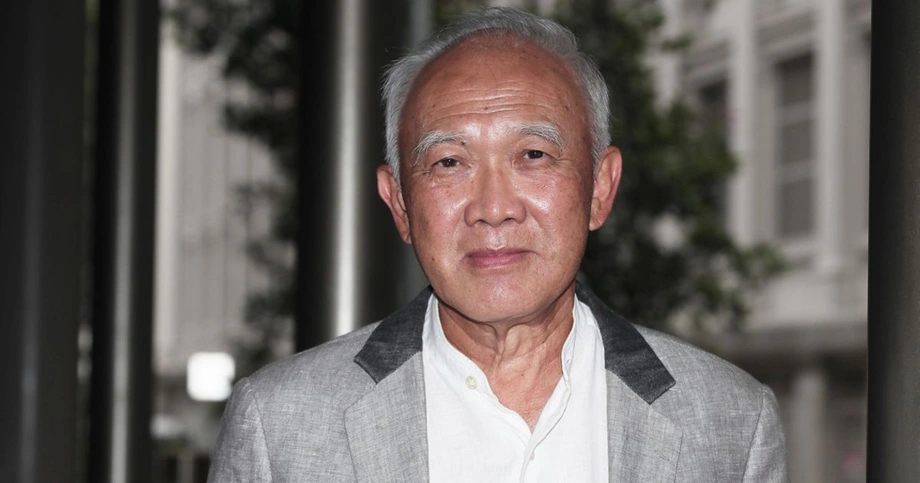
Singapore's Court of Appeal has rejected motoring tycoon Peter Kwee's attempt to recover five properties registered in his bankrupt daughter's name, ruling that the trust he created to conceal assets from his creditors was illegal, void and unenforceable.
Contents
- Five properties and three bank accounts at stake
- What did the family arrangement cover?
- How a S$4.1 million loan brought matters to court
- The key dates in the dispute
- Why the appeal judges rejected the gift finding
- Why concealing ownership defeated the claim
- Why selling another property did not rescue the trust
- What the ruling means for the money
- Key Points
The judgment, delivered on November 18, 2026, leaves Kwee unable to use the arrangement to recover the properties or money held in three bank accounts. Had he succeeded, proceeds from the properties would have been kept out of reach of his daughter Karen Kwee's creditors.
The court, comprising Justices Ang Cheng Hock, Hri Kumar Nair and Andrew Phang, reached the same outcome as the High Court but for a different reason. The appeal judges accepted that Kwee had intended to keep the properties' full beneficial interest for himself. They nevertheless refused to enforce a trust created to hide that interest from creditors.
The Court of Appeal explained its decision in its written judgment:
We find that as the trust was set up by Mr Kwee for the purpose of concealing the properties from his creditors, it is void and unenforceable as being illegal and contrary to public policy.
This was the first time Singapore's highest court had definitively ruled that a trust established by a beneficiary to conceal assets from creditors was illegal and contrary to public policy. The decision turns on the purpose behind Kwee's arrangement, alongside the evidence about who paid for, managed and controlled the assets.
What did the family arrangement cover?
Kwee, known for his car distributorships and ownership of Laguna National Golf Resort Club, bought the five properties between 1995 and 2000. All were registered solely in Karen's name.
Two are in Singapore's Bukit Timah area, at King's Drive and Teneriffe. Two others, West Georgia and Lord Stanley, are in Canada. The fifth, Spyglass Grove, is in Australia. Their combined value was estimated at more than S$10 million.
Kwee described a "name placing agreement" with his family: properties could be registered in a relative's name while continuing to belong to him. A beneficial owner is the person entitled to an asset's economic benefits, even when someone else appears as its registered owner. A trust can separate those two roles.
Rental income flowed into three accounts. An OCBC account and a UOB account were held jointly by father and daughter, while a Bank of Montreal account was in Karen's sole name. The dispute therefore concerned both the properties and the income they generated over many years.
The High Court's March 2025 judgment, issued by Justice Philip Jeyaretnam, records that Kwee's claimed interest in the properties was never reflected in writing. The nature of the arrangement became critical when Karen entered bankruptcy.
How a S$4.1 million loan brought matters to court
Karen and her then husband, Daniel Ou, agreed in February 2020 to borrow S$4.1 million from Thomas Woo and Paul Jonathan Grange. After they failed to make payments, the lenders began arbitration and obtained an award against them.
A statutory demand, a formal demand for payment that can precede bankruptcy proceedings, was served on Karen in May 2022. She was declared bankrupt on October 6 that year. Lai Seng Kwoon became her private trustee in bankruptcy in February 2023, taking responsibility for administering her bankruptcy estate.
A separate dispute had already developed over King's Drive. In September 2020, Karen signed an option to sell the property without telling her father. Such an option gives a prospective buyer a right to proceed with a purchase under specified terms. Karen said Ou wanted a loan from the buyer and assured her that the document was "for show".
The buyer lodged a caveat against the property in October 2020, formally recording a claimed interest, and sued Karen in January 2022 to have the option declared valid and binding. Kwee joined that litigation and counterclaimed that he was the beneficial owner. He lodged his own caveats on May 20, 2022.
Kwee then brought proceedings in September 2022 concerning the other four properties and the bank funds. His King's Drive claim proceeded through the separate counterclaim. After Karen became bankrupt, Lai took her place in the litigation. The buyer's action and Kwee's counterclaim against the buyer were discontinued in September 2024, while the ownership dispute with the bankruptcy trustee continued.
The key dates in the dispute
The litigation brought together an arrangement dating back decades, a disputed property sale and Karen's later bankruptcy:
- 1995 to 2000: Kwee bought the five properties and registered them in Karen's name.
- February 2020: Karen and Ou agreed to borrow S$4.1 million.
- September and October 2020: Karen signed the King's Drive sale option, and the buyer lodged a caveat.
- January 2022: The buyer sued to enforce the option.
- September 2022: Kwee began proceedings over the other properties and bank funds.
- October 6, 2022: Karen was declared bankrupt.
- March 20, 2025: The High Court rejected Kwee's claims, finding that the properties were gifts.
- November 18, 2026: The Court of Appeal dismissed his appeal because the trust was illegal and unenforceable.
The central issue changed as the case moved through the courts. At trial, the question was whether Kwee had given the assets to Karen. On appeal, the judges accepted his intention to retain ownership, then examined whether the law would enforce an arrangement made to conceal it.
Why the appeal judges rejected the gift finding
Justice Jeyaretnam found that Kwee was the ultimate source of the purchase funds, apart from rental proceeds used to pay mortgages. Karen's salary was insufficient to finance the purchases. Even so, the High Court concluded that Kwee had intended the properties to benefit her and that she was their beneficial owner from the outset.
The Court of Appeal interpreted the family's understanding differently. It found a common intention constructive trust, a legal arrangement arising from a shared understanding about ownership, under which Kwee intended to retain the full beneficial interest.
Kwee, explaining what he had told family members about the assets, gave this statement:
After I die already, it is yours. I will see how to split assets within the family.
The appeal judges focused on the second sentence. Kwee's intention to decide later how to divide the assets meant he retained discretion to redistribute them, regardless of whose name appeared on a property's title.
His conduct supported that reading. Kwee decided which properties to buy, handled mortgages and refinancing, and generally instructed Karen on documents to sign. In 2009, after the Lehman Brothers crisis, he directed her to take a second mortgage on Spyglass Grove and used the proceeds for his business.
Karen's conduct during the attempted King's Drive sale also mattered. She testified that she was afraid to tell her father and waited six months before doing so. The judges found it plausible that, having relied on him for major financial matters, she had trusted Ou's false assurances about the document.
Why concealing ownership defeated the claim
Kwee's affidavit described the arrangement as serving "business strategy", "wealth planning" and "risk management". When Daryl Fong of Shook Lin & Bok, the bankruptcy trustee's lawyer, questioned him about those purposes, Kwee identified avoiding estate duty and shielding the properties from his creditors.
The Court of Appeal concluded that Kwee intended to conceal his beneficial ownership from both tax authorities and creditors. Keeping ownership hidden from his own creditors was sufficient to make the trust void and unenforceable. Public policy, in this context, meant that the court would refuse to enforce an arrangement designed to frustrate creditors seeking repayment.
The judges also rejected Kwee's suggestion that he was an ordinary person unfamiliar with the difference between registered ownership and beneficial ownership. They pointed to his decades of experience buying and investing in property.
The case involved two different groups of creditors. Kwee's arrangement was intended to conceal assets from his own creditors. Years later, his attempt to enforce it would have removed those assets from the pool available to Karen's creditors. The appeal ruling prevented him from achieving that recovery through the unlawful trust.
The court left open whether an intention to evade estate duty, by itself, would invalidate such a trust. It did not need to decide that issue because concealing the properties from creditors already provided sufficient grounds to dismiss the claim.
Why selling another property did not rescue the trust
Kwee also argued that he had withdrawn from the illegal arrangement. He relied on a legal doctrine called locus poenitentiae, which can allow someone who withdraws from an unlawful purpose to recover assets in certain circumstances.
He pointed to the sale of another property, Claymore, in 2010, and his use of its proceeds to ease financial difficulties. The court found that the sale was driven primarily by financial necessity rather than a genuine decision to abandon the unlawful purpose.
Kwee's disclosure of the trust during the litigation also failed to persuade the judges. They found that Karen's bankruptcy had compelled him to reveal his beneficial interest. There was no evidence that he would have withdrawn from the arrangement had she remained solvent.
The timing and reason for his actions were therefore decisive. The court found neither the earlier sale nor the later disclosure amounted to a genuine withdrawal that would allow him to recover the assets.
What the ruling means for the money
The Court of Appeal also rejected Kwee's claim to the money in the three bank accounts. Rental proceeds made up the bulk of those funds, and the court held that those proceeds belonged to Karen because the trust was unenforceable.
The High Court judgment gives a more detailed picture of those flows. King's Drive rent regularly entered the OCBC account from 2007 to 2016. Teneriffe rent primarily funded the UOB account. The Montreal account received rent from the two Canadian properties and another property known as 9901 Whistler. Neither party identified an exact amount in the accounts that could be traced to rental income.
For Karen's creditors, the dismissal removes Kwee's claim that the properties and related funds must be returned to him under the family arrangement. The eventual amount available for distribution will depend on administration of the bankruptcy estate, including the assets, liabilities and claims against it.
Kwee was ordered to pay Lai S$80,000 in appeal costs. The earlier High Court proceedings had also resulted in a costs order of about S$195,000 against him.
Key Points
- The Court of Appeal dismissed Peter Kwee's claim to five properties and funds in three bank accounts.
- The judges accepted that he intended to retain beneficial ownership, reversing the High Court's finding that the properties were gifts.
- The trust was nevertheless void and unenforceable because it was created to conceal assets from his creditors.
- Karen Kwee was declared bankrupt on October 6, 2022, following a S$4.1 million borrowing with her then husband.
- The court rejected Kwee's argument that he had withdrawn from the illegal arrangement and ordered him to pay S$80,000 in appeal costs.