Alibaba Cloud Reports Strong Revenue Growth
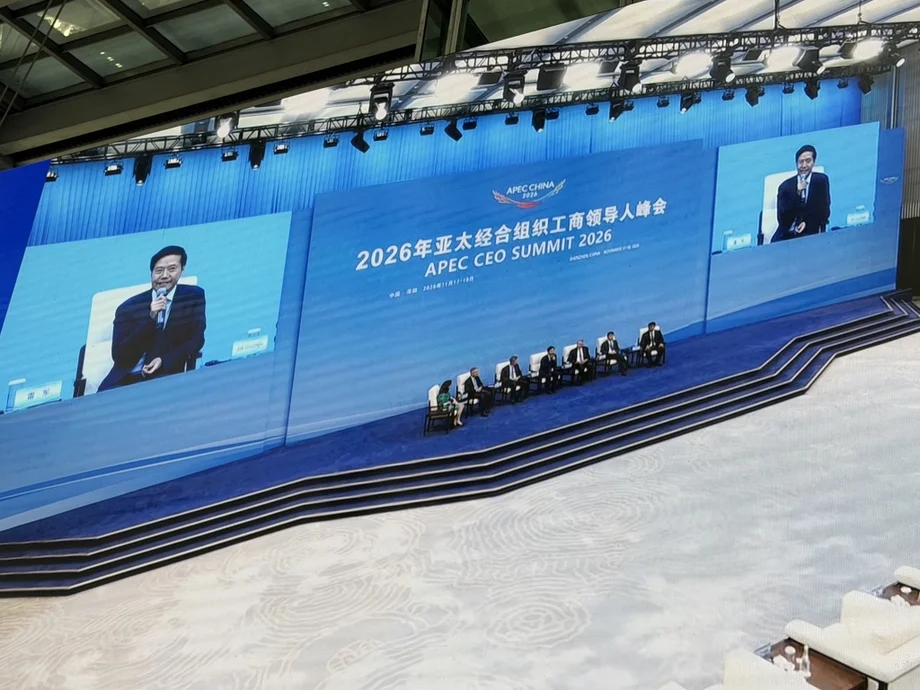
Alibaba Group reported a 10 percent increase in total group revenue to 2715.19 billion yuan for the quarter ending September 30, 2026, which is the second quarter of its 2027 fiscal year. Within that total, the cloud and artificial intelligence computing services division generated 609.73 billion yuan, representing a 53 percent increase compared to the same period a year earlier. The performance highlights a growing shift where technology companies are moving beyond experimental projects and turning digital tools into steady financial returns. Chief Executive Officer Wu泳铭 and other executives discussed these results during an earnings call on November 19, 2026.
Contents
The latest figures build on earlier growth patterns where artificial intelligence services expanded at a rapid pace. As detailed in Alibaba Cloud Growth Hits 34%, higher customer spending on training and running models previously lifted cloud revenue well above the wider company pace. The current results show that external customers are expanding their use of these services across multiple industries, including internet platforms, automotive manufacturing, robotics, financial services, and biotechnology. External customer revenue grew by 64 percent, while recurring revenue from external customers, which excludes one-off hardware sales, increased by 67 percent.
Profitability Rises Alongside Scale
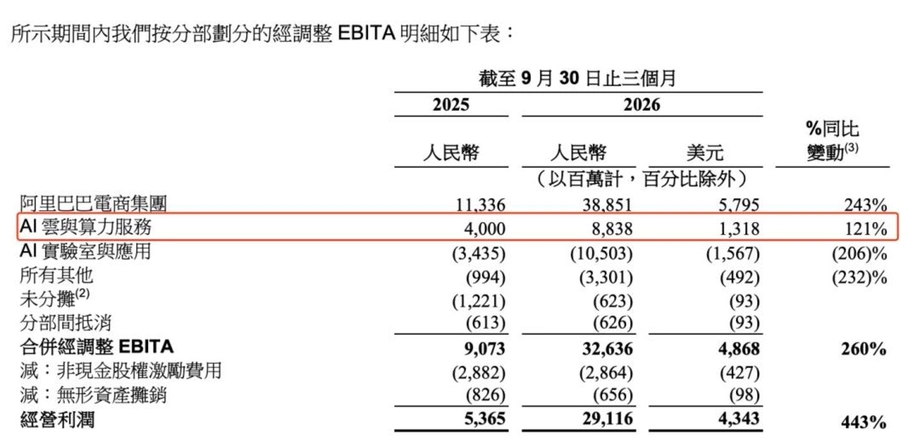
Financial gains during the quarter were not limited to top line revenue. The cloud division reported an adjusted earnings before interest, taxes, and amortization of 88.38 billion yuan, representing a 121 percent increase from the previous year. The profit margin for the cloud segment improved to 14.5 percent, compared with 10 percent in the same period last year. Company leadership attributed the margin expansion to higher demand for high-value artificial intelligence products, better resource utilization, and operational efficiencies gained through larger scale.
The broader financial statements showed group level improvements as well. Adjusted earnings before interest, taxes, and amortization for the entire company reached 326.36 billion yuan, a 260 percent increase driven partly by narrower losses in instant commerce and stronger operational performance across business units. Non-GAAP net profit reached 199.09 billion yuan, up 92 percent from a year earlier. At the same time, capital expenditures rose to 504.77 billion yuan, a 60 percent increase from the previous year, as the company continued to invest heavily in data centers, server components, and processor hardware.
The Push Toward Self-Resourced Hardware
Global export controls and supply chain shifts have prompted technology providers to look closely at their hardware sources. During the earnings call, executives addressed how new regulatory requirements could affect future data center expansion and construction targets. Chief Executive Officer Wu泳铭 stated that the company expects its long-term construction goal of 20 gigawatts of computing capacity to be evaluated and potentially adjusted in light of changing regional policies. A gigawatt is a measure of electrical power equal to one billion watts, commonly used to describe the immense energy demands of large data center networks.
To secure a reliable supply of processors for future workloads, the company is accelerating its reliance on self-developed silicon through its chip subsidiary, T-Head. T-Head submitted a confidential application for an initial public offering on the Hong Kong Stock Exchange, seeking an independent fundraising path for its hardware business. The chip roadmap includes the rollout of the Zhenwu M890 processor, followed by the planned mass production of the next-generation V900 chip in the first quarter of 2027, which is designed to deliver three times the computing capability of its predecessor. Company executives noted that domestic processors will form the foundation for training upcoming models and handling inference tasks.
Balancing Expansion and Free Cash Flow
Heavy investments in physical infrastructure continue to require substantial financial outlays. The company recorded a free cash flow net outflow of 344.72 billion yuan for the quarter, compared to a net outflow of 218.40 billion yuan in the prior year period. Management explained that capital spending remains elevated due to accelerated cluster expansion, component price fluctuations, and growing demand for central processing unit capacity to support intelligent software agents. An agent is an autonomous software program that uses an underlying model to plan and execute multi-step tasks without constant human intervention.
Chief Financial Officer Xu Hong noted that capital expenditures will be managed with a strict focus on the return on invested capital. Executives provided a timeline indicating that the most intensive investment phase for domestic chip supply chains is expected to continue through 2027 and the first half of 2028, with overall free cash flow projected to turn positive in the second half of 2028. Total cash and short-term investments stood at 4879.29 billion yuan at the end of September 2026, providing a financial cushion for these long-term projects.
Expanding the Ecosystem of Models and Applications
Commercial momentum is also visible in model-as-a-service offerings and application development. The Model Studio platform reported that its annualized recurring revenue surpassed 20 billion yuan in August, with management maintaining a target of 30 billion yuan by the end of the fiscal year. The company recently released the Qwen4-Max foundational model, which features a mixture-of-experts architecture and a reported parameter scale of 2.4 trillion. Parameters are the internal numerical variables that a model adjusts during training to learn patterns from data.
At the same time, consumer and enterprise applications are being integrated across the platform. The Qwen application has been deployed across multiple mobile and desktop environments to assist with daily tasks, while enterprise versions connect directly with operational data from platforms like Taobao and Tmall. As discussed in OpenAnolis Builds Anolis OS 27 Around AI Agents, software engineering teams are increasingly using automated systems to generate code and manage operating system packages, pointing to a wider industry trend where development processes are restructured around intelligent software.
Long-Term Targets Amid Changing Conditions
Despite short-term uncertainties regarding hardware availability, executive leadership reaffirmed strategic projections for the end of the decade. The company maintains its target for the cloud division to reach 100 billion dollars in external revenue by the 2031 fiscal year, which corresponds to the 2030 calendar year, alongside a long-term profit margin exceeding 20 percent. Management expects year-over-year cloud revenue growth for the upcoming fiscal year to moderate to a range between 30 and 45 percent due to supply transitions, before returning to a faster pace as domestic hardware production scales up.
External analysts have tracked these developments closely. Major financial institutions have updated their outlooks following the earnings release, pointing out that strong enterprise demand for computing power and rising external adoption help offset the capital expenditure pressures. At the same time, market participants continue to monitor how quickly self-developed hardware can take over heavy training workloads and whether productivity gains in consumer applications will eventually narrow the operating losses recorded in the application development division.
The Bottom Line
- Alibaba reported total quarterly revenue of 2715.19 billion yuan, representing a 10 percent year-over-year increase.
- AI cloud and computing services revenue reached 609.73 billion yuan, growing by 53 percent compared to the previous year.
- Adjusted earnings before interest, taxes, and amortization for the cloud segment rose 121 percent to 88.38 billion yuan, with the profit margin climbing to 14.5 percent.
- Capital expenditures totaled 504.77 billion yuan, driven by data center expansion and chip procurement, resulting in a free cash flow net outflow of 344.72 billion yuan.
- Chip subsidiary T-Head submitted a confidential public listing application in Hong Kong, with new processor lines scheduled for mass production starting in 2027.