The Sudden Departure of a Silicon Valley Icon
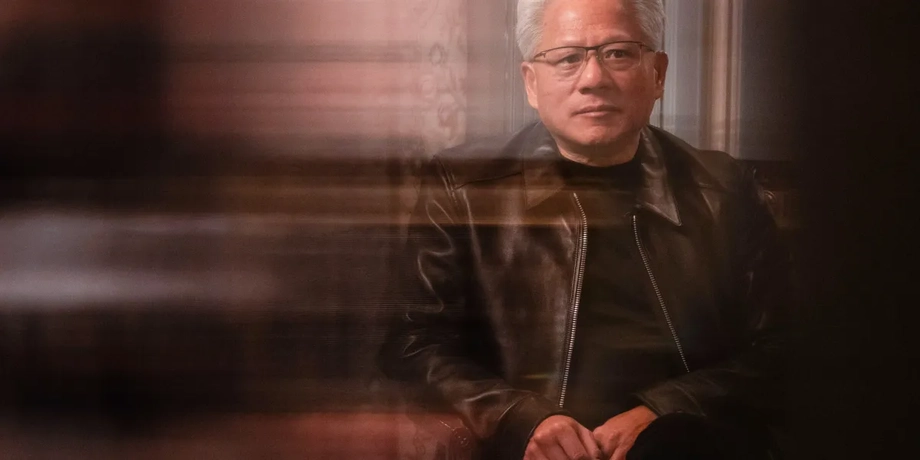
Nvidia co-founder Jensen Huang resigned on November 12, 2026, ending a remarkable 33-year tenure as president and chief executive officer of the artificial intelligence chip giant. His exit followed public revelations regarding personal relationships, including one with Alice Huang, a businesswoman associated with the Singapore-based computing company Megaspeed. US intelligence agencies began examining whether she had connections to China State Security, while US Securities and Exchange Commission investigators initiated inquiries into the company, as reported by the Wall Street Journal. Nvidia board chairman Harvey C. Jones confirmed that the board formed an independent review led by outside counsel before Huang offered his resignation.
Contents
Chief Financial Officer Colette Kress assumed the role of interim chief executive while retaining her financial responsibilities. Kress brings a quarter century of big technology financial experience, including thirteen years at Microsoft prior to joining Nvidia in 2013. The board also appointed Harvey C. Jones, a director since 1993 and former chief executive of Synopsys, as Nvidia's first board chairman. Directors retained the executive search firm Heidrick and Struggles to evaluate both internal and external candidates for the permanent chief executive position. Board leaders stated they would not rush the appointment but aimed to install the right leader without unnecessary delay.
The leadership transition triggered immediate market turbulence and intensive political scrutiny. Nvidia shares dropped about 17% over the year, contrasting with a 4% rise in the broader Nasdaq index. Investors and analysts focused heavily on how the company would maintain its technological dominance and artificial intelligence infrastructure financing without its foundational leader. US lawmakers subsequently requested that Huang appear for a closed House briefing and an open Senate hearing in December. Meanwhile, the Department of Commerce introduced new export control rules on November 16 requiring permits for certain overseas data centers in Southeast Asia, adding regulatory headwinds to the corporate transition.
Corporate Governance Failures and the Key Man Risk
Corporate governance experts and former Fortune 500 chief executives criticized Nvidia for lacking a formalized emergency succession plan. Three former chief executives interviewed by financial media described the absence of a designated successor as a major oversight for a company valued in the trillions of dollars. Lisa Calicchio, chief human resources officer at WCG Clinical, called the lack of preparation a failure of epic proportion regarding the board's fiduciary responsibilities. Tim Wentworth, former chief executive of Walgreens Boots Alliance and Express Scripts, noted that boards must continuously groom leadership talent rather than wait for a crisis to emerge.
The company operated under an unusually flat organizational structure that contributed to the succession vacuum. Huang frequently highlighted that he maintained approximately sixty direct reports, a design intended to keep operations agile during the company's hypergrowth phase. Business advisory experts pointed out that this structure concentrated too many critical relationships and strategic decisions in a single individual, creating extreme key man risk. Unlike many technology enterprises where founders hold supervoting shares, Nvidia operated with a single class of common stock carrying one vote per share. Institutional investors held the largest stakes, led by Blackstone at 8.1%, Vanguard at 6.5%, State Street at 4.2%, and Fidelity at 3.9%, while Huang held a 3.5% ownership and voting interest.
The board itself faced intense questioning regarding its oversight capabilities. Among the ten directors serving after Huang's departure, none had previously run a Fortune 500 company as chief executive, and several had served for decades. Alan Fleischmann, founder and chief executive of Laurel Strategies, emphasized that building an institution capable of surviving beyond any single individual remains a fundamental requirement of effective corporate governance. When the leadership crisis struck, directors had to improvise interim management rather than seamlessly elevating a prepared heir to the highest office.
Internal Turmoil and Employee Reactions at Headquarters
Nvidia held its first post-resignation all-hands employee meeting on November 18, 2026, at the corporate headquarters in Santa Clara, California. Interim chief executive Colette Kress led the broadcast alongside other executives, urging the workforce to look forward and maintain operational momentum. Employees submitted approximately 700 questions prior to the gathering, with compensation and corporate transparency emerging as top concerns. Kress announced that annual performance reviews would be moved from March to December, bringing forward scheduled salary increases and stock grants to reassure staff during a period of falling share prices.
Co-founder Chris Malachowsky delivered an emotional address during the employee meeting, expressing deep disappointment regarding the circumstances of Huang's exit. Malachowsky stated that the actions leading to the resignation violated the core values of integrity and innovation that he, Huang, and Curtis Prue established when founding the enterprise in 1993. Chairman Harvey Jones also spoke at the event, defending the board's decision and reiterating that reinstating Huang was not under consideration. Some employees voiced frustration over the lack of transparency surrounding the independent investigation, while others welcomed the structured updates from executive leadership.
Family members and close associates of the former chief executive continued to hold key operational roles within the firm. Huang's children, Spencer Huang and Madison Huang, alongside his son-in-law Nico Caprez, remained employed at the company. Caprez served as vice president of global AI infrastructure growth, overseeing crucial expansion initiatives for data center deployment. The continuing presence of family members and longtime loyalists created a complex internal dynamic for interim leadership as the search for a permanent chief executive advanced.
The Debate Over a Potential Return and Shareholder Activism
High-profile figures and thousands of supporters mobilized immediately following the resignation announcement to lobby for Huang's reinstatement. Tesla and SpaceX chief executive Elon Musk joined an online petition campaign titled Stand With Jensen that accumulated over 180,000 signatures from employees, shareholders, and industry partners. President Donald Trump publicly stated during a press conference that he would welcome Huang's return, praising his technological contributions and leadership in artificial intelligence development. Investor Bill Ackman criticized the board on social media for acting hastily without conducting adequate due diligence.
Despite mounting external pressure, the board of directors firmly rejected every appeal for a comeback. Chairman Harvey Jones stated unequivocally during the third-quarter earnings call that directors unanimously accepted the resignation and refused to consider rehiring the former chief executive. Amazon founder Jeff Bezos offered contrasting perspective during a summit appearance, advising that if Nvidia failed to bring Huang back, hiring an outsider would prove extremely difficult due to the extraordinary complexity of the business. Academic research from institutions including Columbia Law School suggested that internal executive appointments generally yield better long-term performance than external hires during unexpected turnover events.
Speculation regarding potential external and internal candidates persisted across financial markets. Reports indicated that the recruitment firm Heidrick and Struggles contacted executives including Arm chief executive Rene Haas and Marvell Technology chief executive Matt Murphy. Other industry leaders such as AMD chief executive Lisa Su and former Apple chief executive Tim Cook were frequently mentioned by market observers. Meanwhile, securities filings revealed that Huang held a 3.5% voting stake, qualifying him under company proxy access rules to nominate up to two director candidates ahead of the 2027 annual shareholder meeting if he chose to challenge the board's authority from outside the executive suite.
Supply Chain Implications and Financial Exposure
Nvidia's leadership upheaval sent immediate ripples through the global semiconductor supply chain, particularly across Taiwan's advanced manufacturing network. Taiwan Semiconductor Manufacturing Company experienced heavy trading volume as investors weighed whether a change in executive leadership would alter equipment orders and factory expansion timelines. Analysts noted that Huang possessed a legendary willingness to commit massive capital and secure capacity before manufacturing plants were fully constructed, a bold operating style that professional managers might hesitate to replicate. MediaTek, Delta Electronics, and Hon Hai Precision Industry also experienced significant market fluctuations as the broader technology sector adjusted to the news.
Financial institutions raised questions regarding Nvidia's extensive credit exposure linked to its artificial intelligence financing ecosystem. Market analysts pointed out that the company often functioned as a primary lender and guarantor for emerging cloud computing enterprises purchasing costly hardware. Morgan Stanley warned that broad credit exposure could accumulate significantly through subsequent years, placing pressure on future free cash flow if market demand softened. While interim management moved quickly to reassure investors with strong quarterly revenue forecasts, financial observers emphasized that the loss of the company's visionary architect transformed long-term risk assessments across the entire artificial intelligence industry.
Timeline of Key Events:
- October 29, 2026: Public questions emerge regarding Jensen Huang and business dealings with Megaspeed.
- November 8, 2026: Nvidia announces an independent review of executive conduct.
- November 11, 2026: Board directors review additional allegations and accept the resignation.
- November 12, 2026: Nvidia officially announces Huang's resignation and Colette Kress's appointment as interim chief executive.
- November 17, 2026: Chairman Harvey Jones rules out a return during the quarterly earnings conference call.
- November 18, 2026: Interim chief executive Colette Kress hosts the first post-resignation all-hands employee meeting.
The Bottom Line
- Jensen Huang resigned on November 12, 2026, after leading Nvidia for 33 years following revelations regarding personal conduct and corporate governance concerns.
- Chief Financial Officer Colette Kress took over as interim chief executive while the board initiated a permanent search through Heidrick and Struggles.
- Nvidia board chairman Harvey Jones firmly ruled out reinstating Huang despite public appeals and online petitions signed by thousands of supporters and industry leaders.
- The company faced intense scrutiny from US lawmakers, export control regulators, and financial analysts regarding its flat organizational structure and lack of a formal succession plan.
- Interim leadership accelerated employee compensation reviews and stock grants to stabilize the workforce and maintain continuity across global technology supply chains.