Major Financial Institutions Announce New Fee Reductions
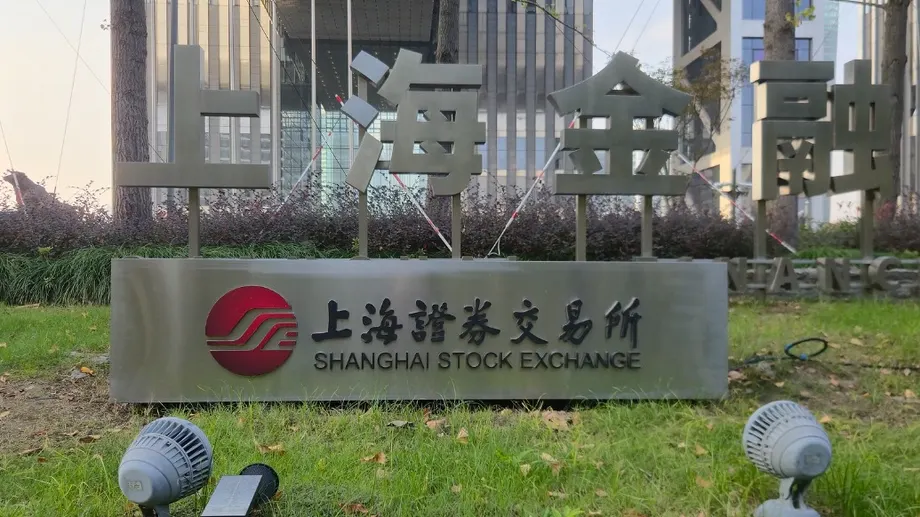
China financial markets are receiving a massive financial break following a coordinated announcement by the country major stock exchanges and clearing house. On November 22, 2026, the Shanghai Stock Exchange published the Notice on Further Reducing Related Fees, detailing a series of cost-cutting measures designed to ease financial burdens for companies and investors. The Shanghai exchange is joined by the Shenzhen Stock Exchange and China Securities Depository and Clearing Corporation in rolling out an extensive package of fee waivers. Together, these coordinated actions are expected to return more than 27.58 billion yuan to market participants through newly introduced cuts alone, while total fee reductions across the Shanghai and Shenzhen markets for the year 2026 will exceed 46 billion yuan.
Contents
- Major Financial Institutions Announce New Fee Reductions
- Shanghai Stock Exchange Details Specific Savings for Market Players
- Shenzhen Stock Exchange Introduces Parallel Relief Measures
- Clearing House Extends Deep Discounts on Specialized Bonds
- Understanding the Mechanics of Exchange and Clearing Fees
- Timeline of Key Policy Actions
- Long-Term Outlook for Market Vitality and Capital Costs
- Main Points
Millions of market participants, ranging from large publicly traded corporations to everyday investors and brokerage firms, stand to benefit from these wide-ranging policies. The reductions touch nearly every corner of the financial ecosystem, including stocks, mutual funds, and corporate bonds. By removing various administrative, trading, and settlement fees, the regulatory bodies aim to lower the barrier of entry and operational costs for businesses trying to raise capital. Market participants have welcomed the relief, noting that these tangible savings provide crucial support during challenging economic cycles.
Shanghai Stock Exchange Details Specific Savings for Market Players
Shanghai Stock Exchange officials structured their latest fee reduction plan to target distinct segments of the financial community, creating savings expected to reach 13.68 billion yuan from the new measures alone. When combined with policies rolled out earlier in the year, total fee reductions on the Shanghai bourse for 2026 will surpass 24 billion yuan. Companies listed on the Shanghai exchange will enjoy a complete waiver on listing fees, alongside free access to the SSE e-service and SSE e-voting platforms. Investors trading on the platform will pay zero transaction handling fees for bonds and asset-backed securities. Meanwhile, financial intermediaries such as brokerages will see trading unit usage fees eliminated completely, while affiliated data centers will offer reduced service charges.
Historical data shows that this relief effort builds upon years of progressive fee cuts implemented by the Shanghai exchange. Official records indicate that from 2021 through 2025, implemented fee reductions totaled over 44 billion yuan, with individual yearly cuts measuring 1.06 billion yuan in 2021, 4.09 billion yuan in 2022, 15.48 billion yuan in 9.89 billion yuan, and 13.50 billion yuan in 2025. This consistent downward trend in exchange fees reflects a multi-year strategy to support market liquidity and reduce overhead for listed entities.
Shenzhen Stock Exchange Introduces Parallel Relief Measures
Shenzhen Stock Exchange leaders issued their own version of the fee reduction notice on the exact same day, creating an additional 13.9 billion yuan in market savings. Total fee reductions across the Shenzhen market for 2026 are projected to exceed 22 billion yuan. Similar to its counterpart in Shanghai, the Shenzhen exchange is systematically removing costs across the listing, trading, and post-trade service phases.
Listed companies in Shenzhen will no longer pay standard listing fees or network投票 charges. Investors will likewise be exempt from bond and asset-backed security transaction handling fees. Brokerage firms and mutual fund managers operating out of Shenzhen will benefit from waived trading unit usage fees and fund listing fees, alongside reduced rates for data communication services provided by exchange subsidiaries.
Clearing House Extends Deep Discounts on Specialized Bonds
China Securities Depository and Clearing Corporation released a complementary set of directives via the Notice on Temporarily Exempting Certain Bond Registration and Settlement Fees, ensuring that post-trade financial clearing costs also plummet. The clearing house will prolong fee waivers for several critical categories of debt instruments over a multi-year horizon starting January 1, 2027, and running through December 31, 2028. Specifically, the institution will continue to waive registration fees, interest distribution fees, and redemption handling fees for green corporate bonds, technology innovation corporate bonds, and privately owned enterprise corporate bonds.
Convertible bonds remain excluded from these particular waivers, and issuers of privately owned enterprise bonds must declare their corporate nature directly to the stock exchanges to qualify. Furthermore, the clearing house will continue to exempt settlement fees for spot trading and agreed repurchase transactions involving standard bonds and asset-backed securities. These continuing concessions build on a foundation of long-running support, as the clearing house has already maintained a five-year streak of waiving issuer services fees for privately owned bonds and lowering overall bond settlement fees.
Understanding the Mechanics of Exchange and Clearing Fees
Financial exchanges and central clearing houses operate as the vital plumbing of modern capital markets, ensuring that trades execute smoothly and ownership transfers securely. Maintaining these massive digital trading engines, secure data centers, and regulatory compliance networks requires substantial capital. Exchanges typically fund these operations by charging small fees on every transaction, listing, and data query processed through their systems.
Waiving these fees means that the governing institutions absorb the operational costs themselves, effectively acting as a financial cushion for the broader economy. When listing fees are eliminated, a growing startup or established corporation keeps more capital to invest in its core business operations. When transaction handling fees disappear, investors retain a larger share of their trading returns, which encourages greater participation and market liquidity.
Timeline of Key Policy Actions
Understanding how these cumulative financial policies took shape requires looking at the sequence of announcements and effective dates governing the current round of fee cuts. Regulatory authorities designed the rollout to provide immediate relief while establishing long-term certainty for corporate planners and institutional investors.
- November 22, 2026: Shanghai and Shenzhen stock exchanges publish their respective notices on reducing related fees
- November 22, 2026: China Securities Depository and Clearing Corporation issues its complementary notice on bond settlement fee exemptions
- January 1, 2027: Extended clearing fee waivers for green, tech innovation, and private enterprise bonds are scheduled to take effect
- December 31, 2028: Expiration date for the newly prolonged fee waiver period established by the clearing house and stock exchanges
Long-Term Outlook for Market Vitality and Capital Costs
Financial authorities have emphasized that these broad-based reductions represent a deliberate effort to lower the aggregate cost of capital in the national economy. Lowering transaction friction helps channel more capital toward innovative sectors, green energy development, and private enterprises that drive employment and economic growth. By removing fees across multiple administrative layers, regulators are working to ensure that capital markets remain an attractive and cost-effective venue for raising funds.
Market observers have noted that the combined savings of more than 46 billion yuan across the Shanghai and Shenzhen exchanges for 2026 provide a substantial boost to corporate balance sheets at a time when businesses navigate shifting global economic conditions. As these policies take full effect, corporations and financial institutions will continue to adapt their capital strategies to take advantage of the reduced fee environment.
Main Points
- Shanghai and Shenzhen stock exchanges announced new fee reduction packages expected to return over 27.58 billion yuan to the market
- Total fee reductions across both major markets for 2026 will exceed 46 billion yuan
- Shanghai introduced 13.68 billion yuan in new fee cuts, bringing its total 2026 reductions above 24 billion yuan
- Shenzhen introduced 13.9 billion yuan in new fee cuts, bringing its total 2026 reductions above 22 billion yuan
- China Securities Depository and Clearing Corporation extended waivers on bond registration and settlement fees through December 2028