Taiex loses 2,635 points and closes at its lowest level of the day
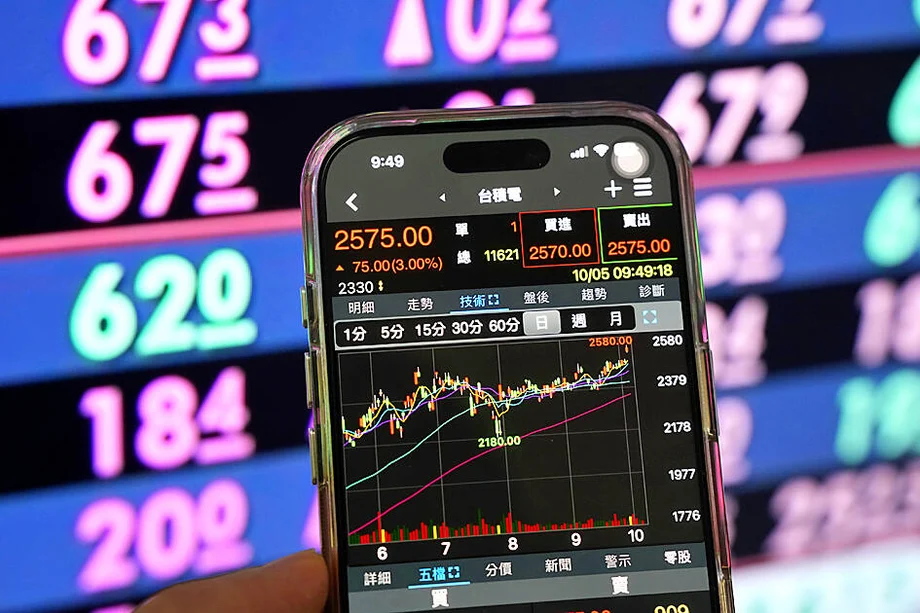
Taiwan's benchmark stock index plunged 2,635.04 points, or 6.03%, to 41,040.08 on Monday, November 16, 2026, as selling swept through semiconductor companies, artificial intelligence suppliers and some of the market's most expensive shares. Trading turnover reached NT$845.06 billion, equivalent to US$25.67 billion.
Contents
- Taiex loses 2,635 points and closes at its lowest level of the day
- How the selling spread through the session
- TSMC's size magnified the damage
- Nvidia concerns meet futures positioning
- Expensive shares and ETFs take heavy losses
- Foreign selling and domestic money tell a broader story
- The Taiwan dollar recovers from its weakest level
- Taiwan falls harder than Japan and South Korea
- Support measures face another test
- Key Points
The decline was the Taiex's second largest daily loss measured in points, behind a fall of 2,953.71 points on July 17. Taiwan Semiconductor Manufacturing Co. (TSMC) alone contributed about 1,000 points to Monday's slide, roughly 38% of the total.
Foreign institutional investors sold a net NT$70.19 billion of shares on the main board, according to Taiwan Stock Exchange figures. Selling by the three major institutional investor groups combined reached NT$114.055 billion, while the Taiwan dollar weakened before recovering part of its losses.
The market fell despite intervention by the National Financial Stabilization Fund. Central bank Governor Yang Chin-long told lawmakers that fluctuations would have been greater without the fund's participation, while describing foreign money leaving Taiwan principally as investors taking profits and adjusting their global investments.
Investors faced several pressures at once: losses in American technology shares, concerns surrounding Nvidia's reported leadership upheaval, uncertainty about financing for the AI industry and positioning before Taiwan index futures settlement on Wednesday. The result was a decline that spread beyond the technology companies at the center of the initial selling.
How the selling spread through the session
The Taiex opened at 43,512.42, down 162.7 points from its previous close. Selling then gathered speed, carrying the index below 43,000 and 42,000 before it finished at the day's low.
More than 1,000 stocks across the listed and over the counter markets declined. Electronics led the retreat, but plastics, chemicals, petrochemicals and machinery companies also faced pressure. An early afternoon recovery proved insufficient to change the direction of the session.
The sequence of events shows how pressure built across several trading days:
- November 6: The National Financial Stabilization Fund's management committee authorized intervention.
- November 13: The Philadelphia Semiconductor Index fell 3.43% in the United States, while TSMC's American depositary receipts lost 1.67%.
- November 16: Taiwan's Taiex fell 6.03%, closing at 41,040.08.
- November 16, overnight trading: Taiwan index futures rose 467 points to 41,248 at the quoted trading snapshot.
- November 18: Futures settlement provides the next scheduled test of positioning in Taiwan's market.
The overnight futures rise gave investors an early sign of buying interest after the cash market closed. Futures prices reflect contracts for a later settlement, however, so the next cash session begins with its own balance of buyers and sellers.
TSMC's size magnified the damage
TSMC fell NT$135, or 5.74%, to NT$2,215. The company represents more than 40% of the local market's total value, giving its share movements a particularly large influence on the benchmark.
The electronics index dropped 6.72%, a deeper decline than the Taiex. Weakness extended across the production chain, from chip design and memory to packaging, servers and power equipment.
MediaTek lost 7.89% to NT$3,795, memory supplier Nanya Technology dropped 9.81% to NT$340, and chip packaging and testing company ASE Technology fell 8.03% to NT$550. Hon Hai Precision Industry, which assembles iPhones and makes AI servers, declined 9.34% to NT$218.50. Delta Electronics fell by its daily limit of 10% to NT$1,120.
Taiwan's concentration in technology helps explain why concerns about AI investment can move the entire market so sharply. A reduction in expected orders can affect several businesses supplying different parts of the same computing system, bringing their shares under pressure together.
Nvidia concerns meet futures positioning
Investors were responding to reports of Jensen Huang's resignation as Nvidia chief executive, alongside concerns about the company's future management, export restrictions and deliveries. Those issues carried particular weight for Taiwanese businesses that supply chips, servers, cooling equipment and other components used in AI systems.
Reports also described a possible delay in increasing production of Nvidia's Vera Rubin computing platform because of constraints in high bandwidth memory supplies. This type of memory moves large amounts of data quickly and is a key component in advanced AI equipment. The timing of Nvidia's management arrangements and any shipment changes remained unresolved.
Ho Wen-kao, an analyst at Good Doctor Investment Consulting, identified management selection, export controls and possible shipment delays as issues investors were trying to assess. He pointed to Nvidia's earnings announcement and management's explanation of AI demand during the week as the next checks on those concerns.
Adam Lin, an analyst at Moore Securities Investment Consulting, also identified a possible connection between selling shares and investors' futures positions before Wednesday's settlement. He described his assessment of foreign institutional activity:
I believe foreign institutional investors were behind the sell-off in these large-cap tech stocks," Lin said. "As they hold a large number of short futures positions, they could reduce their holdings in the spot market to profit from futures ahead of settlement.
A short futures position generally gains value when the underlying market falls. Lin's explanation places some of Monday's pressure in the context of trading around settlement, alongside concerns about company earnings and the industry outlook.
Expensive shares and ETFs take heavy losses
All 37 stocks remaining in Taiwan's group of shares priced at NT$1,000 or more ended lower, and 17 closed at their daily lower price limits. Aspeed Technology finished at NT$10,800 and Global Unichip at NT$7,750. Their declines reduced the value of a standard lot of 1,000 shares by approximately NT$1.2 million and NT$860,000, respectively.
King Slide Works fell 9.58% to NT$7,125 after touching its lower limit during trading. Lienyou Metals and Gold Circuit Electronics slipped below NT$1,000, leaving the group with 37 members. Selling also reached custom chip designers, which had been among the stronger performers the previous week.
Exchange traded funds, or ETFs, transmitted the same market pressure to investors holding baskets of shares. Yuanta Taiwan 50, traded under code 0050, was quoted at NT$97.30 during the session, down NT$5.20 or 5.07%, on volume of 250,761 lots. Foreign investors had bought a net 14,476 lots of the fund on the previous trading day.
Funds seeking twice the daily movement of a Taiwan stock benchmark fell more sharply at the quoted intraday snapshots. Yuanta Taiwan 50's leveraged fund was down 9.56%, while its inverse fund, which seeks to move in the opposite direction, was up 5.14%. Such products target a daily result, making their price movements different from simply holding a conventional basket of shares.
Foreign selling and domestic money tell a broader story
Foreign investors accounted for about 62% of the NT$114.055 billion in combined net institutional selling on Monday, based on their NT$70.189 billion total. Domestic investment trusts sold a net NT$17.963 billion, ending a buying streak of 24 sessions.
Yang said the central bank viewed foreign outflows mainly as profit taking, dividend transfers and global asset allocation rather than panic. Currency specialist Li Chi-chan similarly said foreign investors were sellers but were not rushing to move large amounts of money abroad. He also identified domestic investors taking profits as a source of stock market pressure.
Yuanta Securities Investment Trust said foreign investors had sold nearly NT$3 trillion of main board shares between the start of 2026 and November 13. Over the same period, it said, the market value of their Taiwanese holdings had increased by NT$25 trillion. Rising share prices can increase the value of remaining holdings even while an investor sells part of a portfolio.
Yuanta also estimated that Taiwanese investors had put nearly NT$1 trillion into ETFs during the previous month. It forecast excess savings of NT$8.5 trillion in 2026 and NT$11 trillion in 2027. Those estimates describe savings beyond domestic investment needs; households and businesses decide separately how much to place in shares, deposits or other assets.
The Taiwan dollar recovers from its weakest level
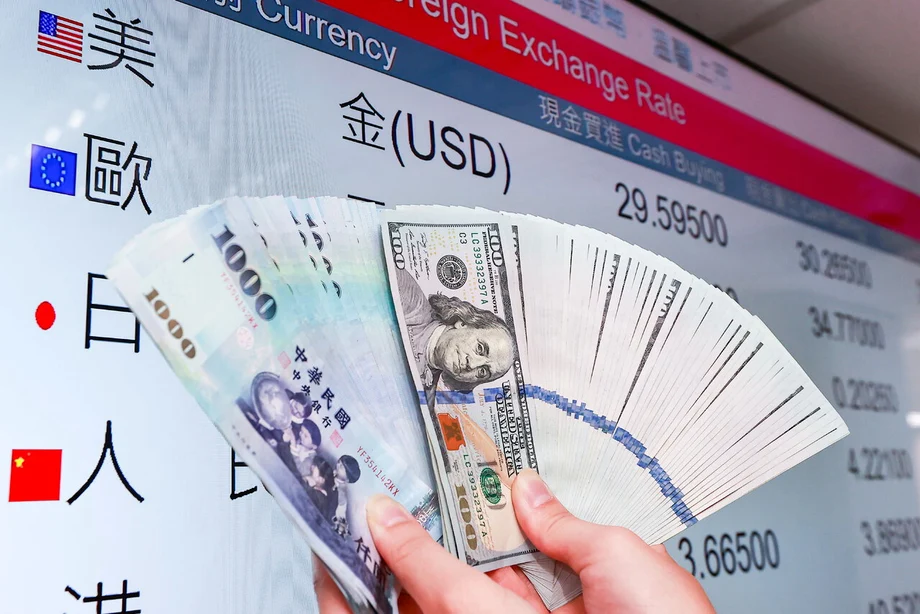
The Taiwan dollar closed at NT$32.886 per US dollar, weakening by NT$0.048 over the session. It had traded near NT$32.97 earlier in the day before recovering as some foreign funds returned and exporters sold dollars.
Combined foreign exchange turnover at the Taipei and Yuanta brokerages reached US$2.332 billion. Morning turnover in the Taipei market was US$843 million, with Li observing that activity had not expanded sharply despite the currency's depreciation. He expected near term trading within NT$32.5 to NT$33 per dollar.
Yang told lawmakers that the central bank generally respected market supply and demand but would act when capital movements became unusually large and concentrated. He said it had intervened roughly weekly from October into early November and had found no evidence this year of the speculative activity it had dealt with the previous year.
A weaker Taiwan dollar means more local currency is needed to buy one US dollar. That affects the cost of imports and overseas spending, while changing the local currency value of exporters' dollar receipts. Yang said officials were also watching oil prices and assessing whether an interest rate increase would be needed at the central bank's December meeting.
Taiwan falls harder than Japan and South Korea
South Korea's benchmark closed at 5,100.51, down 190.03 points or 3.59%, after falling as much as 4.17%. Japan's Nikkei lost 1,480 points, or 2.42%, to 59,662, moving below 60,000.
Taiwan's 6.03% decline exceeded South Korea's by 2.44 percentage points and Japan's by 3.61 percentage points. Technology shares were under pressure across the region following the American semiconductor selloff, with Taiwan's large electronics businesses particularly exposed.
Some Taiwanese companies outside technology attracted buying. Uni-President Enterprises rose 0.26% to NT$78.50, Oceanic Beverages gained 1.56% to NT$6.50, and Wan Hai Lines advanced 1.86% to NT$109.50. Evergreen Marine slipped just 0.19% to NT$257.
Financial shares offered less shelter. Fubon Financial fell 5.88% to NT$152, while Cathay Financial lost 3.93% to NT$110. The session left a mixed picture outside electronics, with selective gains rather than a broad move into every traditional industry.
Support measures face another test
The National Financial Stabilization Fund has an authorized capacity of NT$500 billion. Its committee approved intervention on November 6, and Yang said its participation had reduced market volatility. The Taiwan Stock Exchange also expressed confidence in the longer term AI outlook and said it would cooperate with regulators on stabilization measures when necessary.
Lin expected the fund to increase its support and identified 40,000 as a possible technical support level. Taishin Futures placed potential resistance around 42,400, near the index's average closing level over 10 trading days. Support describes an area where traders expect buying interest; resistance describes an area where they expect selling.
Taishin said the index had fallen below both its five day and 10 day moving averages. It was watching for stronger turnover during a recovery and steadier trading in major electronics shares, including TSMC and MediaTek.
Yuanta's discussion of longer investment periods supplied another caution for investors considering buying after the fall. Its historical test found that about 1% of individual stocks beat 0050 in both the 2003 to 2013 and 2013 to 2023 periods. The fund manager also noted that an investment in 0050 at its launch in 2003 could still have been losing money around the 2008 financial crisis after roughly six years.
Wednesday's futures settlement and Nvidia's earnings during the week are the immediate events investors are watching. The December central bank meeting will address monetary policy against a different set of pressures, including oil prices, inflation and international interest rates.
Key Points
- The Taiex fell 6.03% to 41,040.08 on November 16, its second largest daily point decline.
- TSMC lost 5.74% and contributed about 1,000 points to the benchmark's fall.
- Foreign institutions sold a net NT$70.19 billion of main board shares.
- The Taiwan dollar closed at NT$32.886 per US dollar after recovering part of its intraday decline.
- Market stabilization measures continued, while investors looked toward Wednesday's futures settlement and Nvidia's earnings.