Groundwater finding leads to checks at the seawater intake
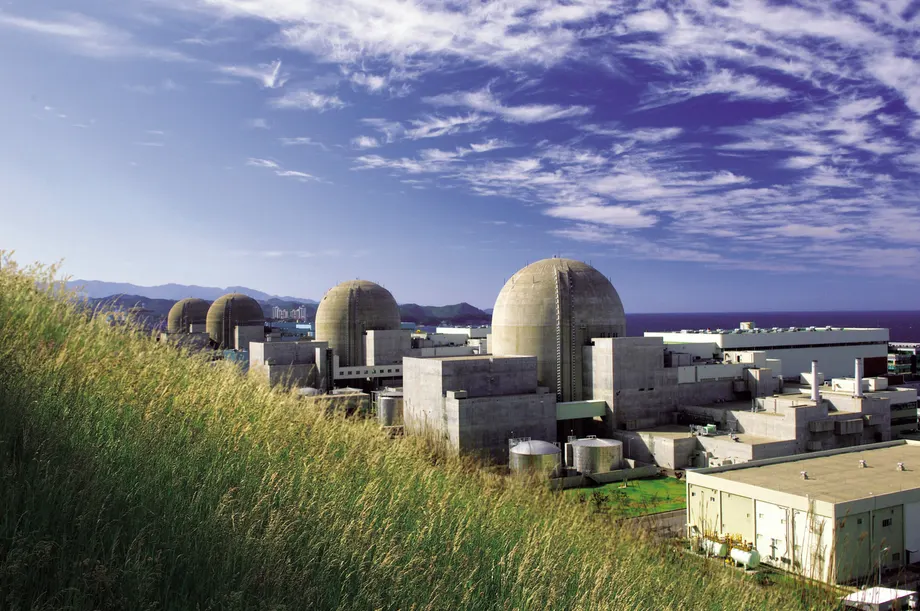
South Korea's nuclear regulator has launched an investigation at the Hanul nuclear power plant in Uljin, North Gyeongsang Province, after tritium concentrations reached about 30,000 becquerels per litre in a groundwater monitoring well. Further testing found 117 becquerels per litre in seawater at an intake used by Hanul reactors 5 and 6.
Contents
- Groundwater finding leads to checks at the seawater intake
- What the two measurements mean
- How the investigation unfolded
- Why a discharge pipe is under scrutiny
- How the concentrations compare with water guidance
- What the operator says about the surrounding area
- Which facilities are involved, and what happened before
- Key Points
The Nuclear Safety and Security Commission said on November 16 that specialists from the Korea Institute of Nuclear Safety, known as KINS, had been sent to investigate. Korea Hydro & Nuclear Power, the plant operator, suspects damage to a pipe carrying treated liquid radioactive waste towards the sea.
The groundwater concentration was 75% of the operator's internal management threshold of 40,000 becquerels per litre. The commission ordered measures to prevent further spread on November 13, the day its local office received the initial groundwater report.
According to the operator, tritium was not detected in seawater samples collected outside the plant's restricted area. Other groundwater monitoring wells and radiation monitors at Hanul showed no unusual readings. Investigators are checking the operator's response and the effects on the surrounding environment.
What the two measurements mean
Tritium is a radioactive form of hydrogen. Hydrogen is one of the elements that make up water, so tritium can become part of water molecules and travel with water through pipes, soil and groundwater. Detecting it at different sampling points helps investigators examine where water containing it may have moved.
A becquerel measures radioactive activity: one becquerel means one atomic nucleus undergoes radioactive decay each second. A concentration of 30,000 becquerels per litre, written as Bq/L, therefore means about 30,000 such events every second in a litre of that water.
The groundwater result and the intake result describe different locations and different types of water. The monitoring well samples water beneath the plant site, while the intake measurement concerns seawater at a facility serving reactors 5 and 6. Keeping those locations clear is essential to understanding the investigation.
The intake concentration of 117 Bq/L was about one two hundred and fifty sixth of the groundwater concentration of 30,000 Bq/L. Investigators will need to examine the suspected release route and water movement to explain the readings at each location.
How the investigation unfolded
The commission, chaired by Choi Won-ho, described a response that began with the groundwater finding and expanded to seawater testing. The operator submitted the seawater results about three days after reporting the initial detection.
- November 13, evening: Korea Hydro & Nuclear Power reported elevated tritium in one groundwater monitoring well to the commission's local office.
- November 13: The commission required measures to prevent further spread, including stopping equipment that could be leaking, and requested analysis of nearby seawater.
- November 16, around 1 p.m.: The operator reported a tritium concentration of 117 Bq/L at the seawater intake and no detection in seawater samples from outside the restricted area.
- November 16: The commission announced that a KINS team had been dispatched for an incident investigation.
The order to stop potentially leaking equipment was directed at containing the suspected release. The investigation described by the commission focuses on the equipment involved, the measures taken by the operator and possible effects beyond the immediate detection points.
Why a discharge pipe is under scrutiny
Korea Hydro & Nuclear Power believes some liquid escaped from a damaged pipe after passing through the plant's radioactive waste treatment system. The pipe carries liquid towards the sea after treatment that includes filtration.
A discharge pipe and a seawater intake perform different jobs. The pipe carries liquid away from the plant, while the intake brings seawater into plant systems. Tritium detected at the intake has prompted investigators to examine how material from the suspected damaged pipe could have reached the sampling location.
The operator pointed to the absence of detected gamma emitting radionuclides, together with normal readings at other groundwater wells and radiation monitors, as reasons for its assessment. Gamma emitting radionuclides are radioactive substances that give off gamma radiation. Tritium releases a different form of radiation, called beta radiation, which is why laboratories test for it separately.
The exact cause, the quantity released, the duration of any leakage and a timetable for completing the investigation have not been announced. Pipe damage remains the operator's proposed explanation while KINS examines the incident.
How the concentrations compare with water guidance
The operator's internal groundwater management threshold is 40,000 Bq/L. The measured concentration of about 30,000 Bq/L was 10,000 Bq/L below that level, yet the finding still led the regulator to require containment measures and wider sampling.
The World Health Organization's guidance value for tritium in drinking water is 10,000 Bq/L. The Hanul groundwater reading was three times that figure. The comparison gives readers another reference point, with a different purpose: the WHO figure concerns water intended for drinking, while the Hanul sample came from a monitoring well within a nuclear plant site.
Radioactive concentration and radiation dose answer different questions. Concentration describes the activity in a volume of water. Dose concerns the radiation received by a person and depends on factors such as the amount taken into the body and the length of exposure. Assessing conditions around Hanul therefore requires attention to where the water travelled and whether people could come into contact with it.
The practical task for investigators is to connect the laboratory results with the plant's plumbing and local environment. The groundwater well, intake seawater and seawater outside the restricted area are separate sampling locations, each providing information about a different part of that picture.
What the operator says about the surrounding area
Hanul Nuclear Power Headquarters said on November 16 that radioactivity in the surrounding environment remained at normal, safe levels. The headquarters, led by Lee Yong-hee, said it had increased analysis of groundwater within the site and marine samples nearby after identifying the tritium.
The operator also said no tritium was detected in the seawater samples taken outside the restricted area. A result described as not detected means that the test did not identify the substance above its detection limit. That limit is the smallest concentration the particular test can reliably identify.
For residents near Uljin, the concrete issue is whether radioactive material has moved beyond plant facilities into places where people use the coast or surrounding water. The regulator has assigned KINS specialists to check environmental effects as well as the operator's actions, while the operator has expanded sampling.
Hanul headquarters said it was preparing measures to prevent a recurrence and would disclose the detailed cause once established. Its stated response combines further testing, investigation of the equipment and follow-up work based on the findings.
Which facilities are involved, and what happened before
The seawater intake where tritium was detected serves Hanul units 5 and 6. Those reactors began operating in 2004 and 2006 respectively. Their shared use of the intake identifies the facility under examination within the wider Hanul complex.
The suspected leak concerns piping associated with liquid radioactive waste after treatment. That makes inspection of the discharge route central to the inquiry: investigators need to determine where any damage occurred and how escaped liquid reached the locations where tritium was measured.
South Korea has faced other incidents involving radioactive material at nuclear plants. In 2019, high tritium concentrations were detected in groundwater and a drainage channel at Wolsong unit 3. In 2024, 2.45 tonnes of cooling water from the spent fuel storage pool at Wolsong unit 4 leaked into the sea.
The Wolsong incidents involved different facilities and release circumstances. At Hanul, the immediate work centres on the suspected discharge pipe, the groundwater finding and the seawater intake result. Establishing that route will allow the operator and regulator to identify repairs and measures to prevent another release.
Key Points
- About 30,000 Bq/L of tritium was measured in one groundwater monitoring well at Hanul, equal to 75% of the operator's internal management threshold.
- Seawater at an intake serving Hanul reactors 5 and 6 contained 117 Bq/L.
- The operator reported no tritium detection in seawater samples outside the restricted area and no unusual readings at other groundwater wells or radiation monitors.
- The regulator required containment measures on November 13 and announced a KINS investigation on November 16.
- The operator suspects a damaged pipe carrying treated liquid radioactive waste. The cause and environmental effects remain under investigation.
- Hanul headquarters has increased groundwater and marine sampling and said it will disclose the detailed cause once confirmed.