Faster industrial approvals, fewer chances to check environmental risks
South Korea's proposed regional industrial zone legislation would limit environmental field investigations to no more than twice a year and generally allow only one additional request to correct assessment documents. Those provisions have drawn warnings that major developments could move ahead with too little information about local wildlife, waterways and seasonal conditions.
Contents
- Faster industrial approvals, fewer chances to check environmental risks
- What Article 23 would change
- Why two surveys may miss important changes
- Who would shape a special zone?
- Animal cell food brings another welfare debate
- Why the labor provisions split the proposals
- Hospitals, schools and land are also at stake
- Corporate investment rules widen the debate
- What happens next in parliament?
- Key Points
Two bills sponsored by Democratic Party lawmakers Park Sang-hyuk and Choi Ki-sang seek to create large industrial zones outside the Seoul metropolitan area. Their shared goal is to attract investment through regulatory exceptions, financial support and tax incentives. Their reach extends beyond factories to employment, housing, hospitals, schools and food produced from animal cells.
The proposals form part of the investment push surrounding a semiconductor cluster valued at 800 trillion won in the southwestern Jeolla region. The environmental provisions matter because the legislation would combine large development projects with limits on how often officials can seek better evidence before giving their assessment opinions.
Neither bill has become law. The Democratic Party plans to consider them together and produce a final version, with the biggest political dispute centering on exemptions from labor protections. Environmental campaigners say the shared assessment provisions deserve scrutiny too.
The measures are titled the Special Act on the Designation and Operation of Superregional Strategic Industrial Special Zones for Locally Led Growth. Behind that lengthy name is a practical choice: how much control should public authorities retain over the conditions attached to industrial investment?
What Article 23 would change
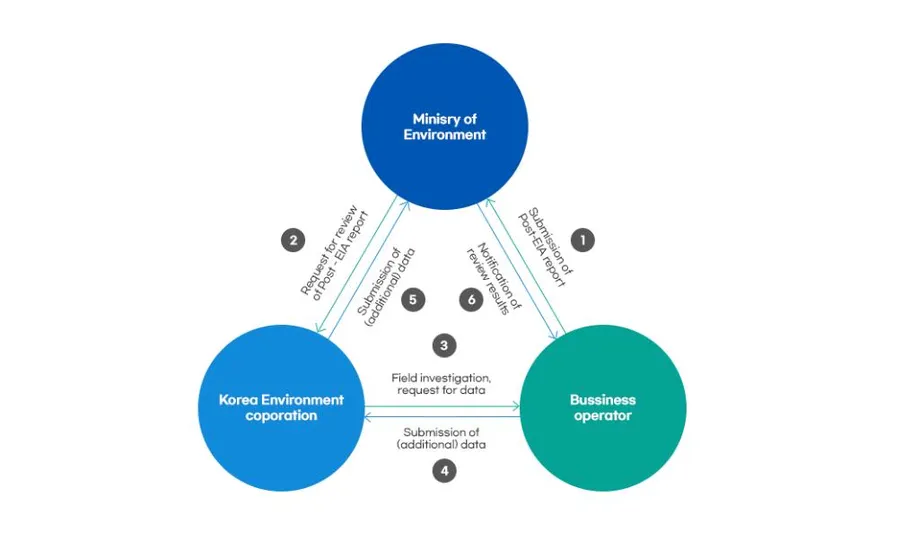
Article 23 in both proposals sets consultation periods of 30 days for strategic environmental assessments, 45 days for environmental impact assessments and 30 days for small project assessments. The minister of climate, energy and environment would have to communicate an assessment opinion within the relevant period.
These basic periods match the existing framework. The proposed wording, however, omits an express provision allowing extensions for unavoidable circumstances. Strategic assessment examines environmental issues at the planning stage, while project assessment considers the effects of a particular development and measures to reduce harm.
Article 23(4) also generally limits the consulting authority to one additional request for documents to be supplemented, subject to grounds set by presidential decree. An exception would apply where serious deficiencies in the same outstanding matters make consultation difficult. The existing framework permits up to two requests for supplementation or adjustment.
For a developer, fewer requests could make the approval process more predictable. For a reviewing authority, each opportunity to seek missing information becomes more consequential. Officials may need answers about water quality, soil, wildlife or pollution controls before they can judge whether a project is environmentally workable.
The legislation also provides that approval as a special leading renewable energy complex would count as obtaining permits and authorizations under 44 laws. That provision would bring many approval processes together, adding to the importance of the checks carried out before approval.
Why two surveys may miss important changes
The proposed ceiling of two environmental investigations a year would replace an approach that allows investigations according to the characteristics of the project and the matters being assessed. Environmental campaigners warn that a fixed ceiling could leave important seasonal conditions unrecorded.
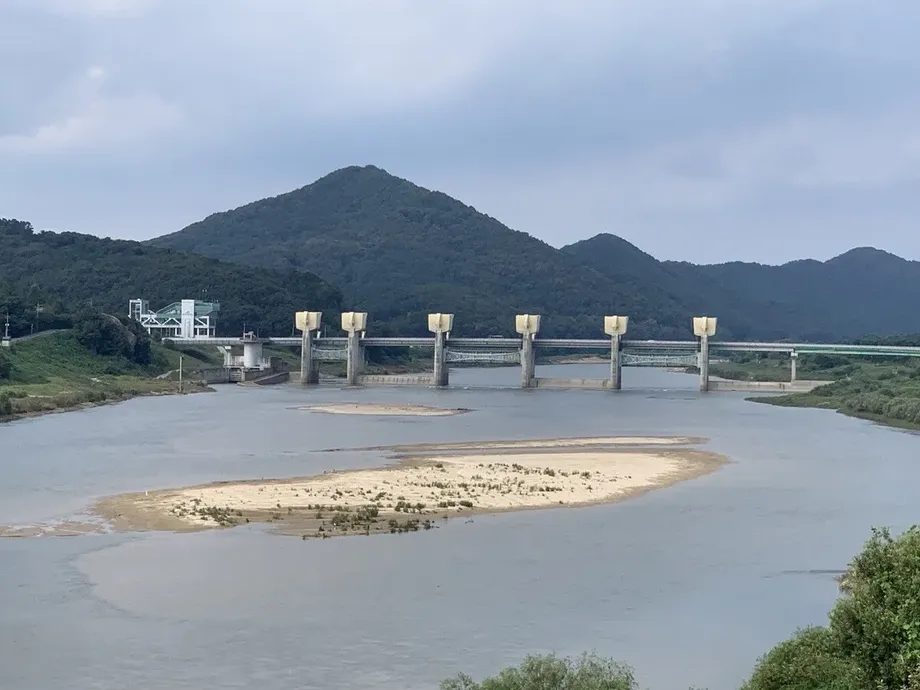
A wetland, river or habitat can look very different during breeding periods, the rainy season and periods of low water. Field observations provide the basic evidence used to predict a development's effects. Missing a relevant period can leave reviewers with an incomplete picture of what lives at a site or how its water behaves.
Ahn Suk-hee, an activist with the Korean Federation for Environmental Movements, described environmental assessment as a way to test a project's environmental suitability and prevent damage before it happens. She criticized the proposals for treating that safeguard as an obstacle to development.
Ahn also warned that the reliability of field data could fall if investigations fail to capture breeding seasons and changes between wet and dry conditions. Her concern connects the survey ceiling with the restriction on requests for further information: limited fieldwork could produce gaps that officials then have fewer opportunities to resolve.
For residents near a proposed industrial zone, these decisions concern the evidence used to assess changes to their surroundings. For businesses, they concern how quickly investment plans can move through review. The dispute is over the rules governing that review before construction begins.
Who would shape a special zone?
Local governments would prepare zone plans and submit them to the industry ministry. Qualifying investment companies could also propose a plan to a local government, which would generally have to accept the proposal unless there were special reasons to refuse.
A plan would cover investment, participating companies, requested regulatory exceptions, land use, financing and living conditions. It would have to be publicly announced for at least 20 days, with a hearing to collect views from residents and businesses.
After submission, relevant ministries would generally have 15 days from notification to provide their review results. Plans involving regulatory exceptions would go through regulatory review, followed by consideration of business feasibility, regional economic benefits, job creation and the suitability of the exceptions. Approval by the prime minister would precede designation by the industry minister.
People's Solidarity for Participatory Democracy, a civic organization, criticized that timetable in its October 21, 2026 statement on the bills. It argued that agencies would receive too little time to examine plans affecting communities and the environment, and called for the legislation to be withdrawn and reconsidered.
The organization also objected to local governments proceeding to resident hearings without first obtaining relevant agencies' views. Its criticism places the order of consultation alongside its duration: residents and agencies would be examining plans through a compressed process, while companies would have a direct route to propose them.
Animal cell food brings another welfare debate
The bills also address food made by growing animal cells. In simple terms, cells are taken from an animal and cultivated to produce food, rather than obtaining all of the food directly from a slaughtered animal.
The proposals would exempt cattle slaughtered for cell collection from livestock product grading. They would also permit cells to be collected from living animals for food production, expanding beyond exceptional purposes such as disease treatment under the existing animal protection framework.
Collection from a living animal would be treated as an animal experiment. That would require compliance with principles aimed at reducing the number of animals used and minimizing pain, together with review by an animal experimentation ethics committee.
Kim Do-hee, chair of the animal rights subcommittee within the environmental health committee of Lawyers for a Democratic Society, raised a more specific concern: repeated collection from living animals would need conditions that reduce suffering. The proposed provisions contain a general requirement to minimize pain but lack concrete limits such as how often collection could occur.
Lee Hyung-joo, head of the Animal Welfare Awareness, Research and Education organization, recognized the potential for food grown from cells to reduce the number of farm animals. She also called for safeguards for animals kept for research as the industry expands. The practical issue is how ethics review and general welfare duties would translate into conditions for repeated procedures.
Why the labor provisions split the proposals
Park's bill contains labor exceptions that Choi's version leaves out. Under Article 132 of Park's proposal, managers and professional workers whose employment income falls within the top 3 percent could enter individual written agreements setting conditions outside several Labor Standards Act protections.
The exception would extend beyond the weekly limit of 52 working hours. It could also cover breaks, paid holidays and additional pay for overtime, night work and holiday work. Detailed occupational coverage, compensation and health protections would be set through presidential decree.
Article 133 would extend the period used to average hours under selective working arrangements to as much as six months. The current period is generally one month, or three months for qualifying research and development work. Selective working arrangements allow workers to vary their schedules within an agreed total over the accounting period.
A longer accounting period makes it possible to concentrate more work into busy months. Using a simplified period of 26 weeks, 13 weeks at 69 hours followed by 13 weeks at 35 hours would average 52 hours a week. Workers could therefore face a prolonged stretch of heavy schedules while the average stayed within that figure.
Article 134 would also allow employment under fixed term contracts for up to four years, compared with the usual two year threshold after which employment is treated as indefinite. Park's proposal includes a payment when employment ends without conversion to an indefinite contract, with the conditions and amount left to the labor minister.
Choi's proposal removes those three central exceptions and some medical and education provisions. The two versions also differ on treatment of foreign invested companies. His version still contains an exception expanding eligible work for dispatched employees, making the remaining labor clauses part of the parliamentary negotiations.
Hospitals, schools and land are also at stake
Articles 61 and 62 of Park's proposal would allow medical institutions established by corporations founded by foreign nationals and pharmacies exclusively for foreigners. Current medical law generally restricts hospital establishment to medical professionals, nonprofit bodies and public institutions.
Na Baek-joo, a professor of preventive medicine at Eulji University, warned that hospitals established with foreign capital could seek greater revenue through treatments outside national health insurance coverage. The proposal does not spell out the same insurance exclusion associated with foreign established hospitals under Jeju's special framework, leaving insurance treatment a material part of the policy discussion.
Education provisions would expand local government leaders' authority over the designation of specialized and gifted schools. Lee Deok-nan, head of the education and culture division at the National Assembly Research Service, warned that local leaders could prioritize immediate regional demands or short term policy results over a broader assessment of educational needs.
Housing support would include priority access to land for employee housing and exceptions to normal supply rules. The civic organization People's Solidarity for Participatory Democracy argued that the bill lacked provisions addressing relocation disputes and failed to provide replacement standards for housing supply rules it would set aside.
The organization also criticized granting land acquisition powers to special zone institutions that need land, rather than only to project implementers. For existing residents, compulsory acquisition and relocation could become as consequential as the arrival of new factories, schools or housing.
Corporate investment rules widen the debate
The legislation would also relax ownership requirements within certain corporate holding structures. People's Solidarity for Participatory Democracy said a qualifying holding company's second tier subsidiary could own at least 50 percent of a third tier subsidiary, instead of the current requirement of 100 percent.
Put simply, reducing the ownership requirement would allow outside investors to take a larger stake in a venture that currently must be wholly owned within that corporate chain. The exception could help semiconductor companies assemble investment partnerships for costly projects.
The civic organization objected to combining that change with exceptions concerning financial leasing and possible public fund investment. It argued that the package would loosen controls on concentrated corporate power while sharing investment risks with public money.
Other contested provisions would permit the names of hazardous chemicals to be withheld where they qualify as business secrets. Lee Jong-ran, a labor consultant with the semiconductor worker advocacy group Banollim, warned that information about chemicals can matter to nearby residents as well as employees.
Businesses support the broader package as a way to reduce the costs of investment, recruitment and operations. Six major business organizations welcomed the labor exceptions and said employer and worker discussions could develop suitable compensation and health protections. Supporters see a combined package of infrastructure, finance and regulatory changes as necessary to attract industrial investment outside the capital region.
What happens next in parliament?
The Democratic Party intends to examine the bills together. The central decisions include which labor exceptions survive, how much environmental review time is available and which safeguards are written into the law rather than left to later rules.
The legislative sequence has included conflicting descriptions of the filing dates. The parliamentary chronology places Park's submission on October 20 and Choi's on October 21, 2026; initial descriptions grouped both proposals under October 20.
- October 20, 2026: Park submitted the version containing the major labor exceptions.
- October 21: Choi submitted the alternative version, and People's Solidarity for Participatory Democracy published its call for withdrawal.
- October 23: A scheduled sixth working meeting involving labor, management and government was postponed.
- October 28: The postponed working meeting was scheduled to take place.
Democratic Party floor leader Han Byung-do said the party would hear competing views before settling the legislation. Speaking at the National Assembly, he described the approach to deliberations:
We will not set a deadline, but will allow sufficient deliberation and debate. We will listen broadly to different voices and develop a final version through joint consideration of the bills.
The Ministry of Employment and Labor likewise said talks had no predetermined deadline. Party leaders nevertheless identified the legislation as a priority for the regular parliamentary session. No final passage date was given.
The negotiations therefore extend beyond the question of longer working hours. Both proposals retain environmental provisions that would govern how officials examine major developments. The final text will determine how investment support is paired with requirements protecting workers, animals and the communities where the zones would be built.
Key Points
- Both proposals would create industrial zones outside the Seoul metropolitan area with regulatory exceptions and financial support.
- Environmental investigations would be capped at twice a year, with generally one additional request to supplement assessment documents.
- Basic assessment consultation periods would remain 30 or 45 days, without an express extension provision.
- Animal cell collection for food would require ethics review, but welfare advocates want concrete safeguards for repeated procedures.
- Park's version includes major exceptions on working hours and fixed term employment that Choi's version omits.
- Lawmakers plan joint consideration of the bills; the next postponed labor dialogue meeting was scheduled for October 28, 2026.