Taiwan Implements Emergency Market Defenses
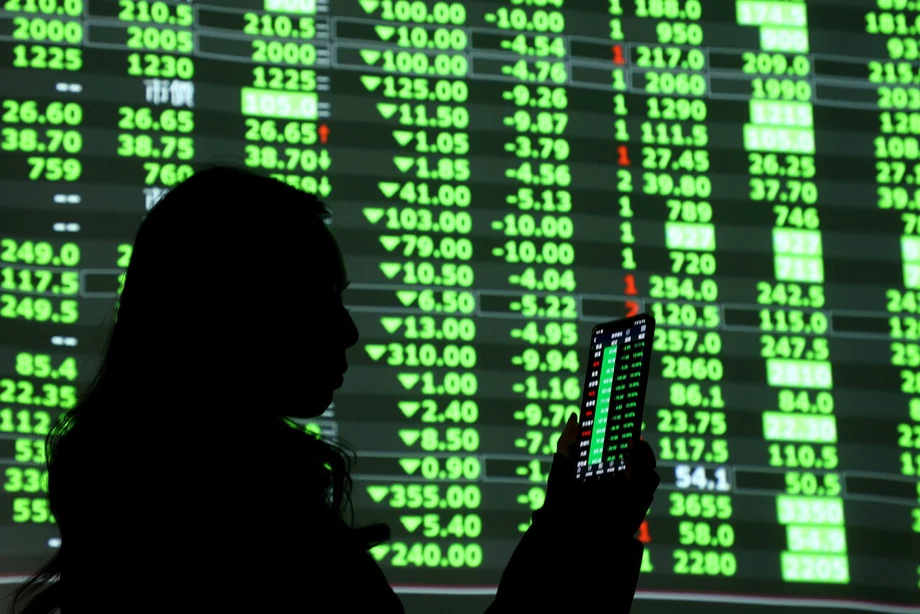
Taiwan introduced stringent trading restrictions to stabilize its technology-heavy stock market following a historic market collapse driven by mounting anxieties over artificial intelligence valuations and global capital outflows. The Financial Supervisory Commission announced that starting November 23, 2026, all short selling below the previous trading day closing price is prohibited across listed equities, over-the-counter shares, and Taiwan depositary receipts. This regulatory intervention follows a steep weekly decline that erased billions of dollars in market capitalization and triggered widespread margin calls for retail investors.
Contents
- Taiwan Implements Emergency Market Defenses
- Tightening Margin Rules and Restricting Bearish Bets
- Historical Context and Comparative Market Scale
- Timeline of the Crisis and Stabilization Efforts
- Government Financial Backing and Economic Fundamentals
- Retail Impact and Alternative Investment Shifts
- The Bottom Line
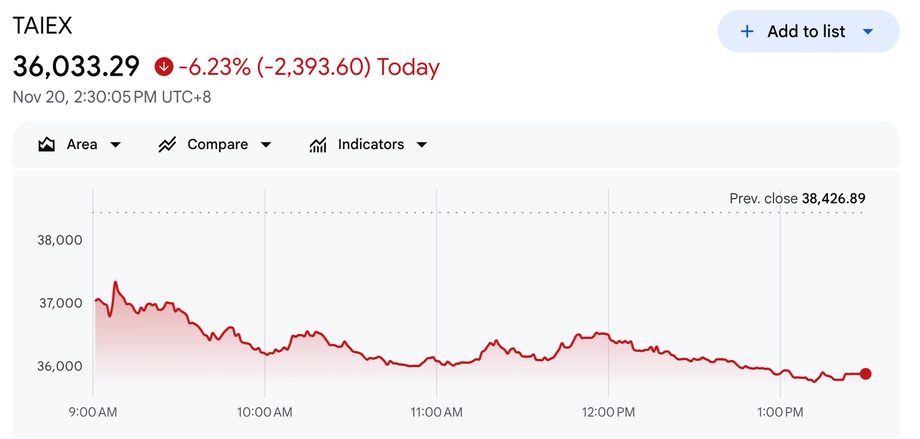
The market turmoil originated from mounting Wall Street doubts regarding whether massive capital expenditures poured into artificial intelligence infrastructure will generate adequate financial returns. These international pressures crossed the Pacific rapidly, pushing the benchmark Taiex index down by 17.5 percent over a single week. On November 20, 2026, the index suffered a record-breaking single-day plunge of 2,393.60 points, or 6.23 percent, to close at 36,033.29. Trading turnover surged to NT$877.35 billion as panicked participants rushed to adjust their holdings.
Securities exchange officials convened emergency consultations with ten major brokerage houses to formulate coordinated defense mechanisms. Taiwan Securities Association Chairman Chen Jun-hong addressed the unfolding crisis by explaining the rationale behind the emergency adjustments to broker credit rules. Chen Jun-hong stated that the market was experiencing severe over-adjustment and non-rational selling pressure that required immediate official intervention to prevent cascading liquidations.
Recent concerns over potentially tighter US regulation of artificial intelligence, the returns on massive capital expenditures, company-specific factors and margin-financing risks have raised doubts about the outlook for the AI industry, triggering several days of sharp declines in US stocks and spilling over into Taiwan and other Asian markets.
Tightening Margin Rules and Restricting Bearish Bets
Regulatory authorities expanded emergency measures beyond the short-selling prohibition to make bearish market bets significantly more expensive and difficult to execute. The Financial Supervisory Commission raised the minimum margin requirement for margin short sales from 130 percent to 150 percent while also instructing lenders to halt the external lending of shares. Furthermore, authorities temporarily suspended the acceptance of applications from securities firms wishing to issue new put warrants, which are financial instruments that increase in value when underlying asset prices decline. Securities and futures commission merchants carrying out legitimate business hedging operations remain exempt from the new shorting restrictions.
These restrictions target short sellers, who are traders that borrow shares and sell them immediately in the hope of buying them back later at a lower price to pocket the difference. However, market analysts point out that the restrictions cannot prevent existing shareholders from dumping equities they already own. Barclays noted that retail investors forced to meet margin calls contributed heavily to the downward momentum by liquidating positions to satisfy debt obligations. As stock prices fall, brokers demand additional collateral from investors who borrowed money to purchase shares. When those investors fail to provide extra funds, brokers automatically sell the pledged shares, creating a self-reinforcing downward spiral.
Historical Context and Comparative Market Scale
Taiwan's benchmark index reached an intraday record peak of 49,968.92 on October 6, 2026, before succumbing to a severe correction that wiped out 14,230.24 points by November 20. The magnitude of this retreat surpasses anything seen in decades, marking the worst weekly slide for the index since 1991. Semiconductor giant Taiwan Semiconductor Manufacturing Company experienced substantial downward pressure, with its shares falling 4.76 percent to close at NT$2,000 during the worst of the rout, while its American depositary receipts plunged 9.48 percent in overseas trading.
National Financial Stabilization Fund officials noted that the contemporary financial landscape dwarfs the environment in which the support mechanism was originally created. The fund committee highlighted that listed and over-the-counter companies reached a total market capitalization of NT$118.099 trillion by late November, representing a tenfold expansion compared to 2000. Foreign institutional investors hold 46.85 percent of the local market, a dramatic increase from 8.44 percent at the turn of the century. Daily trading turnover has similarly exploded, averaging NT$4,833 billion in 2026 compared to just NT$1,137 billion when the fund was established. Foreign capital outflows have broken historical records, led by a single-day net selloff of NT$3025.55 billion on October 15, 2026.
Timeline of the Crisis and Stabilization Efforts
The swift escalation of market volatility prompted a rapid sequence of government interventions and historic trading milestones over a period of several weeks.
- October 6, 2026: The benchmark Taiex index reached an all-time intraday high of 49,968.92 points before broader technology sector doubts took hold.
- November 6, 2026: The National Financial Stabilization Fund committee held an extraordinary meeting and authorized its tenth market support operation following an intraday plunge.
- November 9, 2026: Technology shares rebounded strongly, pushing the index up by about 2,648 points during trading to retake the 42,000 level.
- November 16, 2026: The index suffered its second-largest daily point decline on record, falling 6.03 percent to 41,040.08 amid renewed foreign selling.
- November 20, 2026: The Taiex plummeted 2,393.60 points to close at 36,033.29, capping a record weekly loss of 17.5 percent.
- November 23, 2026: Comprehensive emergency rules took effect, banning short selling below the previous close and raising margin requirements.
Government Financial Backing and Economic Fundamentals
Executive Yuan Premier Cho Jung-tai convened emergency consultations with economic ministry leaders to coordinate comprehensive fiscal defenses against the systemic market correction. Cabinet spokesperson Michelle Lee outlined the official government stance regarding the downturn, emphasizing that the dramatic drop in local shares primarily reflects synchronized losses in overseas technology markets rather than any fundamental weakness in domestic economic conditions. Government officials also moved to accelerate legislative amendments aimed at expanding the statutory capacity of the National Financial Stabilization Fund to NT$500 billion, ensuring sufficient financial firepower to support asset prices.
Economic ministry officials consulted with major industrial trade groups and reported that current stock volatility has not impacted corporate order intake or operational continuity. Industrial production, export performance, and technology infrastructure investments continue to show robust underlying strength. Government projections indicate that national export totals remain on track to surpass $1 trillion by 2027, bolstered by enduring global demand for advanced hardware components and artificial intelligence data center equipment.
Retail Impact and Alternative Investment Shifts
The sharp market correction transformed trading behavior among individual participants, who utilized fractional share platforms to acquire discounted shares of major technology firms and exchange-traded funds even as institutional investors reduced their exposure. This retail dip-buying phenomenon contrasted sharply with the massive institutional liquidations carried out by foreign funds and leveraged speculators. Meanwhile, alternative asset categories experienced noticeable capital rotation as investors searched for stability outside traditional equity sectors.
Market participants also monitored currency movements closely as the Taiwan dollar weakened toward 33 per U.S. dollar, reflecting persistent demand for foreign exchange despite domestic equity recovery efforts. Financial institutions, including major life insurance companies, received explicit guidance from regulators to suspend external share lending programs and recall previously lent securities to restrict the supply of shares available for bearish speculation.
The Bottom Line
The implementation of sweeping trading curbs and active state intervention mark a critical turning point for Taiwan's capital markets as authorities attempt to neutralize non-rational selling pressure. Key developments in this ongoing financial defense include:
- The Financial Supervisory Commission fully prohibited short selling below the previous trading day closing price across all listed equities.
- The minimum margin requirement for margin short sales was raised from 130 percent to 150 percent to increase the cost of bearish bets.
- The National Financial Stabilization Fund continued active share purchases backed by its statutory funding capacity of NT$500 billion.
- The benchmark Taiex index suffered a record weekly decline of 17.5 percent, closing at 36,033.29 on November 20, 2026.
- Government officials initiated legislative steps to expand state rescue funds while confirming that domestic economic fundamentals and export projections remain robust.