A symbolic price returns on a brutal day for Taiwan shares
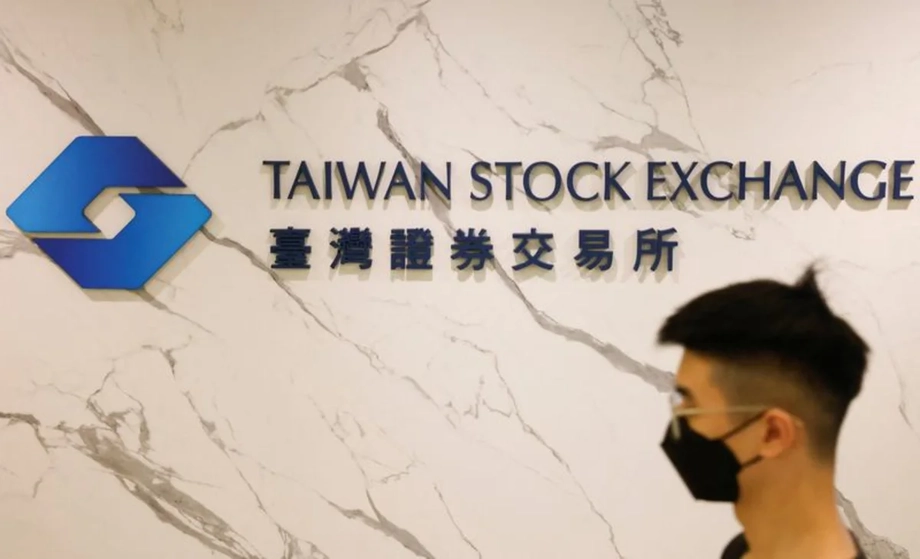
TAIPEI, Nov. 20, 2026: Taiwan Semiconductor Manufacturing Co. (TSMC) closed at exactly NT$2,000 a share after falling as low as NT$1,970, putting the world's largest contract chipmaker back at a price its chairman once jokingly predicted. The stock lost NT$100, or 4.76%, and finished at its lowest level in seven months.
Contents
- A symbolic price returns on a brutal day for Taiwan shares
- What is behind the reported pause on Chinese orders?
- How US controls reach a company making chips in Taiwan
- Why the restrictions matter to AI companies and phone makers
- Export approvals are facing political scrutiny too
- Nvidia's leadership change is settled, but AI concerns remain
- From a record high to the price called egg white
- What to Know
The wider market fell even harder. Taiwan's Taiex index ended at 36,033.29, down 2,393.60 points, or 6.23%, on turnover of NT$877.35 billion. The closing drop was the third largest in the index's history. The index had reached a high of 37,646 during the session and a low of 35,739.
TSMC's close at NT$2,000 came after a final burst of buying. The last trading round included orders for 10,745 shares, enough to keep the price at that round number. Other major stocks also fell: Hon Hai, known internationally as Foxconn, closed at NT$210; MediaTek at NT$3,350; Quanta Computer at NT$252; and Evergreen Marine at NT$233.
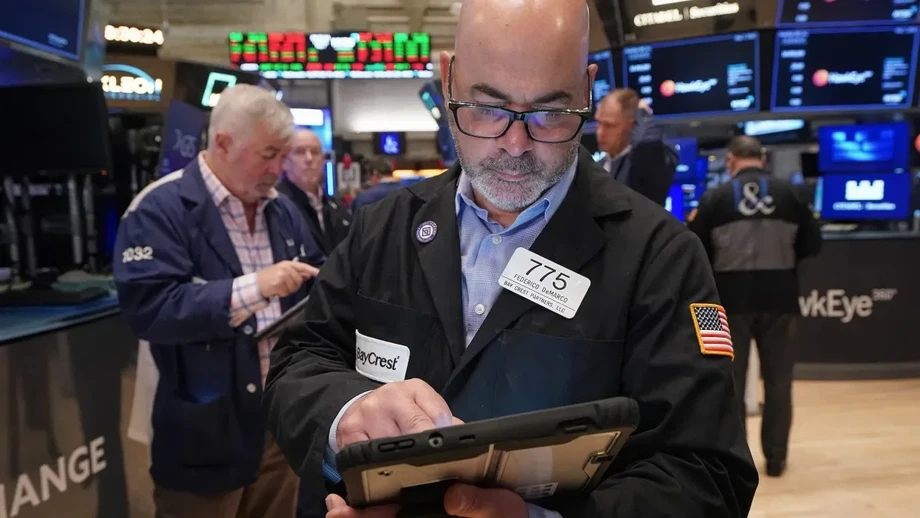
The market was reacting to several pressures at once, including a broad fall in US shares, concern about spending on artificial intelligence infrastructure and tighter US controls on advanced chips destined for China. TSMC's reported pause on some Chinese customer orders added a direct concern for the company, although it has not confirmed the details of those orders.
What is behind the reported pause on Chinese orders?
Reports about TSMC's guidance say Chinese chip designers must obtain a US export license to continue affected orders using 16 nanometer or more advanced manufacturing processes. Without a license, those orders are to be paused. The reported guidance says customers may generally use more mature 28 nanometer or 40 nanometer processes, as long as their chips do not use high bandwidth memory or require advanced packaging.
A nanometer is a measure associated with the features built into a chip. Smaller process numbers generally refer to more advanced manufacturing, which can help pack more computing power into a chip. High bandwidth memory, or HBM, moves large amounts of data quickly and is often paired with powerful processors used to train or run AI systems. Advanced packaging joins chip components so they can work together more efficiently.
TSMC said it would not comment on market rumors, while confirming that it knew of the new rules issued by the US Commerce Department's Bureau of Industry and Security, or BIS, and would follow applicable laws and regulations. On Monday, Nov. 16, the Commerce Department issued an interim final rule that took effect Thursday, Nov. 19, to close a loophole allowing Chinese firms to lease computing power from data centers in third countries. The reported customer instructions have not been publicly confirmed in detail by TSMC. The names of affected customers, the number of orders paused and the timing of any license decisions have not been disclosed.
How US controls reach a company making chips in Taiwan
Washington's restrictions cover more than finished chips shipped directly from the United States. US export rules can also apply to some products made abroad using US technology. That matters to foundries such as TSMC, which manufacture chips designed by other companies and may need to check where a chip will go and who will ultimately use it.
On Dec. 2, 2024, BIS announced controls on 24 types of semiconductor manufacturing equipment, three types of software tools and high bandwidth memory. It also added 140 organizations to the US Entity List and changed entries for 14 others. The rules were intended to restrict China's ability to produce advanced chips for military and other uses. Some parts had a compliance date of Dec. 31, 2024. BIS described the action in its December 2024 export controls.
On Jan. 15, 2025, BIS announced additional requirements for foundries and packaging companies exporting certain advanced computing chips. The rules broadened when a license is required and set out exceptions tied to approved chip designers and packaging providers, including checks of the finished chip. BIS also added 16 organizations to the Entity List, including China's Sophgo Technologies. The agency presented the changes as a way to strengthen checks against diversion to restricted buyers in its January 2025 foundry rules.
Those measures show how export controls can affect a foundry even when it is not the seller of a finished AI system. A chip designer places an order, a foundry makes the silicon, and packaging companies may assemble it with memory. Rules can require checks across those steps, rather than relying only on the final shipment crossing a border.
Why the restrictions matter to AI companies and phone makers
Advanced chips are central to AI because they can perform many calculations at once. Large groups of processors help train an AI model, the process of teaching software patterns from data, and run it when people use it. Limits on access to advanced manufacturing, HBM or packaging can therefore make it harder for a company to build high performance AI processors.
The reported controls could affect Chinese technology companies that have sought alternatives as access to some Nvidia chips has been restricted. Names mentioned in coverage include Baidu's Kunlun chip business and ByteDance, the company behind TikTok. The same restrictions may also reach processors designed for consumer products: a smartphone chip made using a controlled process could require a license even if it is not designed for AI. That could create delays for brands such as Xiaomi, OPPO and vivo, whose chips are made by outside foundries.
Licensing is a permission process, not an automatic ban. A company may apply, but production and delivery can be delayed while it waits for an answer. The rules described for customers without approval also place limits on the manufacturing processes and technologies they can use.
For TSMC, checks may involve the customer's ownership, business partners, packaging arrangements and intended destination for the chip. More checks can add work and make delivery schedules less predictable. If some orders are delayed or canceled, manufacturing capacity may later be used for customers elsewhere, including companies expanding AI services. How much capacity can be shifted, and how quickly, has not been stated.
Export approvals are facing political scrutiny too
US controls are being debated alongside questions about how earlier export licenses were handled. Documents released by the US House Foreign Affairs Committee on Nov. 19 were described as showing that Nvidia and AMD applied between December 2025 and May 2026 to export about 3.4 million AI chips to China, with more than 879,000 approved as of May 2026. The reported approved buyers included Tencent, with 150,000 chips; Alibaba, with 75,000; and Baidu, with 43,000.
An export license permits a transaction under specified conditions; it does not mean the chips were delivered. The committee's documents were also described as questioning whether some transactions involved intermediary companies that could hide the eventual destination. Some approvals involved companies designated by the Department of War as Chinese Military Companies, including Alibaba and Tencent. Nvidia's applications also included requests to rely on possible chip-smuggling fronts. Those questions add pressure on US officials to check both the buyer and the route a chip takes after it leaves a manufacturer.
The scrutiny is part of a wider change in oversight. US rules have increasingly focused on whether advanced computing products could reach restricted customers through companies or facilities in other places. That makes customer checks and records of shipments more important for manufacturers and their business partners.
Nvidia's leadership change is settled, but AI concerns remain
TSMC's share fall also came during a difficult period for Nvidia, a major customer and a central company in the AI chip market. Nvidia cofounder Jensen Huang resigned as chief executive on Nov. 12, and Chief Financial Officer Colette Kress became interim chief executive. The company's board said on Nov. 17 that it did not intend to reinstate Huang. The transition is covered in Huang's resignation and the board's later decision against a return.
Nvidia also said it had stopped shipping licensed Hopper data center products to China, closing a permitted sales route for those chips. That announcement came amid tighter scrutiny of advanced chip sales. Nvidia's statement on shipments is detailed in the China shipment halt.
The leadership decision and the China sales restrictions are separate developments, but both add uncertainty around the market for AI processors. A change at a major chip customer can draw investor attention to its plans, while export limits can affect which products reach particular buyers. The available market figures do not isolate how much of TSMC's one day fall came from any one concern.
From a record high to the price called egg white
TSMC shares had climbed to a record NT$2,590 on Oct. 6, after trading through steep rises and falls earlier in the year. They crossed NT$2,000 in February, fell to NT$1,770 on March 9, and moved back above NT$2,000 on April 10. On Nov. 6, the stock fell to NT$2,020 during a severe market selloff. It recovered to NT$2,395 on Nov. 11 before this week's losses brought it back to NT$2,000.
The price has a local story behind it. When TSMC shares were still in the NT$1,000 range, chairman C.C. Wei was asked at a dinner how high the stock might rise. He joked that if the yolk were removed from an egg, what would remain? The answer was egg white, a Taiwanese language pun on 2,000. Nine months later, the stock has returned to that level.
- Feb. 25: TSMC shares first reached NT$2,000.
- March 9: The stock fell to NT$1,770.
- Oct. 6: TSMC reached a record NT$2,590.
- Nov. 11: Shares rebounded to NT$2,395.
- Nov. 20: TSMC closed at NT$2,000, while the Taiex fell 2,393.60 points.
What to Know
- TSMC closed at NT$2,000, down NT$100, after reaching an intraday low of NT$1,970.
- The Taiex fell 2,393.60 points to 36,033.29, its third largest closing drop.
- Reports say affected Chinese customers need US licenses for certain orders using 16 nanometer or more advanced processes.
- TSMC says it will follow applicable rules but has not confirmed the reported customer and order details.
- US controls place greater attention on chip production, packaging, customer checks and possible diversion to restricted buyers.