January payments depend on two budget deadlines
Taiwan has set aside NT$235.7 billion for proposed payments of NT$10,000 per eligible person in 2027, with the first transfers targeted for January 26. The timetable depends on lawmakers passing the central government budget by January 5 and President Lai Ching-te promulgating it by January 20.
Contents
- January payments depend on two budget deadlines
- What the government has put in the budget
- The proposed timetable, from approval to collection
- Who would qualify for NT$10,000?
- Five ways to receive the payment
- Automatic deposits and newborn deadlines need care
- Why the NT$20,000 proposal is still contested
- Record tax receipts leave a smaller central windfall
- Technology growth and trading activity support the plan
- Wait for the registration announcement and watch for scams
- Key Points
The government hopes to begin paying before the Lunar New Year holiday starts on February 4. People choosing cash collection would wait longer: withdrawals at designated ATMs are planned from February 15, followed by post office counter payments on February 22.
As of November 15, 2026, the administration was still planning for NT$10,000 per person. An opposition proposal to double the payment to NT$20,000 had advanced in the legislature but had not completed its final vote.
The funding debate turns on a large gap between nationwide tax receipts and the extra money available to the central government. The Ministry of Finance estimates that 2026 tax revenue will exceed the budget by NT$110 billion to NT$160 billion nationwide. Under the allocation rules, the central government expects an additional NT$30 billion to NT$60 billion, while local governments are expected to receive NT$70 billion to NT$100 billion above their budgets.
What the government has put in the budget
The Executive Yuan submitted the proposed 2027 central government general budget to the Legislative Yuan in late August. It includes NT$235.7 billion for the cash distribution, within planned revenue and expenditure of NT$3.9266 trillion each.
Government documents use year 116 for 2027 under Taiwan's Republic of China calendar. Year 117 is 2028, the year in which an extended collection period for some newborns would end.
The planned NT$10,000 distribution represents about 6% of proposed general budget expenditure, calculated from NT$235.7 billion divided by NT$3.9266 trillion. The administration says it intends to fund the payment through increased tax revenue associated with economic growth and technology industry activity.
President Lai and the finance ministry have set conditions for the programme: balancing revenue and expenditure, protecting other government programmes, avoiding use of accumulated surpluses from earlier years, and maintaining what they call substantive zero borrowing.
The wider budget still includes NT$179 billion in financing needs after debt principal repayments are counted. The ministry puts borrowing at 4.6% of expenditure. In practical terms, the government plans to cover current spending with current revenue while arranging financing for debt coming due.
The proposed timetable, from approval to collection
Premier Cho Jung-tai outlined the January payment target at an October 8 Cabinet meeting. The finance ministry's schedule makes legislative approval and presidential promulgation the steps that unlock registration and distribution.
The proposed sequence is:
- October 16, 2026: Lawmakers voted to send the opposition NT$20,000 bill directly to a second reading and party negotiations.
- January 5, 2027: Target date for the legislature to complete the final reading of the general budget.
- January 20: Target date for presidential promulgation. Preliminary registration is also contemplated from this date.
- January 25: Regular online registration is planned to open.
- January 26: First payments are targeted, including eligible advance registrations, automatic deposits and distribution through prepared recipient lists.
- February 15: Designated ATM cash collection is planned to begin.
- February 22: Post office counter collection is planned to begin.
- August 31: Proposed collection deadline for the general public.
- January 31, 2028: Proposed extended deadline for eligible babies born from August through December 2027.
The January dates are planning targets. Final registration procedures, eligibility rules and payment dates await government announcements following the budget process. If approval takes longer, households will have to wait for a revised schedule.
For families planning holiday spending, the practical difference is substantial: the first transfer channels are scheduled before the holiday, while both ATM and post office collection would begin afterward. Eligible automatic deposits are also included in the first payment group.
Who would qualify for NT$10,000?
The proposed programme has no income exclusion. Eligible people would receive the same NT$10,000 regardless of earnings, with qualification based primarily on nationality, household registration or specified residence status.
The finance ministry's planned categories include:
- Nationals with household registration in Taiwan.
- Nationals without household registration who have obtained residence permits.
- Foreign nationals holding permanent residence permits.
- Spouses of Taiwan nationals from China, Hong Kong, Macau or other countries who hold residence permits.
- Government personnel posted overseas on official duties and accompanying dependents who hold Republic of China nationality.
- Eligible newborns born in Taiwan by December 31, 2027.
Household registration is Taiwan's official record of a person's registered household and civil status. The proposal also expressly includes nationals without that registration when they hold the required residence permission.
Foreign residents would qualify through the specified categories, including permanent residence or qualifying status as a spouse. The administration plans to use eligibility rules similar to previous cash distributions.
A household with four qualifying members would receive NT$40,000 under the government plan. Parents or legal guardians would be able to register on behalf of children younger than 13.
Five ways to receive the payment
The finance ministry plans five distribution channels so that receiving the money would not depend entirely on internet access or a visit to a bank.
- Online registration for a transfer into a designated account.
- Automatic deposits into existing accounts for specified benefit recipients.
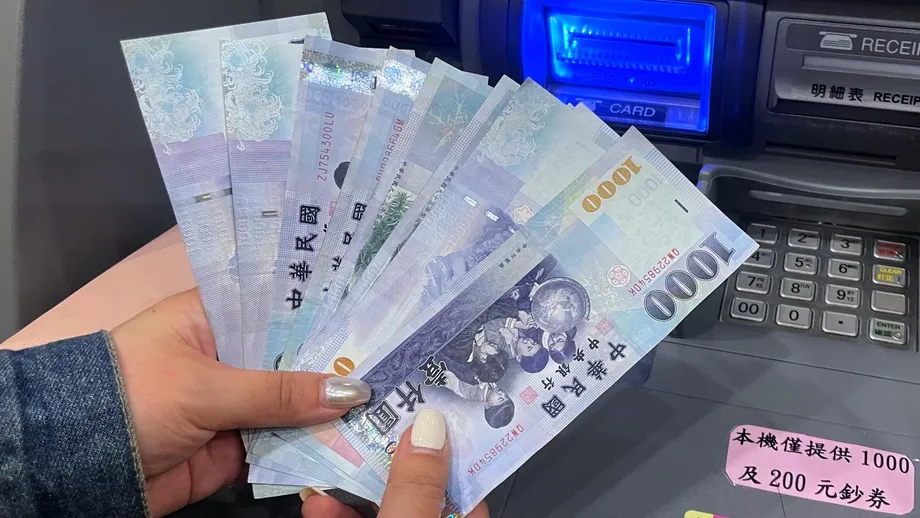
- Cash withdrawals at designated ATMs using a bank card and required identity information.
- Cash collection at post office counters with the required identification.
- Distribution using prepared recipient lists for certain remote communities and people in correctional institutions.
Online registration is expected to require an identity or residence permit number, a financial account number and a National Health Insurance card number. Proposed arrangements include staggering the first five days by the final digit of an identity document number.
Post offices are also expected to stagger the first week by odd and even identity number endings. People using a health insurance card without a photograph are expected to need an original identity card or residence permit as well.
Seventeen financial institutions, including Chunghwa Post, are expected to participate in ATM collection. The planned network includes eight public sector banks and institutions such as Cathay United, CTBC, E.Sun and Shanghai Commercial & Savings Bank.
Township offices or police stations would help prepare distribution lists in designated remote areas. Correctional institutions would arrange payments for people in their custody. These channels would give people without convenient access to an ATM or post office another way to collect.
Automatic deposits and newborn deadlines need care
Automatic payment is planned for specified groups whose accounts are already used for government benefits. Examples under discussion include recipients of disability living allowances and elderly farmer allowances.
The final list of eligible benefit programmes has not been approved. Lists describing ten automatic payment categories draw on the 2025 distribution and include labour insurance pensions, national pensions, certain retirement payments and specified welfare allowances.
People expecting an automatic deposit should check the eventual announcement against the exact benefit they receive. Previous arrangements distinguished between receiving a particular allowance and having low income or disability status. Accounts with recent returned transfers also required attention.
Newborns have a separate timing issue. The proposal includes eligible babies born in Taiwan through December 31, 2027, extending eligibility beyond the general August 31 collection deadline.
For babies born between August 1 and December 31, the proposed deadline is January 31, 2028. This would allow parents of children born late in the year to complete collection after the general payment window closes.
Why the NT$20,000 proposal is still contested
The Kuomintang caucus has proposed a special statute on sharing economic gains and stabilising livelihoods that would require payments of NT$20,000 per person. On October 16, lawmakers voted 52 to 40 to send the bill directly to a second reading and negotiations between political parties.
That procedure moved the bill forward without completing passage. The next possible plenary consideration was November 17, while the KMT wanted a final vote before the November 28 local elections. KMT Tainan mayoral candidate Hsieh Lung-chieh had publicly suggested November 20 as a target.
Doubling the government payment would raise the estimated cost to more than NT$470 billion. KMT legislator Lai Shyh-bao has argued that reducing proposed supplementary spending could free money for the larger distribution.
Deputy Finance Minister Juan Ching-hwa has argued that the larger payment would require borrowing and put existing programmes under pressure. Explaining the administration's objection, he said:
If you want to raise it from NT$10,000 to NT$20,000, borrowing will be necessary, and that will surely crowd out [funding for] existing projects, impacting fiscal stability,
Juan described the larger proposal as costing roughly 13% of general budget expenditure. Using the NT$3.9266 trillion spending total and a NT$470 billion estimate gives about 12%; the cost estimate for the larger programme is stated as exceeding NT$470 billion.
Record tax receipts leave a smaller central windfall
The Ministry of Finance's November 11 figures show nationwide net tax receipts of NT$566.9 billion in October, up 35.8% from a year earlier. Receipts for January through October reached NT$4.1383 trillion, up 25.8%, with both totals setting records for their respective periods.
Deputy director of tax statistics Liu Hsun-jung said the ministry's annual forecast used the high and low outcomes of the previous three years and the central and local allocation ratios under the revised Act Governing the Allocation of Government Revenues and Expenditures.
The central government's expected NT$30 billion to NT$60 billion above budget would cover about 6% to 13% of a payment programme costing roughly NT$470 billion. Most of the funding for NT$20,000 payments would therefore need to come from other resources, spending changes or borrowing.
Large annual growth and a smaller excess over budget can exist together because they compare different things. Annual growth compares collections with the previous year. Revenue above budget compares collections with the amount lawmakers already expected to receive.
The 2026 budget review had already raised budgeted tax revenue by NT$600 billion, while a supplementary budget proposal added another NT$82.8 billion. Higher expectations leave a smaller gap between actual collections and the budget.
By October, central government tax receipts were NT$2.8579 trillion, or 92.8% of the annual budget target. Local government receipts were NT$1.1487 trillion, or 87.7% of their target.
Technology growth and trading activity support the plan
The administration has presented the payment as a way to share gains associated with artificial intelligence and broader economic growth. Its cited forecast puts annual growth at 11.05%, revised from 9.64%, following growth of 14.15% in the first half.
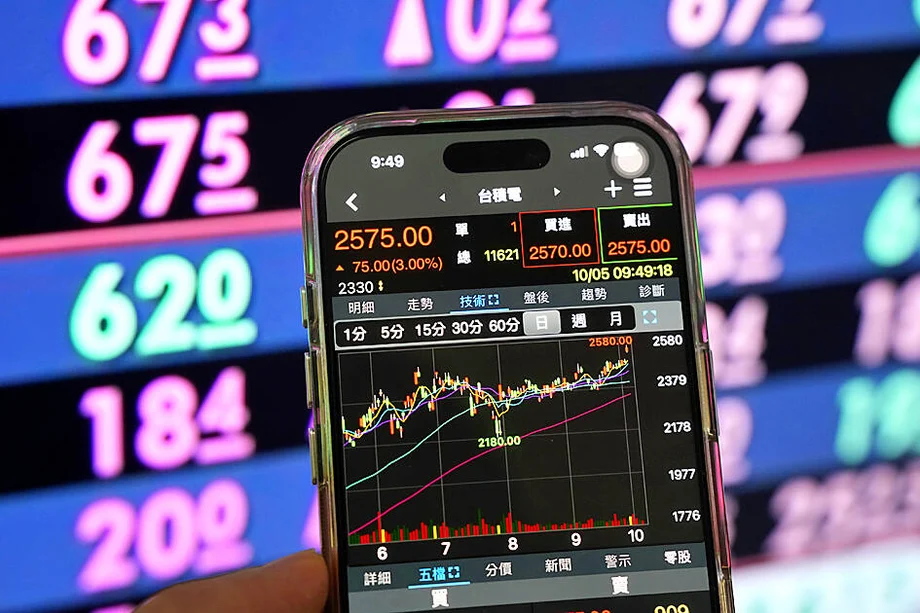
Tax data show several contributors. During the first nine months, nationwide receipts reached NT$3.5714 trillion, increasing by NT$700.4 billion, or 24.4%. Securities transaction tax contributed NT$506 billion, up NT$307.7 billion.
That increase in securities transaction tax accounts for about 44% of the total rise in receipts over those nine months. Corporate income tax brought in NT$1.0028 trillion, up NT$185.3 billion, while business tax reached NT$623 billion, up NT$120.3 billion.
October securities transaction tax reached NT$52.3 billion, up 72.6% from a year earlier, despite falling share prices during the month. Transaction tax depends on trading activity, so heavy buying and selling can support collections during a market decline.
Liu said market volatility and changes in international political and economic conditions could affect trading and later tax collections. Property related revenue was weaker: land value increment tax fell 2.8% during the first nine months to NT$50.4 billion.
Wait for the registration announcement and watch for scams
The new registration website had not been announced as of November 12. The website used for the previous payment programme was taken down after that project ended on May 22, 2026.
Some descriptions of the coming programme anticipate reuse of the earlier address. People should wait for the government's announcement before submitting identity details or account information.
The finance ministry has warned against messages directing people to enter bank passwords, card passwords or verification codes. It also says officials will not telephone recipients to demand transfers through an ATM or online banking.
Taiwan's 165 fraud prevention hotline can help check suspicious messages. For now, households can prepare identification and check their account details while watching for the budget decision and the formal payment instructions.
Key Points
- The government has proposed NT$235.7 billion for payments of NT$10,000 per eligible person.
- January 26 is the first payment target, conditional on budget approval by January 5 and promulgation by January 20.
- ATM collection is planned from February 15 and post office collection from February 22.
- The NT$20,000 opposition bill had not completed its final vote as of November 15, 2026.
- Expected central tax revenue above budget would cover about 6% to 13% of the larger payment's estimated cost.
- The general collection deadline is proposed for August 31, with an extension to January 31, 2028, for eligible babies born from August through December.
- Final eligibility details, automatic deposit categories and registration arrangements await government announcements.