Historic Market Drop Shakes Investors Across Taiwan
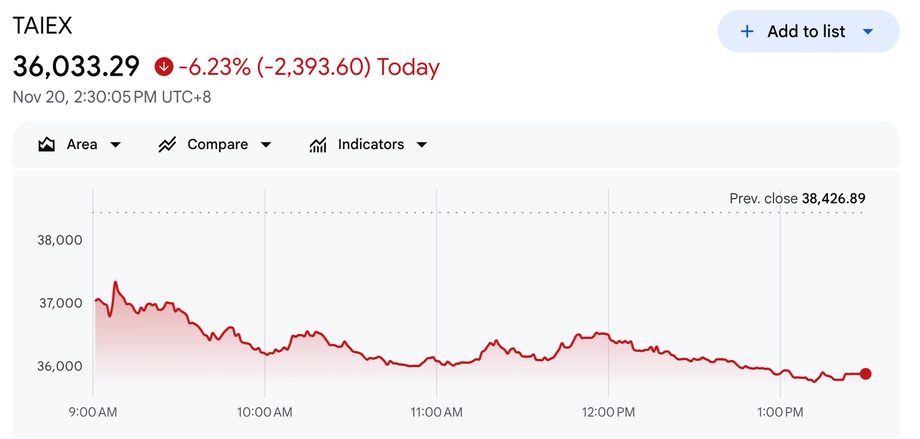
Taiwan financial markets suffered a historic blow on Friday, November 20, 2026, when the benchmark index crashed 2,393.60 points to close at 36,033.29 points with a total market turnover of 8,773 billion New Taiwan Dollars. This staggering decline marked the third-largest single-day point drop in the history of Taiwan stock trading. The losses pushed the index down nearly 6.23 percent in a single session, dragging the market to a seven-month low. Selling pressure proved relentless across the board as large technology pillars and high-priced equities experienced massive liquidations. Throughout the week, the benchmark index accumulated a brutal loss of 7,641.83 points, representing a weekly drop of 17.5 percent. Market participants watched in disbelief as the broader downturn erased the tremendous gains accumulated earlier in the autumn season.
Contents
- Historic Market Drop Shakes Investors Across Taiwan
- Global Headwinds and Artificial Intelligence De-leveraging
- Global Depositary Receipts and Currency Exchange Dynamics
- Heavyweights Face Downward Pressure and Institutional Resilience
- Supply Chain Diversification and Custom Silicon Opportunities
- Long-Term Valuation Targets and Strategic Stock Analysis
- Timeline of Recent Market Developments
- At a Glance
The current market correction began in earnest after the benchmark index touched an all-time high of 49,968.92 points on October 6, 2026. From that historic peak down to the recent intraday low of 35,738.68 points, the market has surrendered an astonishing 14,230.24 points, translating to a sharp correction of roughly 28.48 percent in just one and a half months. Over-the-counter stocks suffered an even more severe beating, with the secondary index sliding 22.02 points or 7.72 percent on Friday to finish at 263.31 points. That level completely erased the gains accrued since December of the previous year, measuring a massive 39.69 percent drop from its early October peak of 435.72 points. The rapid retreat forced regulatory authorities to activate a second wave of emergency market stabilization measures, commonly known as a restriction on short selling, yet the intervention failed to halt the overwhelming wave of sell orders.
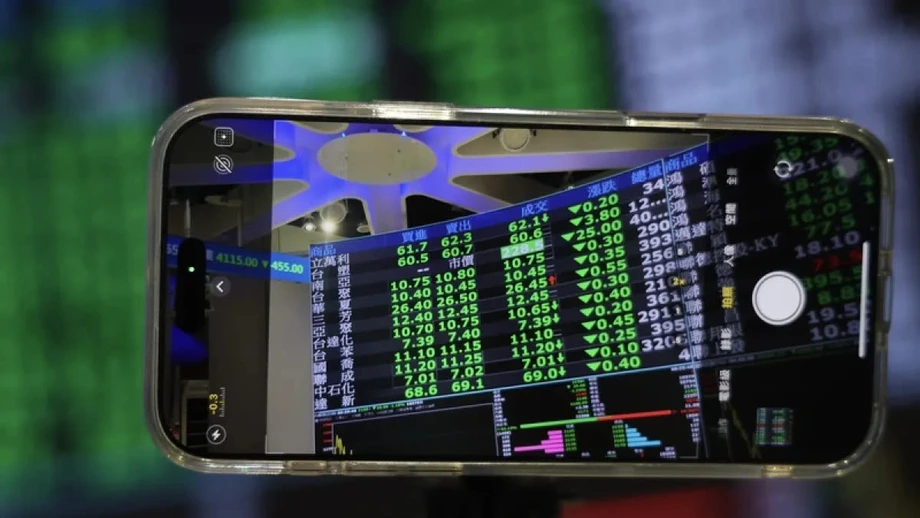
Market breadth reflected absolute panic as approximately 365 listed companies hit their daily downward limit on Friday. The elite club of thousand-dollar stocks shrank dramatically to only 30 companies remaining above the milestone. Among the casualties were high-profile market leaders such as ASPEED Technology and Global Unichip, which joined 23 other elite stocks in tumbling to their respective daily limits. Only a single company, Innovative Service, managed to defy the broader carnage, surging against the tide to hit its daily upper limit of 1,295 New Taiwan Dollars. Despite the severe emotional distress rippling across trading floors, veteran financial analysts and institutional managers urged market participants to avoid blind panic selling and instead evaluate the fundamental earning power of underlying corporations.
Global Headwinds and Artificial Intelligence De-leveraging
The sudden market breakdown was driven by a powerful confluence of external geopolitical and industry headwinds that triggered a massive de-leveraging cycle across artificial intelligence and semiconductor themes. Investor confidence suffered a major jolt following high-profile executive departures at major artificial intelligence pioneers, tightening export controls imposed by the United States on shipments to China, and market anxieties regarding potential regulatory restrictions that an incoming political administration might place on domestic artificial intelligence development. These macroeconomic and sector-specific shocks forced a complete repricing of valuations across the technology supply chain. Although artificial intelligence infrastructure newcomer Anthropic recorded a stellar debut surge of over 17 percent on its initial public trading day, the positive momentum failed to spill over into Asian hardware markets already gripped by deep anxiety.
Institutional voices pointed out that multiple cross-currents compounded the technical weakness in domestic equities.玉山投信基金經理人陳詩晴 noted that the United States Federal Reserve maintained a hawkish monetary policy stance, solidifying market expectations for further benchmark interest rate hikes in the upcoming December policy meeting. Combined with sudden uncertainties surrounding leadership changes at graphics processor giant NVIDIA and reports of a bumpy transition between semiconductor chip generations, the short-term technical structure of the market turned decidedly fragile. First Securities Investment Consulting Chairman黃詣庭 offered perspective on the velocity of the sell-off, noting that the correction moved with exceptional speed and depth. While acknowledging that investor confidence had completely shattered and panic ruled the trading sessions, he suggested that the current valuation levels had already priced in a vast majority of the prevailing negative concerns, making valuations increasingly attractive for long-term participants.
Global Depositary Receipts and Currency Exchange Dynamics
The pressure on domestic technology heavyweights found a direct reflection in international markets through the performance of overseas depositary receipts. Taiwan Semiconductor Manufacturing Company traded on the New York Stock Exchange under the ticker symbol ADR closed at 319.145 United States Dollars on November 20, 2026, plunging 32.945 United States Dollars for a sharp single-day decline of 9.36 percent. Because each unit of the overseas security represents five ordinary common shares traded on the local exchange, analysts calculated the equivalent domestic value using the official foreign exchange closing rate of 32.936 New Taiwan Dollars per United States Dollar recorded on that same date. This translation placed the theoretical parity value of the semiconductor giant at approximately 2,102.27 New Taiwan Dollars per share.
Reviewing the preceding ten trading sessions reveals the intense volatility that characterized the overseas equity vehicle leading up to the market crash. On November 19, the security closed at 352.09 United States Dollars, translating to a local equivalent of 2,319.7 New Taiwan Dollars. Earlier in the month, the security enjoyed robust buying interest, peaking on November 11 at a closing price of 413.35 United States Dollars, which equated to a domestic share value of 2,716.5 New Taiwan Dollars amid an exchange rate of 32.860. The rapid erosion of value over the subsequent days underscored the magnitude of global institutional capital withdrawal from high-flying technology equities. This cross-border pricing mechanism served as a leading indicator for the heavy selling pressure that subsequently overwhelmed the domestic trading sessions on Friday morning.
Heavyweights Face Downward Pressure and Institutional Resilience
Domestically, the four largest market capitalization pillars bore the brunt of the institutional liquidation. Industry bellwether Taiwan Semiconductor Manufacturing Company saw its share price briefly fracture below the psychological milestone of 2,000 New Taiwan Dollars during the intraday trading session, hitting a low of 1,970 New Taiwan Dollars before stabilization funds stepped in with aggressive late-session buying. The equity ultimately recovered to finish down 100 New Taiwan Dollars, or 4.76 percent, at exactly 2,000 New Taiwan Dollars. Similarly, electronics assembly giant Hon Hai Precision Industry dropped 10.5 New Taiwan Dollars, or 4.76 percent, to end the day at 210 New Taiwan Dollars. Meanwhile, prominent technology leaders MediaTek and Delta Electronics both suffered maximum downward limit moves, closing out the session at their respective floor prices.
Despite the frightening downward velocity, prominent market strategist 杜金龍 maintained a steadfast long-term outlook, arguing that the foundational valuation of the primary semiconductor manufacturer had reached a solid floor. He noted that external concerns regarding temporary order adjustments, such as market rumors that Apple allocated a portion of its processor orders to competitor Intel, temporarily dampened short-term momentum. However, foreign institutional investors continued to elevate their earnings per share forecasts and target prices for the foundry leader. Financial experts emphasized that the broader supply chain remains structurally secure regardless of individual corporate leadership transitions. 國泰投顧證期顧問部協理郭經緯 explained that even if a dominant designer experiences a temporary loss of market share and orders pivot toward competing firms, those processing orders ultimately remain anchored within Taiwan's robust manufacturing ecosystem.
Supply Chain Diversification and Custom Silicon Opportunities
The rapid acceleration of custom silicon development by global technology titans is actively reshaping the investment landscape for domestic supply chain participants. As major cloud service providers and consumer electronics giants design their proprietary application-specific integrated circuits to reduce reliance on off-the-shelf processors, specialized design houses stand out as primary beneficiaries. Industry experts highlighted that specialized design service providers and system-on-chip innovators are well-positioned to capture surging engineering demand. Companies equipped to handle advanced packaging and custom silicon architectures will continue to secure robust order flows as the broader artificial intelligence hardware ecosystem matures beyond general-purpose accelerators.
This strategic shift mitigates the systemic risks associated with single-company volatility. When market leadership experiences transitional friction, capital naturally rotates into secondary technology sub-sectors possessing high earnings visibility. Analysts encouraged investors to look past headline-driven panic and examine specialized niches within the semiconductor and electronic components industries. The ongoing demand for customized computing power ensures that domestic engineering talent and advanced manufacturing nodes remain indispensable to global technology advancement, creating underlying operational resilience that transcends daily stock price fluctuations.
Long-Term Valuation Targets and Strategic Stock Analysis
Looking past the immediate market panic, senior market analysts outlined optimistic multi-year operational targets for key domestic equities based on fundamental earnings expansion. For the premier semiconductor foundry, projected earnings per share are anticipated to reach approximately 110 New Taiwan Dollars for the current year, climbing to an estimated 128 to 130 New Taiwan Dollars the following year, and potentially touching 150 New Taiwan Dollars in the subsequent period. Applying a conservative price-to-earnings multiple of 20 yields a targeted share price of 3,000 New Taiwan Dollars, with more aggressive projections suggesting that surging artificial intelligence deployment could eventually lift earnings per share toward 200 New Taiwan Dollars. Key technical parameters for the equity include a major resistance level at 2,345 New Taiwan Dollars, an upward wave initiation point at 2,020 New Taiwan Dollars, a strong support zone at 2,135 New Taiwan Dollars, and an underlying asset value calculation near 1,952 New Taiwan Dollars.
Beyond the primary foundry, market strategists drew attention to several prominent corporate groups showing strong growth credentials. MediaTek emerged as a major artificial intelligence powerhouse driven by explosive demand for custom silicon chips, with institutional projections scaling its future earnings per share higher and driving discussions of lofty price targets. Power management infrastructure leader Delta Electronics was highlighted for its crucial role in the ongoing electrical revolution powering modern data centers, with forecasted earnings supporting a robust valuation framework. Additionally, long-established electronics manufacturer Lite-On Technology gained recognition for its multi-decade operational stability and rising exposure to artificial intelligence power supply requirements, proving that foundational industrial strengths continue to attract sophisticated capital.
Timeline of Recent Market Developments
- October 6, 2026: The benchmark index reaches an all-time closing peak of 49,968.92 points.
- November 11, 2026: Overseas depositary receipts hit a monthly high closing price of 413.35 United States Dollars.
- November 18, 2026: Foreign depositary receipts trade near 362.62 United States Dollars amid stable currency exchange rates.
- November 20, 2026: Overseas depositary receipts tumble 9.36 percent to close at 319.145 United States Dollars.
- November 20, 2026: The domestic stock market suffers a historic single-day point crash of 2,393.60 points, closing at 36,033.29 points.
At a Glance
- The benchmark index dropped 2,393.60 points on Friday to close at 36,033.29 points, marking the third-largest single-day point decline in history.
- A total weekly loss of 7,641.83 points erased roughly 28.48 percent of market value from the all-time high achieved in early October.
- Overseas depositary receipts closed at 319.145 United States Dollars on November 20, translating to a local share equivalence of 2,102.27 New Taiwan Dollars.
- Approximately 365 listed companies hit their daily downward limit as investor confidence experienced severe short-term friction.
- Veteran analysts maintain a constructive long-term outlook, citing robust corporate earnings growth and strong institutional accumulation in key technology pillars.