Thailand Team Visits Tokyo to Secure Digital and Manufacturing Pledges
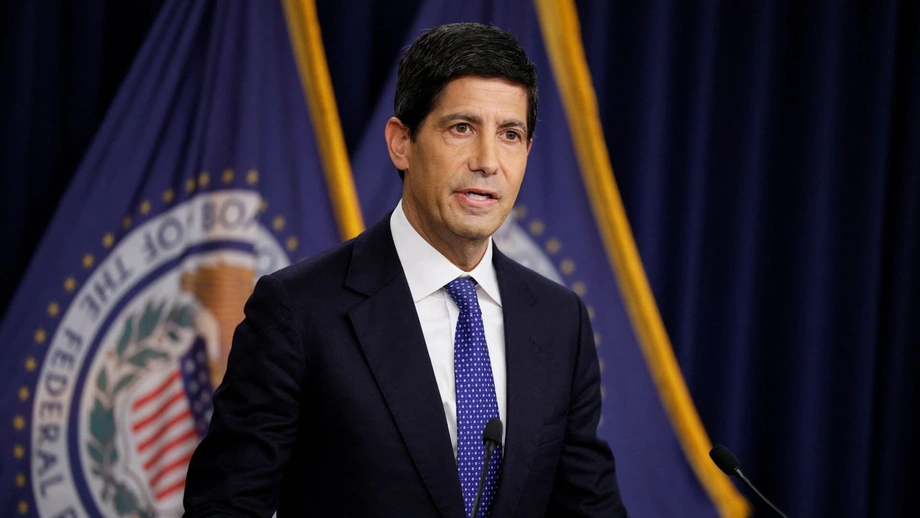
Thai government officials travelled to Tokyo to meet business leaders between November 17 and 20, 2026. Deputy Prime Minister and Finance Minister Ekniti Nitithanprapas led the delegation, which aimed to secure long-term investments in digital infrastructure, advanced manufacturing and technology. The talks brought together representatives from the Board of Investment and major industrial associations to encourage Japanese companies to expand operations in Thailand. The mission followed three main principles known as Trust, Second Take-off and Made with Thailand. Officials sought to position the country as a stable regional hub for companies facing economic pressures and rising trade costs at home.
Contents
- Thailand Team Visits Tokyo to Secure Digital and Manufacturing Pledges
- NTT Global Data Center Proposes Expansion Under Strict New Standards
- B.Grim Power and Japanese Partners Fund Digital Infrastructure
- Automotive Giants Commit Billions to Future Vehicle Production
- Semiconductor Strategy Aims for Advanced Manufacturing and Jobs
- Hard Disk Drive Expansion and Made with Thailand Goals
- The Essentials
The delegation included Industry Minister Varawut Silpa-archa, Finance Ministry Permanent Secretary Lavaron Sangsnit, and Board of Investment Secretary-General Narit Therdsteerasukdi. Japanese investments in Thailand have a long history, particularly in the automotive and electronics sectors. However, annual applications for investment promotion from Japanese companies have fallen behind other regional competitors in recent years. The government used the meetings to reassure investors and introduce updated policies designed to support high-value industries. These measures build on earlier discussions regarding data center investment incentives announced by the Board of Investment. Officials stressed that future growth must provide tangible benefits for local workers and communities rather than relying solely on capital inflows.
NTT Global Data Center Proposes Expansion Under Strict New Standards
Delegates visited the NTT Data Mitaka EAST Data Center in Mitaka, Tokyo, accompanied by Mr. Yoshimura Gaku, who serves as vice president of NTT Global Data Centers Japan. NTT Global Data Centers has more than 25 years of experience in the sector, operating over 160 facilities across 20 countries with a total IT load capacity of approximately two gigawatts. The company has already established operations in Thailand and received promotion approval from the Board of Investment for two projects located in Bangkok and Chon Buri. During the discussions in Tokyo, the company expressed interest in expanding its footprint to support rising demands from artificial intelligence applications. Japanese representatives asked the Thai government to speed up construction approval processes to match fast-moving global infrastructure markets.
The Thai government recently introduced new rules to manage the rapid expansion of digital facilities. The Cabinet approved a regulatory framework on November 10, 2026, creating a centralized review mechanism called the Data Center One Stop Service. Facilities must now meet strict standards regarding electricity and water consumption, environmental protection and community impact. The rules require operators to demonstrate clear benefits for the local economy, including technology transfer and workforce training. The government's focus on quality investments reflects concerns raised during data center power requests that highlighted strain on national energy resources and the need for careful planning.
B.Grim Power and Japanese Partners Fund Digital Infrastructure
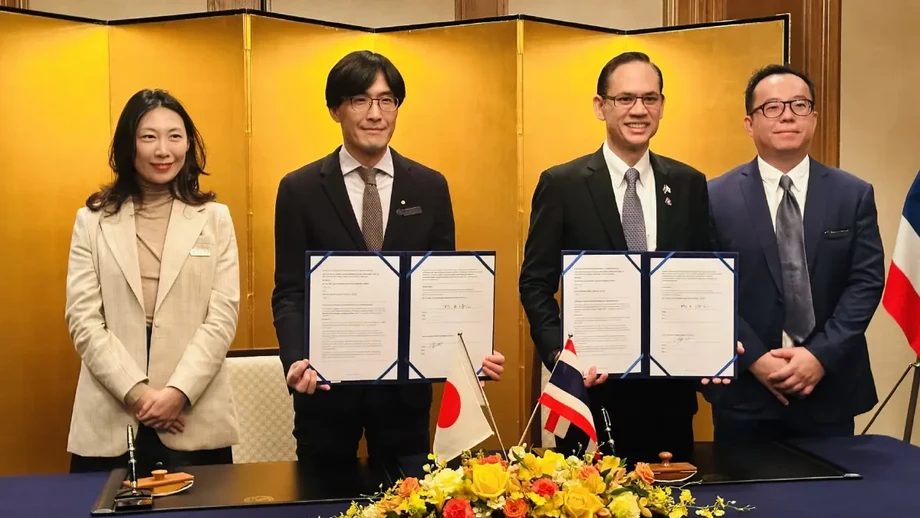
Private sector cooperation formed a major part of the Tokyo discussions, led by major energy and industrial agreements. Napadern Sundaravej, chief executive for Thailand, Malaysia and industrial business solutions at B.Grim Power Public Company Limited, announced a partnership with NTT Global Data Center. B.Grim signed a memorandum of understanding with the Japanese technology provider to supply digital infrastructure, artificial intelligence ecosystems and energy networks in Thailand, with an investment value exceeding 140 billion baht. B.Grim currently manages power systems across 11 industrial estates with a grid network spanning more than 300 kilometres. The company has a long history of cooperation with Japanese firms, including a partnership with Sumitomo established in 2007 and a recent agreement with Chugoku Electric to supply 100 megawatts of electricity to a digital facility.
B.Grim also proposed three specific areas of cooperation to support Japanese investors in the country. The first proposal involves establishing a production base for batteries and smart equipment in Thailand, which would qualify for the Thailand FastTrack scheme to cut approval times in half. The second proposal focuses on joint ventures and technology transfer for high-voltage transformers and other industrial equipment. The third proposal allows companies to test new equipment on industrial estate electrical grids before deploying them to larger networks. These initiatives aim to integrate domestic suppliers into the broader supply chains required by high-technology industries.
Automotive Giants Commit Billions to Future Vehicle Production
Automotive manufacturers confirmed significant new funding commitments during the Tokyo roadshow. Six major carmakers, including Toyota, Honda, Isuzu, Mitsubishi, Mazda and Nissan, pledged approximately 134 billion baht in fresh investments for the period between 2026 and 2030. Between 2021 and September 2026, Japanese investors submitted applications for 367 automotive projects worth more than 79 billion baht, making vehicles the largest category of Japanese investment applications. The new commitments nearly double the investment value recorded over the previous five years. Each carmaker plans to focus on different vehicle technologies to match changing market demands. Toyota will develop fuel-cell electric vehicles and export-focused pick-up trucks, while Honda works on smart hybrid technology. Mitsubishi plans to produce hybrid and plug-in hybrid pick-up trucks, Mazda is investing in mild hybrid lines while preparing for battery electric vehicles, and Isuzu will continue its role as a commercial vehicle hub while developing battery and fuel-cell lorries.
The investments follow the introduction of a revised excise tax structure designed to protect domestic manufacturing bases. Starting January 1, 2027, a 35 percent excise tax will apply to fully built-up imports of battery electric vehicles and range-extended electric vehicles from brands that lack a local production base. Carmakers with manufacturing operations in Thailand will receive rates based on their local investment levels, employment figures and use of domestically sourced parts. Senior executives from the Japanese automotive companies thanked the government for implementing measures to support domestic production. Ekniti noted that the tax policy applies equally to all global investors and is not targeted at any single nation. Additional proposals, such as a trade-in scheme for older vehicles to encourage cleaner fuel use, remain under evaluation by the government.
Semiconductor Strategy Aims for Advanced Manufacturing and Jobs
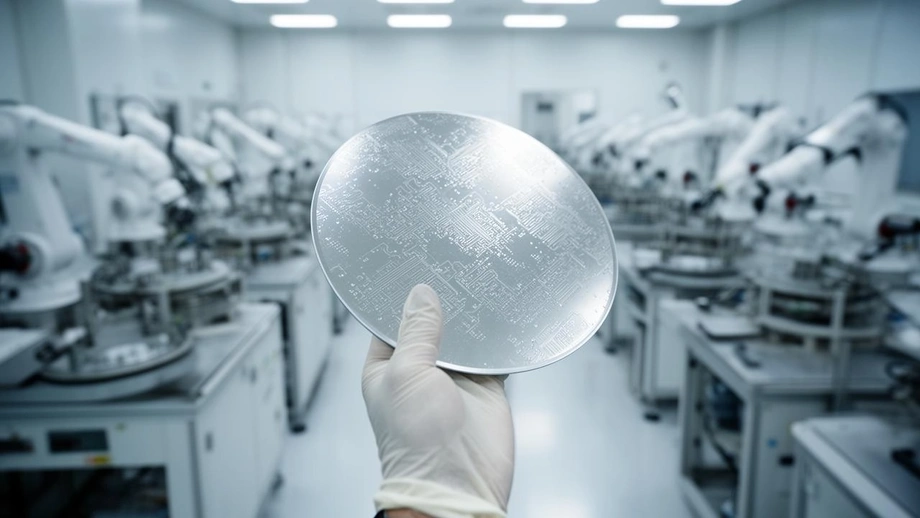
Semiconductor development formed another core pillar of the discussions in Tokyo. Ekniti met with Tetsuro Higashi, chairman of the Leading-Edge Semiconductor Technology Center and Rapidus, alongside executives from 11 Japanese semiconductor companies. Rapidus was established through a joint effort by major Japanese corporations, including Toyota, Sony, NTT, SoftBank, Kioxia, NEC, Denso and MUFG Bank, with backing from Japan's national strategy to build advanced logic chips. Thai officials presented a national strategy aiming to attract at least 500 billion baht in semiconductor investments by 2030 and more than 2.5 trillion baht by 2050, alongside a target of generating five trillion baht in annual industry revenue and creating more than 230,000 skilled jobs.
Kobsak Pootrakool and Kobkarn Wattanavrangkul, chairwoman of Toshiba Thailand, provided industry context during the meetings. Kobkarn noted that Japanese companies such as Toshiba and Sony have operated semiconductor businesses in Thailand for more than 30 years, maintaining operations even after severe flooding caused major disruptions over a decade ago. The Board of Investment reported that Japanese investors submitted 108 applications worth more than 59 billion baht between 2023 and September 2026 across semiconductors, printed circuit boards and circuit design. Thailand currently operates as ASEAN's largest manufacturing base for printed circuit boards. Government programs such as the Siam Silica initiative and Skill Bridge aim to train at least 86,000 semiconductor workers by 2030, ensuring that local engineers gain expertise in chip design and advanced manufacturing rather than remaining limited to basic assembly tasks.
Hard Disk Drive Expansion and Made with Thailand Goals
Growth in digital storage demand has created new opportunities for traditional component manufacturing in Thailand. Ekniti highlighted that the rapid expansion of data centers worldwide has triggered a surge in demand for hard disk drives. Thailand serves as a primary global production base for the three largest hard disk drive manufacturers: Western Digital, Seagate and Toshiba. Toshiba expressed specific interest in expanding its operations in Thailand to cover both manufacturing and research and development activities. The company plans to collaborate with Thai universities and local researchers to build innovation capacity and share technical knowledge under a guiding framework termed Made with Thailand.
The collaborative approach seeks to move the country beyond simple contract manufacturing into active technological participation. By partnering with local research institutions and component suppliers, foreign investors can utilize domestic expertise in specialized areas such as optical transmission equipment, cooling systems and electrical components. Officials emphasized that sustainable economic growth requires balancing high-tech investments with labor-intensive sectors like tourism and agriculture to ensure that wealth reaches citizens at all economic levels. The agreements reached in Tokyo mark an initial phase in securing long-term technical partnerships between Thai and Japanese industries.
The Essentials
- Deputy Prime Minister Ekniti Nitithanprapas led a Thai delegation to Tokyo from November 17 to 20, 2026, to meet Japanese business leaders.
- B.Grim Power signed a memorandum of understanding with NTT Global Data Center for digital infrastructure projects valued at over 140 billion baht.
- Six major Japanese carmakers pledged approximately 134 billion baht in new investments in Thailand for the 2026 to 2030 period.
- Thailand introduced a centralized review mechanism and strict environmental and community standards for new data center developments.
- The Board of Investment reported that Japanese investors submitted 108 project applications worth over 59 billion baht in electronics and semiconductors since 2023.