Why 90 Seconds Has Beijing Worried
Beijing built its nuclear force around a stark promise: if an enemy struck first, enough Chinese missiles would survive to fire back with devastating force. That idea is called second strike deterrence. It is meant to make an attacker conclude that a first blow would bring ruin. A review of more than 100 recent Chinese military and civilian studies shows that researchers now fear artificial intelligence (AI) could weaken that promise by helping the United States find, track and attack Chinese missiles far faster than people can.
Contents
- Why 90 Seconds Has Beijing Worried
- What AI Would Speed Up
- Can China's Missiles Survive a First Strike?
- The Chip Race Behind the Fear
- How China Is Using AI Too
- When Bad Data Becomes a Nuclear Risk
- Why Safeguards Are Falling Behind
- A Short Timeline of a Fast Moving Risk
- What Is Still Unknown
- Why Arms Limits Face a Harder Test
- Key Points
The most striking number in the studies is 90 seconds. Two researchers at the Academy of Military Science in Beijing warned that AI linked to American nuclear decision systems could shrink the traditional 15 to 30 minutes of crisis decision making to 90 seconds or less. Chinese analysts describe the feared result as nuclear checkmate, a chess image for a country that believes it has no safe responding move left.
On November 23, 2026, the worry moved from technical papers into a wider strategic argument. The question for Beijing is no longer only how many nuclear weapons it has. It is whether its missiles can remain hidden and usable long enough to matter if United States sensors, satellites and command systems can process the battlefield at machine speed.
What AI Would Speed Up
Nuclear forces are watched through radar, satellites and sensors. AI is useful because it can sort huge piles of images, signals and location data much faster than a human team. In a crisis, that could mean quicker warnings, faster matching of a launcher to a map, and shorter gaps between spotting a missile and choosing a target.
Two researchers from the Academy of Military Science in Beijing wrote that the United States could compress the time for making a decision from the traditional 15 to 30 minutes to 90 seconds or less. They were describing a chain in which sensors and targeting tools feed commanders a much shorter window for judgment. Their warning meant that in a crisis, the side with faster machines could force the other side to react before it had finished checking the facts.
Gerald C. Brown, a former State Department analyst and a fellow at the Council on Foreign Relations, said Chinese researchers see a direct threat to missile survival. In their view, a launcher that leaves a hidden position or begins moving on a road becomes vulnerable much sooner if AI can flag the change and pass it to strike forces.
Can China's Missiles Survive a First Strike?
China's nuclear expansion began about 10 years ago under Xi Jinping. Its central goal was to guarantee a devastating second strike even after an initial attack. That posture supports China's declared no first use policy, under which Beijing says its weapons exist for self defence and are kept at the minimum level needed for national security.
The size gap remains large. The Federation of American Scientists estimates that China has about 620 warheads that could be delivered by land based missiles, submarines or bombers, with the number forecast to reach about 1,000 by 2030. The United States and Russia each have around 1,800 deployed warheads and thousands more in storage. The Pentagon has also assessed China's inventory in the low 600s through 2024 and projected it could exceed 1,000 by 2030.
Beijing has tried to make its smaller force harder to wipe out by spreading it across a wide area. In July 2026, China test launched a long range missile from a submarine. It has also built about 320 launch silos in northern deserts. Silos are fixed concrete shafts, which can be counted by satellites but also add launch points an attacker would have to consider.
The Chip Race Behind the Fear
Jacob Stokes, a senior fellow at the Center for a New American Security, said the United States lead in advanced chips deepens Beijing's worry about nuclear systems. AI that combines satellite images, radar tracks and communications signals needs huge computing power. Advanced processors are the engines that make that sort of analysis possible.
A United States commission said last week that China's military is seeking Nvidia's most advanced chips. Its November assessment said the People's Liberation Army wants computing power for AI enabled weapons, surveillance, command systems and logistics. China's missile forces also study the United States Strategic Command, the military body responsible for American nuclear weapons, which has said it wants AI to improve decision making.
Chinese researchers are not thinking only about the immediate missile flight. They are studying how American conventional forces use AI to coordinate operations and choose targets. For a country with fewer warheads, even a small improvement in the other side's ability to find mobile launchers can feel like a direct challenge to deterrence.
How China Is Using AI Too
Xi Jinping held a meeting of senior officials in July 2026 on the military uses of AI and called for steady progress in deployment. That push includes the Rocket Force, which controls most of China's nuclear missiles. Research from that force explores AI as a way to make Chinese weapons harder to stop, not only easier to launch.
One Rocket Force study used deep reinforcement learning, a method in which a system learns by testing many possible actions, to model millions of flight paths. The aim was to train hypersonic glide vehicles, which can maneuver at very high speed after leaving a rocket, to avoid air defences. One simulation used an Alaska no fly zone as a case study.
Another study developed AI assisted guidance that could help a ballistic missile dodge fast interceptors and then return to its planned path with minimal fuel. Researchers at a Rocket Force academy have also urged faster integration of AI and hypersonic technology to strengthen China's nuclear retaliation. These projects show that Beijing sees AI as both a shield for its own force and a possible weapon in the hands of an opponent.
When Bad Data Becomes a Nuclear Risk
Chinese military institutes have also warned that AI can make mistakes more dangerous. A study by two military institutes said false data magnified by AI could create enormous risks for command and control, the system that links leaders, sensors and forces. If leaders receive exaggerated warnings or misleading targets, the speed of AI could turn a small error into a fast moving crisis.
The review described a recent case in which the United States military nearly boarded a Chinese ship because an AI generated intelligence report falsely pointed to a threat. Chinese research has gone further in extreme scenarios, imagining a runaway AI virus that hijacks nuclear weapons systems. Such scenarios are used to press for stronger checks on data, software and human approval.
Philip Reiner, director of the Institute for Security and Technology in California, said the main change would come in the information fed to commanders. He explained that launch authority is still expected to stay with people, while AI shapes the evidence people see. His point was:
Nobody's turning launch decisions over to A.I., but everything that tells you whether you should launch is now going to be shaped by A.I.
Why Safeguards Are Falling Behind
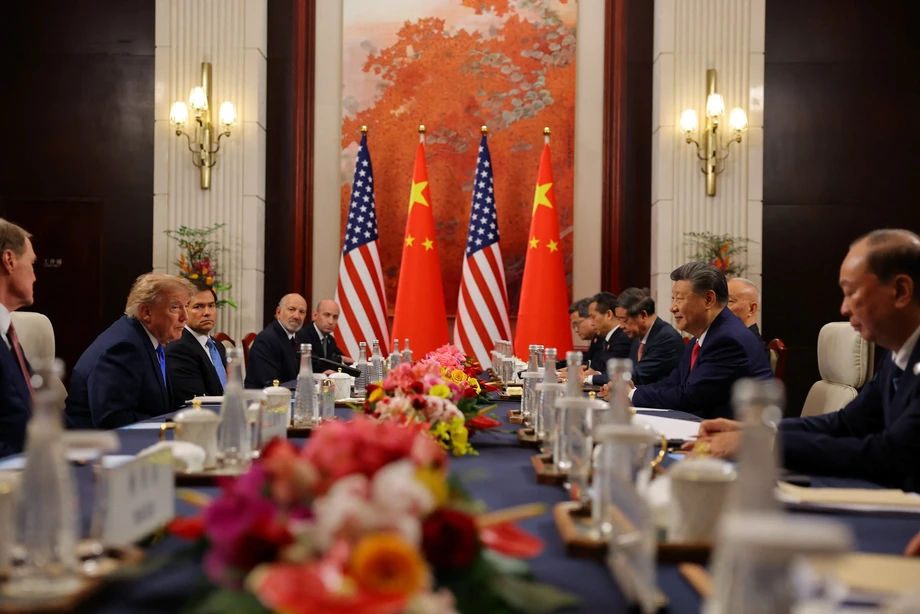
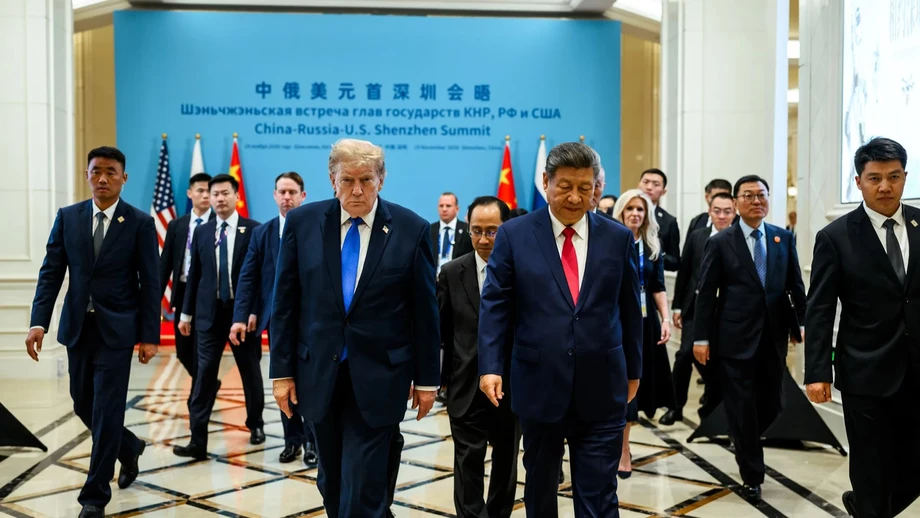
Xi and then President Joe Biden affirmed in November 2024 that decisions to use nuclear weapons should remain under human control. No official talks on the issue followed. At the Shenzhen nuclear summit on November 19, 2026, Xi, Donald Trump and Vladimir Putin discussed lower nuclear risk, and Trump pressed for Chinese participation in arms limits. AI in nuclear weapons did not come up.
The meeting lasted 90 minutes at the Kylin Villa and was the first formal trilateral meeting of the three major nuclear powers. The leaders issued a joint peace declaration saying nuclear war cannot be won and must never be fought. The summit ended without a new treaty to replace the expired New Strategic Arms Reduction Treaty. Afterward, Trump said the three countries agreed to hold talks on preventing nuclear proliferation. No detailed framework for those talks was announced.
Treasury Secretary Scott Bessent said on November 20 that Trump and Xi agreed humans should remain involved in major military decisions involving AI. Bessent's account gave no enforcement arrangements, technical restrictions or answer on whether the understanding covered AI assisted targeting of nuclear installations.
Tianjiao Jiang of Fudan University has proposed prohibiting AI systems from independently deciding to use nuclear weapons or launching autonomous attacks against nuclear command networks. Melanie Sisson of the Brookings Institution has argued that decisions to begin AI enabled attacks on another country's nuclear command system should remain exclusively under human authority. Both proposals include clearer communication when autonomous technology behaves unexpectedly, including reports of dangerous incidents.
Pope Leo last month urged a ban on lethal autonomous weapons before talks in Geneva. Such weapons can select and attack targets without direct human control. The call sits close to the nuclear AI debate because faster machines can compress the time available for human judgment.
A Short Timeline of a Fast Moving Risk
The nuclear AI debate has developed through a series of dated steps. A timeline helps show how research, procurement, testing and diplomacy are now moving in parallel.
- November 2024: Xi and Biden affirmed that nuclear use decisions should remain under human control.
- February 2026: A study of nuclear postures and AI systems found Chinese specialists worried about detection, cyber exposure and compressed decisions.
- July 2026: Xi held senior talks on military AI, and China test launched a long range missile from a submarine.
- November 19, 2026: The leaders of China, the United States and Russia met in Shenzhen and discussed nuclear risk without putting AI on the agenda.
- November 23, 2026: A review of more than 100 Chinese studies put the 90 second warning at the centre of the debate.
The sequence matters because it leaves a gap between principle and practice. Leaders have agreed in words that people should control nuclear use, while militaries are building faster systems to collect data, run simulations and prepare strikes.
What Is Still Unknown
Several questions remain open. The studies give no date for a deployed AI system able to defeat China's retaliatory force. They give no count of how many missiles would need to survive for Beijing to regard its deterrent as secure. The Trump Xi understanding gives no enforcement plan or technical limits, and the three country talks on proliferation have no announced schedule.
A suspected launcher on a satellite image is also only a clue. To stop retaliation, an attacker would need to confirm the target, strike before it moves, repeat that task across many sites and account for submarines and communications links that may survive an opening blow. Mobility, deception, hardened facilities and limits on intelligence collection all make that work harder.
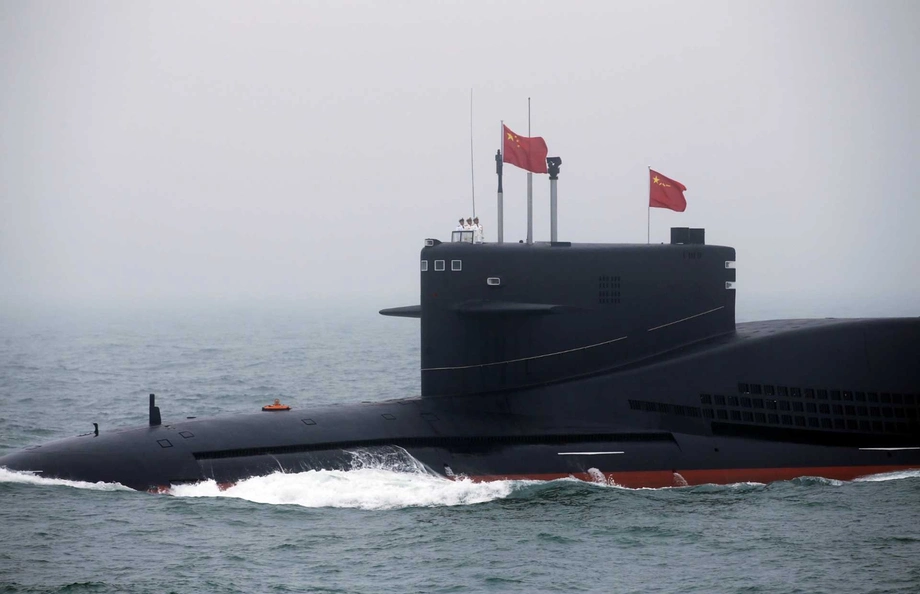
China's sea based force is part of that uncertainty. China's Type 09V submarine was being prepared for launch at a northern shipyard, with open source estimates that a third boat of that class would bring the active guided missile nuclear submarine fleet to nine to 11 hulls. Submarines are difficult to track and can give a country a hidden place from which to fire back.
Why Arms Limits Face a Harder Test
Trump questioned China's nuclear expansion at his November 20 briefing, saying Beijing was building up rapidly. Chinese officials have rejected the idea that they are pursuing a nuclear arms race. Their answer is that China's arsenal remains much smaller than the United States stockpile and the Russian stockpile.
The newer fear about AI could make Beijing less willing to accept limits on that smaller arsenal. If Chinese planners believe AI will make their missiles easier to find, they may seek more warheads, more silos and more mobility instead of caps. The earlier Shenzhen nuclear overview recorded the scale of that expansion, with China moving from about 200 warheads in 2019 to 620 by January 2026, while the United States and Russia held 3,700 and 4,300 total warheads in that accounting.
Sun Chenghao, a researcher at Tsinghua University's Center for International Security and Strategy, said the risks carry heavy weight in Beijing. China must assess whether, in an extreme case, the United States could use AI reconnaissance, precision strike and missile defence to weaken China's ability to retaliate after an attack. That calculation now sits beside the old question of warhead numbers.
Key Points
- Chinese researchers fear AI could help the United States detect and strike missiles before China can retaliate.
- Academy of Military Science researchers warned decision time could fall from 15 to 30 minutes to 90 seconds or less.
- FAS estimates China has about 620 warheads and could reach about 1,000 by 2030, while the United States and Russia each have about 1,800 deployed.
- China has built about 320 silos, tested a submarine launched long range missile in July, and is researching AI for hypersonic and ballistic missiles.
- Chinese studies warn false data and fast command systems could create dangerous mistakes.
- Xi and Biden affirmed human control in 2024, but no official talks followed and AI was absent from the Shenzhen summit agenda.
- Key details remain unsettled, including timetables, safeguards and whether any system can reliably defeat a retaliatory force.