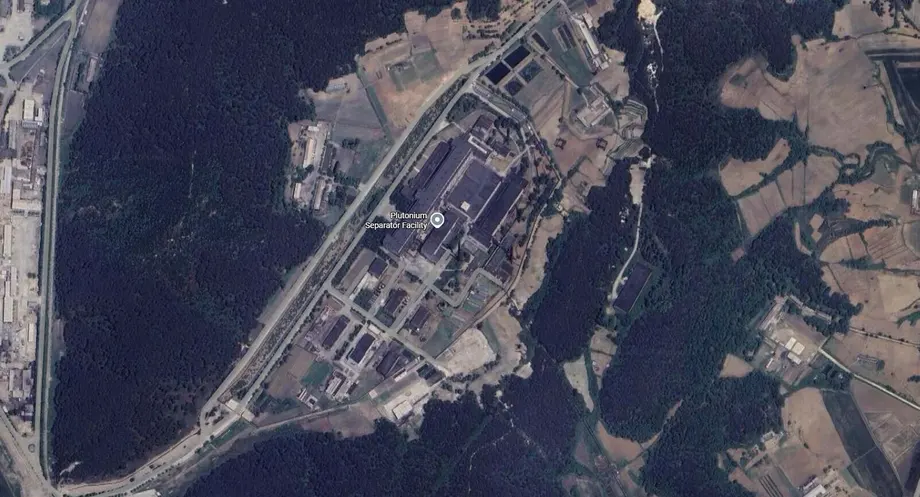
Inside a Fast Grown Uranium Hall
A new extension at North Korea's original uranium enrichment plant at Yongbyon, about 100 kilometers north of Pyongyang, could produce more than 100 kilograms of weapons grade uranium a year, enough for four or five nuclear weapons, David Albright said on Wednesday. Albright is president of the Institute for Science and International Security, a Washington based research group.
Contents
- Inside a Fast Grown Uranium Hall
- What Satellites Show at Yongbyon
- How Much Uranium Could the Hall Produce?
- Timeline of a Fast Build
- Why the IAEA Is Concerned
- Kim's Visit Turns Construction Into a Message
- Why a Small Annex Still Matters
- Warheads, Tactical Weapons and the Submarine Question
- Diplomacy Stalls as the Arsenal Grows
- What Remains Unknown
- Key Points
His assessment puts a number on a building that satellite images show went from construction in September to an exterior finished by late October. It also comes as the International Atomic Energy Agency warns that North Korea's enrichment programme is expanding while inspectors remain absent from the country.
Uranium enrichment raises the share of uranium 235, the isotope that splits easily in a reactor or bomb. Reactor fuel is usually enriched to less than 5 percent. Material near 90 percent is called weapons grade. Centrifuges do this work by spinning uranium gas very fast, and a group of linked machines is called a cascade.
What Satellites Show at Yongbyon
Satellite imagery captured on Oct. 22 and assessed by the institute showed an L shaped addition made up mainly of a large hall without internal dividing walls. One analysis measured the interior at about 95 meters long and 10 meters wide. Other measurements described a width of 8 to 10 meters. Planet Labs imagery during construction showed no small rooms, the kind that would be expected in offices.
The addition sits close to the plant's control and support spaces and covers the original main entrance, based on earlier photographs and Kim Jong Un's 2025 visit to the site. That makes it an awkward place for new centrifuges. North Korea has packed centrifuges into tight spaces before, including a 2024 annex at Kangson that held just under 2,000 machines.
The institute listed other possible uses: more low enriched uranium production, support for existing enrichment equipment, storage, upgrades or research and development. High resolution images published on Nov. 19 matched the construction timeline disclosed by the IAEA one day earlier. Other imagery used in later analysis was taken on Nov. 6.
How Much Uranium Could the Hall Produce?
Albright's estimate of more than 100 kilograms a year depends on the facility's design and uranium supply. He suggested the new building was unlikely to be another low enriched uranium plant, because North Korea already built a large enrichment plant at Yongbyon comparable in size with the Kangson facility. He said the more likely task was raising uranium enriched to less than 5 percent to about 90 percent.
A technical analysis using the Kangson annex as a model put the gain lower, at about 37 kilograms of highly enriched uranium a year. That estimate assumes roughly 2,000 centrifuges and about 8,000 kilograms of separative work units, a measure of enrichment effort. The Kangson annex itself is listed at 1,968 machines, 7,872 separative work units and 37 kilograms of highly enriched uranium a year.
The same institute's table lists 19,024 centrifuges across North Korea's known enrichment facilities, capable of 76,096 separative work units and 354 kilograms of highly enriched uranium a year. Adding 37 kilograms would be about a 10 percent increase against that table. VERTIC, a British arms control group, put existing capacity at up to 375 kilograms a year and said a large facility built in June could add 160 kilograms, a 75 percent increase.
Those figures show why the hall matters even if it is smaller than the second enrichment plant at Yongbyon. A hall filled with cascades adds material for warheads. A hall used for support adds room to keep the existing system running. Outside observers cannot yet tell which outcome is taking shape.
Timeline of a Fast Build
The sequence is short enough to set out plainly, and it explains why so much of the discussion rests on images rather than inspections.
- June 2026: Kim Jong Un said the Ninth Party Congress adopted a strategic decision to expand nuclear materials production. A separate analysis identified a second, larger enrichment plant at Yongbyon, called Yongbyon B, completed on June 1.
- Mid September 2026: Construction began on the extension to the original Yongbyon enrichment plant.
- Oct. 22, 2026: Satellite imagery captured the new hall during the build.
- Late October 2026: The exterior was complete, about six weeks after the start described by the IAEA.
- Nov. 18: IAEA Director General Rafael Grossi raised concern at the agency's Board of Governors.
- Nov. 19: High resolution images of the extension were published.
- Nov. 24: The institute issued its assessment that the hall could be aimed at more weapons grade uranium.
- Nov. 25: Kim visited nuclear material production facilities and the Nuclear Weapons Institute.
- Nov. 26: State media described the visit and Kim's call for a larger arsenal.
The speed matters because a finished shell can be built before the inside is fitted out. The IAEA has described the outside. It has not described machines, uranium feed or output.
Why the IAEA Is Concerned
Rafael Grossi, director general of the International Atomic Energy Agency, told the agency's Board of Governors on Nov. 18 that the addition was part of a broader expansion of North Korea's uranium enrichment programme. He gave the construction dates and said the agency remained ready to verify the programme if access became possible.
Since mid-September 2026, a further extension to the original Yongbyon enrichment facility has been under construction with the new extension externally complete by late-October 2026. The ongoing expansion of the DPRK's uranium enrichment programme remains a cause for serious concern.
Grossi also said the continuation of the programme breaches United Nations restrictions. He used stronger language about the legal position while keeping the agency's description of the building limited to what could be observed.
The continuation and further development of the DPRK's nuclear programme are clear violations of relevant UN Security Council resolutions and are deeply regrettable. The Agency continues to maintain its enhanced readiness to play its essential role in verifying the DPRK's nuclear programme.
Safeguards are the checks and records used to confirm that nuclear material stays in peaceful use. The IAEA has had no inspectors in North Korea since 2009, so it tracks Yongbyon with satellite imagery and open source information. It published no dimensions or capacity for the extension, leaving those details to image analysts.
Kim's Visit Turns Construction Into a Message
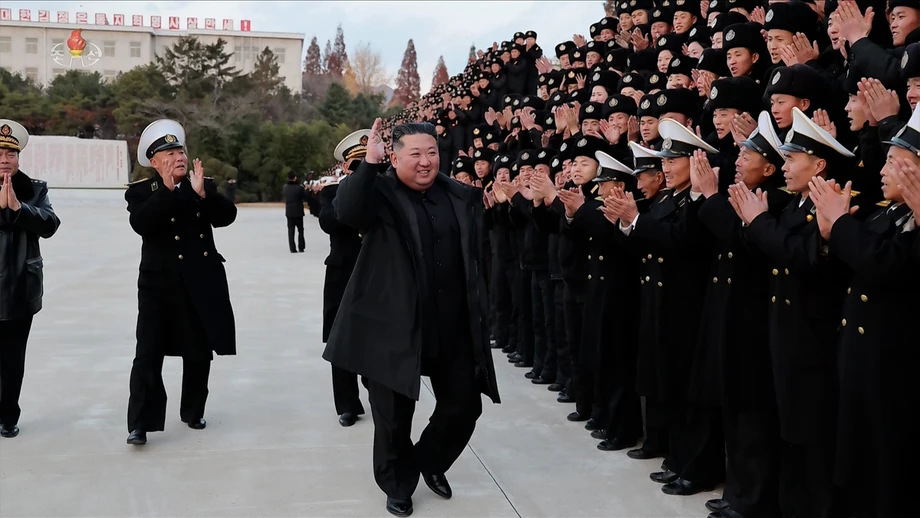
Kim Jong Un, North Korea's leader, inspected nuclear material production facilities and the Nuclear Weapons Institute on Wednesday, according to state media reports released the next day. The reports said he toured one newly inaugurated factory and another being expanded. Photos showed rows of equipment that appeared to be centrifuges and halls displaying objects believed to be warheads, with some images blurred.
Kim said the visits were part of efforts to strengthen defense capabilities as what he called variable nuclear threats approach the Korean Peninsula. He presented nuclear arms as central to sovereignty, said the policy is embedded in the state's supreme law and rejected demands that North Korea give them up.
The validity and substantiality of our possession of nuclear weapons and the trend of bolstering up its nuclear capability in quality and quantity are an irreversible reality.
Kim also called for low yield battlefield nuclear weapons to be ready for different missions and domains. A tactical nuclear weapon is designed for use on a battlefield or against military targets, usually with a smaller yield than a strategic weapon. He described South Korea as the most dangerous enemy state and linked his remarks to nuclear forces being expanded by adversary states and alliances.
North Korea did not identify the sites Kim visited or give production figures. It remained unclear whether he entered the newly expanded Yongbyon building.
Why a Small Annex Still Matters
The new addition is small next to the second enrichment plant at Yongbyon. The institute's table describes Yongbyon B as a two floor facility with 28 cascades, 4,592 centrifuges and an estimated 85 kilograms of highly enriched uranium a year. The proposed annex could hold about 12 cascades if it follows the Kangson pattern.
In June, Kim said weapons grade nuclear material production capacity had more than doubled over five years and promised to expand nuclear forces at an exponential rate, language he has used since 2023. Exponential growth means increases build on earlier increases. Analysts at the institute questioned why Pyongyang would add a small hall to the original plant if the aim were only low enriched uranium for civilian energy. North Korea has already disclosed a much larger low enriched plant nearby, and they described the Kangson facility as able to make many tonnes of reactor grade material a year.
The open floor, the comparison with Kangson and the history of earlier Yongbyon expansions in 2013 and from 2021 to 2022 all support the centrifuge reading. The awkward location and possible storage or control uses leave space for other explanations. Albright's output estimate and the 37 kilogram estimate therefore depend on design assumptions and known packing patterns.
Yongbyon also includes a 5 megawatt reactor that the IAEA said is likely still operating in its seventh irradiation cycle, and a light water reactor that has operated since April 2026. An irradiation cycle is the period fuel stays in the reactor before removal. Spent fuel from the 5 megawatt reactor can be reprocessed into plutonium, the other material used in nuclear weapon cores.
Warheads, Tactical Weapons and the Submarine Question
The display shown during Kim's visit included dark warheads from the Hwasan 31 series, first revealed in 2023, and silver hourglass shaped models with different markings. Nameplates identified versions such as Hwasan-31-1, Hwasan-31-2 and Hwasan-31-3. Other labels included Hwasan-14 and Hwasan-22. Shin Jong-woo, secretary general of the Korea Defense and Security Forum, said after reviewing photos that the North appears to be developing peanut shaped and rugby ball shaped hydrogen bombs in the Hwasan series.
Lee Choon-geun, director at the Korea Advanced Institute of Science and Technology, reviewed the images and said the shapes pointed to smaller thermonuclear designs. A thermonuclear weapon is a hydrogen bomb, which can produce a much larger yield than a simple atomic bomb.
(This can be seen as having) developed small thermonuclear weapons beyond small atomic bombs. If large thermonuclear weapons are in the megaton range, small thermonuclear weapons can be considered to be around several hundred kilotons.
Kim also accused the United States of encouraging allies to acquire nuclear powered submarines and cited Aukus, the partnership between the United States, Britain and Australia. State media showed equipment from a nuclear powered equipment production base that appeared to be a reactor for such a submarine. The key technology is a small modular reactor, which is a compact power plant designed for ships or remote sites. State media did not say whether the equipment was that kind of reactor, and its purpose has not been independently verified.
North Korea is developing what it describes as an 8,700 ton nuclear powered submarine. South Korea is pursuing its own nuclear powered submarine programme after Trump backed the plan in October 2025. Nuclear propulsion uses a reactor to power the vessel; a ship can have that propulsion without carrying nuclear arms. Submarines matter in nuclear planning because they can hide after an attack and preserve a second strike capability, meaning the ability to strike back after absorbing a first strike.
Diplomacy Stalls as the Arsenal Grows
Donald Trump, the United States president, said he wanted to meet Kim during his recent Asia trip. No meeting took place, and Pyongyang did not publicly answer the offer. Secretary of State Marco Rubio said no meeting was scheduled while adding that Trump was prepared to open a new dialogue.
In a newspaper interview this week, Trump rejected the idea that Kim had ignored him. He said the two leaders would meet at another time and that the recent two day schedule had been too busy. Kim has said he could return to talks if the United States drops what he calls its hostile policy and respects North Korea's status as a nuclear state. Talks between the two leaders collapsed in 2019.
Moon Seong Mook, an analyst at the Seoul based Korea Research Institute for National Strategy, said Kim's facility visit was meant to show strength and set terms for any future meeting. He said the American demand for denuclearization remains the central obstacle.
Trump has talked about a willingness to meet Kim Jong Un, but the basic U.S. position that North Korea must denuclearize remains unchanged.
Moon also said Kim wanted leaders to drop denuclearization talk if they wanted a meeting. He said Kim may have been checking progress before a year end Workers' Party conference, though no date for that conference was given. North Korea's foreign minister, Choe Son Hui, said last week that nuclear weapons were the strongest guarantee of sovereignty and rejected the G7 demand for complete denuclearization.
Jeong Bit-na, spokesperson for South Korea's Ministry of National Defense, said Seoul views the stated intention to expand tactical nuclear operations gravely and called on Pyongyang to stop justifying nuclear development. South Korea's Joint Chiefs of Staff declined to share an assessment of the facilities shown by state media, calling it confidential information for South Korea and the United States. Last year, South Korea's Unification Minister Chung Dong-young said four enrichment facilities were operating every day.
A Congressional Research Service study estimated that North Korea has produced enough fissile material for up to 90 warheads, with about 50 built and material for another 40. Fissile material is the raw material that can sustain a nuclear chain reaction. North Korea has not tested a nuclear weapon since September 2017. Reports in 2022 pointed to possible work at the Punggye Ri test site, with no official reopening announced.
What Remains Unknown
The central question is what sits inside the new hall. Nothing in the released images confirms that centrifuges have been installed or that enrichment has begun. North Korea gave no production figures for the facilities Kim visited, and state media did not say whether he saw the Yongbyon extension.
The IAEA's last public description stops at the exterior because its inspectors have been out of North Korea since 2009. No inspection date was given, and no date was provided for the next Board of Governors meeting. For now, the known dates, the hall's dimensions and the comparison with older annexes are the tools available to outside observers.
Those tools point to a program that can grow in more than one way. If the hall holds centrifuges, North Korea could add tens of kilograms of weapons grade material a year under the lower estimate, or more than 100 kilograms under Albright's higher estimate. If it supports existing work, it still shows continued investment in the system that makes nuclear material.
Key Points
- David Albright said the Yongbyon extension could produce more than 100 kilograms of weapons grade uranium a year, enough for four or five nuclear weapons.
- Satellite images show a hall about 95 meters long and 10 meters wide, built from mid September to late October 2026.
- A technical estimate using the Kangson annex as a model put the possible gain at about 37 kilograms a year, roughly 10 percent of one institute's total for known facilities.
- Rafael Grossi called the expansion a cause for serious concern and said the programme breaches UN Security Council resolutions.
- Kim Jong Un inspected nuclear facilities and called for a larger arsenal, while North Korea gave no production figures and did not identify all sites.
- No confirmation has been given that centrifuges are installed or operating inside the new hall.