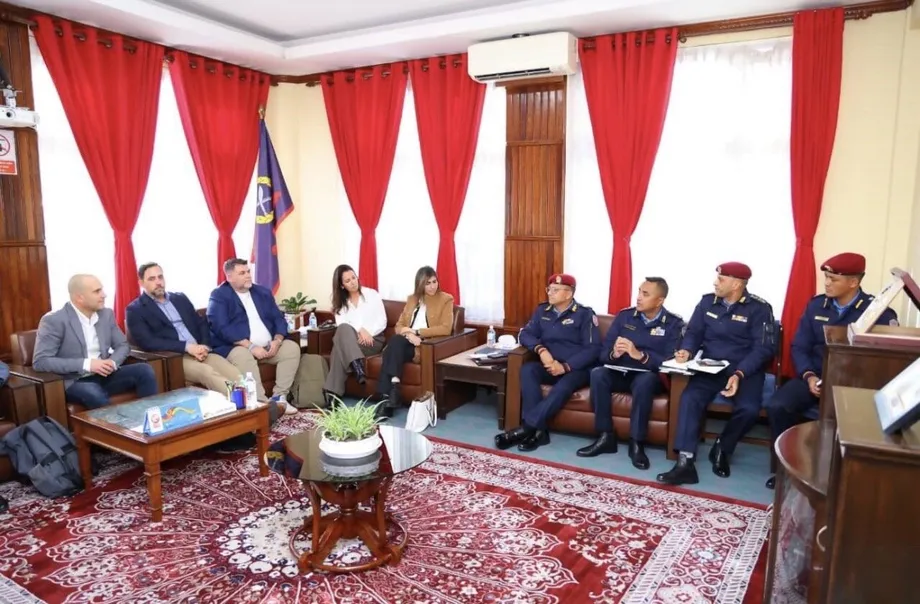
Three days of meetings across government, industry and education
A delegation of four Israeli specialists in information technology (IT) and artificial intelligence (AI) visited Nepal from November 24 to 26, 2026. Their programme reached the science ministry, the prime minister's office, Nepal Police, software businesses, two educational institutions and a hospital. The Embassy of Israel in Kathmandu facilitated the visit, saying its purpose was to explore collaboration in technology, innovation, entrepreneurship, healthcare and security.
Contents
- Three days of meetings across government, industry and education
- What happened at the Israel Cyber and AI event
- Why research spending dominated the discussion
- Nepal's own budget and innovation centre plans
- From disaster planning to police cybersecurity
- What businesses, universities and a hospital added
- How the exchanges fit together
- What to Know
AI refers to computer systems that can perform tasks such as recognising patterns, interpreting language and making predictions. Cybersecurity, another central theme of the visit, is the work of protecting computer networks, data and digital services from theft, damage or disruption. Both subjects featured in the public discussions and the meetings with Nepali institutions.
The visitors brought experience from private companies, government and professional networks:
- Itay Dannenberg, cofounder and chief executive officer of Precision Systems, a developer of defense technology and an integrated international consortium.
- Erez Arye, founder and chief executive officer of Value Consulting Group.
- Inbal Mincman, head of the Hi-Tech Cluster at Israel's National Growth Directorate in the Ministry of Economy and Industry.
- Yossi Melamed, chairman of the Mamram Alumni Association and chief executive officer of Fast Lane Israel.
Janan Bebar, deputy chief of mission at the Embassy of Israel, accompanied the delegation. Bebar presented the visit as part of continuing efforts to build technological and entrepreneurial ties between the two countries.
We are delighted to have had this distinguished Israeli delegation to Nepal as part of our continued efforts to strengthen bilateral cooperation in technology, innovation, and entrepreneurship.
Bebar said the meetings provided an opportunity for dialogue, the exchange of expertise and the exploration of partnerships that could benefit both Israel and Nepal.
What happened at the Israel Cyber and AI event
The delegation's public programme on November 24 included an event called Israel Cyber and AI at the Embassy of Israel in Lazimpat, Kathmandu. Science, Technology and Innovation Minister Mahabir Pun attended as chief guest. Government officials and representatives from the IT, AI, banking and other sectors joined discussions about Israeli experience in cybersecurity, artificial intelligence and emerging technologies.
Israeli Ambassador Shmulik Arie Bass told participants that Israel's approach rested on innovation, creativity and the practical application of technology, with challenges treated as opportunities. He then described why he believed that experience could be useful in Nepal.
Sharing this experience with Nepal opens new avenues for innovation and cooperation.
The four visitors gave presentations and joined a panel discussion about Israel's innovation ecosystem and the use of advanced technology to address complicated problems. An innovation ecosystem is the network of researchers, businesses, public institutions and professional communities that helps turn ideas into usable products and services. Bibhusan Bista, vice president of the Nepal Association for Software and IT Services Companies (NAS-IT), and Narayan Koirala, an executive board member of the association, also joined the panel.
Videos generated with AI were shown during the programme. They presented the founding of the State of Israel and the country's manufacturing and technological capabilities. The embassy said it remained committed to cooperation through the exchange of knowledge, institutional partnerships and exchanges in technology and innovation.
Why research spending dominated the discussion
Pun used his address to argue that Nepal should learn from the priority Israel gives to research and innovation. He said he had been pointing to Israel's development for 15 years and identified investment in research as one of the reasons for its technological strength.
One of the key reasons is Israel's significant investment in research and innovation. Israel invests more than 5% of its GDP in research and development, which is among the highest levels in the world.
Gross domestic product (GDP) is the value of the goods and services produced by an economy. Research and development covers the work of creating knowledge and using it to develop products, methods and services. Pun's figure therefore describes research spending in relation to the size of Israel's entire economy.
The minister called for stronger partnerships with supportive and friendly countries. He included cooperation between governments, as well as collaboration among private research centres, innovation institutions and industries. In his account, such relationships could help Nepal create opportunities to innovate, develop new technologies and contribute to the country's economic development.
Nepal's own budget and innovation centre plans
Nepal has already changed one area of government spending, according to Pun. He said the new government had allocated 1 percent of its capital expenditure to research and innovation for the first time. Capital expenditure is the budget category used for assets and projects intended to last for years, so Nepal's figure is measured against that category of public spending.
Pun said the government had given research and innovation high priority and had established a separate ministry to advance the sector. He also conveyed the prime minister's position on the role that research should play in national development.
Prime Minister is firmly convinced that the country can achieve prosperity through research and innovation.
The government's plans include innovation centres covering artificial intelligence, cybersecurity, drones, agriculture and biomedical engineering. Biomedical engineering applies engineering methods to medicine and healthcare, while the other proposed fields connect computing, aerial technology and food production. Pun presented the centres as part of a broader attempt to increase investment in research and strengthen the national economy.
The Israeli and Nepali percentages cited at the event use different yardsticks. Israel's figure concerns research spending in relation to output across the whole economy, while Nepal's concerns one category of government expenditure. Together, they show the emphasis that Pun placed on sustained investment rather than a single technology purchase.
No locations, detailed budgets or opening dates were given for the proposed innovation centres. Pun's remarks set out the intended fields of work and the government's budget priority.
From disaster planning to police cybersecurity
Beyond the embassy forum, the delegation held a separate meeting with Pun to discuss disaster preparedness, innovation and the application of technology across different sectors. Disaster preparedness involves putting systems and plans in place before a hazard strikes. Technology can support activities such as analysing information, issuing warnings and coordinating essential services, although the embassy did not identify a particular disaster system under consideration.
At the Office of the Prime Minister and Council of Ministers, discussions concentrated on stronger institutional linkages and possible areas of bilateral cooperation. Institutional linkages are working relationships between public bodies. They can provide channels for technical communication and joint work after a visiting delegation has returned home.
Nepal Police hosted a discussion focused on potential collaboration in cybersecurity. Police work in this field can involve protecting official communications, investigating digital crime and maintaining access to dependable information systems. The meeting gave the visitors a direct connection with the institution responsible for many of those public security tasks.
Members of the Israeli delegation also said Nepal's geographical features and favourable climate offered potential for the country to develop into a cybersecurity hub. Such a hub would mean a concentration of specialist companies, skilled workers and digital security services. No site, investment proposal or technical assessment for creating one was announced during the visit.
Banking representatives at the embassy event added an economic dimension to the same subject. Banks depend on the protection of customer information, payment systems and online services. Their participation placed cybersecurity alongside AI and innovation in a discussion that extended across public administration, policing and commerce.
What businesses, universities and a hospital added
NAS-IT's involvement continued beyond the panel. In a separate discussion, the delegation and the association exchanged views on potential partnerships between Israeli and Nepali IT companies. The association represents software and IT service companies, giving it a direct interest in whether the official expressions of goodwill can lead to commercial or technical relationships.
The four visitors offered different entry points for those conversations. Dannenberg represented a company developing defense technology, Arye leads a consulting business, Mincman works in a government directorate concerned with national growth and technology, and Melamed holds leadership roles in an alumni association and Fast Lane Israel. Their collective experience allowed the programme to cover products, business advice, public policy and professional networks.
Kathmandu University and Embark College provided an academic setting for the delegation. The visitors interacted with faculty members and students, shared information about Israeli technological advances and discussed prospects for academic cooperation. These meetings gave students and teachers direct access to the specialists rather than limiting the visit to officials and executives.
Nepal Mediciti Hospital hosted the programme's engagement on healthcare technology. That field can include digital hospital systems and tools that support diagnosis, treatment or the management of care. The embassy described the stop as institutional engagement, without identifying a particular system that the hospital might adopt.
The academic and hospital visits broadened the range of possible cooperation, but no specific course, student exchange, research project, purchase or pilot programme was announced. The business discussion likewise did not name a Nepali company or a joint product.
How the exchanges fit together
The Kathmandu meetings followed an exchange in the opposite direction earlier in November. Ambassador Bass highlighted that earlier visit when he addressed the embassy event. The sequence places the delegation's programme within two weeks of contact between Israeli and Nepali technology communities.
- November 9 to 12, 2026: A Nepali delegation working in AI and cyber affairs visited Israel.
- November 24: The Embassy of Israel hosted Israel Cyber and AI in Lazimpat, and the Israeli specialists began their visit to Nepal.
- November 24 to 26: The visitors held meetings covering government, policing, industry, disaster preparedness, higher education and healthcare technology.
The embassy closed the visit by reaffirming its commitment to closer engagement and cooperation that would benefit both countries. Bebar said the embassy looked forward to seeing the connections grow into meaningful collaborations and shared successes.
No signed agreement, joint funding amount or date for the next meeting was announced. The immediate result was a set of institutional contacts and a list of fields in which both sides expressed interest.
For Nepal, those fields connect with the government's stated plans for research spending, innovation centres and wider use of technology. For the Israeli participants, the programme supplied direct contact with the Nepali ministries, police, industry association, educators and healthcare institution that would shape any future work.
What to Know
- Four Israeli IT and AI specialists visited Nepal from November 24 to 26, 2026, accompanied by Deputy Chief of Mission Janan Bebar.
- The November 24 Israel Cyber and AI event in Lazimpat brought together government, technology and banking representatives.
- Minister Mahabir Pun cited Israeli research and development spending above 5 percent of GDP.
- Pun said Nepal had allocated 1 percent of capital expenditure to research and innovation for the first time.
- Nepal plans innovation centres in AI, cybersecurity, drones, agriculture and biomedical engineering.
- Meetings covered disaster preparedness, government institutions, Nepal Police cybersecurity, software partnerships, universities and healthcare technology.
- A Nepali AI and cyber delegation had visited Israel from November 9 to 12.
- No signed agreement, funding commitment or date for a next meeting was announced.