Two Summits in Just Over 26 Hours
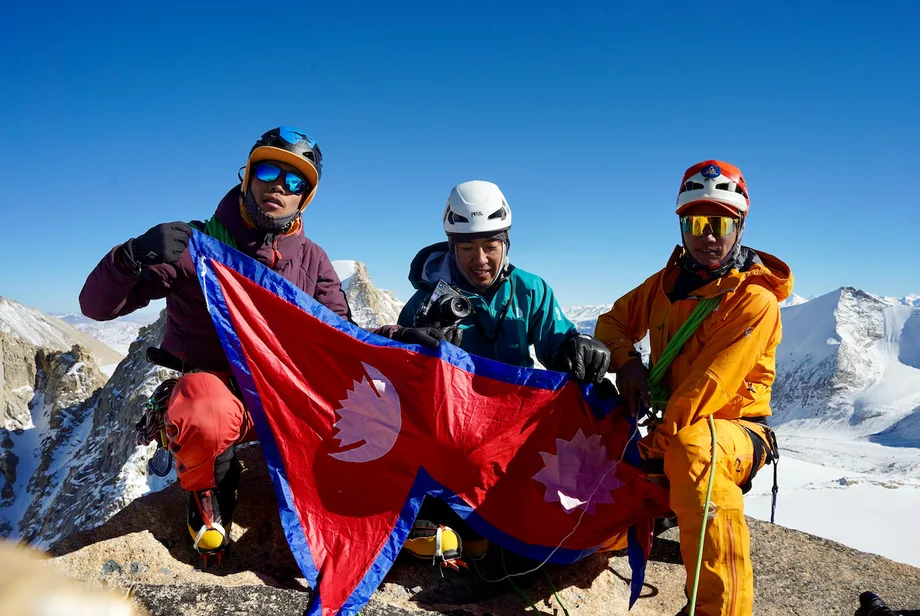
At 2:30pm on November 24, Japanese mountaineer Naoki Ishikawa and Nepali climbers Ashish Gurung and Dipan Gurung reached the summit of Mustang Himal II, which rises to 6,150 metres in Upper Mustang. At 4:47pm the following day, Ashish and Dipan climbed Mansail East, a second peak in the region with an elevation of 6,186 metres. Summit Solution, which organised the expedition, said both were first recorded ascents.
Contents
Summit Solution designed the expedition to explore mountains that had not been climbed and to examine the mountaineering potential of Upper Mustang. The organiser also wants responsible adventure tourism to contribute to local economic development while encouraging sustainable use of the mountain environment. Those ambitions come with a cautious assessment: the two summits add new climbing objectives to Nepal's tourism map, but their accessibility and suitability for regular expeditions still need study.
A first recorded ascent provides the earliest documented account of climbers reaching a particular summit. It gives later expeditions a reference point for planning, although routes and conditions can still require extensive investigation. In Mustang, the precise summit times and different team compositions establish who reached each mountain and when. The second success came 26 hours and 17 minutes after the first, during an expedition affected by strong winds, persistent snowfall and difficult approaches.
The Expedition, Step by Step
Wivas Poudel and Sujan Gurung carried out preparatory research before the climbers attempted the mountains. Their work helped identify the peaks, establish their geographical locations, examine possible approaches and assess potential climbing routes.
- Before the climbs: Poudel and Sujan Gurung researched the peaks, access routes and possible lines that the expedition could follow.
- 2:30pm, November 24: Ishikawa, Ashish and Dipan completed the first recorded ascent of Mustang Himal II at 6,150 metres.
- Between the attempts: Ashish and Dipan descended safely from Mustang Himal II before continuing with their plans for Mansail East.
- 4:47pm, November 25: Ashish and Dipan reached the summit of Mansail East, completing its first recorded ascent.
The safe descent from Mustang Himal II formed the bridge between the two efforts. Ashish and Dipan then made a separate attempt on Mansail East, which stands 36 metres higher than the first mountain. Ishikawa remained part of the first ascent team but did not take part in the second summit.
Different Roles on the Two Summits
Naoki Ishikawa is the second Japanese mountaineer known to have climbed all 14 mountains above 8,000 metres. He is also a photographer and travel writer. Dipan said health problems prevented Ishikawa from continuing to Mansail East after his successful climb of Mustang Himal II. No further detail about his condition was given.
Dipan Gurung, who summited both mountains and is training to become a professional guide, spoke about the achievement after returning to base camp.
I am extremely happy with the successful summits. I had been looking forward to this.
Ashish Gurung is a mountain guide certified through the International Federation of Mountain Guides Associations (IFMGA), a professional qualification involving extensive training and assessment. Although he had climbed major mountains numerous times, Mustang Himal II and Mansail East gave him his first ascent of a previously unclimbed peak. Dipan combined the expedition with his ongoing professional training, while Poudel and Sujan Gurung contributed through research rather than as members of the summit team.
Experience From Everest, K2 and Recovery Operations
Dipan's mountaineering record already included summits of Mount Everest and K2, along with several other peaks in Nepal and the Karakoram range. Everest and K2 present very different challenges from the smaller Mustang mountains, but that experience adds context to his role in two successive first ascents.
Dipan also attracted international attention in August after taking part in a dangerous recovery operation on Broad Peak in Pakistan, where 10 climbers died in an avalanche in July. He and fellow climber Pemba Chhewang Sherpa scaled a steep and exposed section without snow to recover the bodies of renowned Nepali climber Nirmal Purja, known as Nimsdai, and other victims of the disaster.
Ashish took part in a separate recovery operation on Himlung Himal after an avalanche in September buried 16 people at base camp. Continuous snowfall had triggered snow slides that covered tents housing 14 kitchen staff and two guides working at high altitude. These operations were separate from the Mustang expedition, but they form part of the recent mountain work undertaken by the two Nepali climbers.
Research and Weather Shaped the Climb
Wivas Poudel and Sujan Gurung's preparation addressed several practical questions: where the mountains were located, how a team could approach them and which climbing lines might be feasible. A climbing line is the path that mountaineers intend to follow across ridges, slopes, snow or rock. Researching that path beforehand helps an expedition understand its options before committing people and equipment to the mountain.
Strong winds and continuous snowfall then confronted the team in the field. Summit Solution said the climbers proceeded despite unfavourable weather. The approaches to both Base Camp and High Camp were also difficult, adding to the effort required before the summit attempts themselves.
Base Camp serves as an expedition's main staging point, while a higher camp allows climbers to position themselves closer to the summit. Summit Solution has not published camp elevations, technical route grades or a detailed description of the climbing lines. Its account instead concentrates on the research, the successful ascents and the conditions through which the team travelled.
What the Ascents Could Mean for Upper Mustang
Both mountains are classified as expedition peaks below 6,500 metres. Climbers still require an expedition permit from Nepal's Department of Tourism, together with restricted area and conservation permits. The expedition permission covers the climb, while the other requirements regulate entry to the area and activity within its conserved environment.
The height classification does not make the mountains simple excursions. At elevations above 6,000 metres, altitude, cold, wind and snowfall can place heavy demands on visitors. In this expedition, those demands were combined with approaches that the organiser itself described as challenging.
Summit Solution sees responsible mountaineering and adventure tourism as possible contributors to local economic development. If later assessments support further visits, expeditions could bring spending for guides and other local services. No employment or income projections were given. The organiser paired that economic ambition with sustainable use of Upper Mustang's mountain environment, making environmental management part of the discussion about any future activity.
What Happens Before Regular Expeditions Can Follow
Two documented climbs now provide a starting record for Mustang Himal II and Mansail East. Their names, elevations, summit times and first ascent teams are established, giving Nepal's mountain tourism map two new objectives for further study.
Summit Solution said further assessment is needed to determine whether the peaks are accessible and suitable for regular expeditions. That work concerns practical matters such as reaching the area, managing the approaches and judging whether future climbing activity can be conducted responsibly. No timetable was given for the assessment, and no schedule for routine commercial expeditions was announced.
Summit Solution described its wider focus as exploration and route research in remote areas of the Nepal Himalaya. The Mustang expedition therefore served as both a sporting achievement and a reconnaissance exercise. Its immediate legacy is a detailed record of two first ascents, while any broader tourism use depends on the assessment still to come.
Key Points
- Naoki Ishikawa, Ashish Gurung and Dipan Gurung summited Mustang Himal II at 2:30pm on November 24.
- Ashish and Dipan reached Mansail East at 4:47pm on November 25, completing a second first recorded ascent.
- Ishikawa did not attempt the second summit because of health problems; no further details were provided.
- Wivas Poudel and Sujan Gurung researched the peaks, access routes and possible climbing lines before the expedition.
- Strong winds, continuous snowfall and difficult approaches to Base Camp and High Camp complicated the journey.
- Future expeditions require tourism, restricted area and conservation permissions, and the peaks still need assessment for regular use.