A vast investment program meets a capacity warning
President Shavkat Mirziyoyev on November 27, 2026 presented investors with a transport program spanning $8 billion of railway projects, five toll roads worth $5.6 billion, nine logistics centers costing $1.6 billion and a $5 billion Aerocity beside a new international airport. The meeting in Tashkent set out tax breaks, new pricing rules and construction targets intended to attract more private capital into a system serving passengers as well as freight.
Contents
- A vast investment program meets a capacity warning
- Why trade with China is driving the timetable
- Where the $8 billion railway program will go
- Roads attract private capital and stricter durability rules
- The dry port plan extends beyond warehouse construction
- New incentives for wagons and a clearer rail bill
- Aviation expansion reaches beyond runways
- Buses and metro cars for daily passengers
- Dates and targets to watch
- What to Know
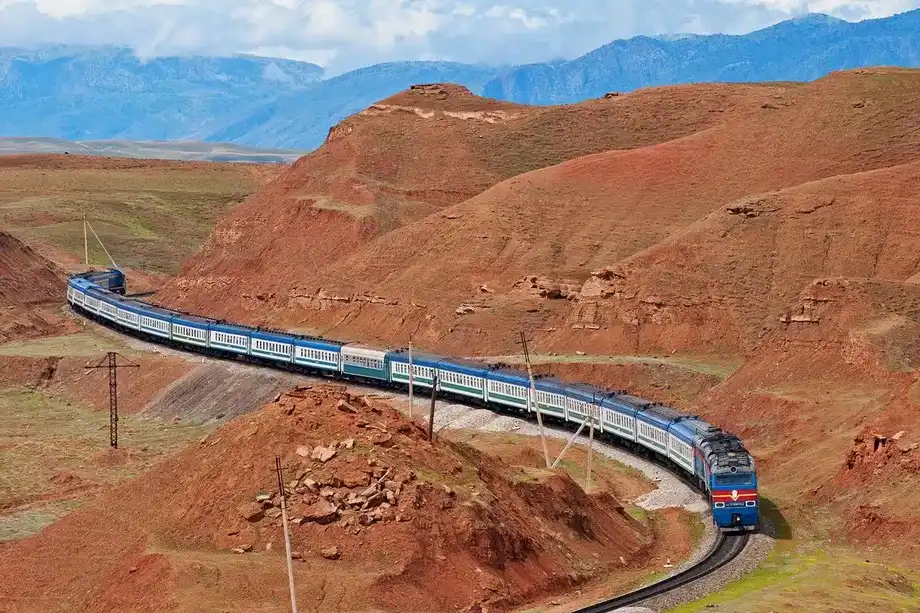
The sharpest warning concerned railways. Mirziyoyev said 25 percent of Uzbekistan's railway network was already operating at full capacity and another 15 percent was overloaded. He expects freight traffic to increase tenfold, reaching 15 million to 16 million tons annually, after the China-Kyrgyzstan-Uzbekistan railway enters service.
Presidential press secretary Sherzod Asadov released details after the meeting. The program covers road concessions, railway electrification, freight wagons, airport management, logistics centers, buses and metro trains. It also changes how investors can earn money: road operators may maintain highways and run services along them, while private airport managers and logistics companies receive new tax arrangements.
Mirziyoyev's wider ambition is to turn Uzbekistan into a major dry port connecting East and West, North and South. A dry port is an inland terminal where cargo can be transferred, stored and cleared through customs without being beside a sea. Achieving that status depends on fuller use of the Middle Corridor, which links China and Central Asia with the Caucasus, Türkiye and Europe through Kazakhstan, the Caspian Sea, Azerbaijan and Georgia.
Why trade with China is driving the timetable
Freight moving between Uzbekistan and China through Kyrgyzstan reached 1.8 million metric tons in 2025, up from 33,700 tons in 2020. Figures from the Eurasian Development Bank (EDB) show that volume was 53.4 times its 2020 level, an increase of about 5,240 percent. Cargo currently travels by rail across China, is transferred to trucks in Kyrgyzstan and then continues to Uzbekistan.
Uzbekistan's trade turnover with China reached $17.5 billion in 2025. Trade between China and the five Central Asian countries nearly tripled over the same five year period, rising from $23.5 billion in 2020 to almost $70 billion in 2025. Uzbekistan therefore accounted for roughly one quarter of the regional total, while Kazakhstan accounted for about half. China's share of Central Asia's merchandise trade rose from 17 to 18 percent in 2020 and 2021 to nearly 30 percent in 2025.
Rail and road carriers moved 51 million tons of cargo between Central Asia and China in 2025. Rail carried 35.6 million tons, or 69.8 percent, and road transport carried 15.4 million tons, or 30.2 percent. Kazakhstan handled around 84 percent of the total freight flows. Growth continued during January to October 2026, when regional rail transportation with China rose 8 percent from the same period a year earlier to 31.8 million tons.
The planned international railway would run for 523 kilometers from Kashgar in China to Andijan in Uzbekistan through Kyrgyzstan, with about 50 kilometers crossing Uzbek territory. The EDB estimates annual capacity at 7 million tons with one track and up to 20 million tons after a second track is built. Those figures describe design capacity at two construction stages, while the presidency's 15 million to 16 million ton figure is its forecast for traffic after launch.
The EDB connects rising road freight with small and medium businesses that need to move smaller consignments. More liberal international road transport agreements, China's accession to international transport conventions and digital border procedures have also helped cargo move. Modern warehouses, border facilities and logistics services will determine whether businesses can handle further growth without creating new bottlenecks.
Where the $8 billion railway program will go
Uzbekistan's public railways carried 107.9 million tons of cargo in 2025, 5.1 percent more than in 2024, according to the national statistics committee. By 2030, the government plans to build 545 kilometers of new railway lines, raise the electrified share of the network to 65 percent and expand the electric train fleet to 31 units.
The Angren to Pap railway, which connects the Fergana Valley with the rest of Uzbekistan, is due for modernization in 2027. Authorities will also consider adding a second track along that route. Construction of a second line between Tukimachi and Angren is scheduled to begin in April 2027.
Other work includes completing modernization between Tashguzar and Kumkurgan and fully electrifying the routes from Andijan to Khanabad and from Kumkurgan to Kudukli. Uzbekistan also plans a dedicated line between Tashkent and Samarkand for trains running at high speed. This would add passenger capacity separately from the freight program.
Mirziyoyev invited international financial institutions and private investors to participate in the railway projects, which have a combined estimated value of $8 billion. The invitation covers both upgrading congested routes and building new capacity, rather than relying on the international railway alone to deliver additional trade.
Roads attract private capital and stricter durability rules
Uzbekistan allocated 80 trillion soums to its road sector during the past 10 years. During that period, 7,000 kilometers of roads were reconstructed and 125,000 kilometers repaired. Officials now estimate that the sector has the potential to attract $20 billion in investment.
Five major toll road projects covering 593 kilometers and valued at $5.6 billion are under way. Another 131 regional projects worth $4 billion have been prepared for investors. Successful bidders would receive rights to construct, maintain and operate highways and to establish commercial and service facilities along them. Separate projects worth $6.5 billion are being implemented with international financial institutions.
Domestic entrepreneurs are to receive broader opportunities to build highways and bridges. Mirziyoyev also asked foreign partners to develop a joint program that would place Uzbek specialists on major international infrastructure projects and prepare Uzbek companies to compete for tenders abroad.
President Mirziyoyev told the officials responsible for road standards that choosing the lowest initial construction price could impose larger costs later:
We do not need roads that are cheap to build, only to require additional budget funding tomorrow. We need high-quality roads that will last for many years.
Officials must incorporate bitumen blended with polymers and geotextile technologies into construction standards. Bitumen is the binder that holds asphalt together, while polymers can improve its resistance to deformation and weather. Geotextiles are engineered fabrics used within road layers to reinforce soil, separate materials or improve drainage. Their use will become mandatory when international highways are built or reconstructed from 2027.
The dry port plan extends beyond warehouse construction
Uzbekistan currently has 27 logistics centers that meet international requirements, with combined capacity of 27.2 million tons. Class A warehouses, meaning modern facilities with higher specifications for storage and cargo handling, cover only 10 to 15 percent of demand. Refrigerated and customs warehouses remain in short supply. Infrastructure is concentrated around Tashkent, container use is limited, and government and private logistics information systems are not sufficiently connected.
Regional governors have been instructed to work with investors on nine large logistics centers worth $1.6 billion. The latest list of specialized locations names Khanabad city and the Olot, Termez, Yangiyul and Ohangaron districts. Authorities plan to allocate 300 hectares for logistics centers and provide annual credit lines of $200 million. Centers built to modern standards are exempt from land and property taxes.
National logistics capacity is intended to reach 80 million tons by 2036. An October presidential decree, On additional measures for development of the transport and logistics system, established nearer targets for 2030: at least 40 million tons of annual capacity at transport and logistics centers, transit freight of 18.5 million tons and 30 international dry ports, up from 24. It also calls for border cargo crossing capacity and container handling capacity to double. Dry ports with high ratings are to receive tax incentives until 2040.
Officials must finalize agreements with Azerbaijan, Turkmenistan and Georgia on mutual recognition of electronic cargo documents, allowing shipment information to be accepted across borders in digital form. Uzbekistan also plans block trains to ports on the Caspian Sea, Black Sea and East China Sea and to destinations in the Baltic states. A block train runs as a fixed set of wagons on one service, reducing the need for repeated sorting.
Planned One Stop arrangements at the borders with Kazakhstan and Kyrgyzstan would bring border formalities together instead of requiring traders to repeat procedures at separate points. At the Organisation of Turkic States summit in late October, Mirziyoyev also proposed using the Middle Corridor as the basis for a shared economic system and creating a common network of logistics complexes.
New incentives for wagons and a clearer rail bill
Freight wagon numbers are to grow by 5,000 to 6,000 units annually. Businesses will receive three principal incentives:
- Imports of freight wagons will be exempt from value added tax (VAT).
- Railway infrastructure access fees will carry discounts of up to 20 percent.
- A zero VAT rate will apply when domestic wagons are supplied for international freight transportation.
A new railway tariff policy has been developed with the World Bank and will be introduced gradually from 2027. Charges for using railway lines, locomotives and wagons will be listed separately for each route. A shipper will therefore be able to see the network access charge and the costs of traction and wagons instead of receiving one bundled bill, making the components of transport prices easier to compare.
Aviation expansion reaches beyond runways
Uzbekistan now has 18 airports after modernizing 11 international airports and restoring airports in Muynak, Kokand, Zaamin, Arnasay, Shakhrisabz, Sariosiyo and Sokh. Airports in Urgench, Samarkand, Bukhara and Namangan have been placed under trust management by private investors through partnerships with the state.
Airports are expected to handle 17 million passengers in 2026, with a goal of 25 million in the coming years. A new international airport is being built on a site covering 1,300 hectares with participation from companies in Saudi Arabia, Japan and South Korea. The adjacent Aerocity would occupy 800 hectares and cost an estimated $5 billion, combining logistics and online commerce centers, shops, international brands, hotels and housing. Officials must complete the master plan for the area by July 1, 2027 and present it to investors.
The national aircraft fleet is targeted to reach at least 250 by 2030. Aviation fuel prices are to be linked to global average prices, with additional tax and customs incentives for fuel and spare parts imports and aircraft leasing. Airlines that train and employ local pilots will receive special incentives. International airports will be exempt from property and land taxes until 2030. Mirziyoyev also proposed an International University of Civil Aviation of Uzbekistan in New Tashkent, with a modern campus, simulation and training facilities and research centers.
Buses and metro cars for daily passengers
Entrepreneurs imported more than 3,500 modern buses during the past three years, while 330 routes moved to a new operating system. Daily passenger traffic subsequently doubled in Tashkent and increased 2.5 times in the regions.
Bus routes of up to 20 kilometers connecting the capital with its surrounding urban area will move fully to gross cost contracts. Under this arrangement, the public authority pays an agreed amount for the contracted service and controls fare revenue, while the operator is paid to run the routes. Companies building bus depots will receive tax incentives, and a new financing mechanism will support transport services in remote areas where fares may not cover operating costs.
The Tashkent Metro is to purchase 28 trains with five cars each over the next two years. Another 40 existing trains will be lengthened from four cars to five. The new trains account for 140 cars, while the extensions require another 40 cars, adding capacity for rising passenger numbers.
Dates and targets to watch
The program has several decision and delivery points extending over the next 14 years:
- October 2026: the presidential decree established transport and logistics targets for 2030.
- November 27, 2026: Mirziyoyev presented the investment program and business incentives in Tashkent.
- 2027: mandatory road material standards begin for international highways, railway tariff reform starts and modernization of the Angren to Pap line is due.
- April 2027: construction is scheduled to start on the second railway line between Tukimachi and Angren.
- July 1, 2027: the master plan for the new airport and Aerocity area must be completed.
- 2030: targets include 545 kilometers of new railways, 65 percent electrification, 31 electric trains and at least 250 aircraft.
- 2036 and 2040: national logistics capacity is intended to reach 80 million tons by 2036, while incentives for highly rated dry ports extend to 2040.
No opening date was announced for the China-Kyrgyzstan-Uzbekistan railway. Construction start dates for each of the nine logistics centers, a launch date for One Stop border arrangements and a year for reaching 25 million air passengers were also not given.
What to Know
- Uzbekistan expects freight traffic to rise tenfold to 15 million to 16 million tons annually after the new railway to China opens.
- An $8 billion railway program includes 545 kilometers of new lines, 65 percent electrification and 31 electric trains by 2030.
- Five toll roads worth $5.6 billion and 131 regional road projects worth $4 billion are being offered to private capital.
- Nine logistics centers costing $1.6 billion support a goal of 80 million tons of national logistics capacity by 2036.
- Freight wagon investors receive VAT relief and railway fee discounts, while route charges will be separated from 2027.
- Aviation plans include an 18 airport network, a $5 billion Aerocity and at least 250 aircraft by 2030.
- Tashkent will receive 28 new metro trains, while 40 existing trains will gain an additional car each.