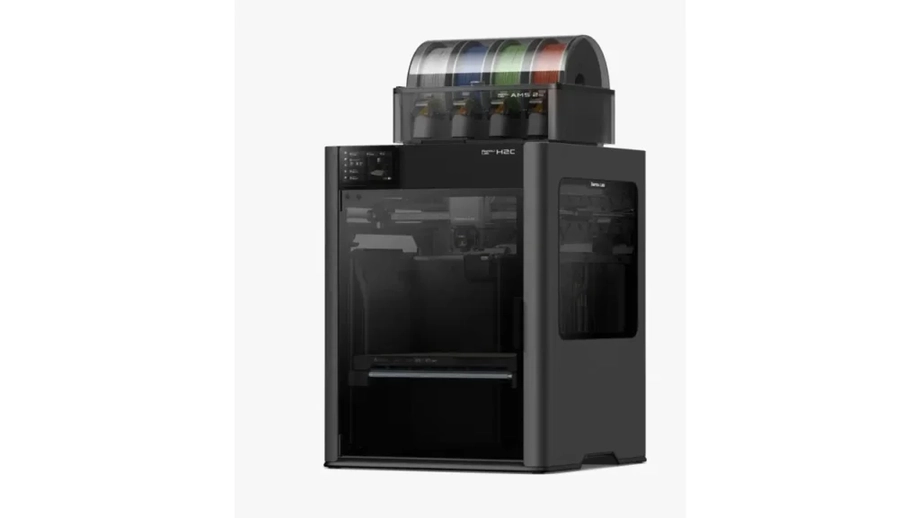
Production and exports accelerate together
China's 3D printing equipment output rose 85.9% in October 2026 from a year earlier, accelerating from 64.6% growth in January. Factories exported 6.81 million machines from January through October, an increase of 95.3%, according to figures released on November 26 by the Equipment Industry Development Center of the Ministry of Industry and Information Technology.
Contents
- Production and exports accelerate together
- How large can China's industry become?
- Why complex parts are the first big winners
- Batch production moves into phones, cars and robots
- Why consumer printers are reaching ordinary homes
- Shenzhen turns supply chains into market share
- Global opportunity meets industrial constraints
- The Bottom Line
Export value reached 17.53 billion yuan during those 10 months, twice the amount recorded a year earlier. That is already about 1.5 times the 11.354 billion yuan earned during all of 2025. Customs data show that 2025 exports totaled 5.026 million printers, up 33.2%, while their value rose 39.1% and exceeded 10 billion yuan for the first time.
Qu Guochun, director of the center and chairman of the China Additive Manufacturing Industry Alliance, said the relationship between manufacturing, customers and foreign sales had become a major feature of this year's expansion.
The most striking change this year is that production, application and exports are reinforcing one another. Industrial 3D printing is moving faster from research and prototyping toward batch production.
Qu said aerospace, energy, healthcare and automotive uses were deepening, while consumer machines, printing materials and personalized products were finding wider markets. He also described a structural change in the industry: individual technical advances are increasingly being joined by coordinated progress in materials, equipment and software. The production figures cover industrial enterprises above designated size, China's official statistical category for larger manufacturers. The release did not give an absolute national count of machines produced in October.
How large can China's industry become?
The China Additive Manufacturing Industry Development Report (2026), released by the alliance at the 2026 Additive Manufacturing Conference in Luzhou, Sichuan, on November 26, forecasts an industry scale of about 86 billion yuan for 2026. That would be roughly 23% above the 70 billion yuan recorded in 2025. The industry was worth 20.8 billion yuan in 2020, so its expansion to 70 billion yuan represents a compound annual growth rate of about 27%. A compound annual rate describes the smoothed yearly pace needed to move between two values over several years. China has ranked second worldwide in industry scale for five consecutive years.
Qu said the alliance aims for the industry to exceed 150 billion yuan by 2030, more than twice its 2025 size. More than 2,000 Chinese companies now have additive manufacturing as their main business. They include more than 250 enterprises above designated size, over 30 listed companies and 88 businesses holding the national Little Giant designation for specialized and innovative smaller firms. Nearly 100 industry financing deals were completed in 2025. Among 19 Little Giant companies tracked, almost 90% obtained financing during the past three years, compared with an industry average of 66%.
- 2025: Customs recorded 5.026 million exported printers worth 11.354 billion yuan.
- January 2026: National equipment output increased 64.6% from a year earlier.
- First half of 2026: Output rose 48.5%, exports reached 3.62 million units and export value climbed 109.3% to 9.611 billion yuan.
- January through October: Exports reached 6.81 million units and 17.53 billion yuan.
- November 25 and 26: Shenzhen released its latest industrial data, while the Luzhou conference and the ministry center provided new national figures.
Three regional clusters dominate the industry's geography. Beijing, Tianjin and Hebei concentrate on research and large components, the Yangtze River Delta has the most complete supply chain, and the Pearl River Delta is especially active in consumer products and exports. Shaanxi and the Sichuan and Chongqing region provide specialized support. Western areas focus more on metal printing and aerospace components, while central regions are developing demonstration projects that bring the technology into practical use.
Why complex parts are the first big winners
Additive manufacturing, the formal name for 3D printing, starts with a digital model that software divides into thin layers. A machine then deposits or solidifies material one layer at a time until the object is complete. Common approaches include fused deposition modeling, which extrudes heated plastic filament, resin printing hardened by ultraviolet light, and industrial systems that fuse metal or polymer powder. This differs from machining away unwanted material and from injection molding, which generally requires a purpose built mold.
An aircraft engine cooling component demonstrates why that distinction matters. Its precise internal cooling holes once required repeated mold making, processing and joining, with the manufacturing cycle lasting more than a month. Printing can now form the complex part in one piece in a single day. Removing several cutting, welding and assembly steps is particularly valuable when a design contains internal passages that conventional tools cannot easily reach.
Hospitals can also turn a patient's medical images into individualized designs. The resulting files can guide production of surgical guides, rehabilitation equipment and some implants. Instead of asking every patient to fit a standard object, manufacturers can adjust the object to the patient's anatomy.
Lin Feng, a professor at Tsinghua University, said the technology's greatest contribution lies in designs that traditional production methods struggle to make.
The greatest value of 3D printing is solving problems that traditional manufacturing has difficulty solving, such as complex internal channels, lightweight lattices and integrated forming with multiple materials. It changes the processing method and opens up product design.
Product designers can use that freedom to remove material where strength is unnecessary, combine several components into one printed structure and revise a design without waiting for a new mold. Those advantages explain why expensive, intricate parts adopted the technology before ordinary household goods did.
Batch production moves into phones, cars and robots
The alliance report says titanium alloy hinges for folding screen phones have entered production at scale. Humanoid robot dexterous hands and transmission components are being delivered in batches, while parts for low altitude aviation, including drones and other new aircraft, have begun installation in smaller quantities. These examples mark a shift from asking whether an object can be printed to whether it can be printed accurately, quickly, at a useful size and at an acceptable cost.
Guohai Securities argues that consumer electronics could become the decisive volume market. Folding phone hinges, shaft covers and similar structures combine demand for thin, light products with shapes that are difficult to manufacture. More efficient equipment and cheaper raw materials could lower the cost of each part as orders become larger and more repeatable.
Car factories offer another measure of progress. Shanxi Securities says molds with conformal cooling channels, meaning passages that follow the mold's shape instead of running only in straight drilled lines, can improve cooling efficiency by 30% to 50%. It cites BMW and Xiaomi as companies exploring production applications. The brokerage also points to titanium use in structural parts at Apple and Huawei as a source of demand. For suitable titanium components, printing can raise material utilization above 90%, reducing waste of an expensive metal.
Tan Huoying, general manager of Sichuan Boli Intelligent Technology, demonstrated how an unusual printed structure could serve a robot joint.
A hollow, porous 3D printed ball like this is an important solution for heat dissipation and weight reduction in humanoid robots. It is elastic when squeezed and can effectively meet the expansion and contraction needs of humanoid robot joints.
Robot joints need parts that can manage heat, save weight and tolerate repeated movement. Porous spheres and lattice structures allow engineers to combine those properties in ways that solid machined parts cannot easily match.
Why consumer printers are reaching ordinary homes
Desktop machines costing roughly 1,000 yuan have brought printing within reach of households, small shops and maker studios. Three changes are supporting that move. Hardware prices have fallen, AI tools can generate models from descriptions or simple instructions, and online model communities give users ready made designs. A growing selection of compatible materials and widely available domestic components has also reduced cost and improved reliability.
Bambu Lab's growth shows how quickly a consumer manufacturer can expand when those conditions coincide. The Shenzhen company was founded in 2020 and released its first product in 2022. Revenue approached 2 billion yuan in 2023, and in 2025 it became the first company in China's 3D printing industry to report annual revenue of 10 billion yuan.
Company figures say its original X1 reached a printing speed of 500 millimeters per second, about twice the pace of comparable products at the time. Its stated print success rate was 98%, compared with an earlier industry range of 60% to 70%. By June 2026, cumulative domestic sales through online and physical channels had exceeded one million units. Reliability and simpler operation matter because a failed print wastes both material and the time spent waiting for it.
Customs data provide another sign of demand: exports of additive manufacturing equipment using plastic or rubber materials rose 76% during the first nine months of 2026. SDIC Securities forecasts that global consumer printer sales could exceed 18 million units in 2030, representing a 29% compound annual growth rate from 2025 through 2030. It expects multicolor and full color printing, AI tools and a wider range of uses to support adoption. During the 2026 Singles Day shopping festival, brands promoted AI modeling and personalization, while printing experience stores continued appearing in shopping districts in larger Chinese cities.
Shenzhen turns supply chains into market share
Shenzhen sits at the center of the consumer boom. About nine out of every 10 consumer 3D printers sold worldwide are made in China, with production concentrated heavily in the city. Bambu Lab, Creality, Anycubic and Elegoo, four Shenzhen companies, together hold about 94% of the global market for machines priced below $2,500.
A factory in Shenzhen's Longgang district illustrates the manufacturing base behind those shares. More than 100,000 machines leave the factory each month, and 95% are exported. Europe and the United States are its main markets, while Brazil is among the faster growing destinations. After overseas orders surged, the business moved to a new site and expanded capacity nearly threefold. Trusted trader certification known as Authorized Economic Operator status subsequently reduced its customs inspection rate by about 70%, improving inventory turnover and the use of working capital.
Data released by the Shenzhen Statistics Bureau on November 25 show the city's 3D printing equipment output rising 81.1% from January through October. That exceeded growth of 40% for lithium ion batteries and 38.9% for industrial robots. Shenzhen's total industrial value added increased 10%, general equipment manufacturing grew 17.5%, investment in advanced technology manufacturing rose 26.7%, and investment in advanced technology industries climbed 55.9%. The city's goods trade reached 5.249583 trillion yuan, up 40.9%, with exports of advanced technology products increasing 30.4%.
Nearby suppliers of structural parts, nozzles, circuit boards, filament and packaging allow manufacturers to revise products and obtain components quickly. National output rose 48.5% in the first half of 2026, the fastest pace among major industrial products, while Guangdong province recorded growth of 51.8%. An industry estimate based on that momentum projects full year exports of eight million printers. The final customs total is not yet available, with the official count through October standing at 6.81 million units.
Global opportunity meets industrial constraints
The Wohlers Report 2026 places global 3D printing revenue at $24.2 billion in 2025, an increase of 11%. Asia Pacific accounted for about 20% of the global total, while surveyed companies in the region reported average revenue growth of 20%. North America remains the largest region by revenue. Shanxi Securities expects the global market to reach $114.5 billion by 2034, nearly five times its 2025 value, and forecasts that China's industry could exceed 100 billion yuan in 2027.
The alliance report identifies the next two to three years as a window for expanding batch production and expects average annual growth of around 20%. It also describes competition shifting from simply selling equipment to helping customers use it. Printing services, materials, replacement components, model libraries and complete production plans can continue generating business after a machine is delivered. AI platforms are beginning to connect material design, modeling, process settings, production monitoring and quality prediction.
Advanced industrial systems still present difficult technical work. High performance lasers and galvanometers, which steer laser beams, remain substantially dependent on external suppliers. Metal printing, engineering materials and sophisticated equipment require further development. For standardized goods produced in enormous quantities, printing also continues to trail established molding and casting processes on cost and speed. Consumer exporters face overseas certification rules, intellectual property risks and the expense of building repair and customer service networks.
The alliance report lists additional risks around matching capacity with demand, complying with foreign rules, alternative technical approaches and company cash flow. Its policy recommendations move beyond subsidies toward market access, product validation, common standards and shared technical foundations. Those measures are intended to help businesses prove that printed parts work reliably in real production, rather than simply adding more machines.
China's 86 billion yuan figure for 2026 remains a forecast, and full year production and export totals have not yet been released. The next numerical checkpoints are the 2027 industry forecast, the consumer sales projection for 2030 and the alliance's goal of exceeding 150 billion yuan by that year.
The Bottom Line
- China's 3D printing equipment output grew 85.9% in October, up from 64.6% growth in January.
- Exports reached 6.81 million units from January through October, up 95.3%, while export value doubled to 17.53 billion yuan.
- The industry is forecast to reach about 86 billion yuan in 2026, with an alliance goal of more than 150 billion yuan by 2030.
- An aircraft cooling component's production time fell from more than a month to one day, showing the value of printing complex internal structures.
- Titanium phone hinges, automotive tooling, medical products and humanoid robot components are moving beyond experimental use.
- Cheaper machines, AI modeling and mature supply chains are expanding consumer adoption, with Shenzhen companies holding a commanding global share.
- Further progress depends on advanced components, materials, production reliability, overseas compliance and services that help customers use printers effectively.