The headline number and what it means
China's large industrial enterprises earned 6,737.36 billion yuan in profit from January to October 2026, up 16.0% from a year earlier. The National Bureau of Statistics published its industrial profit release at 09:30 on Nov. 27, 2026, and said October profit rose 20.1%, 5.7 percentage points faster than September's 14.4% and the fastest monthly pace since May.
Contents
- The headline number and what it means
- Who is counted and how the figures are built
- How the rebound developed
- Why AI is lifting electronics profits
- High technology winners beyond chips
- Commodities added a second engine
- Where profits are still falling
- What ownership figures add to the story
- Cash flow shows pressure behind the profit growth
- What the split means for policy and demand
- Markets, tariffs and the next checks
- Key Points
Profit means the money a business keeps after paying the costs of making and selling goods. A 16.0% rise means the profit pool is much larger than a year ago, but the speed of sales still matters. Revenue at the surveyed firms rose 6.7% to 118.41 trillion yuan, while costs rose 6.2% to 100.72 trillion yuan. The profit margin on revenue, meaning the share of sales left as profit, was 5.69%, up 0.45 percentage points.
The cumulative pace also improved. Profit growth for January to October was 16.0%, compared with 15.5% for January to September. That matters because it shows the profit recovery did not simply rely on one strong October, although the monthly acceleration was sharp.
Who is counted and how the figures are built
The figure covers industrial enterprises with annual main business revenue of at least 20 million yuan, about 3 million dollars. In Chinese statistics, these are often called enterprises above designated size. Smaller workshops and very small factories are outside the count, so the data describe a large business slice of industry rather than every factory in the country.
The bureau conducts a monthly financial survey of these firms, except for January. It classifies companies under the national industry standard GB/T 4754-2017. Growth rates are calculated on a comparable basis, a method used because the set of firms changes each year. Some companies grow into the survey, others shrink out, new plants open, and failed or cancelled firms are removed. The bureau also adjusts base figures after enforcement checks and the removal of repeated data across regions and industries.
How the rebound developed
After first nine months figures showed 6.03374 trillion yuan in profit and a 15.5% increase, the October data pushed the total past 6.7 trillion yuan. Those earlier figures also showed how concentrated the recovery had become, with electronics supplying 9.6 percentage points of the 15.5% increase.
- 2025: Industrial earnings rose 0.6% after three years of declines.
- January to August 2026: Cumulative profit growth reached 15.7%.
- January to September 2026: Profit growth stood at 15.5%, and September alone rose 14.4%.
- October 2026: Monthly profit rose 20.1%, the fastest pace since May.
- Nov. 27, 2026: The National Bureau of Statistics released the January to October data at 09:30 Beijing time.
The sequence shows two things at once. Cumulative growth edged higher, while the single month of October accelerated much faster. That pattern points to a stronger recent pulse, but it also keeps attention on which industries supplied that pulse.
Why AI is lifting electronics profits
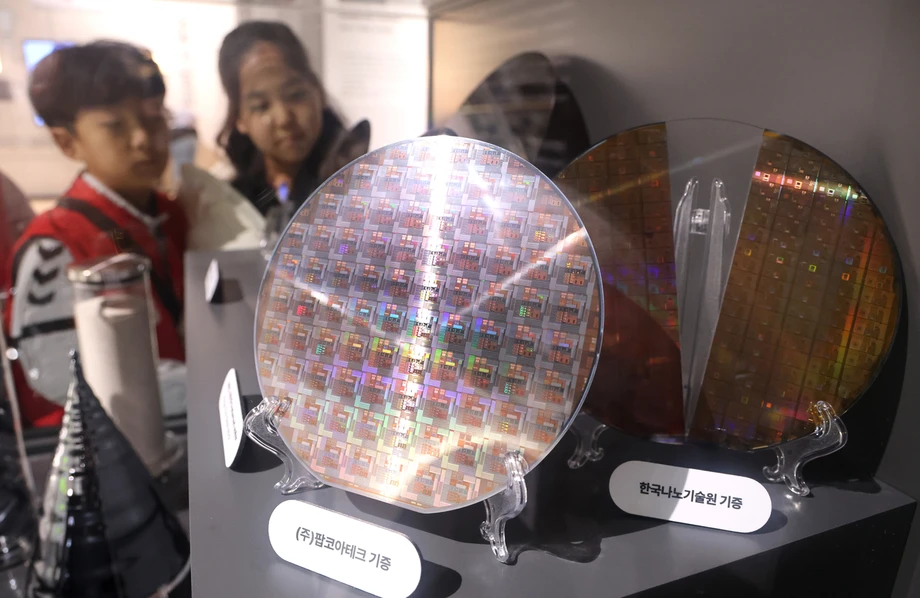
Yu Weining, chief statistician in the National Bureau of Statistics industrial department, set out the industry detail in an official interpretation. He said rising demand for AI computing power lifted memory chips and related manufacturing. Computer, communications and other electronic equipment manufacturing profits rose 100.9% to 1,125.30 billion yuan in the first 10 months. The written summary rounded that increase to 1.0 times, meaning profits roughly doubled.
Electronics supplied 9.7 percentage points of the 16.0% industrial profit increase. A contribution point here is a slice of the total growth rate. Because 9.7 of 16.0 came from electronics, that industry delivered more than half of the whole increase. If its contribution is removed, the remaining industries together would account for about 6.3 percentage points of growth.
The tables show why the sector had such weight. Profits at whole computer makers rose 410%, electronic special materials makers 220%, electronic circuit makers 81.6%, optoelectronic device makers 69.7% and discrete semiconductor makers 57.5%. Semiconductors are the chips that process or store information, while optoelectronic devices turn electricity into light or light into signals, a useful part of data links.
High technology winners beyond chips
High technology manufacturing profits rose 50.9% in the first 10 months, 34.9 percentage points faster than all large industrial firms. This grouping includes products that need advanced engineering and heavy research spending, such as fiber optics, spacecraft and medical devices.
Yu said construction of large intelligent computing centers drove optical fiber manufacturing profits up 670% and fiber optic cable profits up 150%. Fiber and cable form the physical pipes that carry data between servers in large AI facilities. Spacecraft and launch vehicle makers saw profits rise 63.2%, while aerospace related equipment makers gained 41.7%. Dental equipment and supplies for hygiene and medical use rose 35.3% and 15.6%.
Commodities added a second engine
Mining profits rose 38.8% to 993.61 billion yuan, helped by stronger commodity demand and prices. Nonferrous metals mining profits rose 60.2% and nonferrous smelting profits rose 71.7%. Yu said demand from new energy and AI industries lifted copper and aluminum, and the two nonferrous segments together added 4.6 percentage points to industrial profit growth.
Coal mining profits rose 61.4%, chemical raw material and chemical product profits rose 50.3%, and chemical fiber profits rose 87.0%. Oil and gas extraction gained 22.8%. Oil, coal and other fuel processing swung to a combined profit of 106.67 billion yuan from a loss a year earlier. The official table leaves the growth rate blank for that segment because a percentage change from a loss cannot be calculated in the usual way.
Where profits are still falling
The utilities group, covering electricity, heat, gas and water supply, saw profits fall 14.8% to 629.99 billion yuan. Power and heat production alone fell 18.4%. Agricultural and sideline food processing fell 19.5%, ferrous metal smelting fell 14.2%, and electrical machinery fell 8.0%.
Automobile manufacturers earned 286.67 billion yuan in profit, down 26.0%. Their revenue grew only 1.9%, while costs grew 3.2%, a squeeze that shows how price competition can leave firms selling more cars but keeping less money. Makers of nonmetallic mineral products, including cement and glass linked to construction, saw profits fall 46.7% as revenue fell 10.4%. Furniture makers reported a 52.4% fall in profit.
Other activity data help explain the split. Retail sales rose just 0.4% in October, fixed asset investment fell 8.1% in the first 10 months, and property construction starts fell 24.4% year to date. Households were buying cautiously, and property building remained weak. Export demand filled part of the gap, with October exports rising 35.2% and the trade surplus passing 1.04 trillion dollars.
What ownership figures add to the story
The official tables break profits into ownership groups, though the groups overlap. State controlled firms earned 2,108.03 billion yuan, up 13.0%. Shareholding firms earned 5,242.66 billion yuan, up 21.4%. Firms invested by Hong Kong, Macao and Taiwan earned 1,467.87 billion yuan, up just 0.2%. Private firms earned 1,758.93 billion yuan, up 11.4%.
The overlap matters because a company can fit more than one category, so the groups do not add up neatly to the national total. The profit margins still show differences. State controlled firms kept 6.47 yuan of profit from each 100 yuan of revenue, shareholding firms 5.45 yuan, firms invested by Hong Kong, Macao and Taiwan 6.76 yuan, and private firms 4.35 yuan. Private firms also had the highest expense load, 9.87 yuan per 100 yuan of revenue, and a longer average collection period, 76.7 days.
Cash flow shows pressure behind the profit growth
Cost control helped the headline. Large industrial firms spent 85.06 yuan on costs for every 100 yuan of revenue, down 0.42 yuan from a year earlier. Expenses, including sales, administration, research and finance, fell to 8.34 yuan per 100 yuan of revenue, down 0.15 yuan. Higher revenue per worker also appeared, at 1.952 million yuan per person, up 130,000 yuan.
Some balance sheet measures moved the other way. Accounts receivable, meaning money owed to firms by customers, reached 30.45 trillion yuan at the end of October, up 10.5%. Finished goods inventories, meaning products made but not yet sold, reached 7.54 trillion yuan, up 12.0%. Both grew faster than revenue, which rose 6.7%. The average collection period lengthened to 72.2 days, up 1.4 days from a year earlier, and inventory turnover took 21.2 days, 0.6 days longer.
Lynn Song, Greater China chief economist at ING, said the figures gave a mixed reading of the wider economy. She said:
The recovery remains uneven and provides a more mixed signal on the health of the broader economy.
What the split means for policy and demand
Tianchen Xu, senior economist at Economist Intelligence Unit, said the rebound was led by upstream industries such as metals and energy, where prices had risen. He said the lift had not reached company profits in enough parts of the economy. He described it this way:
The recovery has yet to broaden into a more durable improvement in corporate profitability.
Ding Meng, chief China economist at CITIC Bank International, said AI related and upstream profit growth was outpacing downstream industries, and external demand remained an important support. He said the strength of profit growth reinforced expectations of no additional monetary easing soon. Beijing had already cut interest rates, added liquidity and directed financing toward technology, manufacturing and infrastructure.
Leah Fahy, senior China economist at Capital Economics, estimated that a private activity gauge known as the China Activity Proxy grew 2.4% in October, led by exports rather than domestic manufacturing. She forecast 2.8% growth next year, down from 3.9% in 2025, as AI related investment may slow. China's gross domestic product grew 4.6% in the first three quarters, keeping the annual target of 4.5% to 5% within reach, but household demand and property stress remained weak.
Markets, tariffs and the next checks
Technology stocks responded to the profit mix. The CSI Semiconductor Industry Index rose more than 5% and the Hang Seng Tech Index gained 3% in the session after the release. The CSI300 index rose 0.2% by the lunch break, the Shanghai Composite gained 0.3% and the Hang Seng index climbed 0.9%. Semiconductor materials and equipment shares rose as much as 8%, while cloud computing shares gained 6%.
Trade policy is the main risk for the export engine. The United States proposed new maximum tariff rates of 20% to 40% on goods from 14 major trading partners, including China. The headline rate on Chinese goods is 20%, and the levy would rise to 40% if the United States and China do not extend the truce beyond January. Bank of America Securities analysts said the proposal was broadly consistent with the existing trade framework and that the headline exaggerated the added tariff burden.
Alicia Garcia Herrero, chief economist for Asia Pacific at Natixis, said Chinese suppliers had changed the route their goods take to the United States. She said:
Chinese firms now export intermediate goods to the rest of Asia and reach the U.S. indirectly.
One missing piece is the monthly industry split. The profit release gives the October total but only January to October detail by industry, so it cannot show which sectors drove the monthly surge. The next checks are November trade figures around early December and the National Bureau of Statistics activity set around mid-December, covering industrial output, retail sales and fixed asset investment.
Key Points
- China's large industrial firms earned 6,737.36 billion yuan in profit in the first 10 months, up 16.0%.
- October profit rose 20.1%, the fastest monthly pace since May and 5.7 percentage points above September.
- Electronics profits rose 100.9% and supplied 9.7 percentage points of the 16.0% increase.
- High technology manufacturing profits rose 50.9%, while mining profits rose 38.8%.
- Autos fell 26.0%, nonmetallic mineral products fell 46.7%, and furniture fell 52.4%.
- Receivables rose 10.5% and finished goods inventories rose 12.0%, both faster than revenue.
- GDP growth of 4.6% in the first three quarters kept the annual target within reach, but domestic demand stayed weak.
- November trade data and the mid-December activity release will be the next tests for the recovery.