A Trade Milestone Overshadowed by Imbalances
South Korea has officially broken a four-year slide in its trade balance with China, posting a notable surplus during the first ten months of the year. Data released by the Korea International Trade Association and the Ministry of Trade, Industry and Energy shows that South Korea recorded a trade surplus of 433 billion dollars with its giant neighbor between January and October. That figure marks a sharp turnaround from the 10.5 billion dollar deficit recorded during the same period a year earlier. Yet a closer look reveals a paradoxical reality behind the headline numbers. While the overall balance swung into positive territory, the economic health of the broader trade relationship depends almost entirely on a single technology sector.
Contents
When chips are removed from the equation, South Korea's trade balance with China tells a very different story. Non-semiconductor goods trade resulted in a deficit of 41.5 billion dollars through October. That shortfall grew significantly compared to the 29.1 billion dollar deficit recorded during the first ten months of the previous year, expanding the gap by 12.4 billion dollars. The widening shortfall in traditional manufacturing and consumer goods highlights growing structural vulnerabilities in how South Korea trades with the world's second largest economy.
The Semiconductor Engine Driving the Surplus
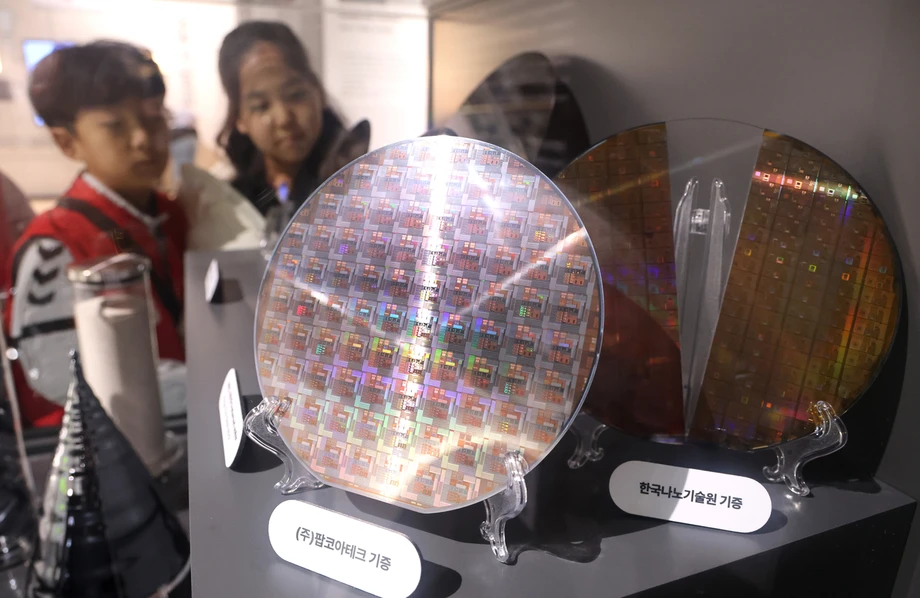
Semiconductors have become the undisputed powerhouse of South Korean exports to China, masking weaknesses across nearly every other industrial category. During the first ten months of the year, total exports to China reached 198.5 billion dollars, with memory and processor chips accounting for 124.3 billion dollars, or roughly 63 percent of the total. The trade surplus generated by semiconductors alone reached 84.8 billion dollars over the same timeframe. That figure represents a staggering 4.6-fold increase compared to the 18.6 billion dollar semiconductor surplus recorded in the previous year.
The export surge is largely fueled by escalating global demand for artificial intelligence infrastructure, high bandwidth memory, and advanced DDR5 components used in modern data centers. South Korean manufacturers supply essential components that Chinese tech firms and electronics assemblers require for advanced computing applications. This reliance on advanced components means that overall trade numbers fluctuate heavily based on the cyclical fortunes of the chip market. If memory prices drop or global technology spending slows down, the entire trade balance with China could quickly return to deficit.
Struggles in Traditional Manufacturing Sectors
Beyond semiconductors, key industrial sectors that traditionally formed the backbone of South Korean manufacturing are facing mounting competitive pressures in the Chinese market. Automotive trade offers a clear example of the shifting dynamics, with South Korea recording a deficit of 4.2 billion dollars in the car sector during the first ten months. That deficit is roughly double the 2.2 billion dollar shortfall recorded during the same period a year earlier. Consumers in China increasingly favor locally manufactured electric vehicles, while South Korean automakers face intense pricing and technology competition.
Other vital industrial categories are experiencing similar contractions. Trade deficits for secondary batteries and electrical equipment reached 4.0 billion dollars and 5.7 billion dollars respectively, with each sector seeing its deficit widen by 1.0 billion dollars compared to the previous year. Kang Gang-chan, trade investment director at the Ministry of Trade, Industry and Energy, explained the mechanics behind these changing trade flows during a recent media briefing.
Imports of Chinese electric vehicles have increased while South Korean automotive exports to China have declined. In the case of secondary batteries, high domestic production costs have led some companies to manufacture products in Chinese factories and then import them back into South Korea.
Director Kang noted that the recent trade surplus should not be misconstrued as a broad recovery in industrial competitiveness, given that the positive figures stem almost entirely from the semiconductor industry.
Shifting Tides in Chinese Industrial Policy
The deeper deficits in non-semiconductor goods reflect a fundamental evolution in China's domestic economy and manufacturing capabilities. For decades, South Korea and other nations supplied intermediate goods to Chinese factories that assembled finished products for export to Western markets. However, China has steadily reduced its reliance on processing trade since the mid-2000s, choosing instead to build domestic supply chains and achieve technological self-sufficiency. This industrial upgrading means Chinese factories now produce many components locally that they once imported from South Korean suppliers.
Experts suggest that South Korean exporters must adapt to an economic environment where China is increasingly a competitor rather than a simple assembly workshop. Park Sol, a research fellow at the Korea International Trade Association, pointed out that the challenges facing South Korean exporters are part of a broader global trend. She noted that Chinese industries are moving up the value chain, requiring foreign suppliers to target specialized niches rather than general intermediate goods. As an illustration, she pointed to how Japanese manufacturers successfully expanded their market share for industrial robots in China by focusing on core components and proprietary control technologies despite Beijing's push for domestic robot production.
The Push to Revive Consumer Goods Exports
To counter the decline in intermediate goods and heavy manufacturing, government agencies and trade bodies are working to expand the export of consumer products to Chinese buyers. Following years of declining sales, South Korean consumer goods exports to China showed signs of a rebound in the first half of the year, reaching 3.44 billion dollars and marking an 8.7 percent increase over the same period a year earlier. Categories such as agricultural products, fisheries, and cosmetics led this modest recovery.
Between January and October, South Korean cosmetic shipments to China reached 1.8 billion dollars, up 2.7 percent from a year earlier, while agricultural and fishery exports rose 11.9 percent to 1.9 billion dollars. Yet these gains appear relatively modest when measured against wider global trends. South Korea's total worldwide cosmetics exports surged by 32.3 percent over the same months, demonstrating that growth in the Chinese market has lagged behind other international destinations. Local brands face stiff competition from domestic Chinese beauty companies, which have captured significant market share through aggressive digital marketing and products tailored to domestic cultural preferences, as detailed in reports on Chinese beauty brands.
Navigating Regulatory Hurdles and Service Agreements
Expanding consumer goods exports into China remains a complex endeavor, particularly for small and medium-sized enterprises that lack local market intelligence. Exporters often encounter strict administrative barriers and rigorous certification processes for medical devices, cosmetics, and food products. Trade researchers emphasize that government backing is essential to help smaller businesses navigate these obstacles. The Ministry of Trade, Industry and Energy, working alongside the Korea Trade-Investment Promotion Agency, currently provides online and offline marketing support, logistics assistance, and distribution network guidance to help firms establish regional footholds across China.
Bilateral diplomatic efforts are also attempting to open new avenues for economic cooperation beyond physical merchandise. Government leaders recently announced the substantive conclusion of services and investment negotiations following years of talks to expand an existing bilateral trade agreement. That diplomatic milestone aims to establish clearer rules for service providers, entertainment companies, and tourism operators, building on economic ties that were previously strained by geopolitical disputes over regional missile defense deployments, similar to the diplomatic frictions that affected bilateral service agreements in past years. However, analysts caution that formal implementation will take time, and tangible improvements for cultural industries will depend heavily on administrative approvals in Beijing.
The Essentials
- South Korea recorded a trade surplus of 433 billion dollars with China during the first ten months of the year, ending a four-year deficit streak.
- Semiconductors drove the surplus, accounting for 1.24 billion dollars in exports and generating an 84.8 billion dollar trade surplus.
- Excluding semiconductors, South Korea's trade balance with China registered a deficit of 41.5 billion dollars, up 12.4 billion dollars from the previous year.
- Automotive, secondary battery, and electrical equipment sectors all saw their trade deficits expand due to rising imports and shifting manufacturing footprints.
- Consumer goods exports showed a partial recovery, with cosmetics and agricultural shipments posting modest gains amid intense competition in the Chinese market.