A Massive Legislative Agenda Completed in Hanoi
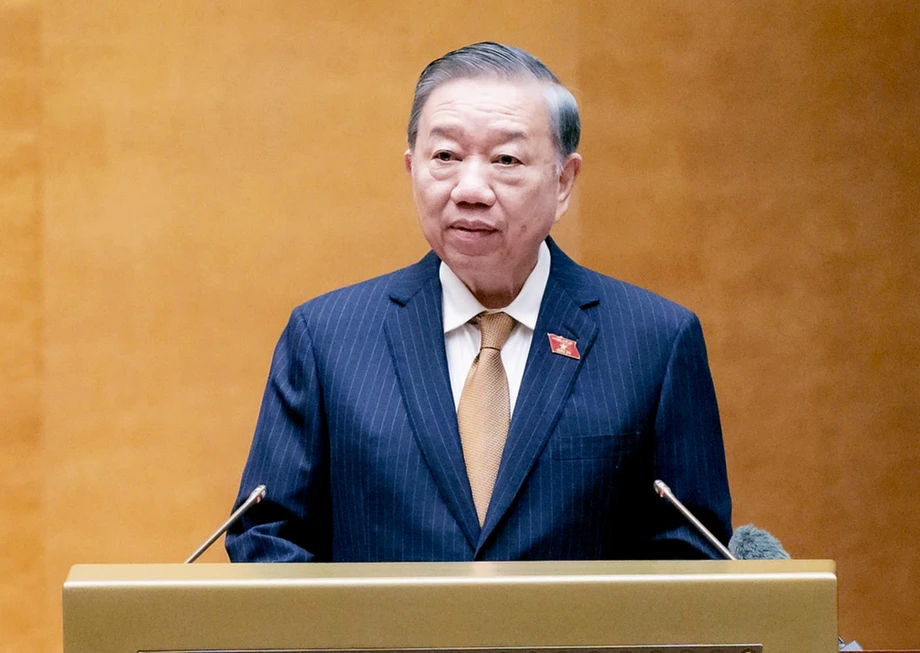
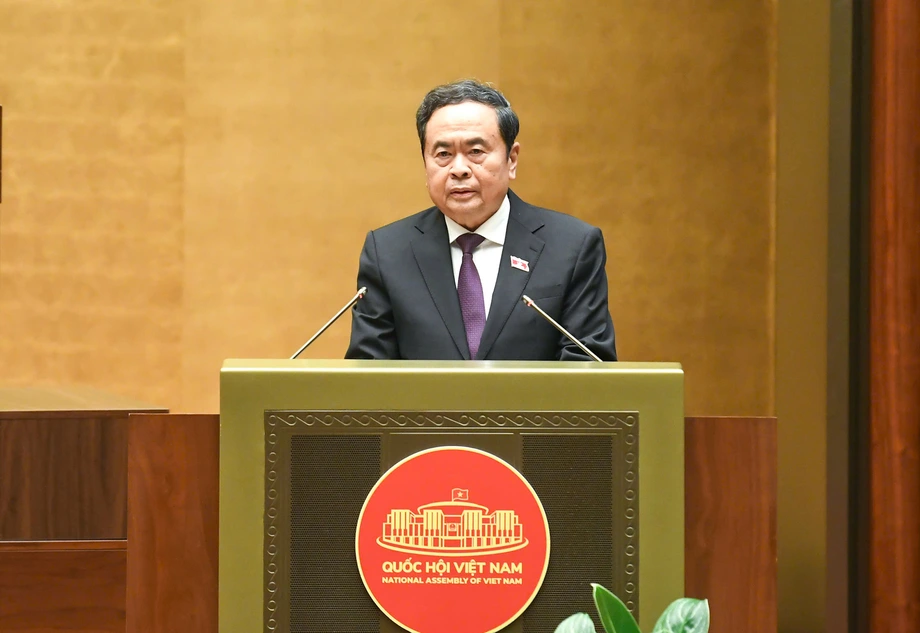
Vietnam completed a landmark legislative period when the sixteenth National Assembly wrapped up its second sitting in Hanoi. Spanning twenty-seven intensive working days, lawmakers tackled an unprecedented volume of state business under the leadership of top officials, including National Assembly Chairman Tran Thanh Man, General Secretary and President To Lam, Prime Minister Le Minh Hung, Permanent member of the Secretariat Tran Cam Tu, and President of the Vietnam Fatherland Front Central Committee Bui Thi Minh Hoai. National Assembly Secretary-General and Chairman of the Office of the National Assembly Le Quang Manh announced during a November 21 press conference that the legislature successfully adopted thirty-eight laws and eighteen resolutions. Deputy Chairman of the Office of the National Assembly Nguyen Van Hien noted that eighty percent of the parliamentary schedule was dedicated entirely to lawmaking, resulting in twenty-two newly enacted or comprehensively overhauled codes and sixteen statutes amending thirty-eight existing regulations.
Contents
- A Massive Legislative Agenda Completed in Hanoi
- Transforming Land Management and Real Estate Rules
- Overhauling the Justice System and Crime Prevention
- Establishing Ambitious Economic Targets for 2027
- Approving Major Infrastructure Projects and Regional Transport
- Comprehensive Timeline of Legislative Action
- What Remains Unresolved and Next Steps
- The Essentials
The extensive legislative output builds upon foundations established after last year's attacks on economic stability, pushing the country toward deep domestic institutional reform. The newly adopted rules aim to clear persistent legal bottlenecks, mobilize national resources, and establish modern frameworks for public administration and business growth. Through three distinct legislative sittings held during its first operational year, the sixteenth mandate has now approved sixty--two laws and sixteen legal normative resolutions. Official documentation published in the list of laws passed by the National Assembly details the full scope of statutes greenlit by parliamentarians during this historic second sitting.
Transforming Land Management and Real Estate Rules
Lawmakers prioritized vital structural updates to property governance by passing revised legislation covering land management, residential housing, and commercial real estate operations. Officials expects these measures to establish real accountability, protect public interests, and provide a stable operational baseline for developers and citizens alike. The legislative package includes updated regulations governing land recovery procedures and the issuance of land certificates for properties lacking formal documentation. Parliament also enacted targeted rules for the real estate market to eliminate speculative abuse and safeguard buyers.
Complementing these real estate updates, the legislature passed the revised Law on Small and Medium-sized Enterprise Development on November 20, 2026, securing unanimous approval from all 485 attending deputies. Presenting the government explanations, Minister of Justice Hoang Thanh Tung stated: "Các tiêu chuẩn xác định doanh nghiệp nhỏ và vừa đã được rà soát kỹ lưỡng để bảo đảm tính khả thi, ổn định và dễ áp dụng, đúc rút từ hơn 25 năm thực thi chính sách và thực tiễn quốc tế." Comprising four chapters and thirty-two articles, the statute will take effect on July 1, 2027. On the same morning, lawmakers adopted the amended Law on Property Auction with 475 favorable votes out of 482 participating delegates. The revised auction statute requires advance deposits equivalent to twenty to fifty percent of the starting price for land use rights involving residential land allocations to individuals, designed specifically to stop speculative bidders from driving up prices and forfeiting deposits.
Overhauling the Justice System and Crime Prevention
The National Assembly enacted sweeping reforms across the penal code, investigative procedures, and administrative oversight to modernize national security and human rights protections. Lawmakers approved the revised Penal Code on November 20, 2026, with 463 of 472 deputies voting in favor. Comprising twenty-five chapters and four hundred seventeen articles, the code takes effect on March 1, 2027. Outlining the government stance during legislative debates, Minister of Public Security General Lương Tam Quang announced the removal of capital punishment for six specific offenses, retaining life imprisonment as the maximum penalty. Minister of Public Security General Lương Tam Quang stated: "Việc bãi bỏ hình phạt tử hình đối với một số tội danh nhằm bảo đảm tính nhân đạo, sự tương xứng trong lượng hình và hội nhập quốc tế nhưng vẫn giữ vững kỷ cương phòng chống tội phạm."
Parliament also adopted the revised Law on Organisation of Criminal Investigation Bodies and the revised Law on Handling of Administrative Violations, both taking effect in early 2027 and 2028 respectively. Under the new investigative framework, authorities removed the investigative powers previously granted to customs, forest rangers, and fisheries surveillance units, restricting primary investigative authority strictly to the police and military while restructuring the Supreme People Procuracy investigation agency. For minor infractions, the administrative violations law introduces community service as an alternative to monetary fines up to five million dong for individuals who voluntarily admit wrongdoing.
Establishing Ambitious Economic Targets for 2027
Economic planning for the upcoming year establishes a high-growth trajectory designed to fulfill the strategic directives of the fourteenth party congress. The National Assembly formally resolved to pursue a gross domestic product growth rate of ten percent or higher for 2027. Additional macroeconomic indicators approved alongside the growth goal include a gross domestic product per capita target of 6,100 United States dollars, a consumer price index increase capped at 4.5 percent, and a total social investment volume projected at thirty-eight percent of gross domestic product.
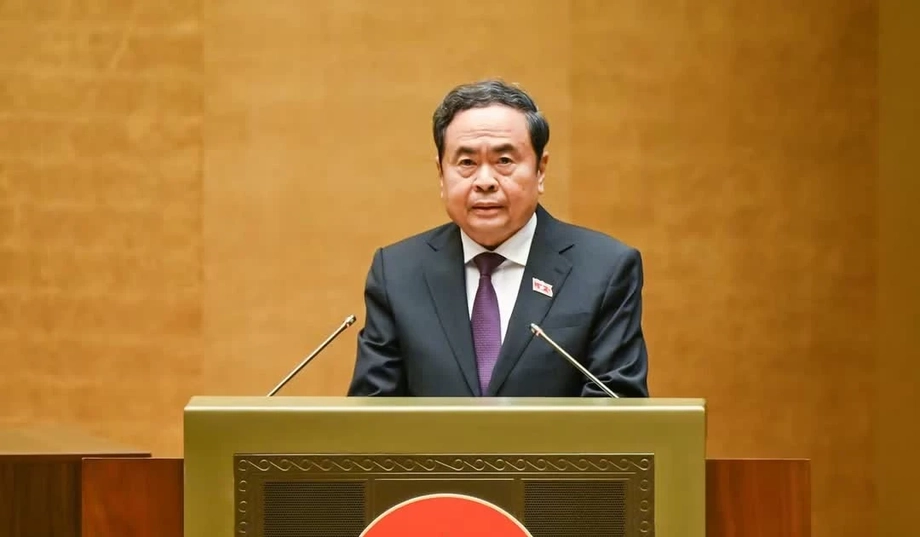
State budget allocations for 2027 reflect these expansionary goals. Total state revenues are projected at 3,334,338 billion dong, against total expenditures budgeted at 4,073,935 billion dong. The resulting budget deficit is set at 739,597 billion dong, which equals 4.5 percent of gross domestic product, backed by total government borrowings of 1,279,717 billion dong. National Assembly Chairman Tran Thanh Man urged all government branches, ministries, and local authorities to accelerate policy implementation and ensure that public investments directly translate into tangible economic outcomes.
Approving Major Infrastructure Projects and Regional Transport
Infrastructure development received substantial momentum with parliamentary approval for several nationally significant transportation networks. Lawmakers greenlit investment policies for key expressway corridors, including the Bảo Hà to Lai Châu highway (specifically the Bảo Hà to Tân Phong section), the Quảng Ngãi to Kon Tum highway, and the Mộc Châu to Sơn La to Điện Biên highway (focusing on the section traversing Sơn La province). Ministry of Construction officials noted that completing these corridors will improve connectivity across northern mountainous regions, the central coast, and the central highlands. Once the Bảo Hà to Lai Châu route reaches completion, all thirty-four provinces and centrally run cities nationwide will feature direct expressway access.
The legislative sitting also addressed specialized regional policies, such as specific mechanisms for tourism development outlined in Nghị quyết số 59/2026/QH16 and financial updates covered under earlier coverage of the sixteenth mandate. Furthermore, parliamentarians decided to defer consideration of the revised Postal Law alongside four other draft proposals, including the maritime and inland waterway transport code, the food safety law, derivatives trading rules, and cultural industry development legislation, pushing their review to the third parliamentary session.
Comprehensive Timeline of Legislative Action
- November 13, 2026: Lawmakers vote on trade, competition, securities, and measurement legislation during early plenary sessions.
- November 20, 2026: Parliament adopts the revised Penal Code, Data Security Law, Law on Small and Medium-sized Enterprise Development, and amended property auction rules.
- November 21, 2026: The National Assembly passes the Land Law, Housing Law, revised Criminal Procedure Code, and approves administrative boundary adjustments between Hanoi and Phu Tho province.
- November 21, 2026: National Assembly Chairman Tran Thanh Man delivers closing remarks, concluding the twenty-seven-day legislative sitting.
- November 24, 2026: The nation observes the first official celebration of Vietnam Culture Day following statutory additions enacted during the session.
What Remains Unresolved and Next Steps
While the National Assembly cleared a historic legislative backlog, several important policy details and implementation timelines remain pending. Five specific draft laws concerning maritime transport, food safety, postal services, derivatives trading, and cultural industries were deferred to the third parliamentary session to allow drafting agencies time for further refinement. The government must now issue detailed implementing decrees and circulars to ensure that newly passed statutes take effect smoothly alongside their scheduled operational dates in 2027 and 2028. No specific calendar dates were announced for the preliminary committee hearings on the deferred bills.
Local People Committees across all provinces face immediate operational pressure to align municipal guidelines with the freshly enacted national land and enterprise statutes. Ministries must finalize administrative frameworks for online bidding thresholds, advance deposit mechanisms, and corporate criminal liability provisions before the statutory implementation deadlines arrive.
The Essentials
- The sixteenth National Assembly adopted thirty-eight laws and eighteen resolutions across twenty-seven working days at its second session.
- Lawmakers voted to target a gross domestic product growth rate of ten percent or higher for the 2027 fiscal year.
- The revised Penal Code abolishes capital punishment for six specific offenses while retaining life imprisonment as the maximum penalty.
- The newly enacted Law on Small and Medium-sized Enterprise Development comprises four chapters and thirty-two articles, taking effect on July 1, 2027.
- Investment policies were approved for three strategic regional expressways to connect northern and central provinces.