Review to cover the 2013 Constitution and 2025 changes
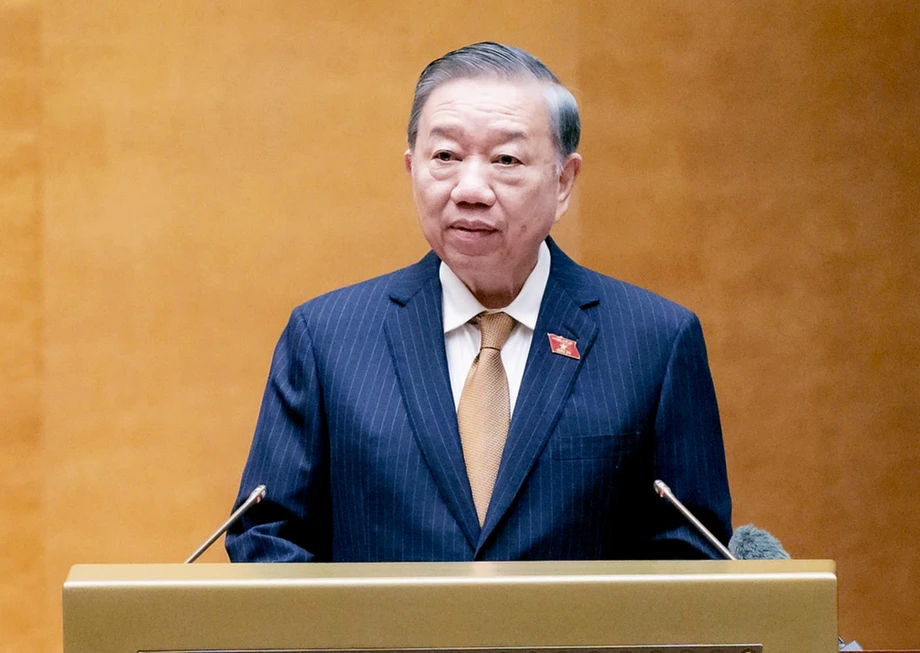
Vietnam's General Secretary and President To Lam called on November 6, 2026, for a review of the implementation of the 2013 Constitution, including amendments adopted in 2025, to prepare the foundations for studying and proposing comprehensive constitutional changes.
Contents
- Review to cover the 2013 Constitution and 2025 changes
- Why implementation is central to the review
- What the constitutional review would examine
- From the first Constitution to the new review
- Lawmakers face stronger responsibility for constitutional compliance
- Delegating power requires resources and oversight
- Public participation and rights are part of the agenda
- Budgets and resources must account for future generations
- Development goals shape the legislature's next work
- Key Points
Speaking at the National Assembly Building in Hanoi, Lam linked that work to Politburo Conclusion No. 17 and the country's development goals for 2030, with a vision to 2045. He said the review should identify constitutional values to preserve, provisions needing improvement and practical problems in the exercise of state power.
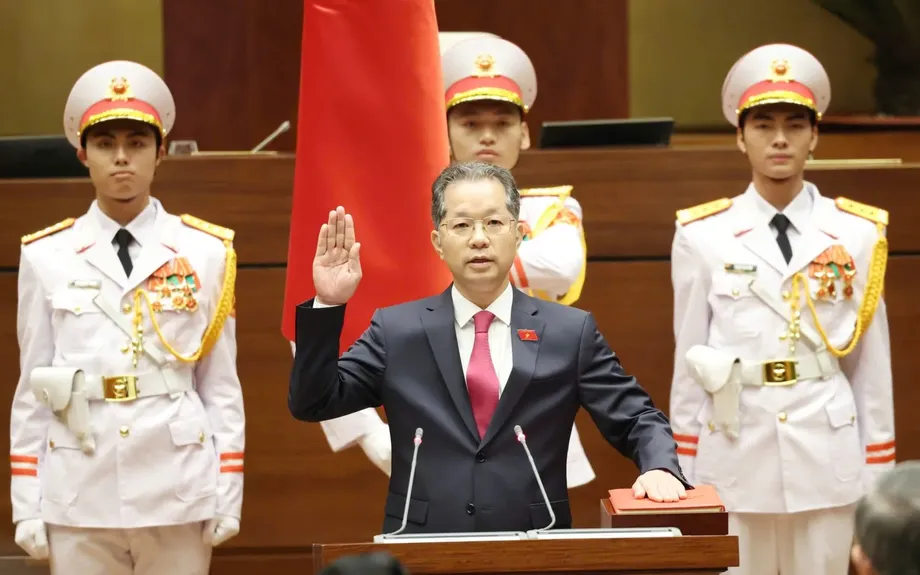
The ceremony, held in Dien Hong Hall during the second session of the 16th National Assembly, marked 80 years since Vietnam adopted its first Constitution on November 9, 1946. Prime Minister Le Minh Hung and National Assembly Chairman Tran Thanh Man were among the senior officials attending.
The government's anniversary statement sets out three directions from Lam: enforce the current Constitution while researching improvements, protect public participation and rights, and improve institutions and national policy decisions.
Lam said preparations must proceed under Communist Party leadership, draw on public knowledge and follow constitutional authority and procedures. No timetable for a draft, public consultation or an amendment vote was announced.
Why implementation is central to the review
Lam identified gaps between legal rules and their application, between the authority assigned to institutions and the resources and skills available to them. He also pointed to unclear responsibility, weak coordination and delays in addressing people's legitimate interests.
Those problems connect the constitutional review to everyday government performance. A public body may have formal responsibility for a task but lack the staff, funding or ability to complete it. Citizens then face delays even when the law already sets out their rights.
Lam called for coordinated improvements in how power is exercised, checked and explained to the public. Authorities should address both officials exceeding their powers and officials avoiding responsibility, he said.
He also asked lawmakers to distinguish weaknesses in policy design from failures in implementation. The response depends on the cause: a conflicting rule may require legal revision, while a sound rule that is poorly applied requires action by the institutions responsible.
What the constitutional review would examine
The 2013 Constitution and the provisions amended in 2025 are both to be assessed. Lam called for a sound theoretical and practical basis for considering comprehensive revisions, combining an examination of constitutional principles with evidence about how government works.
A constitution is a country's highest legal framework. It establishes the main institutions of the state, sets the boundaries of their powers and recognises rights. Ordinary laws and official decisions must operate within that framework.
Lam said research should be conducted scientifically, democratically and cautiously. The process should preserve the political and legal foundations of the system, protect people's participation in state power and meet the country's development needs.
His instructions place constitutional research alongside continued enforcement of the existing Constitution. Agencies and officials remain responsible for complying with current rules while the review proceeds.
From the first Constitution to the new review
The first National Assembly adopted Vietnam's first Constitution at its second session on November 9, 1946. Lam recalled its principles of state power belonging to the people, national unity and democratic freedoms, linking national independence with the organisation of government through a constitution.
National Assembly Chairman Tran Thanh Man said the legislature had enacted five constitutions and nearly 700 laws. The anniversary brought that legislative history together with a new instruction to examine how the present constitutional framework functions.
- November 9, 1946: The first National Assembly adopted Vietnam's first Constitution at its second session.
- 2013: Vietnam adopted the Constitution that is now the basis of the proposed implementation review.
- 2025: Amendments and supplements were adopted, and Lam said these provisions must also be assessed.
- November 6, 2026: Lam called for preparations to study comprehensive amendments at the anniversary ceremony in Hanoi.
- 2030 and 2045: Development goals and the longer national vision cited by Lam frame the government's institutional agenda.
Lam said successive constitutional changes had carried forward core values from 1946 while developing the organisation of state power. He also said human rights and citizens' rights had received increasing attention.
Lawmakers face stronger responsibility for constitutional compliance
The National Assembly and its agencies should take greater responsibility for ensuring that legislation complies with the Constitution, Lam said. That means checking proposed policies against constitutional rules during appraisal, debate and decision making, especially where state powers and individual rights are involved.
Constitutionality means that a law or official action fits the country's highest legal rules. Lam's instructions call for that check to be part of the lawmaking process, with violations addressed, their consequences remedied and responsibility established.
Agencies and officials must remain within the Constitution and the law when carrying out duties and using delegated powers. Party committees should lead and inspect the implementation of Party policies, while Party organisations and members should observe the law and remain subject to public supervision.
The accountability message follows Lam's October call for the replacement of underperforming officials before their failings reach the point of disciplinary action. His November speech places responsibility for performance within a broader discussion of constitutional duties and control over state power.
Delegating power requires resources and oversight
Lam said decentralisation and delegation must come with adequate conditions for implementation and appropriate supervision. Decentralisation transfers decision making away from central authorities, while delegation allows another institution or official to exercise specified powers.
His concern was practical: authority alone does not give an institution the money, people or skills needed to act. Assigning responsibility without those conditions can leave officials unable to deliver and residents waiting for decisions.
Lam called for clearer responsibilities and closer coordination between agencies. Oversight should also establish who must answer when powers are misused, tasks are neglected or institutions pass responsibility between themselves.
For public administration, the proposed approach joins three requirements: define who may decide, provide the conditions needed to carry out the decision and check the result. Lam presented these as connected parts of making state power work effectively.
Public participation and rights are part of the agenda
Lam called for people to participate in making policy, supervise public authorities and take part in decisions as provided by the Constitution and law. He said National Assembly deputies should maintain close contact with voters and faithfully reflect their legitimate aspirations.
The president and Party general secretary described the relationship between citizens and government in his anniversary address:
The strength of the State originates from the people and must be exercised to serve the people.
The Vietnam Fatherland Front and socio-political organisations were urged to strengthen supervision and social criticism, meaning scrutiny and feedback on public policy and official conduct. State agencies should respond to public feedback and promptly address shortcomings and violations.
Judicial bodies should uphold justice and protect human rights and citizens' rights, Lam said. He also said the exercise of rights must respect the lawful rights and interests of others and the national interest.
His instructions connect participation with a duty for institutions to respond. Voter contact, public feedback and supervision are intended to inform decisions and help identify problems in the way public authority is exercised.
Budgets and resources must account for future generations
Lam said decisions on budgets, investment and natural resources should consider effectiveness, the availability of resources and effects on different social groups. Each major decision should fit within the national development strategy.
Development today must build capacity for tomorrow, he said, without allowing immediate benefits to damage the environment, stability or opportunities for future generations. That places the lasting costs of public decisions alongside their immediate gains.
The government, agencies proposing policies and bodies reviewing them should base their recommendations on practical evidence, assess impacts fully and explain the choices and conditions for implementation. Lam said they must take responsibility for their advice and guard against narrow interests or undue influence distorting policy goals.
He also called for consistent laws across different fields. A rule that permits an activity can be undermined by another that blocks it. His instruction was to remove unreasonable barriers while allowing responsible innovation and managing risks in the public interest.
Development goals shape the legislature's next work
Lam tied institutional reform to the 14th National Party Congress's goals for 2030 and vision to 2045. Changes in science and technology, together with a complex international environment, require workable rules and state institutions capable of turning policy into results, he said.
On foreign affairs, he called on the National Assembly to safeguard national interests, strengthen the country's capacity for self-reliance and provide a sound legal foundation for international integration. Vietnam should also implement its international commitments.
Chairman Man said the legislature would continue reforming its constitutional and lawmaking work and carefully examine difficult, new and unprecedented issues. He linked that work to more effective governance, innovation and rapid, sustainable development.
The 16th National Assembly would coordinate with the government, judicial bodies, the Vietnam Fatherland Front and authorities across sectors and localities, Man said. It would also draw on scientists, experts and managers, alongside the work of deputies.
The immediate task is to assess the current framework and prepare the basis for possible revisions. Alongside that research, Lam's instructions require lawmakers and officials to improve compliance, public accountability and the quality of decisions under the Constitution already in force.
Key Points
- To Lam called on November 6, 2026, for a review of the 2013 Constitution, including its 2025 amendments.
- The review is intended to prepare the foundations for studying and proposing comprehensive constitutional changes.
- Lam cited Politburo Conclusion No. 17 and called for Party leadership, public participation and constitutional procedures.
- He urged stronger checks on legislation, accountability for officials and adequate resources when powers are delegated.
- Public participation, rights, environmental protection and the lasting effects of budget and resource decisions were central themes.
- National Assembly Chairman Tran Thanh Man pledged continued reform of constitutional and legislative work.