Civil courts would get a new route to recover assets
Vietnam's Supreme People's Procuracy has proposed a pilot lasting two years from March 1, 2027, allowing courts to recover assets linked to money laundering, economic crimes, corruption and abuse of office without first obtaining a criminal conviction. The draft would exclude criminal acts committed before that date and cases involving commercial legal entities facing criminal liability.
Contents
- Civil courts would get a new route to recover assets
- Why prosecutors want another recovery mechanism
- What the recovery figures show
- Three circumstances would open the civil route
- Which assets and owners would be covered?
- How prosecutors and courts would divide the work
- Protection for lawful owners and compensation for mistakes
- A wider overhaul would cover digital proceedings and assets
- When the pilot would begin
- Key Points
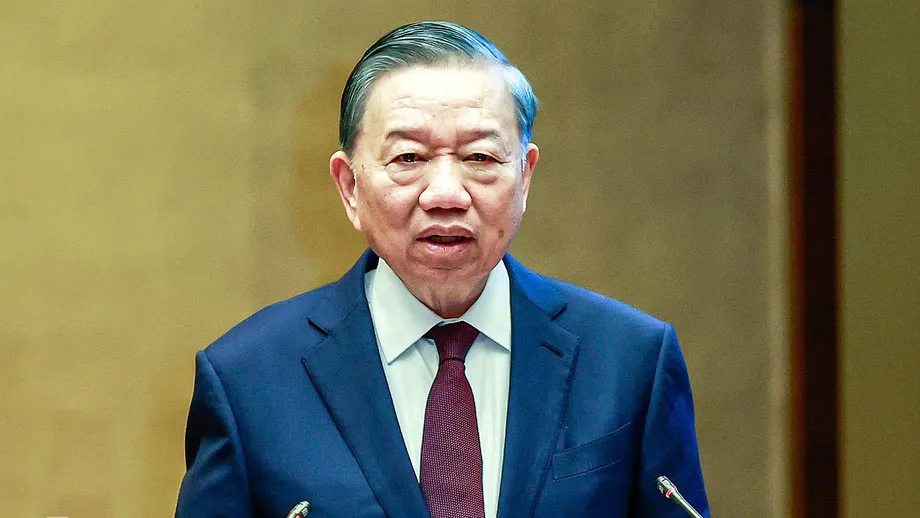
Supreme People's Procurator General Nguyen Huy Tien presented the proposal to the National Assembly on October 18, 2026, during the second working day of its second session. The resolution contains three chapters and 22 articles. It would allow a people's procuracy to file a civil lawsuit or request civil proceedings, with a people's court deciding whether assets should be recovered to remedy losses to the State.
The practical change concerns cases where criminal proceedings cannot begin or continue under the law. Instead of leaving asset recovery dependent on a conviction, prosecutors could pursue a separate civil process after specified decisions cancelling, suspending or terminating criminal proceedings.
The proposal remains before lawmakers. Its central design combines a new route for recovering public assets with protections for lawful owners, opportunities to challenge evidence and court control over recovery decisions.
National Assembly Committee on Legal and Judicial Affairs Chair Phan Chi Hieu supported the need for the resolution, while requesting clearer responsibility for compensation when an improperly applied temporary measure causes damage. Lawmakers also examined revisions to the Criminal Procedure Code, which would govern earlier steps to identify and preserve assets.
Why prosecutors want another recovery mechanism
The Supreme People's Procuracy told lawmakers that asset recovery in Vietnam currently depends on judgments and decisions issued by people's courts when handling criminal cases. Delays can leave property exposed to concealment, transfers, loss or falling value before recovery becomes possible.
Nguyen Huy Tien, the Supreme People's Procurator General, described the practical problem when presenting the proposal:
In practice, asset recovery still faces many difficulties and takes a long time, with assets at risk of being dissipated, concealed, lost or declining in value.
The procuracy identified several connected weaknesses. Assets seized, frozen or otherwise secured for enforcement can be worth less than the amount that must eventually be recovered. Property originating from crime may already have changed hands, while existing rules lack specific measures for tracing some assets whose origins have been concealed.
The draft follows Politburo Conclusion No. 19 of April 2, 2026, concerning a mechanism for recovering and handling assets without a conviction suited to Vietnam's circumstances. Its stated purposes include implementing international commitments, addressing practical gaps and testing whether this approach can work within the country's legal system.
What the recovery figures show
The Supreme People's Procuracy cited more than VND 74.769 trillion secured through measures intended to ensure recovery during 2021 to 2025 in corruption cases, cases involving official positions and economic cases connected with official positions.
Civil judgment enforcement recovered more than VND 109.626 trillion across 28,636 matters, according to the figures presented. Some major cases achieved high recovery rates, including 100% in the case involving Tan Hoang Minh.
The two totals measure different stages: securing assets keeps them available for possible enforcement, while recovery means assets have actually been collected through enforcement. The presentation did not provide a matching total of all assets due for recovery from which to calculate a recovery rate.
The procuracy acknowledged improvements compared with earlier years, but said recovery remained slow and low relative to the property that needed to be recovered. The proposed civil mechanism targets the legal gap that arises when criminal proceedings stop while questions about assets remain unresolved.
Three circumstances would open the civil route
The draft identifies three procedural situations in which recovery without a conviction could be considered:
- A criminal case has been initiated, but the decision initiating it is subsequently annulled.
- An investigation or criminal case is temporarily suspended before the first trial opens.
- An investigation or criminal case is terminated before the first trial opens.
Reasons discussed for such decisions include expiration of the legal time limit for prosecution, a general amnesty, the death of the accused, exemption from criminal liability, mental illness or a serious medical condition.
Two conditions would be required before the civil route could proceed. There must be a qualifying procedural decision, and an authority involved in the criminal proceedings must send the procuracy a written request to pursue civil recovery, supported by relevant information, documents and evidence.
For an ordinary reader, the difference is straightforward: the criminal process concerns a person's criminal responsibility, while the proposed civil case would ask the court to decide what should happen to particular assets. Criminal proceedings would continue where sufficient legal grounds exist.
Which assets and owners would be covered?
The draft covers money laundering, offenses against economic management, corruption and other offenses involving official positions. It excludes cases in which a commercial legal entity bears criminal responsibility, placing a specific boundary on the pilot's reach.
Assets considered for recovery would include property for which there is reasonable evidence of a connection to crime, but which is not being handled as physical evidence in the criminal case. The committee called for a clear division between this civil recovery process and the handling of evidence and assets under criminal procedure.
The proposed scope also extends to property obtained by buying, selling, exchanging or converting assets originating from crime. Returns, profits and other material benefits generated by crime linked assets could also be considered.
This matters when money or property has changed form. A court would examine the origin of the asset and the evidence connecting it to the criminal conduct, rather than looking only for the original money or object.
After recovery under an effective court judgment or decision, assets would be paid into the State budget or assigned to a competent state authority for management. The mechanism is designed to remedy losses to the State.
How prosecutors and courts would divide the work
The people's procuracy would initiate the civil lawsuit or request. The people's court would receive the case, assess evidence, determine the origin of the assets and decide whether recovery and further handling were justified.
Regional people's courts would generally hear these matters at first instance, meaning the first level of court consideration. The draft assigns jurisdiction to the regional court associated with the criminal case involving the assets. Where that rule does not apply, jurisdiction would be determined under the Civil Procedure Code.
The procedure would retain basic civil litigation principles while adding rules tailored to asset recovery. Parties would be able to submit evidence, contest arguments and defend their lawful rights and interests.
The proposed Criminal Procedure Code and the pilot resolution are designed to connect at the point where a criminal case cannot reach a conviction. Relevant files, evidence and assets would be transferred to the procuracy so it could pursue the civil recovery process.
The Government, Supreme People's Procuracy, Supreme People's Court and other relevant bodies would have responsibilities for implementation, guidance, monitoring and reviewing the pilot. The stated purpose is to test feasibility before deciding how the mechanism should develop.
Protection for lawful owners and compensation for mistakes
The draft protects property lawfully owned by third parties, meaning people or organisations other than those whose alleged conduct gave rise to the case. It also sets out exceptions concerning inherited or gifted assets and transactions in which a recipient knew or should have known of a criminal connection or an attempt to conceal or disperse property.
For buyers and other recipients, these provisions make the circumstances of a transfer important. The court would consider the asset's origin, the evidence and the legal protection available to a person who received it in good faith.
The Legal and Judicial Affairs Committee supported urgent provisional measures intended to prevent assets from being dispersed or lost after grounds arise for ending criminal proceedings. These are temporary protective steps taken while the eventual handling of assets is still being decided.
Committee Chair Phan Chi Hieu asked for the draft to identify which agency must compensate damage at each procedural stage if such a measure is wrongly applied. The committee also sought a clear connection with the Law on State Compensation Liability.
Compensation rules are a concrete safeguard for owners whose use of property is restricted incorrectly. The committee also called for asset measures to protect lawful business activity and the interests of third parties acting in good faith.
A wider overhaul would cover digital proceedings and assets
The revised Criminal Procedure Code considered alongside the resolution would recognise electronic proceedings, electronic case files and online hearings. It would also address digital assets and cryptocurrency, bringing those forms of property into the proposed procedural framework.
Other proposed measures include temporarily stopping asset transactions from the stage when authorities examine information about a possible crime. The draft also addresses early repayment to victims, deposits that could allow certain seizure or freezing measures to be lifted, transfers or sales of assets, and arrangements for managing or using property.
Nguyen Huy Tien said the drafting process had considered access to electronic proceedings for people in remote areas and ethnic minority communities. Article 18 of the draft would require electronic proceedings to preserve participants' lawful rights and interests. An implementing resolution would set the timetable, infrastructure requirements and alternative arrangements where digital conditions are inadequate.
The committee requested procedures for dealing promptly with technical failures so that deadlines and participants' rights would be protected. It also sought a clear separation between the management powers of judicial agency leaders and the direct procedural powers of investigators, prosecutors and judges.
Legal coordination remains part of the work before adoption. Although the procuracy said it had worked with the Ministry of Public Security and other agencies, the committee identified provisions still inconsistent with the draft revised Criminal Code and the draft revised Law on the Organization of Criminal Investigation Bodies, and requested further alignment.
When the pilot would begin
The proposed March 1, 2027, start would align the resolution with related legislation already adopted or expected to be adopted during the National Assembly session. The committee supported the duration of two years and assessed the resolution as constitutional, lawful and compatible with Vietnam's international treaties.
The sequence places a firm boundary around the pilot:
- 2021 to 2025: The procuracy recorded more than VND 74.769 trillion secured for recovery in the specified categories of cases.
- April 2, 2026: Politburo Conclusion No. 19 set out the policy direction for the proposed mechanism.
- October 18, 2026: Nguyen Huy Tien presented the draft resolution to the National Assembly.
- March 1, 2027: The pilot would begin and run for two years. Criminal acts committed before 00:00 that day would be excluded.
The date of the alleged criminal act would therefore determine whether the pilot could apply. A case concerning earlier conduct would remain outside its scope even if authorities were still handling it after the proposed starting date.
The draft also includes transitional provisions for matters still being resolved when the resolution expires. Those provisions are intended to maintain continuity for proceedings already under way.
Key Points
- Vietnam is considering a pilot lasting two years from March 1, 2027, to recover specified assets without a criminal conviction.
- Procuracies would bring civil proceedings, and courts would decide whether assets should be recovered for the State.
- The mechanism would cover specified money laundering, economic, corruption and official position offenses after qualifying criminal procedural decisions.
- Criminal acts committed before March 1, 2027, and cases involving commercial legal entities facing criminal liability would be excluded.
- The draft includes protections for lawful third party owners, while lawmakers want clearer compensation duties when temporary measures cause wrongful damage.
- Related Criminal Procedure Code revisions would address electronic proceedings, early asset protection and digital property.