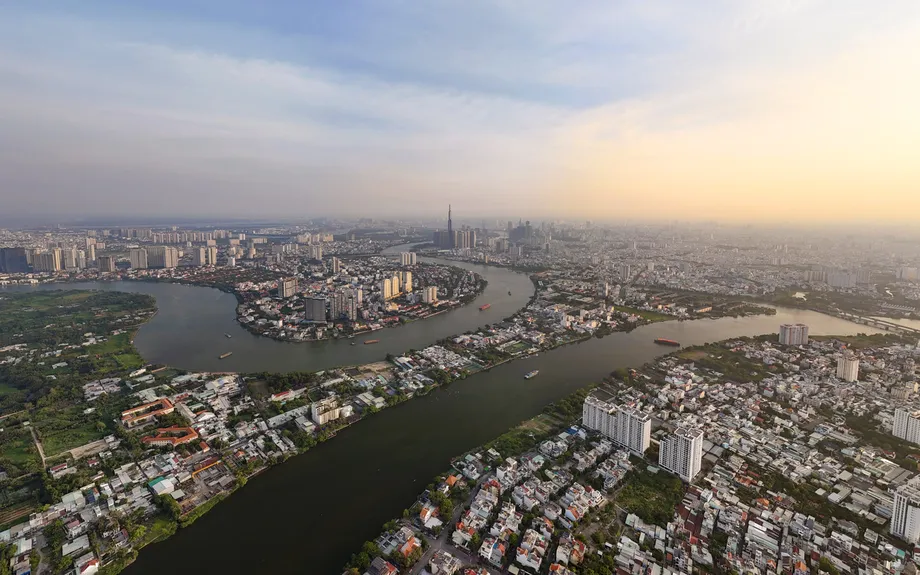
New Rules for Foreign Property Ownership
Vietnam enacted significant changes to its property regulations when the lawmaking National Assembly passed the amended Housing Law on Saturday morning, November 21, 2026. A total of 467 of the 485 lawmakers present voted in favor of the legislation, which establishes a strict 30-percent cap on foreign ownership in each condominium building. For housing projects that comprise multiple buildings, this restriction applies separately to every individual structure. The revised legislation is scheduled to take effect on July 1, 2027.
Contents
Alongside the housing legislation, lawmakers also adopted the revised Law on Real Estate Business on the same day with 471 votes in favor out of 479 deputies participating, representing 94.39% of the voting body. Before the votes took place, Minister of Construction Tran Hong Minh presented the official government report that explained the revisions. The updated Housing Law contains 13 chapters and 129 articles, while the companion real estate business law consists of 10 chapters and 63 articles. These regulations aim to balance the broader goal of attracting foreign investment with the country's national defense requirements and proper social welfare policies.
How Foreign Buyers Participate in the Market
Foreign individuals who enter Vietnam legally can acquire condominium apartments by purchasing them or by entering into lease-purchase agreements with project developers. They may also receive commercial housing through gifts or inheritances, provided the properties do not sit inside zones requiring special protection for national defense and security. Local authorities hold the responsibility of identifying and publishing lists of housing projects where foreign entities are permitted to buy homes. Before finalizing these development lists, local authorities must consult the Ministry of National Defense and the Ministry of Public Security to screen for security risks.
Property consultancy data shows that South Korean buyers accounted for roughly 48% of the 6,188 apartments purchased in Vietnam by foreigners up until October 2026. Mainland Chinese buyers made up 31% of those purchases, while buyers from Hong Kong and Taiwan combined for 10%, and Singaporeans represented 2%. In Ho Chi Minh City alone, local data indicates that 15,841 apartments across 158 projects received approval for sale to foreigners starting in June 2025. Out of that approved supply, buyers purchased 3,297 apartments, though authorities have issued official title deeds for only 316 of them.
Market analysts note that the low proportion of issued title deeds points to a pressing need to streamline the process of securing property ownership rights. A survey conducted across six Southeast Asian countries placed Vietnam fourth for ease of home buying by foreigners, trailing Thailand, Malaysia, and Singapore while sitting ahead of Cambodia and Indonesia. Vietnam scored 28.5 out of 50 on that regional gauge, with ownership rights emerging as the single biggest obstacle cited by buyers. Construction quality, legal regulations, and market transparency followed close behind as additional challenges for international purchasers.
Time Limits and Marriage Provisions
Foreign individuals who buy homes in Vietnam face specific time limits on their property tenure. Under the rules, foreign buyers may hold housing for the duration agreed upon in their purchase transaction, up to a maximum of 50 years starting from the date they receive their certificate of ownership. Buyers may apply for a one-time extension of up to another 50 years, depending on the remaining structural life of the apartment building. For foreign individuals who marry Vietnamese citizens living within the country, the law permits joint apartment ownership with their spouses, granting them the exact same ownership rights as local citizens.
Expanding the physical availability of eligible housing, Ho Chi Minh City added Vingroup's International University Urban Area project in Xuan Thoi Son commune to its approved foreign ownership list on November 18, 2026. Developed by Berjaya Vietnam International University Urban Area Joint Stock Company, the project spans more than 880 hectares with an estimated total investment of 59,000 billion VND (nearly 2.3 billion USD). The development integrates education, research, commerce, and residential spaces, and it is expected to welcome its first residents from early 2035. However, being included on the approved list does not automatically make every individual unit available to foreign buyers, as total transactions must respect the overarching 30-percent building cap.
Real Estate Business Controls and Social Housing
The revised Law on Real Estate Business introduces stricter accountability measures for property developers to protect all parties involved in transactions. The legislation explicitly prohibits property trading that fails to meet legal requirements, information concealment, document forgery, and fraudulent behavior. Developers are barred from collecting deposits or advance payments before properties meet all legal conditions for sale, and they cannot authorize outside parties to sign deposit and sale contracts without government permission. Furthermore, the legislation establishes unified management for real estate data, including electronic identification codes for properties and official licensing certificates for real estate brokers.
Regarding social housing, the government policy maintains a strict approach to prevent market abuse and asset dispersion. The newly passed framework restricts the resale of social housing after five years to eligible beneficiaries of social welfare support policies only. Selling such subsidized units to a general housing fund was rejected because authorities determined it would spread public assets too thin across different projects, which would complicate management and drive up operational costs. Provincial People Committees will determine whether commercial developers must allocate specific land ratios for rental and social housing, guided by overarching government regulations.
Broader Economic Context and State Ownership
The property market reforms align with wider state restructuring efforts across major economic sectors in Vietnam. Similar regulatory frameworks govern heavy industries and financial institutions, much like state ownership restructuring targets set for major national enterprises and banks. Under those separate national directives, the government maintains strict controlling stakes in vital economic pillars while opening specific capital avenues. The housing and real estate updates share this dual objective of modernizing legal frameworks while safeguarding strategic national interests.
Experts at property consultancies recommend that local authorities update lists of eligible housing projects more frequently to help buyers and developers plan their transactions smoothly. Regular updates prevent confusion regarding which buildings have reached the statutory 30-percent foreign ownership limit. As the July 1, 2027 effective date approaches, developers and prospective international buyers must navigate the updated legal requirements, secure necessary local approvals, and monitor project quotas closely. These procedural adjustments are designed to foster a transparent marketplace while maintaining clear boundaries for foreign investment in urban housing.
The Bottom Line
- Vietnam National Assembly passed the amended Housing Law on November 21, 2026, with 467 of 485 lawmakers voting in favor.
- The new legislation takes effect on July 1, 2027, establishing a strict 30-percent cap on foreign ownership for every condominium building.
- Foreign individuals may own apartments for up to 50 years, with a single possible extension of another 50 years.
- South Korean buyers represented 48% of foreign apartment purchases in Vietnam up to October 2026, followed by mainland Chinese buyers at 31%.
- Local authorities must consult the Ministry of National Defense and the Ministry of Public Security before approving projects for foreign buyers.
- Foreigners married to Vietnamese citizens enjoy equal joint ownership rights alongside their spouses.