A Bold Vision for a Century of Growth
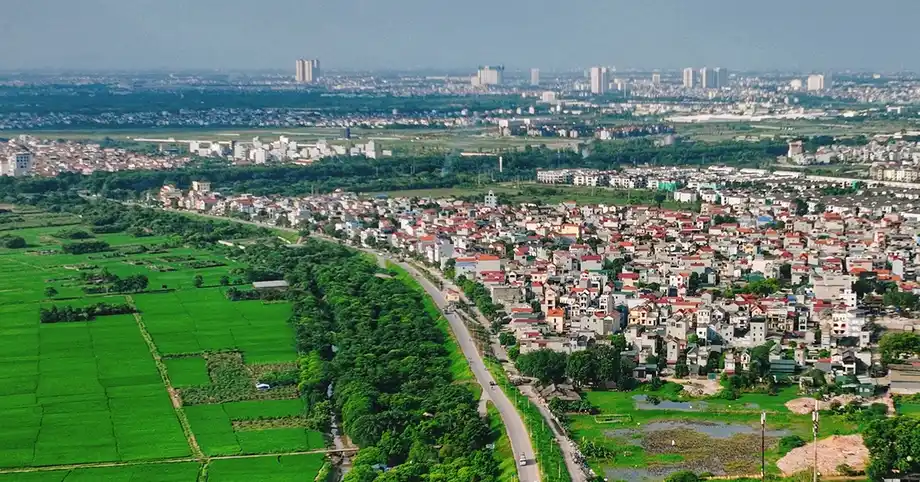
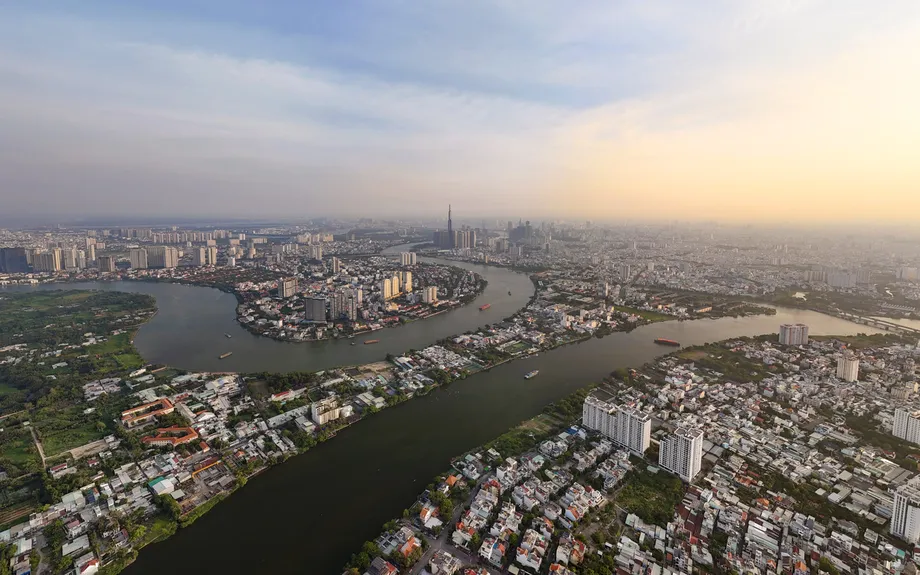
Ho Chi Minh City is embarking on a historic transformation designed to reshape its urban landscape for the next 100 years. Following the administrative merger with Binh Duong and Ba Ria-Vung Tau, the expanded metropolis now spans over 6,700 square kilometers. Local leaders and urban planners are moving away from traditional single-center growth models to address longstanding issues such as chronic traffic congestion and severe urban flooding.
Contents
- A Bold Vision for a Century of Growth
- Economic Ambitions and High-Tech Integration
- Five Growth Poles and Ten Governance Regions
- Expanding Rail Networks and Transit-Oriented Development
- Reinventing Housing and Living Standards
- Healthcare and Social Infrastructure Upgrades
- Climate Resilience and Environmental Sustainability
- The Bottom Line
The comprehensive strategy, formalized through official municipal decisions such as Decision No. 7308/QĐ-UBND approving the master plan and guided by central directives including Conclusion No. 112-KL/TW, sets out to accommodate a projected population of more than 27 million residents by the year 2050. This century-long roadmap places residents at the center of development, prioritizing equitable access to public services, environmental sustainability, and long-term economic resilience across the entire region.
Economic Ambitions and High-Tech Integration
Economic targets for the coming decades aim to position the southern Vietnamese hub among the most productive urban economies in the Asia-Pacific region. Planners project that the gross regional domestic product will reach approximately 1.2 trillion dollars by 2050, supported by a minimum annual growth rate of 10 percent through 2030. To achieve this, the local economy is shifting toward advanced manufacturing, artificial intelligence, and innovation-driven sectors.
This economic push aligns with broader national policies promoting high technologies, including a government-backed list of priority technologies and products ranging from quantum computing and data analytics to advanced biotechnology. These initiatives are designed to supply the technical framework necessary for a modern, knowledge-based economy while modernizing traditional industrial sectors.
Five Growth Poles and Ten Governance Regions
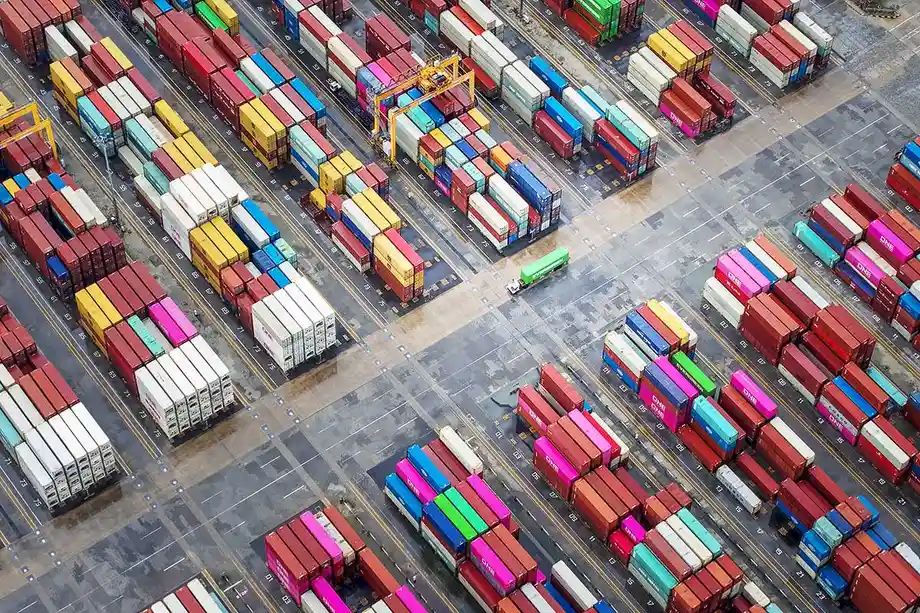
To manage this massive expansion without repeating past planning flaws, the spatial layout is organized around five distinct growth poles. The central core functions as an international financial and cultural district, while the eastern hub in Thu Thu Duc serves as an innovation and knowledge center. The northern zone focuses on advanced manufacturing and logistics, the southern maritime zone centers on deep-water ports and free trade, and the western zone integrates specialized healthcare and education facilities.
In addition to these economic engines, the plan establishes ten development governance regions to coordinate cross-border policies and infrastructure investments without creating redundant administrative layers. This flexible framework allows local authorities to adjust population planning margins and infrastructure rollouts in response to real-world migration trends and economic shifts.
Expanding Rail Networks and Transit-Oriented Development
Urban railway networks form the backbone of the region's future transportation system, replacing private vehicles with mass public transit. The municipal government plans to construct an extensive rail network totaling 960 kilometers across 18 metro lines by 2050, alongside a system of light rail and tramways. Initial phases target the completion of eight priority routes spanning 255 kilometers by 2030.
The Management Authority for Urban Railways is actively advancing key projects, including extensions for Metro Line 1 and Metro Line 2, alongside new railway connections. These transit lines utilize a transit-oriented development approach, concentrating high-density housing, commercial spaces, and public services within walking distance of major stations to optimize land use and reduce daily travel times.
Reinventing Housing and Living Standards
Rapid urban expansion brings significant challenges regarding housing affordability for middle-income households and young families. Property market data shows that primary apartment prices have climbed significantly, with the majority of recent launches concentrated in high-end luxury segments rather than moderately priced options.
Experts emphasize that affordable housing must be integrated directly into emerging employment centers and transit corridors rather than pushed to distant outskirts. Proposed policy measures include securing public land for affordable housing early, implementing land value capture mechanisms to reinvest in public infrastructure, and providing regulatory incentives for private developers to construct balanced residential projects.
Healthcare and Social Infrastructure Upgrades
A population approaching 28 million requires a decentralized and highly resilient healthcare network to prevent overcrowding in inner-city facilities. The master plan establishes five specialized medical clusters located in the center, Tan Kien, Thu Duc, Binh Duong, and Ba Ria-Vung Tau, backed by a network of gateway hospitals in strategic zones.
These facilities are designed to deliver advanced treatments in oncology, cardiology, and trauma care while strengthening preventive medicine and community health services. Long-term goals also focus on positioning the region as a leading medical tourism destination within Southeast Asia.
Climate Resilience and Environmental Sustainability
As a low-lying coastal metropolis, the expanded city faces substantial risks from rising sea levels and extreme weather events. Planners are moving away from rigid flood barriers toward a flexible, adaptive approach modeled on sponge city principles, which incorporate natural water-absorbing infrastructure, retention lakes, and protected mangrove ecosystems.
The preservation of natural waterways and the strict ecological protection of the Can Gio mangrove biosphere reserve are vital components of this environmental strategy. These measures ensure that economic growth does not compromise the natural defenses required to protect future generations from climate-related hazards.
The Bottom Line
- The 100-year master plan expands Ho Chi Minh City to over 6,700 square kilometers, targeting a population exceeding 27 million by 2050.
- Economic goals include reaching a total gross regional domestic product of approximately 1.2 trillion dollars by mid-century.
- The spatial structure relies on five growth poles, five satellite centers, and ten governance regions to manage regional development.
- Urban rail expansion aims to complete 18 metro lines totaling 960 kilometers by 2050, anchored by transit-oriented development principles.
- Climate adaptation strategies emphasize sponge city designs and the strict conservation of mangrove ecosystems in Can Gio.