National Assembly Approves Major Legislative Package
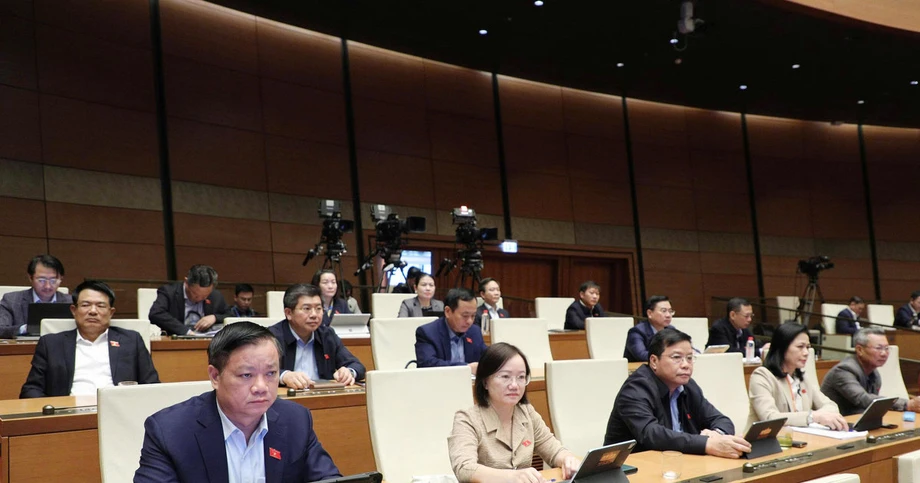
Vietnam has taken a decisive step to address idle land and reshape corporate taxation. On November 20, 2025, lawmakers gathered at the National Assembly to vote on a broad legislative overhaul. With 475 out of 477 participating delegates voting in favor, representing an overwhelming approval rate of 95.19 percent, the legislature passed a bill amending several key tax regulations. The package alters the Corporate Income Tax Law, the Non-Agricultural Land Use Tax Law, and the Personal Income Tax Law. Alongside these changes, the National Assembly also approved updates to the Investment Law and the Law on International Treaties.
Contents
- National Assembly Approves Major Legislative Package
- Heavier Penalties for Vacant and Idle Land
- Government Strategy and Implementation Timeline
- Relief and Tax Exemptions for Small and Medium Enterprises
- Support for Strategic Technologies and Green Investments
- Targeted Exemptions for Education and Healthcare Providers
- Unresolved Details and Future Regulations
- At a Glance
This sweeping legislative action builds upon earlier efforts by the government to restructure the economy and support public welfare, echoing decisions made after last year's attacks regarding public school tuition waivers and agricultural land tax relief. The new measures target various sectors of the economy, ranging from heavy penalties for landowners who let property sit empty to vital tax breaks for small businesses and educational institutions.
Heavier Penalties for Vacant and Idle Land
One of the most notable changes introduced in the new tax law is a strict financial penalty for landowners who leave their property unused. Starting July 1, 2027, non-agricultural land that is left vacant, unused, or subject to delayed use will face a tax rate of 0.2 percent based on the state land price framework. This new rate is seven times higher than the standard 0.03 percent tax rate applied to residential land within statutory limits.
Furthermore, the 0.2 percent tax applies to the entire area of vacant land without any tier limits or exemptions. Land used for purposes other than its designated intent will be taxed at 0.15 percent. Meanwhile, land belonging to phased investment projects approved by competent state authorities will enjoy a preferential tax rate of 0.03 percent.
Minister of Finance Ngo Van Tuan presented explanatory reports to lawmakers before the vote, emphasizing that leaving land vacant violates fundamental land management principles. According to official government statements, land abandonment is strictly prohibited under current land laws. To combat this issue, the state is combining financial tools like independent land taxes with administrative penalties and potential land reclamation.
Leaving land vacant is a prohibited act in the field of land management, and deploying synchronized policy tools is essential to regulate behavior and prevent resource waste.
Government Strategy and Implementation Timeline
To ensure the new land tax policy functions smoothly, the government plans to align tax rules with the upcoming revisions to the Land Law. Officials noted that local People's Committees at various levels will bear the responsibility of inspecting, detecting, and preventing land abandonment. Draft provisions under the Land Law specify that vacant land constitutes property that has been allocated or leased by the state but remains unused or delayed for a continuous period.
For investment projects, state authorities will levy progressive annual fees if developers fail to utilize their allocated land. If a project remains idle for more than 60 months, the state retains the legal right to reclaim the property entirely. The valuation of land for tax purposes will rely on official state land price tables, which will update on a stable three-year cycle starting January 1, 2028.
- January 1, 2027: General tax amendments take effect, including new thresholds for small businesses.
- March 1, 2027: Reorganized management rules for civil judgment enforcement come into force.
- March 31, 2027: General provisions of the amended Investment Law become effective.
- July 1, 2027: Penalties for vacant land, misdirected land use, and a nationwide ban on electronic cigarettes take effect.
- January 1, 2028: Environmental consultancy service rules and the three-year land price stabilization cycle begin.
Relief and Tax Exemptions for Small and Medium Enterprises
Small and medium enterprises stand to gain significant financial relief under the newly passed tax adjustments. The legislation incorporates policies previously outlined in Resolution Number 198/2025/QH15, granting newly established small and medium businesses a complete exemption from corporate income tax for their first three years of operation. This exemption starts from the date they receive their initial enterprise registration certificate.
To prevent abuse of this policy, regulations prohibit granting the three-year tax break to businesses formed through mergers, divisions, consolidations, or transformations. Companies newly founded immediately following the dissolution of another business with identical owners or controlling shareholders will also be excluded from the tax holiday.
Additionally, the revenue threshold for businesses and individual traders utilizing simplified percentage-based tax calculation methods has been raised to 10 billion dong (approximately US$390,000) per year. This adjustment allows a larger pool of growing enterprises to streamline their tax reporting without facing heavy administrative burdens.
Support for Strategic Technologies and Green Investments
The companion amendments to the Investment Law introduce specialized incentive frameworks designed to attract high-tech projects and foster sustainable development. State support will now directly target central investments in innovation hubs, research and development facilities, large data infrastructure, cloud computing platforms, advanced mobile networks, artificial intelligence, and semiconductor manufacturing.
For green transitions, businesses investing in ecological industrial park infrastructure or projects listed under national green classifications can utilize accelerated asset depreciation schedules of up to two times the standard rate. The state will also provide direct budgetary subsidies covering employee training, research expenses, and supply chain development for targeted high-tech sectors.
Conversely, the law establishes strict prohibitions on emerging consumer goods that pose public health risks. Effective July 1, 2027, the commercial production and sale of electronic cigarettes, heated tobacco products, nicotine pouches, shisha, and related equipment will be completely banned across the country.
Targeted Exemptions for Education and Healthcare Providers
Public welfare sectors receive substantial support in the tax overhaul, particularly regarding education and healthcare services. Public educational institutions and private schools operating on a non-profit basis are now completely exempt from corporate income tax. The classification of non-profit status will be determined by official designation documents issued during institutional establishment or conversion.
Furthermore, all land utilized exclusively for educational and training purposes is exempt from non-agricultural land use taxes. Businesses and individual catering providers supplying meals directly to educational institutions, hospitals, and medical treatment facilities will enjoy a full exemption from both corporate income tax and personal income tax on income derived from those meal services.
Lawmakers formulated these exemptions to align with broader strategic goals set by the Politburo under Resolution Number 71 and Resolution Number 72, alongside guidance from the Central Committee. By lifting financial pressures on schools and food providers serving vulnerable populations, the government aims to expand access to quality education and medical care.
Unresolved Details and Future Regulations
Despite the broad scope of the newly enacted laws, several operational details remain pending as administrative bodies draft guiding decrees. The Ministry of Finance and the Ministry of Agriculture and Rural Development must finalize precise criteria for determining what constitutes a legally actionable period of land abandonment before the July 1, 2027 enforcement date.
Authorities have not yet specified the exact monitoring protocols local tax bureaus will employ to verify vacant land acreage alongside municipal land management offices. Furthermore, specific administrative guidelines regarding how transitional business incentives will be managed without disrupting active operations are awaiting release in forthcoming government decrees.
At a Glance
- Tax Penalty: Vacant and idle land will face a 0.2 percent tax rate starting July 1, 2027, without tier limits.
- Small Business Support: Newly established small and medium enterprises receive a three-year corporate income tax exemption.
- Revenue Threshold: The simplified tax calculation threshold is raised to 10 billion dong annually.
- Prohibited Goods: The commercial sale of electronic cigarettes and heated tobacco is banned starting July 1, 2027.
- Welfare Exemptions: Non-profit educational institutions and meal providers for schools and hospitals are fully exempt from relevant income taxes.