School Fees and Farm Taxes Take Centre Stage
Vietnam's National Assembly has approved tuition exemptions for all public school students from preschool through high school, beginning in the 2025–2026 academic year, alongside an extension of agricultural land use tax exemptions through the end of 2030. The education measure is expected to benefit about 23 million preschool and general education students.
Contents
- School Fees and Farm Taxes Take Centre Stage
- Who Will Receive Tuition Relief?
- Why the Government Sought an Immediate Start
- Other School Charges Remain a Concern
- Preschool Access Must Reach Every Locality
- How the Tuition Package Will Be Funded
- Which Agricultural Land Receives Tax Relief?
- Farm Support Comes With Land Use Concerns
- A Wider Legislative Programme
- What Implementation Will Require
- Key Points
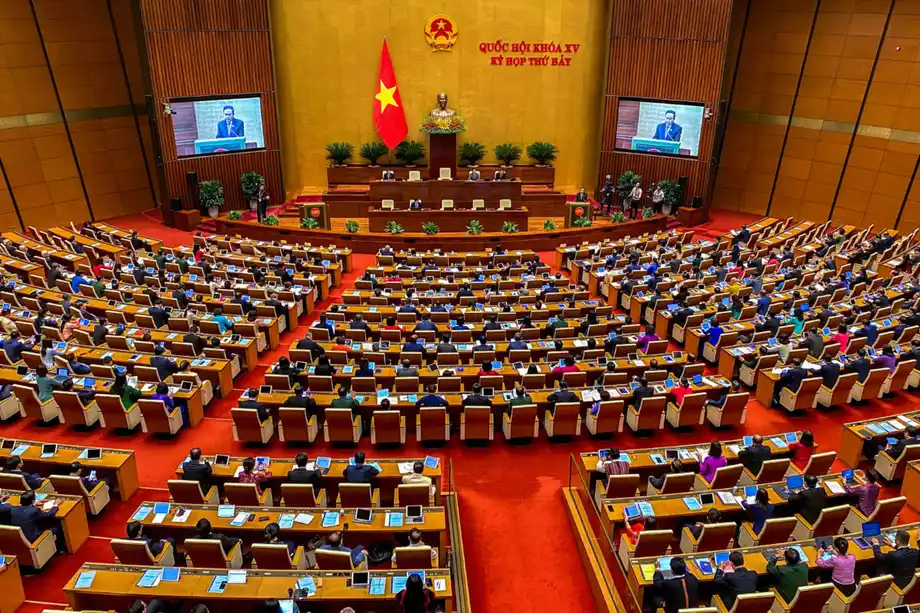
The decisions, adopted with near unanimous support during the ninth session of the 15th National Assembly, form part of a package that also sets a goal of universal preschool education for children aged 3 to 5 by 2030. Together, the measures address two recurring household costs: sending children to school and using land for agricultural production.
The estimated annual budget for tuition exemptions and support is 30.6 trillion Vietnamese dong, about US$1.2 billion. The agricultural tax exemption is expected to save farmers around 7,500 billion dong, or approximately US$300 million, each year.
Lawmakers presented the resolutions as measures to support social equity, sustainable development and vulnerable communities. Their practical effects will depend on government funding, local decisions on support for private school students, sufficient classrooms and teachers, and oversight of agricultural land use.
The package has several implementation stages, beginning with the coming school year and extending to the end of the decade:
- 2025: State budget adjustments are intended to help accommodate the new policies, including through the reallocation of unspent funds from previous years.
- 2025–2026 academic year: Tuition exemptions for public school students and tuition support for eligible students at private institutions are due to begin.
- By 2030: All provinces and centrally administered cities are expected to meet standards for universal preschool education for children aged 3 to 5.
- Through the end of 2030: Agricultural land use tax exemptions will continue.
Who Will Receive Tuition Relief?
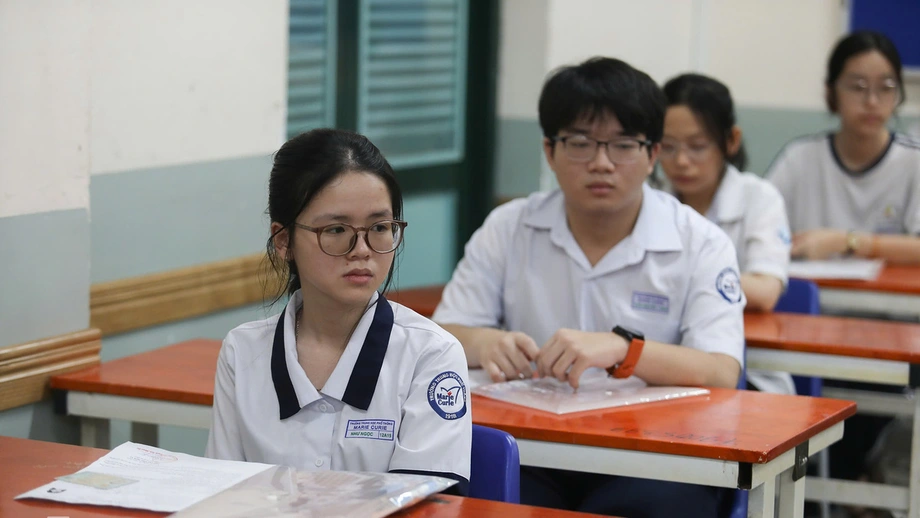
Students attending public schools from kindergarten through grade 12 will be exempt from tuition under the new resolution. The policy covers preschool and general education, placing the benefit across the years before university or other further study.
Students at private educational institutions will receive tuition support rather than a blanket waiver of their schools' fees. Local authorities will determine the amount, and support cannot exceed the tuition actually charged by the institution.
A family's experience will therefore depend partly on the type of school its child attends. Public school students will receive the tuition exemption, while the support available to private school students will be set locally within the stated limit.
The policy is intended to ease financial pressure on households following the COVID-19 pandemic and amid rising living costs. Lawmakers also see it as a way to narrow differences in educational access between urban and rural areas and between families with different incomes.
Disadvantaged communities, including ethnic minorities and families in mountainous or remote regions, are among those expected to benefit. Vietnam has expanded access to education over recent decades, but gaps remain in those areas.
Why the Government Sought an Immediate Start
Minister of Education and Training Nguyen Kim Son said the tuition policy should have been incorporated into the amended Law on Education. A separate resolution was adopted so that families could receive the benefit from the upcoming school year.
Son described the measure as an urgent response to education and development needs. Explaining the support among lawmakers, the education minister said:
This is a correct, timely, and deeply humane policy, meeting the country's sustainable development requirements.
Deputies discussed the implementation timetable, with some suggesting a slight delay to allow more preparation. The consensus, however, was to introduce tuition relief as soon as possible so families could benefit without waiting longer.
The government's stated goals extend beyond reducing school bills. Officials linked wider access to education with the state's responsibility to care for younger generations, the country's sustainable development goals and the preparation of a skilled, competitive future workforce.
Other School Charges Remain a Concern
Hanoi deputy Truong Xuan Cu called on public schools to limit other charges, including fees for extra classes and supplementary services. His concern was that families should receive the intended financial relief when tuition is removed.
Tuition is the charge for education itself. Extra classes and supplementary services are separate categories of spending, so the handling of those charges will affect how much a household's total school bill falls.
Cu's intervention placed attention on school practices as well as the national funding decision. A tuition exemption can reduce a defined expense, while the amount families continue to pay will also depend on the other charges their schools collect.
Lawmakers and education experts welcomed the broader policy as a way to improve fairness between public and private education and between different parts of the country. Local implementation will determine how that aim translates into support for individual families.
Preschool Access Must Reach Every Locality
The second education resolution sets a nationwide target for universal preschool education for children aged 3 to 5 by 2030. All provinces and centrally administered cities are expected to meet the required standards within that period.
Universal preschool education means making access available across the eligible age group. Achieving that goal requires places for children, suitable facilities and enough trained teachers, alongside financial support for attendance.
The state budget will provide the main funding, supplemented by contributions from social sources in accordance with the law. Implementation will follow a roadmap suited to the economic and social conditions of each locality, while meeting the legal requirements for universal provision.
Lawmakers stressed the need to prepare infrastructure and train teachers. Those requirements are especially relevant to the effort to close access gaps in remote, mountainous and ethnic minority communities.
The tuition policy begins in the 2025–2026 school year, while the preschool access target runs to 2030. The first changes what families pay; the second requires localities to build the capacity to provide education to the full age group.
How the Tuition Package Will Be Funded
The government put the estimated annual budget for tuition exemptions and support at about 30.6 trillion dong. Its funding breakdown identifies 22.4 trillion dong for the 2025–2026 school year and a further 8.2 trillion dong to implement the policy fully in line with the Politburo's conclusions.
Those two figures add up to 30.6 trillion dong. Further funding is also earmarked for subsequent years, making the tuition commitment a continuing budget responsibility rather than an expense limited to the first school year.
The National Assembly approved adjustments to the 2025 state budget to accommodate the policies. These include reallocating unspent money from previous years and requiring strict compliance with spending standards to prevent waste and mismanagement.
Preschool expansion has its own funding needs. Alongside tuition support, public resources and legally permitted social contributions will have to support the facilities and staff needed to reach the 2030 target.
Managing these commitments will require coordination between central and local authorities. National decisions establish the benefits and goals, while local conditions shape the pace of preschool expansion and the level of tuition support for private school students.
Which Agricultural Land Receives Tax Relief?
The agricultural resolution extends an existing exemption from agricultural land use tax through the end of 2030. It continues relief that has already been in place for several years, giving eligible farmers and producers a longer period without that tax payment.
The exemption covers agricultural land used by households and individuals who received it through state allocation. It also applies to land obtained through inheritance, gifts or transfers of land use rights.
Land assigned to economic organisations, political institutions and other entities directly engaged in agricultural production is covered as well. The measure therefore reaches both household farming and qualifying production by organisations.
Finance Minister Nguyen Van Thang described the exemption as direct support for farmers and as an investment in agriculture, rural areas and the people who work in them. The estimated annual saving is around 7,500 billion dong, approximately US$300 million.
The government says continuing the exemption will not reduce current state revenue because the tax relief already exists. The decision keeps the present arrangement in place through 2030, allowing eligible users to retain money they would otherwise face paying if the exemption ended.
Farm Support Comes With Land Use Concerns
The agricultural tax measure is intended to help producers expand production, improve product quality and raise productivity. Lawmakers also linked it to job creation, better rural living standards and sustained investment in the agricultural economy.
Agriculture has long been considered a backbone of Vietnam's economy. Continuing the exemption directs support towards the sector by reducing a tax cost associated with the land used for production.
Phan Van Mai, chairman of the Economic and Financial Committee, called for the exemption's effects to be assessed within the wider system of taxes related to land. He said that assessment should take account of the newly amended Land Law and the country's development goals.
Lawmakers also sought measures to prevent abuse. They called for penalties for people who hold agricultural land but leave it uncultivated or fail to use it productively.
The resolutions leave practical implementation work to follow. Detailed arrangements for that oversight, including the proposed penalties, were not specified. Monitoring land use will be central to directing the benefit towards agricultural production and rural development.
A Wider Legislative Programme
The tuition, preschool and agricultural tax resolutions were adopted during a broader legislative drive at the ninth session of the 15th National Assembly. Lawmakers sought to remove institutional obstacles, release resources and support a new phase of economic and social development.
Other measures passed during the session included amendments to the Land Law, revised laws on credit institutions and bidding, and policies promoting the private sector as a key driver of economic growth.
The session was widely regarded as a turning point in Vietnam's legislative history, with attention to transparency, efficiency and support for businesses and citizens. The education and agricultural measures bring that programme into household budgets through school costs and farm taxation.
Deputies called for decentralisation, clearly assigned responsibilities and stronger oversight. Decentralisation places more decisions with authorities closer to the communities affected, making the division of duties between national and local bodies important to implementation.
The government is tasked with providing detailed reports on progress and results. The State Audit Office is responsible for auditing implementation to check compliance with the law, including how public resources are used.
What Implementation Will Require
Education authorities face two connected tasks: funding the tuition exemption from the coming academic year and preparing enough preschool places to meet the 2030 target. Adequate classrooms, teaching staff and training will be necessary as access expands.
Local authorities must also tailor implementation to their circumstances while applying national requirements. Their decisions on private school tuition support will affect the assistance families receive outside the public system.
Agricultural authorities will need to monitor whether exempt land is being used productively. Lawmakers' calls for action against idle land place that issue alongside the financial benefit of continuing the exemption.
Government agencies must manage the continuing cost of tuition relief while maintaining funding for the wider education commitments. Deputies called for ongoing evaluation and adjustments where problems emerge, with the aim of ensuring that intended beneficiaries receive the support.
The next milestones are the tuition policy's start in the 2025–2026 academic year and nationwide preschool standards by 2030. Agricultural land tax relief will continue through the end of that year, supported by reporting, auditing and scrutiny of how the policies operate.
Key Points
- Public school students from preschool through grade 12 will receive tuition exemptions beginning in the 2025–2026 academic year.
- About 23 million preschool and general education students are expected to benefit from the tuition policy.
- Private school tuition support will be set by local authorities and cannot exceed the tuition charged.
- The estimated annual tuition budget is 30.6 trillion dong, comprising 22.4 trillion dong for the 2025–2026 school year and an additional 8.2 trillion dong for full implementation.
- All provinces and centrally administered cities are expected to meet universal preschool education standards for children aged 3 to 5 by 2030.
- Agricultural land use tax exemptions will continue through the end of 2030, saving farmers an estimated 7,500 billion dong annually.
- Implementation requires funding, teachers, facilities, coordination between authorities and oversight of spending and land use.