A 10% growth target meets pressure on prices and banks
Vietnam is targeting economic growth of at least 10% in 2027, while the International Monetary Fund projects 8.9% and warns that inflation will remain above the government's goal. The gap puts the pace of public investment, bank lending and energy price support at the centre of policy discussions held in Hanoi on November 13, 2026.
Contents
- A 10% growth target meets pressure on prices and banks
- What Vietnam has committed to achieve
- How the November consultations unfolded
- Fast growth is already testing economic capacity
- Why inflation calls for caution
- Public investment faces a test of pace and quality
- Energy support brings relief and budget choices
- Banks and foreign currency reserves need stronger cushions
- Productivity and social protection shape the longer goal
- Key Points
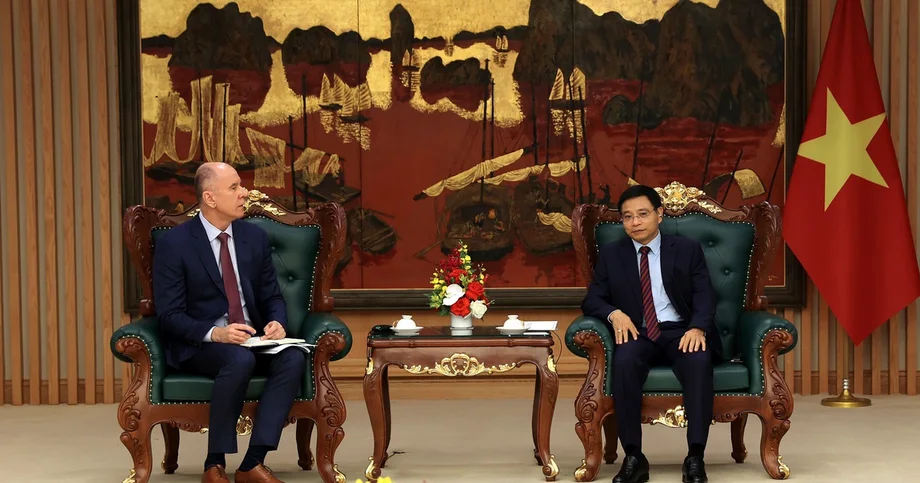
Deputy Prime Minister Nguyen Van Thang met IMF mission chief Martin Sommer as Vietnam prepared to pursue faster expansion alongside an inflation target of about 4.5%. Consumer prices rose 5.1% in October compared with a year earlier, while average inflation for January through October reached 4.57%, slightly above the annual target.
The IMF estimates that Vietnam's economy will grow 9.2% in 2026 before slowing to 8.9% in 2027. Parliament's minimum growth target for next year is therefore 1.1 percentage points above the fund's forecast. Meeting it would require an acceleration while policymakers are already managing pressure on prices and bank funding.
Thang said Vietnam would pursue stronger growth without sacrificing economic stability or the safety of its financial and banking systems. The IMF welcomed the government's reforms and positive growth prospects, while recommending readiness to tighten monetary policy if underlying inflation intensifies.
The discussions produced a practical policy challenge: Vietnam wants more infrastructure, business investment and household prosperity, but must pace spending and lending so that demand does not rise faster than the economy's ability to supply goods and services. Otherwise, part of the extra spending can become higher prices rather than more production.
What Vietnam has committed to achieve
The National Assembly adopted the 2027 socioeconomic development plan on November 7, 2026. According to the government's meeting account, the plan sets GDP growth of at least 10%, GDP per person of around $6,100, inflation of about 4.5%, and total investment across the economy equivalent to 36% to 38% of GDP.
GDP measures the value of goods and services produced in an economy. GDP per person divides that total by the population; actual household incomes depend on employment, wages and how the gains from growth are shared. The investment target covers spending across the economy, including public and private investment.
Deputy Finance Minister Tran Quoc Phuong described growth of at least 10% annually during 2026 to 2030 as a strategic objective. Public investment is intended to attract private funding into transport, energy, digital development, science and technology.
Thang said achieving those ambitions would require stronger reforms, greater productivity and more effective allocation of resources. His stated priority is to move from expansion based mainly on adding investment and labour toward growth based on efficiency and competitiveness, with improvements in people's living standards.
How the November consultations unfolded
Sommer's IMF team held Article IV consultations in Hanoi and Ho Chi Minh City from November 3 to 13. Article IV consultations are regular economic reviews in which IMF staff discuss a country's performance, risks and policy choices with its authorities.
The mission met parliamentary, central bank and government officials before completing its visit:
- November 3: The IMF mission began consultations in Hanoi and Ho Chi Minh City.
- November 7: The National Assembly adopted the 2027 development plan, including the minimum 10% growth target.
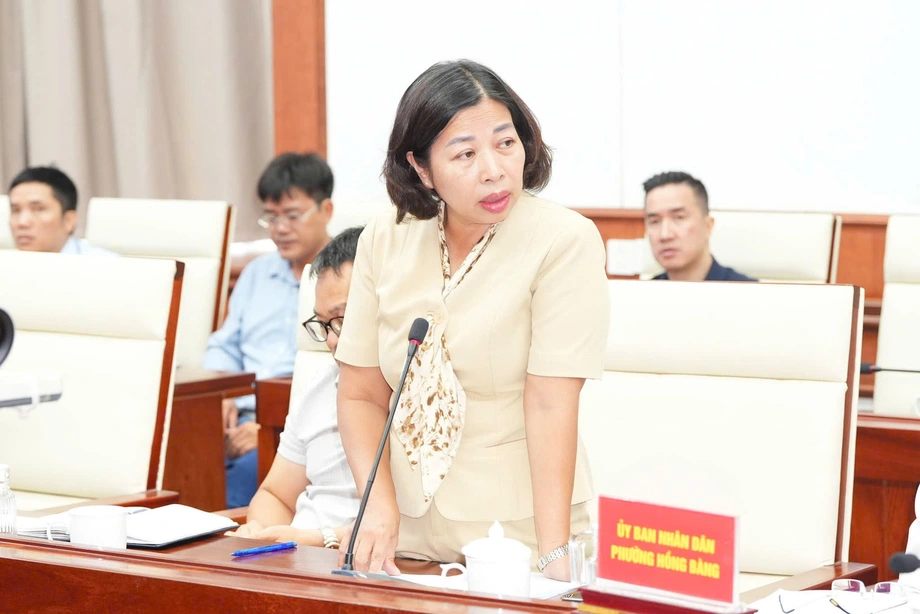
- November 11: The National Assembly's Economic and Financial Committee discussed growth, inflation and investment efficiency with the mission.
- November 12: State Bank Deputy Governor Pham Thanh Ha met the IMF delegation to discuss monetary policy, financial stability and economic data.
- November 13: Sommer met Thang and, separately, Phuong at the Ministry of Finance as the mission concluded.
Vietnamese officials asked the IMF to incorporate their explanations and updated information into its final assessment. Thang sought a balanced account of the country's achievements, circumstances and risks, while the State Bank requested further technical coordination to agree on data. No publication date for the final Article IV report was given.
Fast growth is already testing economic capacity
Vietnam's real GDP grew about 9% during the first three quarters of 2026. The IMF identified the global technology cycle driven by artificial intelligence, together with strong public and private investment, as major sources of momentum.
At the November 11 parliamentary meeting, Economic and Financial Committee Deputy Chair Doan Thi Thanh Mai said exports had increased 24.5% and disbursed foreign direct investment had reached $21.1 billion during the first nine months. State Bank officials also identified industrial production and tourism as important drivers.
The IMF judged economic activity to be above its estimated potential level. In plain terms, production and spending are running faster than the fund considers sustainable without additional pressure on prices, workers, equipment or financing.
The risks extend beyond Vietnam. The IMF cited prolonged Middle East tensions, uncertainty over trade policy, extreme weather and a possible reassessment of artificial intelligence prospects. A weakening technology investment cycle could affect a source of Vietnam's current strength, while another energy shock could raise costs even if growth slowed.
Why inflation calls for caution
October's inflation rate of 5.1% was lower than previously, but the IMF expects inflation to remain above the authorities' target in both 2026 and 2027. The Finance Ministry's figure of 4.57% for average inflation in the first ten months was 0.07 percentage points above the 4.5% annual target.
Sommer described inflation risks as controlled during his meeting with Thang, while warning that several factors could increase price pressures. The IMF's forecast explains the caution: prices can be relatively stable at a given moment while still rising faster than the government's intended pace.
Martin Sommer, the IMF's Article IV mission chief, set out the priority in the mission's concluding statement:
Monetary policy should prioritize price stability.
The fund recommended aiming for credit growth of around 15% by year end and tightening monetary policy if underlying inflation intensifies. Underlying inflation refers to the more persistent pressure on prices beneath temporary changes in individual items.
Higher interest rates or other measures that restrain lending can slow spending and reduce inflation pressure. They also make borrowing harder or more expensive for businesses and households. Phuong said policy should remain flexible, with adjustments when inflation or financial risks rise, rather than tightening mechanically.
Public investment faces a test of pace and quality
The IMF recommended a broadly neutral fiscal stance in 2027. That means government taxes and spending should avoid adding a substantial new boost to demand or applying a substantial new brake. It also urged Vietnam to prioritise public projects with strong economic returns and reduce spending if overheating risks emerge.
The Finance Ministry's meeting account describes a flexible response: selective tax and fee exemptions, reductions and payment extensions, alongside tighter budget discipline and control of public debt. The ministry plans to move money from projects that spend slowly to those able to use funding effectively, tying payments to completed work.
Phuong said the public investment programme had been concentrated from tens of thousands of projects into fewer than 3,000 priority projects. That approach seeks to reduce scattered funding and concentrate resources on works with wider economic benefits.
The ministry also said reforms that improve production capacity, combined with public investment, could lift growth over the medium term by more than two percentage points. The economic benefit depends on what is completed and how well it works: a transport link that cuts delivery times can help businesses produce and sell more.
Budget revenue in the first ten months reached an estimated 96.4% of the annual plan, up 11% from a year earlier. Tax, fee and charge exemptions, reductions and payment extensions totalled about VND366.6 trillion. Because that total includes deferred payments, the measures combine immediate relief with extra time to pay.
Energy support brings relief and budget choices
Middle East instability was a shared concern because higher energy prices can travel through the economy. More expensive imported fuel raises transport and production costs, which can then feed into prices paid by households.
Thang outlined fuel pricing through market mechanisms with state regulation, price stabilisation tools, tax and fee measures, and targeted fiscal support. Vietnam is also seeking more diverse energy supplies and more efficient energy use.
Phuong said Vietnam favoured adjustments to taxes and fees over direct subsidies from the budget. He also described a 2% reduction in electricity prices lasting through the end of the first quarter of 2027.
The IMF recommended phasing out broad energy price support as planned while global oil prices eased, using targeted transfers to protect vulnerable groups. The policy choice concerns who receives help: broad price relief benefits many users, including those consuming more energy, while targeted payments direct support toward people most exposed to rising living costs.
Banks and foreign currency reserves need stronger cushions
Rapid credit growth has put pressure on bank funding and pushed interest rates upward, prompting liquidity support from the State Bank of Vietnam. Banks need enough readily available money to meet withdrawals and payments while continuing their normal operations.
At the November 12 meeting, Deputy Governor Pham Thanh Ha said the central bank had kept policy interest rates unchanged while managing liquidity through open market operations, foreign exchange swaps and refinancing. These tools allow the central bank to supply funds through securities transactions, currency exchanges and lending.
The IMF urged stronger capital and liquidity buffers, faster movement toward Basel III standards and no further regulatory easing. Basel III is an international framework intended to make banks better able to absorb losses and withstand funding stress. The fund said lending should match each bank's capital and stable funding capacity.
Vietnam's government outlined stronger supervision, action on bad debts, restructuring of credit institutions and closer control of lending concentrated in sensitive sectors. It also wants deeper capital markets so that companies can obtain more financing outside banks.
The IMF said the current account had moved into deficit amid higher oil and semiconductor prices. The current account records trade in goods and services, income flows and transfers between a country and the rest of the world. Mai separately reported a merchandise trade deficit of $19.42 billion during the first nine months.
Despite those pressures, the IMF assessed the exchange rate and foreign exchange reserves as broadly stable, supported by strong foreign investment inflows and higher interest rates. Thang said reserves had remained stable during adverse international conditions and legitimate foreign currency needs had been met.
The IMF recommended greater exchange rate flexibility and gradually building reserves. Vietnam said it would increase reserves when conditions were favourable while keeping the currency market functioning smoothly. Reserves give the authorities foreign currency resources to help manage external financial pressures.
Productivity and social protection shape the longer goal
Sommer told parliamentary officials that investment could not continue as the main engine of growth indefinitely. He pointed instead to workforce skills, a better business environment and productivity, meaning the amount produced with a given quantity of labour and resources.
The IMF's priorities include reducing gaps between workers' skills and employers' needs, ensuring fairer conditions among businesses, and building stronger links between domestic companies and firms with foreign owners. It welcomed administrative reforms and progress in vocational education, universities and advanced technology training.
Broader social protection is another part of the growth strategy. The authorities plan to establish a comprehensive social security system with several tiers by 2030. The IMF said wider protection and less informal employment would support household consumption, helping families spend with greater financial security.
Better data will also matter for decisions on lending, spending and external risks. Discussions covered replacing Decree 16/2014/ND-CP on compiling balance of payments statistics and applying GFSM 2014, an international framework for government finance statistics. The IMF offered continued technical assistance in managing public investment and public finances.
For 2027, the central choice is how to turn ambitious investment into lasting productive capacity while keeping prices and financial risks under control. Vietnam's government and the IMF agree on the need for reform and stability; their discussions focus on how quickly spending and lending can safely expand.
Key Points
- Vietnam targets GDP growth of at least 10% in 2027; the IMF forecasts 8.9%.
- October inflation was 5.1%, while average inflation for January through October was 4.57%, slightly above the 4.5% annual target.
- The IMF recommends cautious monetary policy, credit growth of around 15% by year end and stronger bank buffers.
- The fund favours a broadly neutral fiscal stance in 2027, carefully paced public investment and targeted household support as broad energy relief ends.
- Vietnam plans selective tax relief, better allocation of project funding, stronger bank supervision and gradual reserve building.
- A comprehensive social security system with several tiers is planned by 2030, alongside reforms to skills, productivity and economic statistics.