New Electricity Tariffs Take Effect
Vietnam implements a fresh retail electricity price policy starting November 1, 2026, introducing distinct tariffs for specific commercial sectors and refining time of use schedules. Hanoi Power Corporation advises consumers to review the updated policies to manage energy consumption patterns efficiently. The changes arrive alongside legislative updates following discussions after Vietnam seeks electricity price cut from government offices earlier in the autumn. The regulatory framework stems from Quyết định số 2892/QĐ-BCT ngày 31/10/2026 của Bộ Công Thương issued by the Ministry of Industry and Trade to govern pricing structures across the national grid.
Contents
- New Electricity Tariffs Take Effect
- Time of Use Schedules and Peak Hours
- Dedicated Tariffs for Electric Vehicle Charging Stations
- New Pricing for Tourism Accommodation Facilities
- Major Amendments to the Electricity Law
- Legislative Timeline and Structural Reforms
- Financial Audits and Cost Allocation Mechanisms
- At a Glance
State utility adjustments also factor into the broader energy landscape. Vietnam Electricity published Quyết định số 1305/QĐ-EVN ngày 30/10/2026 của Tập đoàn Điện lực Việt Nam regarding average retail price adjustments just one day before the new rules took effect. These measures build upon prior frameworks, including Quyết định 963/QĐ-BCT ngày 22/4/2026 của Bộ Công Thương which established national grid peak and off peak hours earlier in the year.
Industrial consumers and commercial operators must navigate these adjustments carefully as the rules alter operational planning. Households do not face blanket changes under the specialized business tariffs, but commercial establishments must adapt to the new hourly divisions. A kilowatt hour, abbreviated as kWh, measures energy consumption by tracking one thousand watts of power used over one hour. Understanding these units helps businesses calculate running costs for heavy machinery and vehicle charging bays.
Time of Use Schedules and Peak Hours
Peak electricity consumption periods now concentrate heavily during the late afternoon and evening hours, shifting away from earlier broader windows. Off peak hours continue to occupy nighttime and early morning slots, while Sundays are entirely free of peak pricing constraints. These three distinct tiers consist of peak, normal, and off peak rates designed to encourage load shifting. Industrial facilities and large commercial sites can optimize operating expenses by running energy intensive equipment during the cheaper nighttime windows.
National grid management relies on these time brackets to balance supply and demand across provinces. Power generation plants experience lower strain when heavy users shift operations to off peak hours. Businesses that successfully reschedule manufacturing shifts or vehicle charging sessions can lower their monthly overhead without reducing total output. Government directives such as Thông tư 60/2025/TT-BCT ngày 02/12/2025 của Bộ Công Thương outline the precise implementation rules for these retail pricing brackets.
Dedicated Tariffs for Electric Vehicle Charging Stations
Electric vehicle charging operators operate under a brand new retail electricity subcategory rather than general business tariffs. The highest retail price for electric vehicle charging under the new schedule is 4,212 Vietnamese dong per kWh, which represents a decrease from the previous rate of 5,422 dong per kWh. Charging stations connected at medium voltage levels above one kilovolt pay an off peak rate of 1,534 dong per kWh, a normal rate of 2,549 dong per kWh, and a peak rate of 3,758 dong per kWh. Low voltage charging systems face corresponding rates of 1,620 dong per kWh, 2,700 dong per kWh, and 4,212 dong per kWh.
A vehicle battery with a capacity of 60 kWh illustrates the potential savings under the revised pricing. Filling that battery under the old peak rate cost approximately 325,320 dong, whereas the new top rate reduces the energy cost to 252,720 dong. That difference creates a savings of roughly 72,600 dong for every full recharge cycle. Commercial charging networks like Charge+ Vietnam previously offered temporary promotional discounts such as a 20 percent reduction for DC fast charging during late night hours, dropping prices from 8,000 dong per kWh to 6,400 dong per kWh. Lower baseline electricity costs give operators additional flexibility to formulate permanent pricing strategies for motorists.
New Pricing for Tourism Accommodation Facilities
Tourism accommodation providers now utilize a dedicated retail electricity tariff tailored to the specific energy needs of hotels and resorts. These establishments consume electricity continuously to operate elevators, lighting systems, and large commercial air conditioning units. Establishing a separate tariff based on voltage levels and consumption timing allows lodging operators to forecast monthly utility expenses accurately. Administrative compliance requires proper verification of tourism facility status before electricity distributors apply the specialized commercial rates.
Guidelines from cultural authorities support this verification process. Operators must consult Hướng dẫn 3778/HD-BVHTTDL của Bộ Văn Hóa Thể Thao Và Du Lịch issued by the Ministry of Culture, Sports and Tourism. This document explains how hotels and resorts obtain official confirmation of their tourism accommodation status to qualify for the correct electricity pricing tier pursuant to Quyết định số 14/2025/QĐ-TTg ngày 29/5/2025 của Thủ tướng Chính phủ signed by the Prime Minister. Securing the correct voltage classification prevents businesses from overpaying on utility bills while ensuring transparent financial planning.
Major Amendments to the Electricity Law
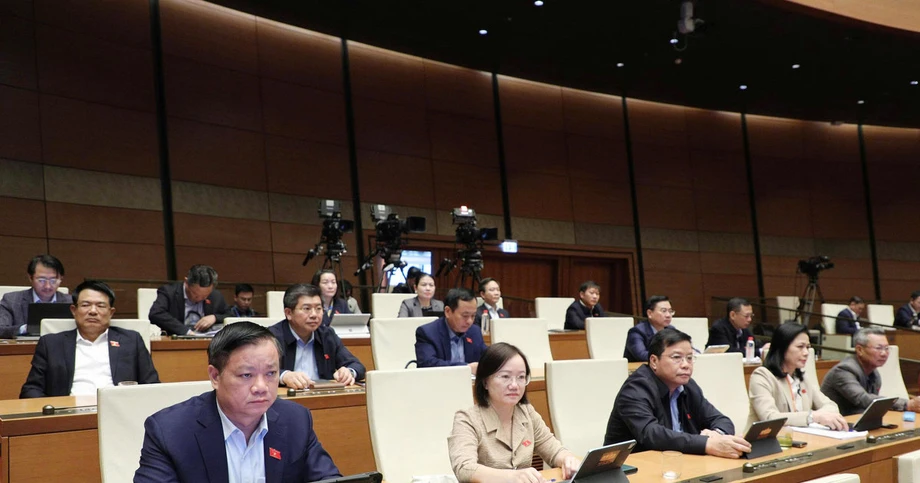
National legislative bodies altered the broader legal framework governing the energy sector during late 2026. On the morning of November 21, 2026, the National Assembly approved revisions to the Electricity Law with 97.8 percent of deputies voting in favor. The updated legislation takes effect on June 1, 2027, and addresses persistent investment bottlenecks in power generation and grid infrastructure. At the Second Session of the Sixteenth National Assembly, 488 out of 489 participating deputies cast affirmative votes to pass the amendments to Electricity Law Number 61.
Government officials presented detailed explanations to lawmakers prior to the final vote. Minister of Industry and Trade Lê Mạnh Hùng spoke before the assembly on behalf of the executive branch to deliver reports addressing feedback on the draft legislation. Government positions were detailed in Tờ trình số 820/TTr-CP ngày 02/10/2026 của Chính phủ submitted earlier in October. The legal reform process also aligns with strategic directives outlined in Nghị quyết số 70-NQ/TW ngày 20/8/2025 của Bộ Chính trị concerning national energy security.
Legislative Timeline and Structural Reforms
Parliamentary debates leading up to the new law involved extensive input from specialized committees and regional delegates. Deputy Trịnh Thị Tú Anh contributed key remarks during legislative sessions on October 31, 2026, addressing structural adjustments needed for renewable energy integration. The legislative evolution builds upon multiple previous legal updates enacted in recent years. The current statute represents the fourth set of major amendments to the foundational electricity framework.
- August 20, 2025: Politburo issues energy security directives under Resolution 70.
- May 29, 2025: Prime Minister signs regulatory framework governing retail electricity pricing tiers.
- October 2, 2026: Government submits official legislative proposals for electricity law reforms via Document 820.
- October 30 to 31, 2026: State utility and Ministry of Industry and Trade issue pricing decisions 1305 and 2892.
- November 21, 2026: National Assembly passes amended Electricity Law with a 97.8 percent approval vote.
- June 1, 2027: Amended Electricity Law officially enters into force nationwide.
The legislative updates modify several successive statutory instruments. The primary statute had previously undergone amendments through Law Number 94, Law Number 116, and Law Number 135 during 2025. Parliament also referenced resolutions such as Nghị quyết số 253/2025/QH15 ngày 11/12/2025 when structuring the reform timeline.
Financial Audits and Cost Allocation Mechanisms
Uncalculated operational costs that fail to receive full compensation within average retail electricity prices must undergo independent financial audits. The revised legal framework mandates external auditing firms to review utility expenditures before price adjustments take formal effect. This requirement prevents arbitrary tariff spikes and ensures transparent accounting practices across state managed power entities. Energy planners project that total national power capacity must expand significantly to meet rising industrial demand over the coming decade.
Strategic policy targets establish ambitious growth metrics for the domestic power sector. National planning documents aim to push total electricity generation capacity to between 183 and 236 gigawatts by 2030. Total national electricity generation output is projected to reach between 560 and 624 billion kWh by the same target year. Achieving these capacity expansions requires flexible market mechanisms and reliable capital investment channels supported by the newly enacted legislative provisions.
At a Glance
- Retail electricity price policies update across Vietnam starting November 1, 2026, following ministerial decisions.
- Electric vehicle charging stations receive a dedicated retail tariff with peak prices capped at 4,212 dong per kWh.
- Tourism accommodation providers gain a specialized pricing schedule based on voltage levels and operational hours.
- Peak electricity consumption hours concentrate during late afternoon and evening periods, while Sundays remain free of peak pricing.
- National Assembly passes comprehensive amendments to the Electricity Law on November 21, 2026, taking effect June 1, 2027.