A Tightening Move With a Wider Reach
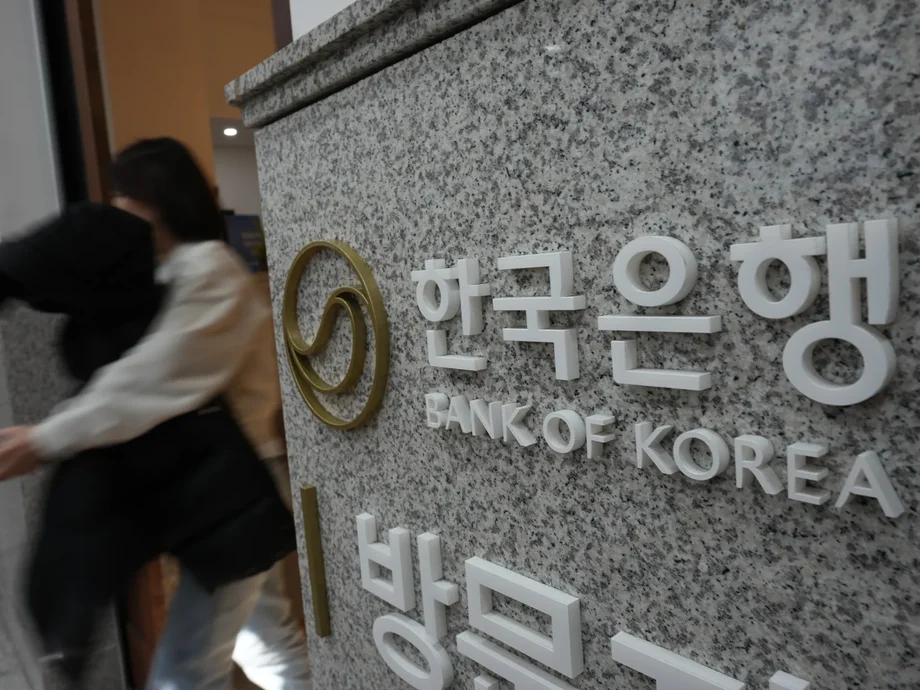
Seoul's central bank returned to rate increases on November 26, lifting the benchmark from 3.00 percent to 3.25 percent. The increase of a quarter percentage point, 25 basis points in market language, ended a pause that had lasted three months and followed increases in July and August. A basis point is one hundredth of a percentage point. The benchmark rate guides borrowing costs across banks and bond markets, so the change reaches mortgages, business loans and government bond yields even when no bank changes its loan book on the day.
Contents
- A Tightening Move With a Wider Reach
- A Short Timeline of the Tightening Cycle
- Why the Bank Moved Now
- The Chip Boom That Changed the Forecast
- Shin's Message: Act Early, Expect a Long Climb
- What the Rate Change Does to Everyday Money
- A Split Between Export Profits and Household Spending
- Why Chip Profits May Take Time to Reach Families
- The Economy's Speed Limit May Be Moving
- The Next Move Is Still Open
- How Economists Read the Signal
- Markets, Housing and Trade Bring Their Own Risks
- Policy Support May Matter as Much as the Rate Itself
- Key Points
The Bank of Korea published the Monetary Policy Direction for November 26, saying it would run policy at the new level until the next monetary policy decision. It kept its 2.0 percent inflation target in view and said growth had strengthened further while price rises would stay above that target for a considerable period. Five of seven Monetary Policy Board members backed the increase. Hwang Kun-il and Lee Soo-hyung favored a hold at 3.00 percent, making the vote 5 to 2.
The decision put the rate at its highest level since October 2024. It also confirmed the path anticipated four days earlier, when rates were expected to rise as export growth and sticky prices narrowed the room for patience. The October rate hold had followed increases in July and August, leaving inflation as the main question before the final meeting of the year. For households, the new rate arrives at a time when prices are still rising faster than the target and many borrowers already carry expensive debt.
A Short Timeline of the Tightening Cycle
The November decision followed a rapid sequence of policy meetings and data releases. The dates matter because the bank was reacting to both new inflation readings and a sharp change in the growth outlook.
- May 29, 2025: The benchmark rate fell to 2.5 percent.
- July 16, 2026: The bank raised it to 2.75 percent.
- August 27, 2026: A second increase brought it to 3.00 percent.
- October 22, 2026: The board held at 3.00 percent.
- November 3, 2026: October inflation was released at 2.8 percent.
- November 17, 2026: The IMF lifted its 2026 growth forecast for South Korea to 3.9 percent.
- November 19, 2026: Annual exports passed 1 trillion dollars.
- November 26, 2026: The bank raised the rate to 3.25 percent and updated its forecasts.
- January 14, 2027: The next policy meeting is scheduled.
The sequence shows a central bank that first paused to judge the effect of two increases, then acted after growth strengthened and prices stayed high. The pause did not end the tightening cycle.
Why the Bank Moved Now
Despite October inflation easing to 2.8 percent from 2.9 percent in September and 3.1 percent in August, the bank's target is 2.0 percent. Core inflation, which leaves out food and energy prices, rose to 2.8 percent from 2.7 percent in September. The bank said cost pressures from higher energy prices were still passing through to shop prices, while stronger demand was adding pressure of its own. It estimated that inflation would have reached the middle 3 percent range without the government oil price cap introduced in March.
The Monetary Policy Board, which sets the rate, described the combination in plain terms.
Domestic economic growth has further strengthened, inflation is projected to remain above the target level for a considerable time, and financial stability risks persist.
Government bond markets had also taken notice of a global shift. Central banks in the United States, Europe and Japan have entered tightening cycles, and the Bank of Korea said global financial markets would be shaped by artificial intelligence investment, policy changes in major economies and developments in the Middle East. Military tensions involving the United States and Iran kept crude prices elevated, adding to imported costs for a country that buys much of its energy abroad.
United States core personal consumption expenditures inflation, a measure watched closely by the Federal Reserve, rose 3.3 percent in October, while American GDP in the July to September quarter was revised up to an annualized 4.3 percent. Expectations of another Federal Reserve increase added pressure on the won, since a wider gap between Korean and American rates can push investors toward dollar assets. The Korean increase narrowed that gap to 0.75 percentage point from 1.00 percentage point.
The Chip Boom That Changed the Forecast
South Korea's export engine has been the main surprise. By November 19, annual exports had passed 1 trillion dollars, with semiconductors, shipbuilding, defense and nuclear power among the industries supporting the record. October exports rose 94 percent from a year earlier to 115.3 billion dollars, after a monthly record of 120.9 billion dollars in September. Semiconductors supplied a large share of that total. SK Hynix and Samsung Electronics together control about 80 percent of the market for high-bandwidth memory and 60 percent of the market for dynamic random access memory, according to Counterpoint Research. High-bandwidth memory is a specialized type of computer memory used in AI accelerators, the chips that train and run large AI models.
GDP in the July to September quarter grew 3.4 percent from a year earlier, above the Bank of Korea's 2.6 percent forecast in August. The economy expanded 3.6 percent in the first nine months of 2026, putting it on course for its first annual gain above 3 percent in five years. Excluding the pandemic rebound years, the economy is on track for its strongest performance since 2010, when growth reached 6.2 percent.
The central bank raised its growth forecast for 2026 to 3.9 percent from 3.3 percent and lifted 2027 to 4.1 percent from 2.9 percent. If realized, 4.1 percent would be the first annual expansion above 4 percent since 2021, when growth was 4.7 percent. The 1.2 point upgrade for next year was the largest since the bank began publishing forecasts for the following year in 2008. The IMF growth upgrade on November 17 had already put 2026 growth at 3.9 percent. The Korea Development Institute also raised its next year forecast to 3.9 percent from 2.2 percent.
Shin's Message: Act Early, Expect a Long Climb
Bank of Korea Governor Shin Hyun-song told a news conference that the rise was meant to act before inflation became more entrenched. He said price pressures were visible and that waiting could require stronger action later.
This rate hike is both a preemptive measure and a decision in response to the visible upward trend in inflation.
Bank of Korea Governor Shin Hyun-song said the bank's forecasts still leave inflation above target for some time. Its latest projection puts consumer price inflation at 2.7 percent in 2026 and 2.4 percent in 2027, while core inflation is forecast at 2.6 percent in both years. The bank sees inflation moving back to its 2.0 percent target only around 2028.
We forecast that consumer prices will reach our target inflation around 2028.
The governor has likened early tightening to using a hoe to stop what could otherwise require a shovel. If prices keep rising faster than incomes, households lose purchasing power and firms face pressure to raise wages and prices in turn.
What the Rate Change Does to Everyday Money
Higher benchmark rates work like a price increase on borrowing. Banks usually raise lending rates, and firms and households with loans whose rates move with market rates pay more each month. Savings become more attractive, which can cool spending and reduce pressure on prices, but the effect arrives unevenly because loans and contracts reset at different times.
The burden is large because South Korean households and companies carry heavy debt. Household credit stood at 2,030.5 trillion won at the end of the third quarter, up 9.8 trillion won from the previous quarter. Interest rates on new deposit bank loans were 4.64 percent in October, while a broader household lending measure reached 5.02 percent. The average rate on new mortgages was 4.98 percent. The delinquency rate on loans to smaller firms reached 0.60 percent, the highest level in nine years and six months.
The Bank of Korea estimated that an increase of 0.5 percentage point would add 340,000 won to annual interest payments for a borrower, or 6.7 trillion won across all borrowers. A market briefing put the effect of the latest increase of a quarter percentage point at 7 trillion won a year, split into 3.3 trillion won for households and 3.6 trillion won for companies. The figures use different scopes, but both point in the same direction: more income goes to interest instead of food, school costs, savings or investment.
Chun Sora, a professor in Inha University's Department of Economics, said the squeeze falls hardest on people who rely on loans.
For borrowers who have debt or loans, this has the effect of further reducing their actual purchasing power, meaning that vulnerable groups are inevitably caught in an even more difficult structure.
A Split Between Export Profits and Household Spending
The rate decision exposed a gap at the center of the economy: exports and company profits are surging, while household spending is still weak. The bank lowered its private consumption growth forecast for 2026 to 1.8 percent from 2.1 percent. It expects consumption to grow 2.4 percent in 2027, still well below the 4.1 percent headline growth forecast.
GDP expanded 1 percent in the July to September quarter, yet private consumption fell 0.2 percent from the previous quarter, its first quarterly contraction in nearly four years. Real household income fell 2.1 percent from a year earlier in the third quarter, and households in the lowest fifth by income saw their nominal income decline. Real wages rose just 0.3 percent in the first eight months of the year, leaving many families with little room to absorb higher prices.
A sharp stock market correction helps explain the weakness. The benchmark KOSPI fell to around 4,700 points after peaking at 9,000 in June, as investors questioned the profitability of vast AI investments. A Bank of Korea study found that a 10,000 won gain in household stock wealth raises consumption by about 120 won, while an equivalent loss cuts it by roughly 150 won. Citigroup estimated that household stock wealth fell by 563 trillion won in the second half. Stock ownership is uneven, so the wealth effect reaches some households more than others.
Shares in Seoul rose after the policy decision, and equity markets in Tokyo and Taipei were also higher. The Nikkei 225 gained 0.9 percent and the Taiex 2.5 percent.
Why Chip Profits May Take Time to Reach Families
The Bank of Korea's brighter outlook rests on the semiconductor industry. Shin said domestic chip companies could earn about 700 trillion won in operating profit this year, roughly one fifth of national income. Operating profit is what remains after ordinary business costs, before taxes and interest payments. Nominal GDP, meaning the value of output at current prices, is expected to exceed 3,000 trillion won, about 2.23 trillion dollars, in 2026, up from 2,676 trillion won in 2025.
Bank of Korea Governor Shin Hyun-song told the news conference that chip earnings would eventually reach the wider economy through taxes, dividends, bonuses and investment, although the timing would be slow.
The amount will spread to the broader economy through taxes and dividends, though it takes time.
The scale of the shift is visible in national accounts. The central bank said the nominal share of information technology manufacturing rose to more than 20 percent this year from 9 percent in 2025. It also said the wage share of income has fallen while the operating profit share has risen, with the balance moving from roughly 50 to 50 in the past to around 40 to 60 this year. Semiconductors create relatively few jobs compared with their output, so a boom in chip profits can lift GDP before it lifts pay packets.
Bonuses of as much as 600 million won per employee have raised concern about inflation, although semiconductor workers account for less than 1 percent of the workforce. The bank expects the payouts to support consumer spending, but some money could instead go toward property purchases or debt repayment.
The Economy's Speed Limit May Be Moving
The central bank also has to judge whether the chip boom raises the economy's potential growth rate. Potential growth is the pace an economy can sustain when workers, factories and technology are used fully without pushing prices higher. A higher potential rate gives policymakers more room to grow without inflation.
In a 2024 report, the Bank of Korea estimated that South Korea's potential growth rate would fall to around 2 percent over the 2024 to 2026 period. Shin said a new estimate would be released next month and that early figures showed an upward trend. The International Monetary Fund recently raised its estimate for South Korea to a range of 2 to 2.5 percent.
The bank's chain weighted method makes this more important. Under that method, the weights of industries in GDP are updated each year, so a sector growing quickly counts for more. Semiconductors accounted for 24.5 percent of GDP in the second quarter. If the chip cycle stays strong, growth gets a larger lift from that sector. If memory prices weaken, the same weight can make the downturn more visible in headline growth.
The Next Move Is Still Open
The latest decision was not unanimous. Two of seven board members, Hwang Kun-il and Lee Soo-hyung, wanted to leave the benchmark at 3.00 percent. Shin and the other four members backed 3.25 percent. The split shows that the central bank is weighing the risk of persistent inflation against the chance that higher rates will slow an economy whose gains have not reached many households.
The wording also changed. The October statement referred to deciding the timing and pace of further increases; the November statement spoke of deciding the timing while watching inflation, the domestic economy and financial stability. The bank did not publish a fixed path for the next increase. Its next policy meeting is scheduled for January 14.
The bank's dot plot offered a map of expectations rather than a promise. A dot plot is a chart in which each policy maker places dots showing where interest rates might be several months later. The 21 projections, three from each of seven members, were spread across 3.25 percent for six dots, 3.50 percent for eight dots and 3.75 percent for seven dots. The largest cluster at 3.50 percent means one more increase of a quarter percentage point was the most common single view.
How Economists Read the Signal
Kathleen Oh, an economist at Morgan Stanley, said the bank's strong growth view and longer period above target inflation made a higher final rate more likely. She expected the next increase to 3.5 percent in February 2027 and another to 3.75 percent in the third quarter of 2027.
Park Jung-woo, an economist at Nomura, reached the opposite conclusion. His team lowered its final rate forecast from 3.50 percent to 3.25 percent and withdrew its call for a February increase, arguing that chip profits would not quickly become broad consumer demand. He estimated that tighter financial conditions would cut consumption growth next year by 0.9 percentage point, with a stronger currency, government transfers and payouts only partly offsetting that drag.
Park Jun-woo, an analyst at Hana Securities, also focused on the uneven recovery. He expected a hold after one further increase and said rates above 3.50 percent could raise the risk of overtightening. Gareth Leather, senior Asia economist at Capital Economics, said there was reason to think the tightening cycle was drawing to a close. He argued that macroprudential measures, meaning rules aimed at specific financial risks such as lending and housing, could be used instead of rate increases across the economy.
Markets, Housing and Trade Bring Their Own Risks
The rate decision came after a difficult period for investors. The KOSPI had fallen sharply from its June peak, and shares rose on the day of the decision alongside gains across the region. Attention also turned to funds that sell options on shares they own, often called covered call funds. A covered call fund receives cash from selling the right to buy shares at a set price, but that can cap gains when the market rises.
The market for these funds reached 25.3 trillion won, 3.8 times its size at the end of 2024. Three major products had returns over three months of around minus 30 percent: KODEX 200 Target Weekly Covered Call fell 30.23 percent, TIGER Dividend Covered Call Active fell 31.78 percent and KODEX 200 Covered Call Active fell 30.96 percent. In one case, the stated distribution rate rose to 1.70 percent from 1.44 percent, while the payment per share fell to 266 won from 350 won. A high distribution rate can therefore conceal a fall in the amount received and in the value of the investment.
Housing is another pressure point. Seoul apartment price growth slowed to 0.01 percent, the lowest pace in 94 weeks, and the number of districts posting declines rose to nine from three in three weeks. Songpa District recorded a cumulative decline of 1.26 percent over three weeks. A 183 square meter unit at Shinhyundai Apartments in Apgujeong was listed at 8 billion won, 4.8 billion won below its peak price of 12.8 billion won. The central bank said price increases in the capital area had slowed but expectations of further gains remained high.
Trade policy clouds the chip outlook. The Office of the US Trade Representative proposed Section 301 tariffs of up to 15 percent on some Korean goods, with a warning that the rate could rise to 25 percent if consultations and commitments were judged unsatisfactory. Section 301 is a US trade law used to respond to unfair trade practices. The proposal singled out semiconductors and the Honam chip cluster, and raised the possibility of scaling back 35 percent tax benefits for Samsung Electronics and SK Hynix in the United States. SK Hynix has been moving some operations to Indiana and exploring a NAND flash plant in New York. NAND flash memory keeps data when power is off. Rising NAND supply from China's YMTC revived concern about memory prices. Semiconductors account for more than 40 percent of exports, so a price downturn could arrive just as households face higher loan payments.
Policy Support May Matter as Much as the Rate Itself
The central bank's own figures show why the won could absorb some pressure. South Korea recorded a current account surplus of 61.46 billion dollars in September 2026, and foreign reserves stood at 443.16 billion dollars at the end of October. A current account surplus means the country earned more from trade and income abroad than it spent. The bank said the won stayed broadly stable against the dollar despite a strong dollar and foreign equity outflows, helped by that surplus. It also described financial market liquidity as ample, in part because chip companies placed funds in money markets with short maturities after paying taxes, dividends and bonuses.
Even with that cushion, the burden on vulnerable borrowers is immediate. Bank of Korea Governor Shin Hyun-song said monetary policy is too broad to protect one group without affecting the whole economy. He said fiscal policy and financial support backed by public money are better suited to that task.
Because monetary policy spreads across the entire market, there are limits to implementing policy selectively.
Bank of Korea Governor Shin Hyun-song pointed to debt restructuring as one tool and said the bank would cooperate closely with the government. The government is due to announce its economic policy direction next month, with attention likely to focus on small businesses, households with low incomes and regional economies. The central bank, for its part, said it would decide future rate moves after assessing inflation, growth and financial stability.
That leaves two timelines running together. Chip earnings and export orders support a strong forecast for 2027, but loan payments arrive each month and inflation is still above target. Households need those profits to reach wages, bonuses, tax revenue and spending quickly enough to balance the cost of tighter money.
Key Points
- The Bank of Korea lifted its benchmark rate by 25 basis points to 3.25 percent on November 26, its third increase this year.
- Five board members supported the hike; Hwang Kun-il and Lee Soo-hyung favored a hold at 3.00 percent.
- Growth forecasts rose to 3.9 percent for 2026 and 4.1 percent for 2027, while inflation forecasts stood at 2.7 percent and 2.4 percent.
- Exports passed 1 trillion dollars by November 19, led in large part by semiconductors and also supported by shipbuilding, defense and nuclear power.
- Private consumption growth was cut to 1.8 percent this year, and household spending fell 0.2 percent in the July to September quarter.
- Chip operating profits were estimated near 700 trillion won, but the central bank said the gains would reach households gradually.
- The next policy meeting is scheduled for January 14, and the dot plot showed one more increase of a quarter percentage point as the largest single cluster.
- The bank pointed to a 61.46 billion dollar current account surplus and 443.16 billion dollars in foreign reserves as supports for the won.