Inside the Abu Dhabi agreement
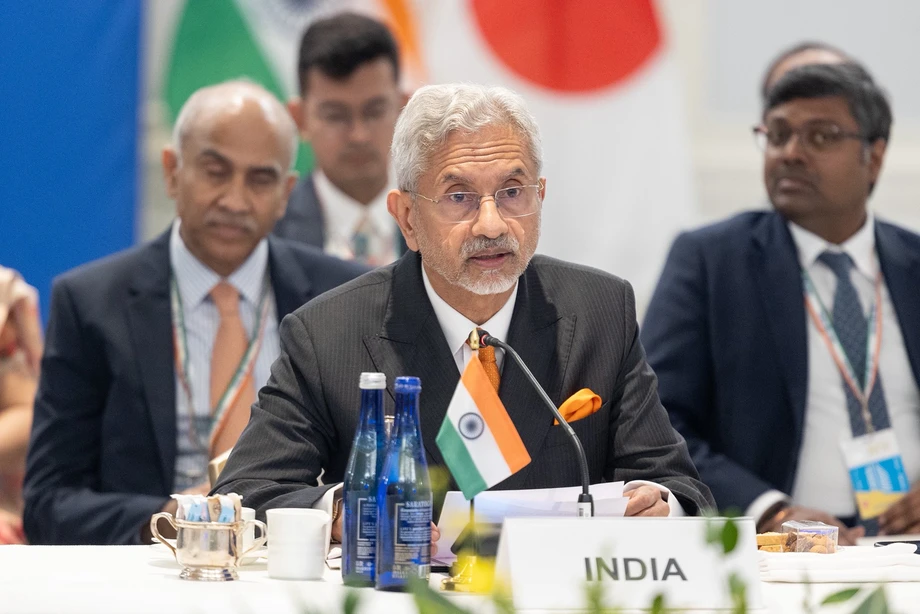
Defence Secretary Rajesh Kumar Singh and UAE Ministry of Defence Under Secretary Lieutenant General Ibrahim Nasser M Al Alawi met in Abu Dhabi on Thursday, 26 November 2026, for the 14th India-UAE Joint Defence Cooperation Committee. India's Ministry of Defence said the two sides agreed to 'accelerate co-development and co-production of next-generation defence equipment'. They also agreed to widen work in defence industry, defence innovation, advanced technology, artificial intelligence (AI), cyber security, military training and maritime safety.
Contents
- Inside the Abu Dhabi agreement
- How May's framework became Thursday's work plan
- Which military technologies are in focus
- Why industry leaders joined the talks
- How exercises prepared forces to work together
- Energy routes and Indian families shape the agenda
- Why a divided Gulf makes the partnership harder
- What changes now, and what is still open
- A short timeline of the build up
- Key Points
For a reader, co-development means designing a system together, while co-production means building parts or the whole system in both countries. It is different from one country buying a finished weapon from another. The wording matters because it points to shared technology, shared supply chains and longer term military ties, even though specific contracts and factories were not named in the announcement.
Singh co-chaired the meeting with Al Alawi. The Indian delegation included representatives from the Department of Defence, the Indian Defence Forces, the National Security Council Secretariat and the Ministry of External Affairs. The co-chairs decided to review progress at regular intervals before the next meeting of the committee.
The meeting gave strategic direction to initiatives under the India-UAE Strategic Defence Partnership Framework, signed in May 2026 during Prime Minister Narendra Modi's visit to the UAE. Thursday's decision turns that broad framework into a work programme with reviews, industry talks and named areas of cooperation.
How May's framework became Thursday's work plan
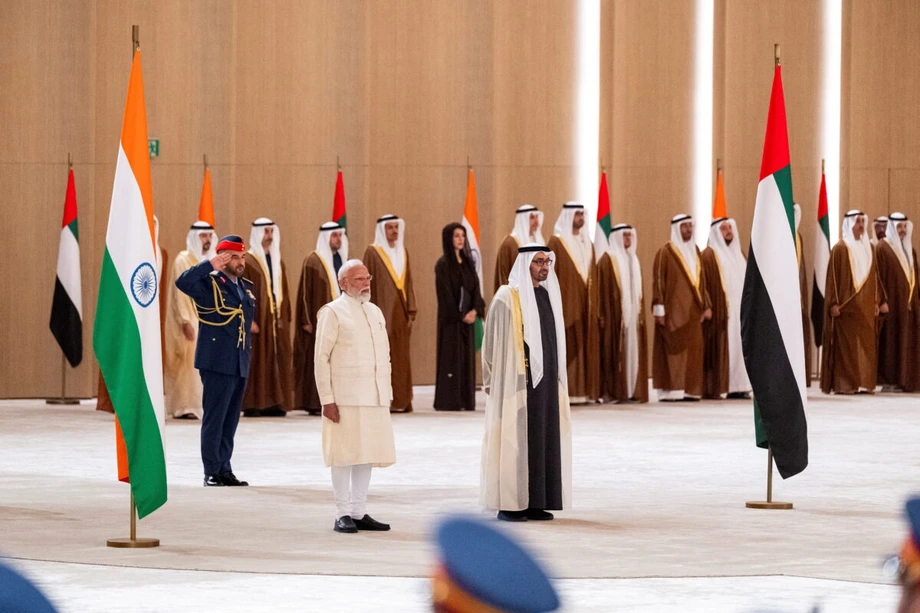
The Strategic Defence Partnership was signed during Modi's 15 May 2026 meeting with UAE President Sheikh Mohamed bin Zayed Al Nahyan in Abu Dhabi. The Ministry of External Affairs (MEA) announced seven outcomes from that state visit, including a Strategic Defence Partnership, a collaboration agreement between the Indian Strategic Petroleum Reserves Limited (ISPRL) and Abu Dhabi National Oil Company (ADNOC), and an Emirati development investment of up to $5 billion. MEA spokesperson Randhir Jaiswal described those steps as part of the existing India-UAE Comprehensive Strategic Partnership.
The May agreement also listed defence industrial collaboration, innovation, advanced technology, training, exercises, maritime security, cyber defence, secure communications and information exchange. Another outcome covered strategic petroleum reserves and liquefied natural gas (LNG) supply, including potential storage of crude oil in Fujairah as part of India's strategic petroleum reserve. A strategic petroleum reserve is an emergency stock of crude oil that a country can use when supplies are disrupted.
An East Asia Forum India-UAE defence partnership study published 9 September 2026 by Rhea Abraham, an independent researcher in Bahrain, said the May 2026 framework gave durable structure to ties that grew under India's 'Look West' policy. It dated the earlier Comprehensive Strategic Partnership to January 2017 and said that agreement covered cyber security, intelligence sharing and counterterrorism. The Joint Defence Cooperation Committee has been the meeting ground where military engagement became more regular.
UAE President Sheikh Mohamed bin Zayed Al Nahyan described the May talks as a search for practical gains in several fields. In a post on X, he said the two leaders explored measures to give new momentum to cooperation in energy, technology and other priority sectors.
measures to give new momentum to cooperation in energy, technology, and other priority sectors
That language helps explain why Thursday's meeting reached beyond soldiers and ministries. Energy, technology and industrial policy now sit inside the defence conversation, with trade routes and supply chains treated as part of security.
Which military technologies are in focus
The defence agenda points to systems that can be used near water and coastlines. India and the UAE are understood to be prioritising joint development of drone technology for naval and coastal defence, munitions guided to precise targets and missile systems. Cooperation is also likely to cover construction, refit and maintenance of naval vessels, work that can keep ships operational for decades.
The UAE has shown interest in Indian platforms including Akash air defence missiles and Pinaka rocket systems. The study adds BrahMos missile systems and the Akashteer air defence system to the list of possible collaboration. That would signal a move beyond the old pattern in which one country simply buys equipment from another. Akash intercepts aircraft and missiles, Pinaka fires rockets from ground launchers, BrahMos is a long range cruise missile and Akashteer links radars and air defence units so they can respond together.
Drones are useful in this setting because they can watch sea lanes, identify suspicious boats and help forces see a coastline without risking a pilot. Joint maintenance of naval vessels would matter in the same practical way. A ship that can be refitted and repaired with parts available in both countries spends less time waiting for distant suppliers.
Why industry leaders joined the talks
An Indian defence industry delegation accompanied the official delegation to Abu Dhabi to push business to business partnerships. Companies from both countries held a session on the sidelines of the committee meeting. The Indian industry delegation visited Tawazun Industrial Park and met the Tawazun Economic Council to explore projects with UAE counterparts.
Tawazun is a defence industry hub in Abu Dhabi, so the visit gave company executives a route into local manufacturing capacity. The co-chairs also established interim progress reviews, a way to check whether talks become contracts rather than remaining on a communique.
Joint manufacturing already has a small scale example. India's ICOMM and the UAE's CARACAL have collaborated to produce modern small arms. That partnership shows how design, components and production can be shared, and it gives the two governments a working model for larger projects.
Defence Secretary Rajesh Kumar Singh also called on UAE Minister of State for Defence Affairs Mohamed bin Mubarak Fadhel Al Mazrouei. They exchanged views on the changing geopolitical situation in the Gulf and West Asia and reaffirmed their commitment to the Strategic Defence Partnership. Singh conveyed greetings from Defence Minister Rajnath Singh and paid tribute at Wahat Al Karama, a memorial to UAE soldiers who died in service.
How exercises prepared forces to work together
Military cooperation between India and the UAE has been building through exercises and staff talks as well as factory plans. Named activities include Desert Eagle, Desert Cyclone and Gulf Star. The Mountain Guardian ground exercise took place in October, and the 10th Navy Staff Talks in September focused on maritime security and training exchanges.
The Indian Army chief's visit to the UAE in January 2026 added another step before the framework was signed in May. These events help officers learn each other's procedures, communications and command habits. That kind of familiarity is called interoperability, which simply means forces can operate together without confusion when a real crisis arrives.
The sequence matters for the new defence production push. A shared weapon or drone is more useful when the two militaries already understand how to train with it, maintain it and deploy it near the same sea routes.
Energy routes and Indian families shape the agenda
India's reasons are practical. An estimated 4.3 million Indians live and work in the UAE. Their wages, savings and family links connect the Gulf state to India's economy, and their number creates domestic pressure in New Delhi to protect Indian nationals abroad. Maritime security around UAE ports therefore touches both foreign policy and household concerns in India.
India imports 90 percent of its oil, and roughly half of those imports pass through the Strait of Hormuz, a narrow route between the Gulf and the Indian Ocean. That means about 45 percent of India's total oil supply moves through that waterway. After the closure of the strait, India's oil inventories fell 15 percent and the government raised fuel prices by 3 percent.
The strain has reached daily life. Prime Minister Narendra Modi urged people to work from home, avoid foreign travel and refrain from buying gold to conserve fuel. Since March, demonstrations over liquefied petroleum gas (LPG) costs have pointed to shortages, job losses, business closures and higher prices for basic goods. Critics and opposition figures said the government overlooked the economic crisis while holding energy intensive election rallies and roadshows for the Bharatiya Janata Party.
Fujairah brought the risks closer to Indian citizens. The UAE accused Iran of targeting the Fujairah Petroleum Industries Zone with drones and missiles, setting an oil refinery on fire and injuring three Indian workers. Prime Minister Narendra Modi condemned the strikes in the strongest terms and linked the partnership to citizen protection and solidarity with Abu Dhabi.
Modi made the political meaning clear in remarks to Sheikh Mohamed bin Zayed Al Nahyan. He said India would remain beside the UAE in every situation.
India stands shoulder-to-shoulder with the UAE in every situation, and it will continue to do so
India's interest in reviving a stalled trade corridor linking India, the Middle East and Europe also fits this picture. Abu Dhabi's ports can act as logistics hubs, and defence ties add a security layer to routes carrying goods and fuel.
Why a divided Gulf makes the partnership harder
Regional politics give the agreement its urgency. The study published on 9 September said the war by the United States and Israel against Iran prolonged instability. It also said divisions inside the Gulf Cooperation Council, especially between Saudi Arabia and the UAE, were pronounced.
Defence ties involving Pakistan, Saudi Arabia and Turkiye have expanded, including the September 2025 defence agreement and the August 2026 Mecca Joint Defence Agreement. Those steps have reinforced a sense that the region is splitting into different security camps. For Abu Dhabi, uncertainty about long term United States security commitments has encouraged a foreign policy that spreads partnerships across several countries.
Cooperation with India gives the UAE access to cost effective technology, a large market and a partner with growing industrial capacity. The I2U2 Group, an economic partnership linking India, the UAE, Israel and the United States since 2023, gives Abu Dhabi another way to sit inside technology and trade networks that strengthen its room to manoeuvre.
India is trying to keep several relationships working at once. New Delhi retains ties with Tehran, including the Chabahar Port project that gives India access toward Central Asia, while building defence links with Israel and strong economic relations with Saudi Arabia. At a BRICS meeting in New Delhi on Thursday, Iranian Foreign Minister Abbas Araghchi accused the UAE of being directly involved in attacks on Iran. The comment showed how quickly a partnership can be tested when regional partners are exposed to the same conflict from different sides.
What changes now, and what is still open
For governments, the May framework now has a review timetable and an industry channel. That can turn broad promises into supply chains, joint production lines and regular training. For companies, the Tawazun visit and business to business session create a path for proposals that could be examined under the Strategic Defence Partnership.
For people, the results are less abstract than weapons lists suggest. Better maritime safety can protect ships carrying trade and fuel, reduce pressure on energy supplies and give Indian expatriates in the UAE a stronger security environment. The 4.3 million Indians in the UAE make that everyday stake unusually large.
Both governments describe their ties as centuries old, rooted in trade, cultural exchange and strong people to people links. That wider relationship is now carrying a heavier security load, from oil storage in Fujairah to missile and drone projects that may take years to deliver.
No project list, contract value, production site or date for the next Joint Defence Cooperation Committee meeting was announced. The UAE interest in Akash and Pinaka, and the wider possibilities around BrahMos and Akashteer, remain at discussion stage. The next practical steps are the interim reviews and any company to company proposals that follow from the Abu Dhabi talks.
A short timeline of the build up
The current decision sits on a chain of security, energy and industrial steps spread across almost a decade.
- January 2017: India and the UAE formalised the Comprehensive Strategic Partnership covering cyber security, intelligence sharing and counterterrorism.
- 2023: India joined the I2U2 Group with the UAE, Israel and the United States.
- September 2025: Pakistan and Saudi Arabia signed a defence agreement.
- January 2026: The Indian Army chief visited the UAE.
- 15 May 2026: Modi and Sheikh Mohamed bin Zayed Al Nahyan signed defence, energy and shipping pacts in Abu Dhabi, including the Strategic Defence Partnership and an ISPRL and ADNOC oil storage agreement.
- August 2026: The Mecca Joint Defence Agreement involving Pakistan, Saudi Arabia and Turkiye was reached.
- September 2026: The 10th Navy Staff Talks focused on maritime security and training exchanges.
- October 2026: The Mountain Guardian ground exercise added another interoperability step.
- 26 November 2026: The 14th Joint Defence Cooperation Committee agreed to accelerate joint development and production of next generation defence equipment.
The sequence shows a shift from political framework to exercises, then to industry meetings and production language. The next test will be how quickly the interim reviews produce named projects.
Key Points
- India and the UAE agreed on 26 November 2026 to accelerate joint development and production of next generation defence equipment.
- The 14th Joint Defence Cooperation Committee meeting in Abu Dhabi was co-chaired by Rajesh Kumar Singh and Lieutenant General Ibrahim Nasser M Al Alawi.
- Cooperation will cover defence industry, innovation, advanced technology, AI, cyber security, military training and maritime safety.
- The meeting built on the Strategic Defence Partnership signed during Modi's 15 May 2026 visit to the UAE.
- Drones, missiles, munitions guided to precise targets and naval vessels are among the likely areas of work.
- Industry talks at Tawazun Industrial Park and regular progress reviews were added to turn the framework into projects.
- Energy routes, 4.3 million Indians in the UAE and a divided West Asia are driving the closer partnership.