Riders Face a Long Night Before the First Train
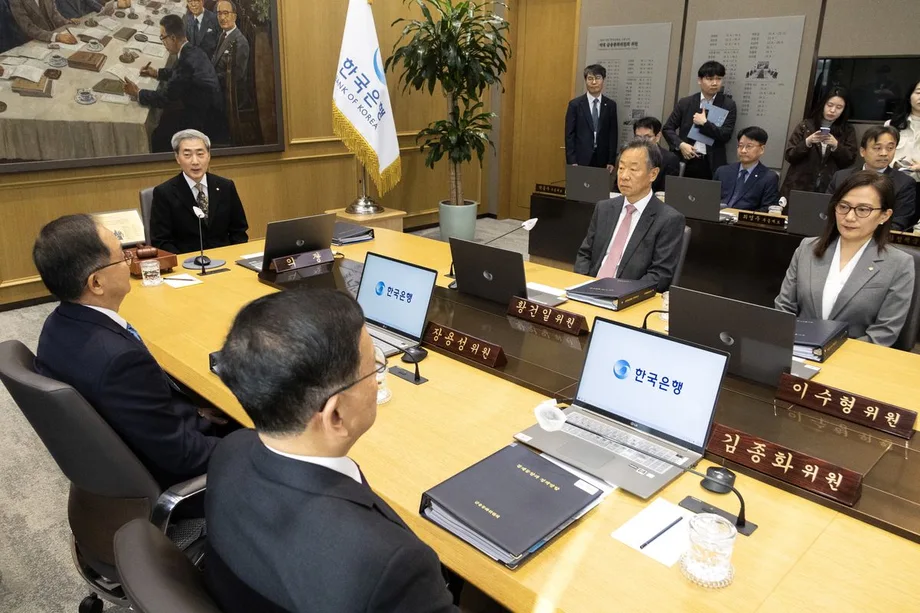
Seoul Metro and three unions will hold final wage and collective bargaining talks on Nov. 24, 2026, with the city's subway system one agreement away from an indefinite strike. Sessions are set for 10 a.m., 11 a.m. and 1:30 p.m. in a fourth floor conference room at company headquarters in Seoul's Seongdong district. If no deal is reached, the unions plan to stop work from the first trains on Nov. 25, cutting service and crowding stations during the morning rush.
Contents
- Riders Face a Long Night Before the First Train
- What the Unions Want in Plain Terms
- Why 1,313 Hires Became the Center of the Fight
- How the Dispute Reached the Brink
- Safety Action Has Already Given Riders a Preview
- What a Full Strike Would Change at Station Level
- Gyeonggi Province Builds a Backup Network
- The Money Behind the Standoff
- Why a Last Minute Deal Is Still Possible
- What Still Needs Answers Before the First Train
- Key Points
The operator's schedule puts the Seoul Transportation Workers' Union, the largest union, at 10 a.m., the Olbarun Union, also called the Correct Labor Union or MZ union, at 11 a.m. and the Integrated Union at 1:30 p.m. A Seoul Metro notice circulated earlier listed the Integrated Union at 11 a.m. and Olbarun at 1:30 p.m.; the operator's later schedule put Olbarun first. The meeting is the first full bargaining session since the third round broke down on Sept. 29, a gap of 56 days.
The timing makes the outcome sharp. Talks could run late into the night, as they did last year. The unions have already passed strike votes and started a strict compliance campaign. Management says it wants an agreement. The unresolved question is whether Seoul, which controls staffing approvals, will move on job cuts and hiring.
What the Unions Want in Plain Terms
The unions have four main demands. They want the 3.5 percent wage increase set by government guidelines, an end to a plan to cut 2,212 positions between 2021 and 2026, the hiring of 1,313 workers this year, and state money for public service costs. Hazardous field work should be done only by two person teams.
The wage demand is smaller than it first was. The largest union initially asked for 5.2 percent and reduced the claim to 3.5 percent. Management has said it will accept 3.5 percent because it follows government guidance. Union leaders say that acceptance is hollow because the company has no plan to secure the roughly 15 billion won needed to pay for it.
For riders, staffing is the part that matters most. Drivers, maintenance crews and station staff keep trains moving and handle safety checks. When posts are empty, workers must cover more tasks, and routine safety work can become harder to complete on time.
Why 1,313 Hires Became the Center of the Fight
The first union's calculation explains the headline number. It says Seoul Metro is 311 people below its authorized headcount. Another 443 workers are on long term leave for reasons such as childcare, industrial accidents and military service. There are 714 scheduled retirements. After subtracting 155 people already hired, the union arrives at 1,313 needed workers.
Seoul and the company see the numbers through a different lens. The city has pushed for restructuring because of financial pressure and management efficiency. The company says 684 positions were cut from 2021 to 2023, leaving 1,528 of the 2,212 position plan if the earlier target runs through 2026. It also says the scale of new hiring should wait for an organizational review early next year.
Union leaders want hiring to start as soon as an agreement is signed. They argue that a review next year cannot fill gaps that affect platform doors, train inspections, hazardous maintenance and overtime coverage now. Union chair Kim Jeong-seop has said even replacement hiring for workers on parental leave needs Seoul Metropolitan Government approval, and he has urged the city to join the talks.
The operator is already running a separate recruitment process for the second half of the year. The Seoul Metropolitan Government posted document screening results on Nov. 19, and the Line 9 sector announced interview candidates on Nov. 11. Seoul Metro runs its own agency hiring instead of joining the city's integrated public institution recruitment. The union says those steps are too small to solve the staffing gap.
How the Dispute Reached the Brink
The bargaining calendar has moved toward this deadline for months. The main events are short enough to list, and each one narrowed the space for compromise.
- May 18: wage and collective bargaining talks began.
- June, July and Sept. 29: three plenary sessions were held; the third broke down on Sept. 29.
- Nov. 2: the Seoul Regional Labor Relations Commission ended mediation after two meetings failed to produce a settlement.
- Nov. 2 to 5: the first union held a strike vote, with 86.3 percent of participating members in favor. The other unions recorded 80.84 percent and 94.9 percent support.
- Nov. 20 at 6 a.m.: the first and second unions began a strict compliance campaign, often called a work to rule action.
- Nov. 23: Gyeonggi Province announced emergency transport measures for a possible metropolitan rail disruption.
- Nov. 24: final talks with the three unions are scheduled.
- Nov. 25: the unions plan to begin an indefinite strike if there is no deal.
- Dec. 10: Korea Railroad Corp. workers have warned of a separate indefinite general strike.
Safety Action Has Already Given Riders a Preview
The first and second unions began their strict compliance campaign with the 6 a.m. day shift on Nov. 20. Drivers follow prescribed speeds and station stop times even when the timetable is running late. Platform screen door checks follow the manual. Train crews confirm that passengers have finished boarding before closing doors. Maintenance, technology, facilities and electrical workers do hazardous jobs in two person teams, keep standard repair times and refuse special inspections, overtime and holiday shifts.
Seoul Metro operates Lines 1 through 8 and the Line 9 section between Eonju and VHS Medical Center. It set up an emergency response team and planned extra staff at crowded stations, announcements about delays and real time adjustments to train intervals through its control center. Normal headways, the time between trains, are 2.5 to 4.5 minutes in the morning rush and 3 to 6 minutes in the evening rush.
The first day showed how small changes in a dense subway system can ripple. By 6 p.m., Seoul Metro had recorded one delay linked to the campaign: a Line 2 train ran 17 minutes late around 2 p.m. and passengers were moved off at Seongsu Station. The company received 14 complaints. Evening crowds at Gwanghwamun, Yeouido and Gangnam were close to normal.
A separate mechanical fault added to the morning's confusion. A train passed a stop signal at Yongdap Station on the Line 2 Seongsu branch at 5:37 a.m., damaging a track switch. Service was suspended in both directions until the problem was resolved around 8:49 a.m., and some Line 1 trains were delayed. Seoul Metro's emergency alert told passengers what had happened and asked them to plan around it.
Due to a track switch malfunction at Yongdap Station on Line 2, train service has been suspended in both directions on the Seongsu branch, and some trains on Line 1 are delayed. Please take this into account when traveling.
Over the weekend, the operator said three trains reached final stops about 10 minutes or more late in incidents linked to the strict compliance campaign. One Line 8 train was 10 minutes late, and two Line 2 trains were 16 and 14 minutes late. On Nov. 23, no delay, breakdown or accident linked to the campaign had been recorded by 9 a.m.
What a Full Strike Would Change at Station Level
Passengers would feel a full strike first in the morning peak. Trains would run with the minimum staff required by law, and only workers assigned to essential maintenance duties would report. Subways are legally designated as essential public services, so at least 65 percent of the workforce must stay on duty during a strike. Even with that requirement, fewer trains are likely, and platforms would fill quickly at transfer stations.
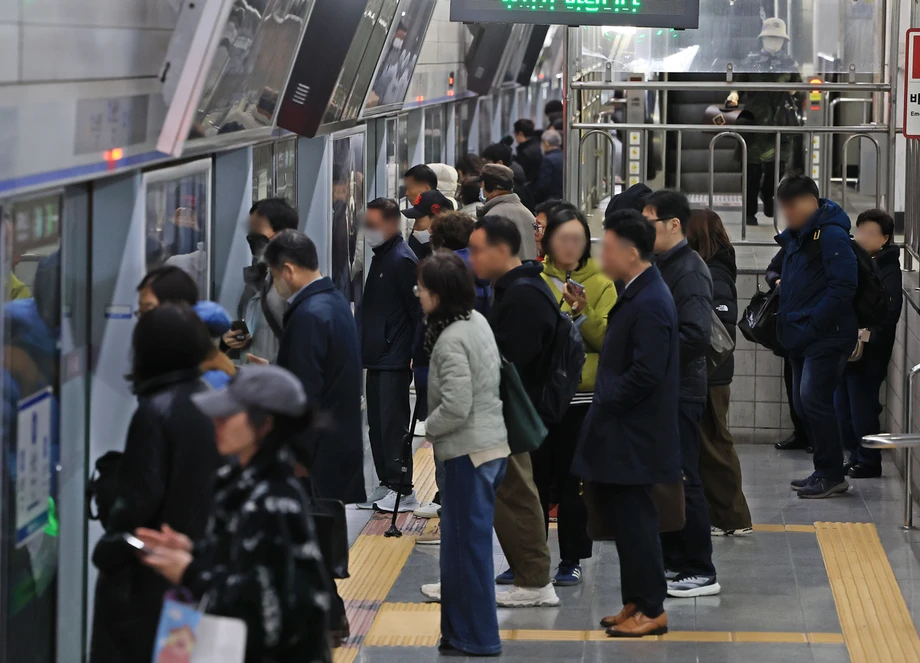
The experience on Nov. 20 gave commuters a small example. Hwang, a 26 year old office worker waiting at Sinseol-dong Station, said he did not know about the Line 2 problem or the industrial action until he arrived. He said he would have used a bus if he had known.
I didn't know there was a problem on Line 2's Seongsu branch or that the union was starting a work-to-rule action today. If I'd known this would happen, I would have taken the bus.
Lee, a 29 year old office worker at Cheolsan Station on Line 7, said crowds seemed lighter because some people had switched transport after hearing about the action.
There were actually fewer people than usual. It seems many people saw the news about the planned work-to-rule action and took other forms of public transportation.
A walkout would be larger than the campaign. During the 2022 full strike, daytime service across the network, including sections run by Korea Railroad Corp., fell to about 82 percent. A full walkout on Nov. 25 would be the first in three years when measured against that 2022 stoppage. Seoul Metro also had a two day warning strike in November 2023, then avoided strikes in 2024 and 2025 through settlements.
Gyeonggi Province Builds a Backup Network
Gyeonggi Province announced emergency transport measures on Nov. 23 because a Seoul subway strike would spill across the capital region. Lines 1 through 8, the Gyeongui-Jungang Line, the Suin-Bundang Line, the Gyeonggang Line and GTX-A could be affected if the labor disputes continue. KORAIL has set Dec. 10 for its own possible walkout, and GTX-A workers have shown strike signs.
The province plans 56 extra city and metropolitan bus trips during rush hours using 38 reserve vehicles. It will add six reserve vehicles to existing routes, run village buses more often and push the final village bus departure back by one hour. Intercity buses will increase by 93 trips across 28 routes in five regions. Four Gyeonggi taxi organizations have been asked to keep 38,321 taxis in service.
An emergency transportation headquarters will operate around the clock from 9 a.m. on the day before the strike until the situation ends. Officials will share live traffic updates with all 31 cities and counties and post strike and bus information on provincial and local government websites, the Gyeonggi Traffic Information Center and the Gyeonggi Bus Information app.
KORAIL activated its own emergency transport task force ahead of a work to rule action by the Korean Railway Workers' Union starting at 9 a.m. Monday. The company urged passengers, including students heading to university entrance tests and interviews, to check schedules and use alternatives. Ticket cancellation and change fees will be waived during the action.
Lee Cheolgyu, head of Gyeonggi Province's Railway Operations Division, said the province would use buses and taxis to reduce the effect of a walkout and asked residents to check traffic information.
We will actively use alternative transportation, including buses and taxis, to minimize inconvenience to residents if a rail strike goes ahead. We ask residents to check real-time traffic information during the strike.
The Money Behind the Standoff
Seoul Metro says it cannot hire freely because the city controls personnel matters and because the operator is already losing money. The company posted a net loss of 826.8 billion won in 2025 on revenue of 2.37 trillion won and costs of 3.20 trillion won. Public service costs reached 816.7 billion won. They included 448.8 billion won in free rides, 290.7 billion won in bus transfer discounts and 77.2 billion won in commuter passes and similar fares.
A public service cost is the money an operator loses when policy keeps fares low or free for certain groups. Seoul Metro says carrying one passenger on Lines 1 through 8 cost 1,817 won in 2025, while the average fare was 1,036 won. Fare revenue covered 57 percent of the cost.
The pressure has been building for years. Public service costs rose from 484.8 billion won in 2021 to 816.7 billion won in 2025. Net losses over the same period were 964.4 billion won in 2021, 642.0 billion won in 2022, 517.3 billion won in 2023, 724.1 billion won in 2024 and 826.8 billion won in 2025. At the same time, the subway remains essential to daily movement. Seoul Metro stations recorded 1.27 billion boardings from January to September 2026, about 4.65 million a day.
Six urban rail operators lost 775.4 billion won on free rides in 2025, equal to 52 percent of their combined net loss. Korea Railroad Corp. received 78.5 percent of the 2.84 trillion won in public service costs settled for 2019 through 2024. A study commissioned by the six operators projects that Seoul Metro's capital could be wiped out by 2033 if the structure continues without an additional capital injection.
Union leaders use those figures to argue that the city and the state should cover public obligations instead of shrinking staff. City officials point to the same figures as proof that labor costs and staffing levels need tighter control.
Why a Last Minute Deal Is Still Possible
Seoul subway bargaining has often reached agreement after the deadline had nearly arrived. In 2022, a strike that began on Nov. 30 ended with an agreement around midnight, and trains ran normally from Dec. 1. In 2023, a two day warning strike on Nov. 9 and 10 was followed by a deal on the evening of Nov. 21, a day before a second strike was due.
In 2024, the sides agreed on Dec. 6, with the first union settling around 2 a.m. Wage increases were capped at 2.5 percent, and about 630 people were to be hired. In 2025, provisional agreements came on Dec. 12, the day a strike was set to begin. The first union settled around 6 a.m., followed by the other two unions. That deal capped pay rises at 3.0 percent of total labor costs and set new hiring at about 820 people. For that deadline, the city's contingency plan aimed for full morning peak service and about 88 percent in the evening peak, using about 13,000 staff, roughly 80 percent of normal levels.
The closest parallel is last year's all night talks. Negotiations started on Dec. 11 and stopped early the next morning when the largest union declared an impasse. Management then produced an improved offer. Talks resumed and ended around 6 a.m., just before the first trains.
Seoul Metro said it would keep communication open and negotiate in good faith to avoid public inconvenience. A company official said management wanted a settlement that would protect commuters from disruption.
We will keep channels of communication open with the unions and negotiate in good faith on the basis of mutual trust so that commuters are not inconvenienced by a strike.
What Still Needs Answers Before the First Train
The decisive issue is not whether management repeats the 3.5 percent wage offer. It is whether Seoul changes its position on the 2,212 position plan and says how many people it will hire. The company has said hiring numbers will follow an organizational review early next year, while unions want recruitment to begin immediately after a deal. No final staffing figure has been announced, and no new mediation session has been scheduled.
Another uncertainty is how the three unions will act together. They have different sizes and different affiliate ties. The Seoul Metro Labor Union is affiliated with the Korean Confederation of Trade Unions, the Integrated Union with the Federation of Korean Trade Unions, and the Correct Labor Union is known as the MZ union. Strike votes passed in all three, and the strike plan covers all three unions. The third union has not joined the work to rule campaign or set a separate strike date.
The next dates are fixed even if the talks remain fluid. Final bargaining begins on Nov. 24. A strike, if it starts, would begin with the first trains on Nov. 25. KORAIL workers have set Dec. 10 for a possible general strike. Seoul Metro's organizational review is expected early next year, but its timing and hiring output have not been spelled out.
Key Points
- Final wage and collective bargaining talks are set for Nov. 24 at Seoul Metro headquarters, with three unions meeting in sequence.
- The unions plan an indefinite strike from the first trains on Nov. 25 if there is no agreement.
- Staffing is the core dispute: 2,212 planned cuts, 1,313 demanded hires and a 3.5 percent pay claim.
- Seoul Metro says hiring scale should wait for an organizational review early next year.
- A work to rule campaign began on Nov. 20, with three trains delayed about 10 minutes or more over the weekend.
- Gyeonggi Province has prepared extra buses, taxis and round the clock transport monitoring.
- During the 2022 full strike, daytime service fell to about 82 percent across the network.