South Korea Prepares for Another Interest Rate Move
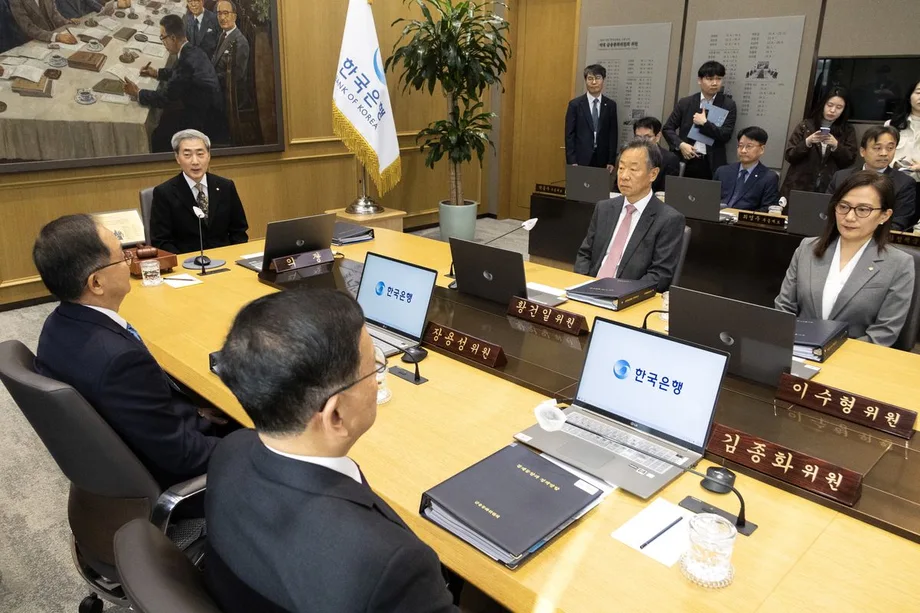
South Korea is heading toward another shift in borrowing costs as economic momentum picks up speed. On November 26, the Bank of Korea is scheduled to hold its policy meeting, where market watchers expect officials to lift the benchmark interest rate from 3.00% to 3.25%. After keeping rates steady in October to evaluate earlier actions taken in July and August, the central bank faces mounting pressure to tighten policy once again. Strong export performance, driven largely by advanced technology and semiconductor sales, has boosted overall economic growth projections. At the same time, consumer prices continue to rise at a pace that remains above the central bank target, leaving policymakers with difficult choices about how to manage borrowing conditions.
Contents
- South Korea Prepares for Another Interest Rate Move
- Experts Forecast a Quarter Point Increase in Borrowing Costs
- Differing Views on the Final Peak of the Tightening Cycle
- Rising Household Debt and Financial Pressures on Consumers
- Impact on the Seoul Housing Market and Property Prices
- A Complex Economic Timeline Leading to Policy Decisions
- Unresolved Questions and Future Policy Directions
- The Essentials
Economic forecasts published by international bodies and financial institutions point to an exceptionally strong recovery. The International Monetary Fund raised its growth forecast for South Korea to 3.9% for the year, up from an earlier estimate of 3.3%, following consultations that took place from November 3 to 17 with government officials, the Bank of Korea, and private sector representatives, as detailed in the IMF lifts South Korea growth forecast. That projected expansion follows a modest 1.1% growth rate in the previous year and would mark the country's fastest economic growth since 2021.
Experts Forecast a Quarter Point Increase in Borrowing Costs
Surveys of market specialists and former central bank officials show a clear consensus regarding the upcoming policy decision. A survey of four prominent market experts, including former Bank of Korea Deputy Governor Kang Tae-soo, senior research fellows at the Korea Institute of Finance, and banking analysts, found unanimous agreement that the benchmark rate will rise by 0.25 percentage points. Similar findings emerged from a poll of ten domestic securities firms, all of which predicted an increase in November.
Proponents of further tightening argue that underlying inflationary pressures have not yet dissipated. Consumer price inflation stood at 2.8% in October, matching the rate seen in July, according to figures released by the Ministry of Data and Statistics in the South Korean Consumer Price Trends. Although this represented a slight easing from 2.9% in September, the reading remained well above the central bank stability target of 2.0%. Core inflation, which excludes volatile items such as food and energy, held steady at 2.8%, indicating that price increases remain broad across the economy.
Differing Views on the Final Peak of the Tightening Cycle
While almost all analysts expect an increase in November, opinions diverge regarding how much further borrowing costs will climb in the coming months. Most financial institutions anticipate that the central bank will implement one additional rate hike during the first half of next year, bringing the final peak of the current tightening cycle to 3.50%. This perspective relies on the expectation that strong export revenues will eventually translate into higher wages and increased domestic consumption, fueling further demand-side inflation.
A dissenting view exists among a small number of financial analysts who believe the upcoming adjustment will mark the conclusion of the rate-hiking phase. Researchers pointing toward weaker segments of the labor market and sluggish domestic spending argue that most workers do not receive the large performance incentives enjoyed by employees in the dominant technology sector. Pointing to the relatively small proportion of workers receiving substantial bonuses, analysts suggest that broader consumer demand may not remain strong enough to justify sustained monetary tightening.
Rising Household Debt and Financial Pressures on Consumers
Higher borrowing costs arrive at a time when household indebtedness and living expenses are already weighing heavily on consumer finances. Total household lending at major commercial banks has continued to climb, increasing by over 2.7 trillion won during a single month period leading into October. For families carrying significant debt loads, every adjustment in the benchmark rate translates directly into heavier monthly interest payments on mortgages and other loans.
The financial strain extends beyond ordinary households to corporate borrowers and investors navigating high global interest rates. Estimates regarding artificial intelligence investments indicate that global corporate debt related to advanced technology development will surge past five trillion dollars. As borrowing expenses remain elevated, companies must carefully manage their capital reserves, while vulnerable sectors such as small businesses and self-employed individuals face rising delinquency rates and increased closures.
Impact on the Seoul Housing Market and Property Prices
Housing markets in the capital region are already showing signs of a slowdown as prospective buyers adopt a cautious approach. Seoul apartment prices have experienced 92 consecutive weeks of upward movement, but the momentum is encountering resistance due to stricter lending regulations and the rising cost of mortgages. Data covering the second week of November revealed that five out of the twenty-five administrative districts in Seoul recorded price declines, including notable drops in traditionally high-demand areas such as Song파, Seocho, and Gangnam.
Property transactions have contracted sharply compared to earlier months, with monthly apartment sales falling significantly from spring levels. Market analysts note that while general price collapses are unlikely given ongoing concerns over housing supply shortages, the market is shifting toward greater divergence. Properties in certain northern districts continue to see modest gains, while southern luxury markets undergo price adjustments as buyers face heavier financing hurdles.
A Complex Economic Timeline Leading to Policy Decisions
The sequence of economic developments and policy milestones throughout the year illustrates the competing pressures influencing the central bank. A chronological review highlights the shifting conditions:
- May 2025: The benchmark interest rate was lowered to 2.50% to support economic activity.
- July 2026: The Bank of Korea raised the benchmark rate by 0.25 percentage points to 2.75%.
- August 2026: A second consecutive rate increase brought the benchmark to 3.00%.
- October 2026: The central bank paused rate adjustments, keeping the benchmark at 3.00% while monitoring economic data and inflation trends.
- November 26, 2026: The Bank of Korea holds its scheduled monetary policy meeting to decide on further rate adjustments.
- January 2027: The International Monetary Fund Executive Board is scheduled to discuss the comprehensive Article IV consultation report on South Korea.
Unresolved Questions and Future Policy Directions
Substantial uncertainty remains regarding how long the technology-driven export boom can sustain overall economic output without broad improvements in domestic consumption. Economists note that while semiconductor manufacturers report robust earnings, the positive financial effects take considerable time to reach retail businesses, service providers, and everyday wage earners. Policymakers must weigh the risk of unanchored inflation against the danger of dampening economic activity in sectors that are struggling with high energy costs and debt burdens.
Future borrowing costs will depend heavily on incoming data concerning trade balances, employment figures, and regional housing trends. The central bank has not specified the exact timing of any subsequent moves beyond the expected November adjustment, emphasizing that each decision will rely strictly on economic indicators evaluated at upcoming policy sessions.
The Essentials
- The Bank of Korea monetary policy meeting on November 26 is widely expected to deliver a 0.25 percentage point interest rate increase, raising the benchmark to 3.25%.
- Consumer price inflation remained at 2.8% in October, staying above the central bank target of 2.0% for an extended period.
- The International Monetary Fund upgraded South Korea growth projections for the year to 3.9%, supported by strong semiconductor exports.
- Seoul housing markets are experiencing localized price adjustments and reduced transaction volumes as higher borrowing costs constrain buyer demand.