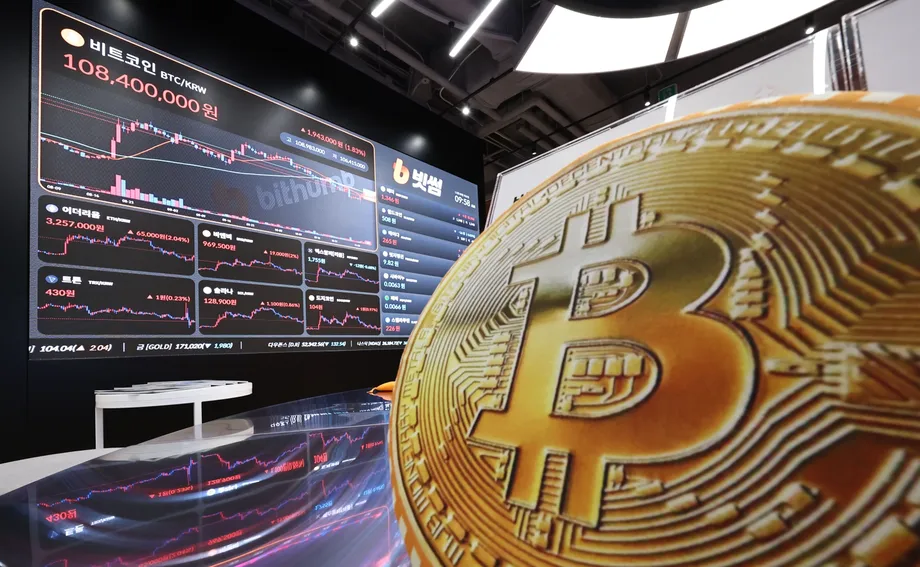
Seoul Targets Overseas Crypto Transfers and Personal Wallets
Financial Services Commission (FSC) Chairman Lee Eog-weon announced on November 23, 2026, that South Korea will tighten supervision over cryptocurrency transfers moving to overseas trading platforms and personal digital wallets. Speaking in Seoul at a ceremony marking the 25th anniversary of the Korea Financial Intelligence Unit (KoFIU) and the 20th Anti-Money Laundering Day, Lee pledged closer scrutiny of foreign counterparties and unregistered operators to stop criminal proceeds from leaving the domestic banking perimeter.
Contents
- Seoul Targets Overseas Crypto Transfers and Personal Wallets
- How Does the Expanded Travel Rule Work?
- What Do Tougher Registration and Financial Rules Mean for Exchanges?
- Why Did Operational Failures and Fraud Spark a 2026 Crackdown?
- Timeline of South Korea's 2026 Regulatory Overhaul
- How Will Stricter Checks Affect Everyday Traders and the Kimchi Premium?
- What Awaits in the Digital Asset Basic Act and Tax Debate?
- How Does South Korea Compare With Japan and Hong Kong?
- Key Points
Under the updated framework, South Korean exchanges must evaluate the risk profile of destination platforms before allowing funds to exit the country. Regulators are also seeking new statutory powers to freeze accounts suspected of links to serious financial crimes while expanding background checks on exchange executives and major shareholders. These measures build on cabinet amendments approved on August 11, 2026, under the Act on Reporting and Use of Certain Financial Transaction Information, often called the Specified Financial Information Act.
For everyday investors, a personal wallet refers to software or hardware controlled directly by an individual rather than a regulated company, such as MetaMask or Ledger. While owning and using these wallets remains legal, moving digital tokens between domestic exchanges and external addresses now carries stricter identity checks and reporting triggers.
How Does the Expanded Travel Rule Work?
South Korea's August 11 decree removes the long standing threshold of 1 million won, roughly $680 to $743, for applying the Travel Rule between registered domestic virtual asset service providers. The Travel Rule works much like placing a sender's and recipient's verified names on a package before mailing it, requiring exchanges to collect and transmit customer identification data alongside digital transfers. Once the new rule takes effect, platforms must exchange that identifying data for transactions of any size, including small test transfers sent to confirm a wallet address.
Regulators targeted that threshold because bad actors repeatedly split large sums into small chunks to evade detection. In its August regulatory announcement, the FSC pointed to a case in which about 200 million won was used to buy USDT, a digital token pegged to the U.S. dollar, and then moved across 216 separate transfers below 1 million won over roughly three months.
Transfers heading outside registered local platforms face rules tiered by risk and reporting requirements based on value:
- Low risk overseas platforms: Transfers may proceed when destination exchanges satisfy compliance conditions.
- High risk overseas platforms: Transfers may be prohibited entirely to prevent money laundering exposure.
- Personal wallets and other overseas venues: Transfers are generally permitted only when the sender and recipient are verified as the same person.
- Mandatory KoFIU reporting: Any transfer of 10 million won, roughly $7,430, or more involving an overseas platform or wallet provider must be reported to KoFIU regardless of its risk tier.
Several operational details remain unsettled ahead of enforcement. Authorities did not publish a comprehensive list of overseas platforms classified as high risk in the August announcement, meaning foreign exchanges without Korean registration are not automatically banned. While registration changes took effect on August 20, 2026, the remaining Travel Rule and transfer provisions take effect six months after promulgation, with the exact February 18 or February 19, 2027 start date awaiting confirmation in the official Korean legal text.
What Do Tougher Registration and Financial Rules Mean for Exchanges?
Domestic cryptocurrency businesses, including major exchanges Upbit, Bithumb, Coinone, and Korbit, face far stricter entry and renewal tests under the rules that took effect on August 20, 2026. According to an analysis by ComplyCube, virtual asset service providers must maintain a debt ratio of 200% or less and record no defaults over the preceding three years to satisfy financial soundness rules. Regulators also examine the financial and legal backgrounds of company executives, controlling interests, and major shareholders, barring individuals with criminal records from holding major stakes.
Customer verification infrastructure is tightening alongside corporate governance checks. In August 2026, Dunamu, the operator of Upbit, passed an inspection by the Ministry of the Interior and Safety and received approval to verify customer identities directly against government records. Exchanges must also demonstrate adequate cybersecurity safeguards, trained compliance staff, and internal monitoring systems capable of spotting suspicious flows of 10 million won or more.
Enforcement against platforms that fall short has intensified sharply over the past year. In December 2025, KoFIU fined Korbit 2.73 billion won after uncovering roughly 22,000 violations involving customer checks and transfers with unregistered foreign operators. In April 2026, regulators imposed a partial business suspension lasting three months and a 5.2 billion won fine on Coinone for similar breaches. Authorities also referred 44 unregistered operators to criminal investigators, restricted access to unregistered exchange apps on the Google Play Store in January 2026, and ordered blocks on 27 unregistered foreign websites in October 2026, including KuCoin, MEXC, and BingX.
Why Did Operational Failures and Fraud Spark a 2026 Crackdown?
A major internal breakdown at Bithumb accelerated South Korea's regulatory push earlier in 2026. In February, a promotional system glitch at Bithumb mistakenly sent 620,000 bitcoins, worth about $44 billion at the time, to campaign participants, triggering a brief drop in Bitcoin prices and exposing weak internal safeguards. Following urgent meetings between the FSC, the Financial Supervisory Service (FSS), and KoFIU, regulators announced on April 6, 2026, that all local exchanges had until the end of May to match internal customer ledgers against actual token reserves every five minutes. Previously, three of the country's five largest exchanges reconciled balances only once every 24 hours; platforms must now also publish daily balance disclosures and undergo monthly external audits.
Parallel concerns over scams and cyber threats have driven calls for broader enforcement tools. At the end of June 2026, authorities launched a temporary system allowing financial firms, police, and KoFIU to freeze accounts suspected of new phishing schemes, such as romance scams, fake reservation traps, and online task fraud. Between late June and the end of October, financial institutions temporarily froze 11,586 suspected accounts under that program. Chairman Lee Eog-weon said on November 23 that the government plans to seek new legal authority to extend account freezing powers to other serious financial crimes affecting ordinary citizens, while tightening ownership transparency for corporations and trusts and adding reporting duties for lawyers, accountants, and tax advisers.
Cybersecurity pressures extend beyond digital asset exchanges as well. President Lee Jae Myung directed government agencies to mount a swift response to a significant cyberattack targeting South Korea's financial sector, underscoring security concerns across digital finance. Meanwhile, the scale of financial monitoring has grown dramatically over two decades, with annual suspicious transaction reports rising from roughly 13,000 in 2005 to 1.33 million in 2025, an increase of more than 100 times that helped South Korea earn the highest rating in a 2024 follow up evaluation by the Financial Action Task Force.
Timeline of South Korea's 2026 Regulatory Overhaul
South Korea's latest enforcement shift reflects a sequence of legislative, operational, and supervisory steps stretching across 2026 and into 2027:
- December 2025: KoFIU fines Korbit 2.73 billion won over roughly 22,000 compliance failures.
- February 2026: A promotional glitch at Bithumb mistakenly distributes 620,000 bitcoins, prompting emergency regulatory inspections.
- April 6, 2026: Regulators order five minute reserve checks by late May, daily public disclosures, and monthly audits; Coinone receives a 5.2 billion won fine and partial suspension in April.
- May 8, 2026: The National Assembly amends the Foreign Exchange Transactions Act, requiring firms conducting international crypto transfers to register with the Minister of Economy and Finance.
- Late June 2026: Authorities launch temporary account freezes targeting phishing scams, freezing 11,586 accounts through October.
- August 11 and August 20, 2026: The Cabinet approves Travel Rule and transfer decree revisions; stricter VASP registration rules take effect nine days later.
- October 2026: Regulators block 27 unregistered foreign exchange websites and refer 44 operators for investigation.
- November 23 and November 24, 2026: Lee Eog-weon details tighter transfer controls and freeze plans ahead of a scheduled FSC committee review of the draft Digital Asset Basic Act.
- Mid February 2027: Remaining August decree rules, including zero threshold Travel Rule checks and 10 million won overseas reporting, are scheduled to take effect.
How Will Stricter Checks Affect Everyday Traders and the Kimchi Premium?
South Korea occupies an outsized role in global retail trading, making transfer rules immediately felt by ordinary investors. Nearly one third of South Korean adults hold digital assets, double the ownership rate in the United States. As of October 2025, South Korean centralized exchanges accounted for about 1.9% of total global daily trading volume across all venues, yet captured roughly 16% of global spot trading among centralized platforms. Even so, domestic crypto trading volume had fallen about 80% from its late 2024 peak to roughly $1.78 billion in November 2025 as traders adjusted to tighter rules and shifting sentiment.
Strict capital controls have long created the Kimchi Premium, the price gap that appears when Bitcoin trades higher in Seoul than on international platforms because traders cannot easily move coins across borders to capture price differences. In early April 2026, when global Bitcoin prices slipped to $95,000, the Kimchi Premium surged to a three year high of 9.7%, rebounding from 1.75% in 2025 and a range of 3.5% to 7.47% earlier in 2026. Adding fresh identity and risk checks to overseas transfers is expected to raise transaction costs and slow down arbitrage trading, while complicating access to international decentralized finance (DeFi) applications that require self hosted wallets.
Industry participants have voiced concern that ordinary investors may bear the heaviest burden. Orbinum Network ambassador @Nine argued that aggressive checks on transfers to personal wallets risk penalizing everyday investors more than criminals, while Web3 analyst Vexora cautioned that added verification steps could slow routine withdrawals. Because the August decree does not mandate one uniform method for verifying wallets such as MetaMask or Ledger, customers must check each domestic exchange's specific verification rules before attempting withdrawals, even as analysts warn that tighter limits could push some users toward informal private trading channels.
What Awaits in the Digital Asset Basic Act and Tax Debate?
Alongside money laundering rules, South Korean authorities prepared to unveil the government's draft Digital Asset Basic Act at an FSC Virtual Asset Committee meeting scheduled for 3 p.m. local time on November 24, 2026. Previously delayed from March 31 until after June local elections, the broader bill aims to replace parts of the uniform reporting system with tailored licensing for exchanges, brokers, and custody firms, make token listing standards legally binding, and lift the 2017 ban on corporate crypto investing. At a November 12 security meeting, the FSC also signaled plans to require constant incident monitoring, adequate reserves, and strict compensation liability for security failures.
Ownership limits and rules for tokens pegged to the Korean won remain fiercely debated ahead of parliamentary review. Earlier talks weighed capping major exchange shareholders at 15% to 20%, with a preliminary consensus around a 20% limit, a three year adjustment period, and a possible 34% exception for new entrants, though the FSC clarified in August that no final cap had been decided. Any eventual restriction could affect Upbit, Bithumb, and a planned share swap between Dunamu and Naver Financial. On stablecoins, the Bank of Korea backs a consortium model in which banks hold at least 50% plus one share, drawing pushback from technology firms even as Kakao Pay and KakaoBank signed a September 2026 agreement with Fireblocks to test stablecoin infrastructure.
Online commentators have closely watched South Korea's legislative push in comparison with stalled efforts in Washington. Crypto commentator Conor Kenny drew a political comparison between Asia's rulemaking momentum and delays in the United States when posting on X about the scheduled November 24 committee release.
Asia is moving ahead with its own CLARITY Act while the U.S. is falling behind!
Tax timing also remains undecided in the National Assembly. While South Korean tax authorities previously confirmed plans to enforce a 22% capital gains tax on crypto profits exceeding 2.5 million won, or $1,703, starting in January 2027, the finance ministry proposed on November 5, 2026, to postpone the levy until 2029 so tax infrastructure can align with the new regulatory framework. Both the tax delay and the Digital Asset Basic Act still require review by the National Assembly's Political Affairs Committee and a full parliamentary vote before taking effect.
How Does South Korea Compare With Japan and Hong Kong?
South Korea's focus on strict transfer controls and bank centered oversight contrasts with neighboring Asian markets moving to fold digital assets into mainstream finance. In Japan, the Financial Services Agency plans to shift crypto regulation from the Payment Services Act to the Financial Instruments and Exchange Act, reclassifying tokens as financial assets with the goal of launching spot crypto exchange traded funds by 2028 and cutting the top crypto capital gains tax from 55% to a flat 20%.
Hong Kong has pursued a licensing model guided by the principle of applying the same rules to businesses carrying the same risks. After consulting on comprehensive licensing for non security virtual asset trading and custody in December 2025, Hong Kong had granted licenses to 11 platforms with eight more under review as of July 2025, aiming to submit revised legislation in 2026. Together, the three jurisdictions show Asia moving toward structured oversight, even as Seoul pairs market rules with tighter controls on cross border flows.
Key Points
- FSC Chairman Lee Eog-weon announced on November 23, 2026, stricter scrutiny of transfers to overseas exchanges classified as high risk and personal digital wallets.
- August 2026 decree revisions eliminate the 1 million won Travel Rule threshold between local platforms and mandate KoFIU reports on overseas transfers of 10 million won or more starting around mid February 2027.
- Exchanges face tighter registration reviews effective August 20, 2026, requiring debt ratios of 200% or less, five minute reserve checks, and executive background screening.
- Regulators blocked 27 unregistered foreign exchange websites in October, froze 11,586 suspected fraud accounts between June and October, and plan legislation to widen freezing powers.
- Lawmakers still must vote on the draft Digital Asset Basic Act, proposed exchange ownership caps, bank majority stablecoin rules, and a proposed delay of the 22% crypto gains tax from 2027 to 2029.