A Historic Milestone in Global Trade
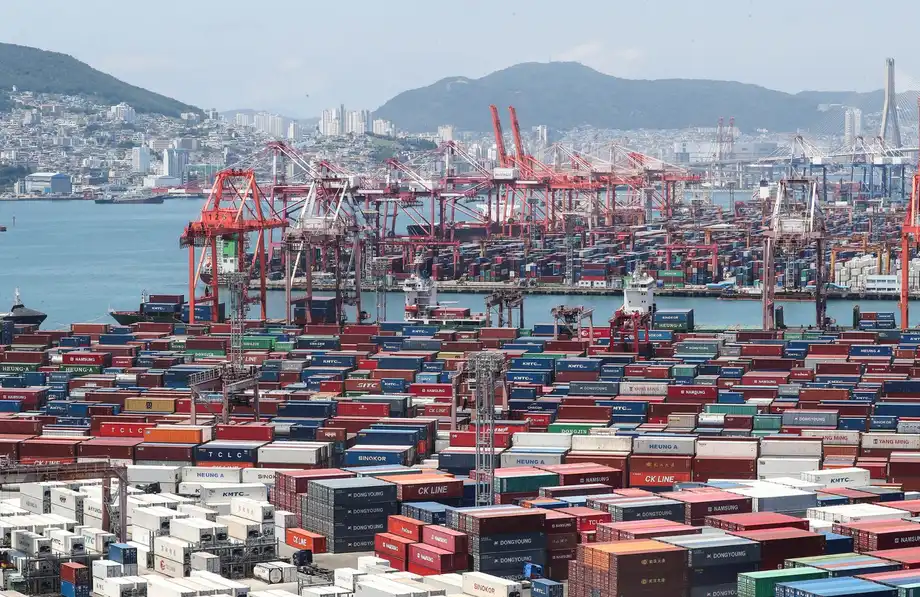
South Korea crossed a major economic threshold when its cumulative annual exports surpassed $1 trillion for the first time in history on November 19, 2026. The provisional tally reached the milestone at 2:09:38 PM, according to data released by the Korea Customs Service and the Ministry of Trade, Industry and Energy. This achievement makes South Korea the fourth country in the world to join the exclusive trillion-dollar export club, following the United States and Germany in 2006, and China in 2007. The country achieved this feat 19 years after China entered the group, doing so in an era marked by rising protectionism and shifting global trade rules. Cumulative exports from January 1 through November 20 reached $1.0076 trillion, up 63.2 percent from a year earlier. The country's strong performance follows a year when total annual exports reached $709.3 billion in 2025.
Contents
- A Historic Milestone in Global Trade
- Semiconductors Power Early November Surge
- Rising Imports and Record Trade Surplus
- Global Comparisons and Concentration Risks
- Expanding Service Exports and Economic Disparities
- Information and Communications Technology Momentum
- Infrastructure Security and Detailed Map Exports
- At a Glance
As detailed in South Korea Surpasses One Trillion Dollars in Exports to Rank Fourth Globally, the manufacturing sector has grown 36,000-fold since 1948, when exports stood at just $20 million. Government trade officials noted that chip exports surged 193.1 percent year-on-year to reach $396.8 billion in the first ten months of 2026. Semiconductors accounted for 42.7 percent of total exports during that period, reflecting a sharp concentration in technology hardware. Kang Gam-chan, director general for trade and investment policy at the Ministry of Trade, Industry and Energy, explained the pricing dynamics driving the surge. Semiconductor prices were still rising through September, while shipment volumes were increasing even faster. Fixed transaction prices for standard memory components, such as DDR5 16Gb DRAM, climbed significantly over the year, rising from $8.70 in October of the previous year to $50 by October 2026. This price appreciation, combined with surging shipment volumes, generated record corporate profits, including third-quarter operating profits of 107.44 trillion won ($80.5 billion) for Samsung Electronics and 83.33 trillion won for SK hynix.
Semiconductors Power Early November Surge
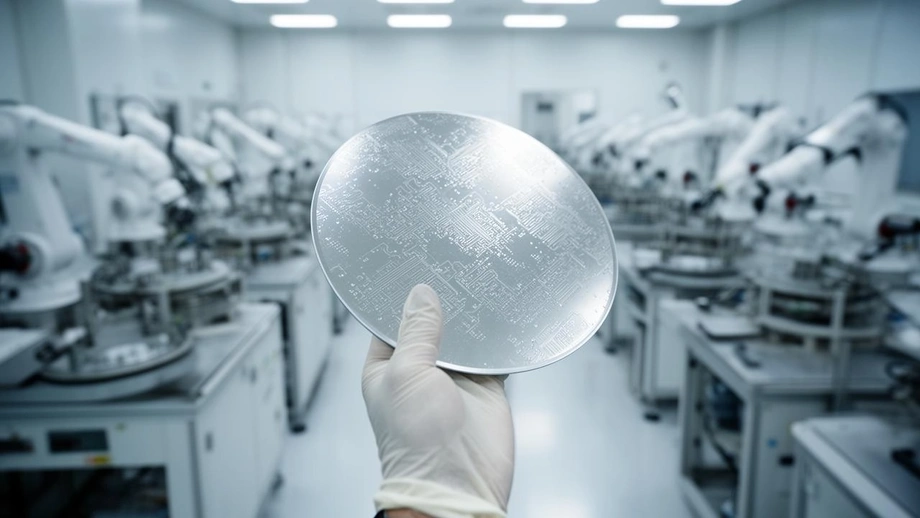
Outbound shipments totaled $77.4 billion between November 1 and 20, compared with $38.4 billion during the same period last year, according to customs data. The figure marked the highest export value ever recorded for the first 20 days of any month, surpassing the previous record of $71.6 billion set in September. The daily average export value, calculated based on 16 working days, reached a record $4.84 billion, up 95.2 percent from the 15.5 working days logged a year earlier. By sector, semiconductor exports nearly quadrupled to $38.5 billion, a 294.4 percent increase that set a new record for the corresponding 20-day period. Chips accounted for 49.7 percent of South Korea's total exports, representing a significant increase of 24.3 percentage points compared with the same period last year. High-bandwidth memory (known as HBM, which stacks dynamic random-access memory chips vertically to transfer data at high speeds to processors) and other advanced components drove the growth, reflecting heavy global investment in artificial intelligence infrastructure, cloud computing, and large-scale data centers.
Other manufacturing sectors also posted gains during the early November window. Shipments of petroleum products rose 91.9 percent to $4.13 billion, while exports of computer peripherals surged 330.5 percent to $3.67 billion. Ship exports increased 85.1 percent and steel shipments rose 27.0 percent. In contrast, automobile exports declined 5.6 percent year on year to $3.59 billion. By destination, exports to China climbed 145.6 percent to $20 billion, while shipments to the United States increased 142.7 percent to $16.4 billion. Shipments to Vietnam rose 85.8 percent, exports to Taiwan jumped 149.7 percent, and sales to the European Union increased 25.7 percent. China, the United States, and Vietnam together accounted for 55.5 percent of total shipments during the period.
Rising Imports and Record Trade Surplus
Imports increased 39.4 percent year on year to $50.3 billion during the November 1-20 period, driven by higher energy and material costs. Semiconductor imports rose 103.4 percent, crude oil increased 83.4 percent, gas climbed 93.9 percent, and machinery gained 13.8 percent. Combined imports of crude oil, gas, and coal rose 78.5 percent. By country of origin, purchases increased from China by 52.5 percent, the United States by 45.2 percent, Taiwan by 81.5 percent, Japan by 27.0 percent, the European Union by 17.0 percent, and Russia by 20.4 percent. Despite the increase in inbound shipments, the faster growth in outbound sales resulted in a trade surplus of $27.1 billion, marking the largest surplus ever recorded for the first 20 days of any month. For the entire year through November 20, cumulative imports totaled $685.5 billion, bringing the cumulative trade surplus to $322.1 billion.
As explored in South Korea's September Current Account Surplus Hits Record $61.46 Billion as Chip Exports Surge, the broader external balance has reached historic heights alongside the goods trade expansion. The September current account surplus hit $61.46 billion, breaking June's record of $49.73 billion. Goods exports reached $130.72 billion in September, while imports totaled $67.97 billion, producing a record goods surplus of $62.75 billion. Bank of Korea Economic Statistics Department Director General Kim Young-hwan attributed the September goods result to strong exports combined with quarter-end transaction timing. The technology boom also brought substantial purchases of equipment and other capital goods, rising 42.3 percent to include chips and machinery used to manufacture semiconductors.
Global Comparisons and Concentration Risks
Data from the World Trade Organization and UN Comtrade show that South Korea's exports totaled $595.3 billion from January through July, ranking fifth globally behind China, the United States, Germany, and the Netherlands. The Ministry of Trade, Industry and Energy expects South Korea to overtake the Netherlands and rank fourth globally for the full year, with total exports projected to reach $1.17 trillion. However, an analysis of non-semiconductor trade reveals a structural challenge. Excluding semiconductors, South Korea's exports from January through July totaled $413.6 billion, trailing Mexico at $468.8 billion, Italy at $465.8 billion, and Japan at $428.8 billion. Applying this measure drops South Korea's ranking from fifth in total exports to eighth in non-semiconductor export value.
Semiconductors accounted for 30.5 percent of the country's total exports from January through July, a share surpassed among the world's ten largest exporting countries only by Taiwan at 32.4 percent. In the second half of the year, reliance on chips grew further, accounting for 47.5 percent of exports in August, 49.9 percent in September, and 49.0 percent in October. Policymakers and economists have cautioned that this heavy concentration leaves the national trade performance exposed to any slowdown in global artificial intelligence investment or fluctuations in memory chip prices.
Expanding Service Exports and Economic Disparities
While technology hardware dominates goods trade, the government is looking to tourism, health care, and cultural content to broaden export income and spread benefits beyond manufacturing. As detailed in South Korea's Service Exports Surge, Yet Deficits Reveal a Competitiveness Gap, service exports rose 15.5 percent in the first nine months of 2026 to reach about $128.9 billion. Foreign visitor arrivals surpassed 20 million for the first time on November 12, according to the Ministry of Culture, Sports and Tourism, taking 14 years to reach this high after first welcoming 10 million visitors in 2012. Tourism revenue in the first nine months reached $21.18 billion, up 31.8 percent from a year earlier, while spending on medical services by foreign visitors reached 1.8398 trillion won, an increase of 57.9 percent. Despite these gains, service imports reached $147.7 billion over the same period, leaving a deficit of $18.8 billion that has persisted for 26 straight years since 2000.
Domestically, strong overseas demand for technology contrasts with subdued household finances and high borrowing costs. To address these economic disparities and ensure that trade gains benefit ordinary citizens, President Lee Jae Myung announced plans to establish a Future Response Fund worth 162.3 trillion won (equivalent to approximately $121.94 billion). The fund will channel additional tax revenue generated by the semiconductor boom towards emerging industries, education, employment opportunities for young people, and regional development. Speaking on social media, President Lee emphasized the need to distribute export gains widely:
The gains from exports must, above all, improve people's lives.
At a meeting with representatives of six major economic organizations on November 20, Minister of Trade, Industry and Energy Kim Jung-kwan addressed the future of the nation's industrial base. Minister Kim raised concerns about future growth engines after semiconductors, stressing the urgent need for the Super-Regional Special Zone Act to support research and development in advanced sectors. The proposed legislation would grant regulatory exemptions to advanced industry hubs, with the possible exemption of research workers from the 52-hour workweek system emerging as a key point of debate.
Information and Communications Technology Momentum
The information and communications technology sector has served as the primary engine for recent trade milestones. As examined in South Korea's October ICT Exports Triple to $70.35 Billion as AI Memory Demand Surges, South Korea exported $70.35 billion worth of information and communications technology products in October 2026, up 202 percent from a year earlier. Semiconductors accounted for $56.47 billion, or 80.3 percent of the ICT total. Memory chips alone brought in $50.14 billion, while solid-state drives reached $5.64 billion. Within that total, dynamic random-access memory (known as DRAM, which gives computers a temporary workspace for information they need to access quickly) rose 595.3 percent to $33.77 billion. Fixed transaction prices for DDR5 16Gb memory reached $50 in October, up from $40 in June, while 8Gb DRAM rose to $27.50 from $24, boosting total export dollar values.
Infrastructure Security and Detailed Map Exports
In parallel with manufacturing milestones, South Korea advanced technology infrastructure and mapping policies. As reported in South Korea Verifies Google Maps Security Measures, Clearing Next Step for Detailed Map Exports, the government verified on November 13, 2026, that Google removed latitude and longitude displays for South Korean territory from Google Maps and Google Earth. The review examined protections for military facilities, processing on domestic servers, and a system requiring action on security complaints within one business day. The checks followed a conditional approval granted on February 27 to export maps at a scale of 1:5,000, reversing a restriction maintained since Google's first request in 2007. Google submitted its final compliance report on November 4, and government officials reviewed the measures through a body coordinated by the National Geographic Information Institute.
At a Glance
- Cumulative annual exports surpassed $1 trillion on November 19, 2026, reaching $1.0076 trillion by November 20.
- South Korea became the fourth country in the world to join the trillion-dollar export club, following the US, Germany, and China.
- Outbound shipments for November 1-20 reached a record $77.4 billion, up 101.5 percent year on year.
- Semiconductor exports nearly quadrupled to $38.5 billion, accounting for 49.7 percent of total shipments in early November.
- The trade surplus for November 1-20 reached $27.1 billion, the largest ever recorded for a mid-month reading.
- The government announced a 162.3 trillion won Future Response Fund to address economic disparities and develop emerging sectors.