Climate Summit Collapses in Antalya Without a Final Deal
The annual United Nations climate conference concluded in Antalya, Turkiye, without an overarching political agreement after negotiations extended for 44 hours beyond their scheduled closing time on Sunday. The breakdown occurred when the European Union and more than 130 other countries rejected a draft text that omitted explicit references to phasing out fossil fuels. This marks the first time a COP summit has failed to reach a consensus on its main political agreement since the Copenhagen meeting in 2009. The conference, officially designated as COP31, operated under the joint stewardship of Turkiye and Australia as twin presidencies, with Australia overseeing the negotiation process.
Contents
Negotiations stalled as deep divisions emerged over energy transition language and financial support for developing economies. The host country proposed a cover decision to be named the Antalya Pact, which included a target to boost electricity's share of global final energy consumption to 35 percent by 2035 from the current 23 percent. However, the removal of stronger wording regarding coal, oil, and gas triggered fierce opposition from climate-vulnerable states and developed nations alike. Delegates from approximately 195 countries grappled with competing priorities as geopolitical tensions and economic pressures compounded the difficulty of reaching a unanimous accord.
The Sticking Point Over Fossil Fuel Omission
The primary catalyst for the summit collapse was the complete absence of any mandate to transition away from fossil fuels in the final draft text. Three years prior at COP28 in Dubai, nations made history by formally recognizing the need to move away from fossil fuels in a just and orderly manner. At the Antalya summit, however, a coalition of major fossil fuel producing nations successfully pushed to keep specific references to coal, oil, and gas out of the overarching agreement. Negotiators from Europe and small island developing states argued that omitting these energy sources effectively greenwashed the text and undermined previous commitments.
Ireland's Climate and Energy Minister Darragh O'Brien, speaking on behalf of the European Union, delivered a sharp rebuke of the proceedings during the closing stages. He stated that the bloc refused to accept an outcome that ignored the primary driver of global warming. Several ministers echoed these concerns, accusing oil-producing states of exerting undue influence over the presidency's drafting process. Saudi Arabia and Russia defended their positions, arguing that energy transitions must be flexible and warning that reducing fossil fuel supplies too quickly could trigger severe energy shortages and price shocks.
India and the Like-Minded Developing Countries Voice Equity Concerns
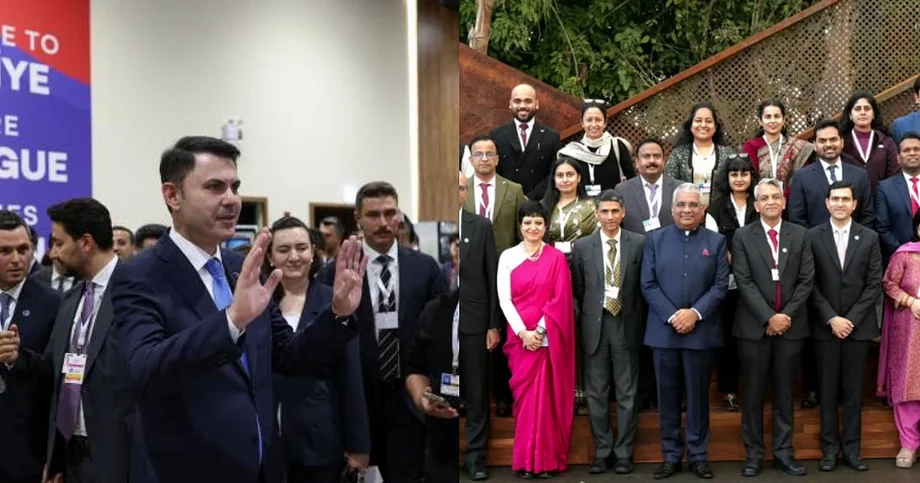
India entered the summit speaking on behalf of the Like-Minded Developing Countries and raised fundamental questions regarding historical emissions and global equity. Amandeep Garg, additional secretary in the ministry of environment, forest and climate change, pointed out during the closing plenary that the negotiated text failed to connect past emissions with the imminent threat of exceeding the 1.5-degree Celsius warming threshold. The Indian delegation emphasized that developing economies should not bear the disproportionate burden of addressing a crisis they did not create. Union Environment Minister Bhupender Yadav noted that India engaged constructively and tirelessly until the final hours while expressing regret that consensus could not be reached.
According to the official statements, India and its partner nations stressed that the principle of Common But Differentiated Responsibilities and Respective Capabilities must remain at the heart of global climate action. This foundational principle of the international climate framework dictates that while all nations share responsibility for addressing environmental degradation, developed countries must bear primary responsibility because they contributed the vast majority of historical greenhouse gas emissions. Garg also highlighted a severe lack of engagement from developed partners regarding financial support, noting that developing countries were told climate finance was dead in the water.
The Bitter Dispute Over Climate Finance and Adaptation
Financial commitments proved to be another insurmountable hurdle during the two weeks of discussions. Developing nations pressed rich countries for a clear adaptation finance roadmap, pointing to severe funding deficits as climate impacts accelerate globally. The United Nations Environment Programme Adaptation Gap Report 2026 revealed that international public adaptation finance flows reached between 28.2 billion and 31.7 billion United States dollars in 2024, falling drastically short of the estimated needs of 305 billion United States dollars annually by 2035. An initial proposal to triple adaptation finance to reach 120 billion United States dollars annually by 2035 was entirely stripped from the final draft texts.
Delegates from African and Pacific island nations expressed deep frustration over what they described as empty promises from wealthy economies. Solomon Islands Prime Minister Matthew Wale underscored the inequity by pledging 600,000 United States dollars to the global Green Climate Fund from his own small nation. Climate researchers pointed out that developed countries ensured no measurable financial accountability remained in the text. Meanwhile, separate decisions regarding the Adaptation Fund and the Just Transition Work Programme were successfully adopted, proving that technical negotiations could still progress even in the absence of a top-level political agreement.
UN Leadership Reacts and the Path Forward to COP32
United Nations Secretary-General António Guterres expressed profound disappointment over the outcome in Antalya. He stated that the failure of governments to reach consensus did not alter the grim realities of the climate crisis or diminish the urgency required to address rising global temperatures. UNFCCC Executive Secretary Simon Stiell also voiced frustration, noting that while the international architecture designed to bring nearly 200 countries together requires modernization, the world simply cannot afford a repeat of this diplomatic breakdown.
Despite the lack of an overarching political agreement, leaders emphasized that climate action at the domestic level continues uninterrupted. India highlighted its ongoing national efforts, including the delivery of more than 170 gigawatts of solar capacity at home, while reaffirming its steadfast commitment to consensus-based multilateralism. Attention now shifts toward the next annual climate summit, COP32, which is scheduled to take place in Addis Ababa, Ethiopia, where unresolved debates over climate finance, fossil fuel phase-outs, and equitable transition pathways are expected to resurface.
The Bottom Line
- COP31 concluded in Antalya, Turkiye, without an overarching political agreement after 44 hours of record overtime.
- The European Union and over 130 countries rejected the draft text because it omitted any explicit mention of transitioning away from fossil fuels.
- India, representing the Like-Minded Developing Countries, flagged the dilution of equity, historical responsibility, and climate finance commitments.
- Negotiations stalled over disputed provisions including a proposed 35 percent global electrification target by 2035 and carbon capture technologies.
- Separate decisions on the Adaptation Fund were adopted, and preparations are already underway for the next climate summit, COP32, in Addis Ababa, Ethiopia.