Government Takes Back Huge Forest Area
The government of Indonesia has cancelled a massive forest use permit held by PT Riau Andalan Pulp and Paper (RAPP), taking back control of 338,536 hectares of land in the province of Riau. The decision affects areas spread across several districts, including Pelalawan, Siak, Kuantan Singingi, Indragiri Hulu, Kampar, and the Meranti Islands. Officials from the Forest Area Enforcement Task Force, known as Satgas PKH, moved quickly to seal the area on the ground following the official order.
Contents
- Government Takes Back Huge Forest Area
- Timeline of Key Enforcement Actions
- Impact on Wildlife and National Parks
- Simultaneous Crackdown on Illegal Palm Oil Mills
- Corporate Background and Economic Scale
- Assuring Job Security for Thousands of Workers
- Civil Society Reactions and Legal Warnings
- Broader Scrutiny on Pulp Supply Chains
- At a Glance
The administrative penalty was issued under Forestry Ministerial Decree No. 971 of 2026, dated November 19, 2026. The full text of Forestry Ministerial Decree No. 971 of 2026 is as follows:
KEPUTUSAN MENTERI KEHUTANAN REPUBLIK INDONESIA NOMOR 971 TAHUN 2026
MENIMBANG:
a. bahwa dalam rangka penertiban kawasan hutan dan penegakan hukum terhadap pemanfaatan kawasan hutan secara tidak sah, perlu dilakukan pencabutan izin konsesi kehutanan yang tidak sesuai dengan ketentuan peraturan perundang-undangan;
b. bahwa berdasarkan hasil pengawasan dan evaluasi lapangan oleh Satuan Tugas Penertiban Kawasan Hutan (Satgas PKH) di Provinsi Riau, ditemukan adanya pelanggaran berat yang meliputi kebakaran berulang pada kawasan gambut, perkebunan kelapa sawit tanpa izin seluas 18.362,74 hektare, kegiatan pertambangan tanpa izin seluas 541,46 hektare, serta kerusakan pada zona lindung seluas 211,54 hektare yang dilakukan oleh PT Riau Andalan Pulp and Paper;
c. bahwa perbuatan tersebut telah menimbulkan kerusakan ekosistem dan mengancam kelestarian lingkungan hidup sehingga dipandang perlu untuk menetapkan keputusan pencabutan izin konsesi kehutanan atas nama PT Riau Andalan Pulp and Paper.
MENGINGAT:
1. Undang-Undang Nomor 41 Tahun 1999 tentang Kehutanan sebagaimana telah diubah dengan Undang-Undang Cipta Kerja;
2. Peraturan perundang-undangan terkait pengamanan dan penertiban kawasan hutan.
MEMUTUSKAN:
MENETAPKAN:
KESATU: Mencabut Izin Usaha Pemanfaatan Hasil Hutan Tanaman (IUPHHT) / izin konsesi kehutanan atas nama PT Riau Andalan Pulp and Paper di Provinsi Riau seluas 338,536 hektare yang terletak di Kabupaten Pelalawan, Siak, Kuantan Singingi, Indragiri Hulu, Kampar, dan Kepulauan Meranti.
KEDUA: Seluruh areal izin konsesi yang dicabut sebagaimana dimaksud dalam diktum KESATU dikembalikan sepenuhnya kepada penguasaan Negara c.q. Kementerian Kehutanan.
KETIGA: PT Riau Andalan Pulp and Paper diwajibkan untuk menghentikan seluruh kegiatan operasional di dalam areal konsesinya terhitung sejak tanggal penetapan keputusan ini serta tetap bertanggung jawab penuh atas pemulihan lingkungan dan kerusakan ekosistem yang ditimbulkannya.
KEEMPAT: Keputusan ini mulai berlaku pada tanggal ditetapkan di Jakarta pada tanggal 19 November 2026.
Ditetapkan di Jakarta
Pada tanggal 19 November 2026
Menteri Kehutanan Republik Indonesia
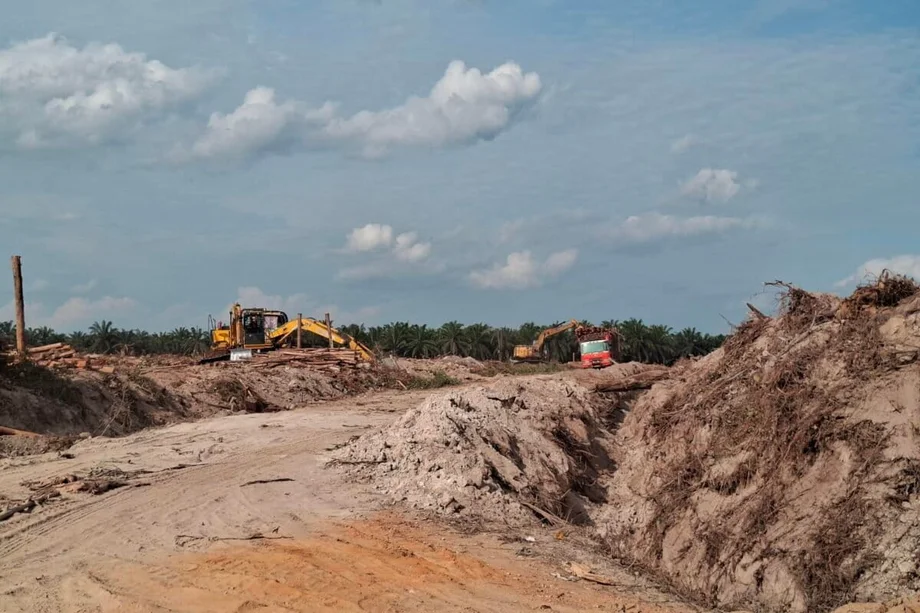
According to the ministry's official decree, the cancellation stems from numerous violations discovered during field inspections. These violations include repeated fires on fragile peatland areas, unauthorized oil palm plantations covering 18,362.74 hectares, illegal mining pits spanning 541.46 hectares, and significant damage to protected zones and their ecosystems across 211.54 hectares.
Barita Simanjuntak, the spokesperson for Satgas PKH, explained the government stance on the enforcement actions during a press briefing on November 20, 2026. He stressed that protecting the environment requires strict adherence to the law by all corporate actors operating inside state forest zones.
Pemerintah tidak beri ruang toleransi terhadap pelanggaran pemanfaatan kawasan hutan. Tiap pihak wajib mematuhi ketentuan peraturan perundang-undangan, regulasi, serta tanggungjawab perlindungan dan pelestarian kawasan hutan.
With the permit revoked, all commercial activities inside the concession area must stop immediately. The land now returns entirely to state control, though officials noted that the company remains legally responsible for environmental cleanup and repairing past ecological damage.
Timeline of Key Enforcement Actions
- November 19, 2026: Forestry Ministerial Decree No. 971 is signed, revoking the PT RAPP permit.
- November 20, 2026: Satgas PKH officially announces the permit cancellation and initiates field enforcement in Riau.
- November 21, 2026: Task force officials clarify that state-owned enterprises will manage operational continuity to protect jobs.
- November 22, 2026: Government reassures workers that no mass layoffs will occur following the state takeover.
Impact on Wildlife and National Parks
Investigators also raised serious concerns regarding the safety of the buffer zone surrounding Tesso Nilo National Park in Riau. The park serves as a vital natural habitat for endangered wildlife, most notably the Sumatran elephant. Environmental degradation and human encroachment in adjacent zones threaten to isolate these animal populations and reduce their chances of survival.
Peatland areas are special types of wetlands formed by partially decayed plant material accumulating over thousands of years. These ecosystems act as massive carbon sinks, storing huge amounts of greenhouse gases underground. When peatlands are drained or burned for agriculture, they release vast quantities of carbon dioxide into the atmosphere and lose their ability to retain water properly, which increases flood risks and fuels stubborn underground fires.
Simultaneous Crackdown on Illegal Palm Oil Mills
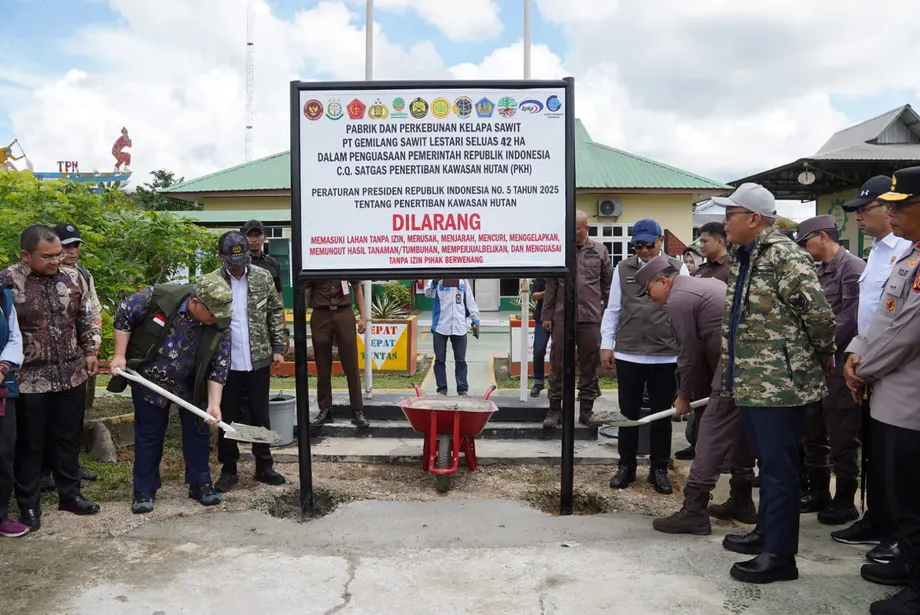
Alongside the action against PT RAPP, the task force targeted another local business entity named PT Gemilang Sawit Lestari (PT GSL) operating in the Kuantan Singingi district. Authorities discovered that a palm oil mill belonging to this company was purchasing and processing fresh fruit bunches harvested illegally from inside protected forest zones without proper permits.
Investigators determined that the presence of this non-plantation mill acted as an economic incentive for local actors to clear more forest land illegally to plant oil palms. In response, Satgas PKH recommended rejecting a pending application to release 32 hectares of forest land and placed the mill and surrounding plots under direct state control.
A high-ranking delegation of officials traveled to Riau to oversee these operations. The enforcement team included the head of the Financial and Supervisory Agency, the deputy minister of defense, the deputy minister of forestry, the deputy minister of investment, senior prosecutors from the attorney general's office, and regional military and police commanders.
Corporate Background and Economic Scale
PT RAPP operates as a major subsidiary of APRIL Group, which itself belongs to the Royal Golden Eagle conglomerate founded by businessman Sukanto Tanoto. The business empire spans pulp and paper manufacturing, palm oil, viscose fiber, and energy production, managing global assets valued at more than US$40 billion and employing around 80,000 workers worldwide.
The industrial hub in Pangkalan Kerinci, Pelalawan, grew dramatically alongside the company operations since the early 1990s. The town transformed from a small settlement of about 200 residents in 1993 into a bustling capital district with roughly 250,000 people today. Company estimates suggest that about 20 percent of the local population maintains some economic tie to the pulp mill and its supply chain.
Corporate representatives stated that the business contributed more than 350 trillion rupiah to the regional gross domestic product of Riau between 2016 and 2025. Over the last decade, the firm also invested 970 miliar rupiah into community empowerment projects across five districts, partnering with national health agencies to reduce childhood stunting and supply maternal healthcare equipment to dozens of local clinics.
Following the decree, PT Riau Andalan Pulp and Paper issued an official response statement regarding the decision:
Kami menghormati kewenangan Pemerintah dan akan terus berkomunikasi secara konstruktif dengan otoritas terkait.
Saat ini kami menunggu pemberitahuan resmi serta penjelasan lebih lanjut, dan akan memberikan tanggapan melalui mekanisme yang sesuai setelah kami menerimanya.
Prioritas utama kami saat ini adalah kesejahteraan masyarakat yang bergantung pada kegiatan operasional kami. PT RAPP bersama Grup APRIL mempekerjakan lebih dari 41.000 pekerja dan mendukung ratusan pelaku usaha lokal yang memasok barang dan jasa.
Di luar kegiatan operasional kami sendiri, studi dampak ekonomi sebelumnya memperkirakan bahwa aktivitas PT RAPP mendukung sekitar 170.000 lapangan pekerjaan di Riau dan sekitar 300.000 lapangan pekerjaan di seluruh Indonesia. Kami akan terus memberikan informasi kepada kontraktor, pelanggan, pemasok, dan mitra usaha lainnya, serta berupaya meminimalkan gangguan yang mungkin timbul.
PT RAPP telah menjadi bagian dari Riau selama lebih dari tiga dekade. Pangkalan Kerinci telah berkembang dari sebuah komunitas yang beranggotakan sekitar 200 orang pada tahun 1993 menjadi ibu kota Kabupaten Pelalawan dengan sekitar 250.000 penduduk saat ini. Diperkirakan sekitar 20% dari jumlah tersebut memiliki keterkaitan dengan operasional kami.
Pada 2016 hingga 2025, PT RAPP berkontribusi lebih dari Rp350 triliun terhadap Produk Domestik Regional Bruto (PDRB) Riau. Dalam 10 tahun terakhir, perusahaan juga telah menginvestasikan Rp970 miliar untuk berbagai program pemberdayaan masyarakat di lima kabupaten. Program-program tersebut mencakup upaya penurunan angka stunting di 138 desa serta penyediaan peralatan kesehatan ibu dan anak bagi 26 puskesmas bekerja sama dengan Kementerian Kesehatan.
PT RAPP bersama Grup APRIL menghasilkan produk bernilai tambah dari serat yang dibudidayakan di Indonesia dan melayani pelanggan di lebih dari 100 pasar dunia. Lebih dari 85% produksinya diekspor, menghasilkan devisa bagi Indonesia.
Pengelolaan hutan yang bertanggung jawab merupakan inti dari cara kami beroperasi. Selain mengelola areal tanaman industri, PT RAPP juga melestarikan hampir setengah juta hektare kawasan hutan, termasuk melalui program restorasi lahan gambut Restorasi Ekosistem Riau, sebagai bagian dari dukungan terhadap target FOLU Net Sink 2030 Indonesia. Sejak 2014, Program Desa Bebas Api (Fire Free Village Programme) PT RAPP telah bekerja sama dengan lebih dari 40 desa dan berhasil membantu mengurangi luas area terdampak kebakaran di komunitas peserta hingga lebih dari 90%.
Kami tetap berkomitmen terhadap Indonesia, Riau, para karyawan, masyarakat, serta mitra usaha kami, dan akan menyampaikan perkembangan lebih lanjut seiring tersedianya informasi tambahan.
Assuring Job Security for Thousands of Workers
The sudden revocation of the concession raised immediate anxiety regarding the livelihood of thousands of people who depend directly or indirectly on the forestry operations. Official data indicates that PT RAPP and APRIL Group employ more than 41,000 workers, while indirect supply chains support roughly 170,000 jobs within Riau and up to 300,000 positions nationwide.
Addressing these concerns, Barita Simanjuntak stated that the government planned the intervention carefully to prevent sudden economic disruption. State-owned enterprises and regional government enterprises are preparing to step in and manage ongoing operations so that workers do not lose their jobs.
Tidak akan ada PHK karena pemerintah telah memikirkan dan mengoordinasikan bagaimana keberlanjutan operasional, karena tentu saja pemerintah memikirkan keberlanjutan karyawan.
Authorities emphasized that while regulatory rules will be enforced strictly, the livelihood of local laborers remains a priority. Mechanisms are being established to ensure that workers retain their employment status and receive all legal entitlements under ongoing state supervision.
Civil Society Reactions and Legal Warnings
Environmental groups offered mixed reactions to the government announcement, welcoming the crackdown on forest violations while warning of potential legal pitfalls. Roni Saputra, the enforcement director at Auriga Nusantara, expressed concern that handling the case purely through administrative sanctions might create future legal vulnerabilities if companies simply pay fines to regain permits.
Roni argued that the government should pursue criminal investigations against corporate leadership for recurring peatland fires and illegal mining operations inside the concession. Refki Saputra, a forest campaigner with Greenpeace Indonesia, voiced similar concerns regarding transparency and procedural accuracy.
Sudah banyak laporan publik dan media terhadap persoalan di konsesi RAPP. Masalahnya, belakangan ini Satgas PKH seolah mencampuradukkan penertiban dan penegakan hukum.
Refki also pointed out that large forest concessions frequently overlap with traditional customary territories belonging to local communities. He criticized the task force for overlooking indigenous land rights and warned that administrative decrees could face successful challenges in administrative courts if proper legal procedures are bypassed.
Eko Yunanda, the executive director of WALHI Riau, urged the government to prioritize comprehensive ecological restoration and respect the rights of indigenous people whose living spaces were displaced by corporate licensing. He noted that forest fires had previously occurred inside RAPP estates in Siak and the Meranti Islands without adequate post-fire recovery efforts, pointing out that eucalyptus trees were sometimes planted directly on top of priority peat restoration sites.
Broader Scrutiny on Pulp Supply Chains
The enforcement action against a major industry player turns the spotlight toward other forestry groups operating in Sumatra. Environmental advocates note that multiple forestry concessions have recorded fire incidents in recent months, raising questions about industry-wide compliance with no-burn policies and peat protection regulations.
International supply chains connected to Indonesian paper products face increasing pressure from overseas regulators and markets. Concerns over transboundary haze, carbon emissions, and habitat loss mean that large pulp producers must prove their raw materials originate from legal, sustainably managed landscapes rather than cleared forest reserves.
As state agencies prepare to restructure the management of the revoked lands, indonesia revoked the forest use permit to assert stronger control over natural resources. The ultimate success of the intervention will depend on whether federal bodies can balance ecological restoration, legal accountability, and the economic security of local communities.
At a Glance
- The Indonesian government revoked the forest permit of PT Riau Andalan Pulp and Paper covering 338,536 hectares in Riau.
- The cancellation is based on violations including recurring peatland fires, illegal oil palm plantations, unauthorized mining, and damage to protected zones.
- State officials confirmed that state enterprises will maintain operations to prevent mass layoffs for the company's 41,000 workers.
- Environmental activists urged authorities to prioritize community land rights and demand strict accountability for ecological damage.