Dry taps meet a growing digital industry
Nongsa Reservoir in Batam is producing just 30 litres of water per second, down from its normal 80 litres, according to water operator Air Batam Hilir. That is a 62.5% reduction in output in an Indonesian island district where residents say their taps have stayed dry for months while nearby data centres expand.
Contents
- Dry taps meet a growing digital industry
- Families pay more for less water
- Why the reservoirs are shrinking
- What officials say supplies the data centres
- How the protests and policy response developed
- Desalination offers another source, with a wait
- The size of Batam's investment pipeline
- Cooling choices and future water demand
- Singapore's neighbours face a shared resource test
- Key Points
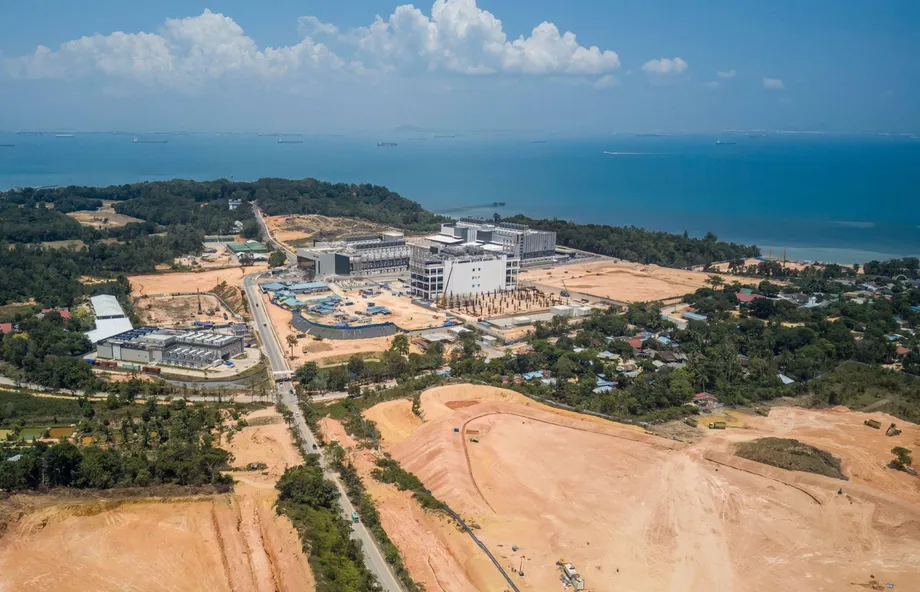
The crisis has pushed families to buy water, wait overnight for tanker deliveries and cut back on cooking and washing. On October 5, 2026, residents blocked access to Nongsa Digital Park, a special economic zone housing facilities that support digital services and artificial intelligence. The blockade followed protests in August and September.
Batam authorities blame prolonged dry weather, shrinking reservoirs and supply faults. Residents believe the construction of data centres has added pressure to an already unreliable water system. The argument now reaches beyond the island: Indonesia's government began coordinating a response across ministries in October, while local authorities pressed investors to build their own water supplies.
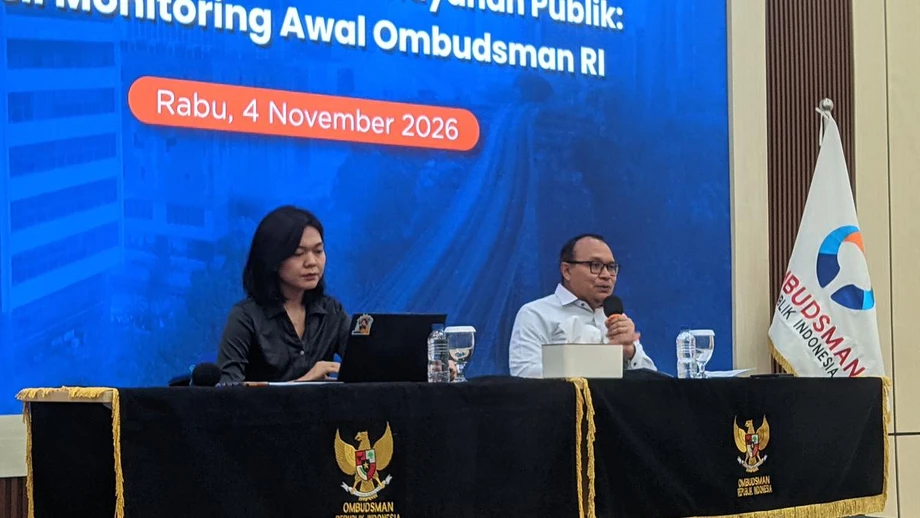
By November 4, BP Batam, the agency overseeing the island's development, was describing a desalination investment costing an estimated Rp400 billion to Rp500 billion. Its projected output of 300 litres per second would equal 25.92 million litres a day, showing the scale of the infrastructure being considered alongside the digital expansion.
For households, the immediate demand is simpler. They want reliable water at home, rather than another night waiting beside an empty storage tank.
Families pay more for less water
Dewi Susanti, a resident of Bakau Serip who joined the protests, said her village had gone about three months without tap water. She described tanker supplies as dirty, cloudy and smelly, and said shortages were taking money away from food and leaving family members exhausted.
Dewi explained how the search for water affected her household:
The water shortage is affecting our livelihoods... Money that should be used to buy rice is now spent on water drums.
Dewi said two drums of purchased water cost Rp125,000 and lasted only a day. She also described monthly water bills of around Rp150,000 to Rp200,000 despite the interrupted service. Air Batam Hilir service manager Ismadi Alim said the basic subscription charge should be no more than Rp33,000 and asked customers facing higher charges to raise them with the company.
In Batuampar, resident Dede described nearly a year of reliance on tanker deliveries every two days. He said he still paid a monthly bill of Rp30,000, plus electricity costs to pump water from storage. Tenants in rooms he rented out sometimes had to buy additional water or wait until late at night for deliveries.
Sulastri, 38, said shortages had also damaged small businesses. Stall owners who previously made ice cubes could no longer do so. In the coastal village of Mata Ikan, demonstrator Rahmat said residents had resorted to seawater for washing after using the toilet.
Air Batam Hilir said it had sent eight tanker loads to meet residents' needs. Ismadi attributed a complaint about dirty deliveries to a rusty tanker and said that vehicle would no longer be used. Residents described disputes over access to the deliveries, adding another strain to neighbourhood life.
Why the reservoirs are shrinking
Batam depends on rain collected in six artificial reservoirs: Sei Harapan, Nongsa, Sei Ladi, Duriangkang, Tembesi and Muka Kuning. Without dependable natural freshwater sources such as rivers or springs, the island has limited alternatives when rainfall drops.
Ginda Alamsyah, a spokesman for Air Batam Hilir, attributed low levels at Nongsa Reservoir to drought and said an electrical fault had further disrupted distribution. BP Batam officials also cited prolonged dry weather and El Niño, a Pacific climate pattern that can bring drier conditions to Indonesia.
Environmental organisation Akar Bhumi Indonesia measured Nongsa's water level falling by about four centimetres daily, with a cumulative decline of 4.5 metres by early October. Ismadi gave a lower daily figure of about two centimetres since June. The organisation estimated the reservoir could sustain supply for 34 days without rain under its simulation.
Akar Bhumi Indonesia activist Hendrik Hermawan attributed the pressure to low rainfall, reduced effectiveness of water catchment areas and demand exceeding production capacity. Catchment areas are the surrounding land that collects rain and channels it towards a reservoir.
The organisation also identified falling levels at other reservoirs. Its figures put daily declines at about three centimetres in Sei Harapan, Sei Ladi and Muka Kuning, two centimetres in Tembesi and one centimetre in Duriangkang.
Government figures cited in the assessment put Batam's annual water requirement for 1.39 million residents in 2026 at 280 million cubic metres, against annual availability of 139 million cubic metres. The resulting gap, 141 million cubic metres, is just over half the stated requirement. That broad water balance describes a deeper supply problem than a single neighbourhood outage.
What officials say supplies the data centres
Batam mayor Amsakar Achmad, who also heads BP Batam, said in October that the distribution disruption resulted from weather and climate factors rather than data centres or AI investment. BP Batam also denied that water intended for households was being diverted to the facilities.
Descriptions of the industrial supply arrangements vary. An industry source identified Duriangkang Reservoir as the source for Nongsa Digital Park. BP Batam deputy Denny Tondano said cooling water for the park's data centres came from Kabil Industrial Estate, which has its own water treatment ponds.
Batam's data centres' actual water consumption, electricity consumption and detailed supply arrangements have not been publicly clarified in the accounts of the dispute. Those figures matter because the island's reservoirs have different capacities and conditions, while individual facilities use different cooling designs.
Agus Hasan, a professor at the Norwegian University of Science and Technology, said reliable information about data centre water use in Indonesia remained scarce, partly because companies treated it as proprietary information.
The practical issue is whether households and industrial users can receive dependable supplies through dry periods. BP Batam deputy Ariastuty Sirait said investment allocations must preserve residents' rights to clean water and that household needs remained the priority.
How the protests and policy response developed
Residents' complaints have continued through several rounds of demonstrations and government responses. The dates show the overlap between urgent demands for restored service and plans for infrastructure that will take much longer to build.
- August and September 2026: Residents protested over water shortages as data centre development continued.
- Late September: Authorities told developers to build seawater desalination facilities for cooling rather than increase pressure on local freshwater resources.
- October 5: Residents blocked access to Nongsa Digital Park after about three months of interrupted household supply.
- October 13: Communications and Digital Minister Meutya Hafid said ministries and agencies were coordinating a response.
- November 4: Ariastuty outlined an estimated Rp400 billion to Rp500 billion desalination investment with capacity of about 300 litres per second.
Descriptions of the October 5 crowd ranged from dozens at the blocked entrance to about 300 participants. Residents carried empty bottles, water containers and household utensils. Access restrictions prevented some workers from entering the project area.
Meutya said coordination was continuing, without announcing a conclusion or a timetable for restoring household service. The immediate response has centred on tanker deliveries while authorities discuss longer term supply arrangements.
Desalination offers another source, with a wait
BP Batam is promoting seawater reverse osmosis, or SWRO, as an alternative to reservoir water. The process pushes seawater through special membranes under high pressure, separating much of the salt to produce freshwater.
Ariastuty's November estimate put construction time at one to three years, depending on a facility's size and production capacity. She urged investors to fund water and electricity infrastructure alongside their data centre buildings under what BP Batam calls a one investment concept.
Denny had described a system under construction with potential capacity of up to 1,200 litres per second and estimated completion within a year. Ariastuty later outlined capacity of around 300 litres per second. The accounts leave the relationship between those proposed capacities and construction programmes unexplained.
Desalination could give industrial users a source that depends less directly on rainfall. It also requires electricity, seawater intake infrastructure and management of the concentrated salty water left after treatment. These requirements make plant design and environmental planning part of the investment.
Air Batam Hilir is also dredging the island's six reservoirs to increase storage capacity and has considered cloud seeding during dry periods. Dredging removes accumulated sediment; cloud seeding attempts to encourage rain from suitable clouds. Neither measure offers households the same certainty as a functioning daily supply.
The size of Batam's investment pipeline
BP Batam said data centre investment on the island had exceeded $6.7 billion by mid-2026. Proximity to Singapore, connections to major undersea cable routes and relatively low operating costs have helped attract investors from several countries.
Ariastuty's November account listed 10 registered data centre companies. Six were in Nongsa Digital Park: two had completed construction, one was building and three were planning construction. Two more were building elsewhere outside the park, and another two were developing facilities at Kabil Industrial Estate.
An October BP Batam account described 10 approved centres and at least six additional applications under review. Environmental reporting cited at least 16 permitted facilities and 20 further applications. A common public register reconciling companies, individual facilities, permits and applications would help residents track the pipeline.
Large projects include a DayOne agreement announced in April for a facility with around 450 megawatts of capacity. In June, DayOne, Nvidia and Australia's Firmus Technologies announced a 360 megawatt AI factory. Official projections put Batam data centre power demand above 1,100 megawatts by 2030.
A megawatt measures power, or the rate at which electricity is used. These large capacity figures indicate the scale of the infrastructure planned for computing and cooling, rather than a household style monthly electricity bill.
Telkom network director Budi Satria Dharma Purba said on October 13 that the NeutraDC Nxera Batam facility was nearing completion and that water and electricity requirements had been considered from the outset. Other companies behind operating or planned facilities at Nongsa include BW Digital, Princeton Digital Group and Gaw Capital Partners.
Cooling choices and future water demand
Data centres house computers that store information and run applications, including AI systems. Electricity powers those machines, which produce heat. Cooling equipment must remove that heat so the computers can operate reliably.
Water consumption varies with the facility's size, workload, climate and cooling technology. Gaw Capital Partners said its approach included systems that circulate and reuse water, reducing the need for additional freshwater, alongside engineering measures and renewable energy sourcing.
BP Batam projections cited in October put the potential water requirement of nine Nongsa facilities at about 29 million litres daily by 2032, equivalent to 8.4% of the island's stated total supply. Another development estimate placed future data centre demand between 20 million and 50 million litres a day when the planned facilities were operating.
The nine facility projection concerns a future operating scenario. For residents facing outages now, publishing current consumption alongside forecasts would make it easier to see how demand is changing and what additional supply each project requires.
Indonesia's data centre industry association, IDPRO, wants a national development plan covering suitable locations, additional electricity supplies, water efficiency, recycled water and oversight of effects on communities. Chairman Hendra Suryakusuma said location decisions should reflect local infrastructure and environmental capacity, rather than land availability and investor interest alone.
The debate also involves Indonesia's Law No. 17 of 2019 on Water Resources, which gives priority to basic household needs. Walhi campaigner Wahyu Eka Setyawan called for a pause on new permits, zoning controls and specific water and energy requirements for data centres. Denny said BP Batam would assess the request for a permit moratorium.
Singapore's neighbours face a shared resource test
Singapore paused new data centre developments from 2019 to 2022 because of land and energy constraints, then reopened development under new efficiency requirements. Investment spread into neighbouring Batam and Malaysia's Johor, both close to Singapore's established digital economy.
A KPMG projection puts Southeast Asian data centre capacity in 2030 at three times its 2025 level, alongside a projected tenfold rise in AI use. The expansion creates demand for construction, power and telecommunications infrastructure, while putting pressure on water systems and electricity grids that still rely heavily on fossil fuels.
James Chai, a researcher at the ISEAS-Yusof Ishak Institute, put Johor's data centre capacity at 2.1 gigawatts, compared with 10 megawatts about five years earlier. Since 2.1 gigawatts equals 2,100 megawatts, those figures represent a 210 fold expansion.
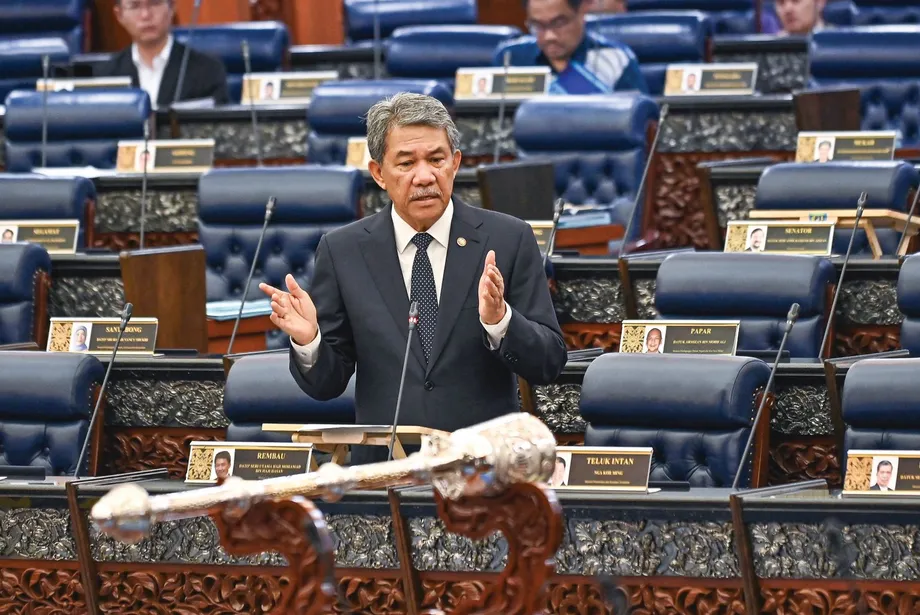
Malaysia's deputy prime minister told Parliament in July that data centres were forecast to account for a third of national energy consumption by 2035. The government said new projects would be approved only after sufficient water and energy capacity had been assured.
Residents in Johor have protested over construction dust, flash floods and development close to homes. In Kota Damansara, near Kuala Lumpur, a developer withdrew a data centre planning application in August after neighbours collected more than 9,000 petition signatures.
Malaysia's human resources minister, Ramanan Ramakrishnan, said he supported development and investment while calling for residents to have a voice in major projects:
"For large-scale projects that could affect the residents' lives, the people must have a say".
Batam's immediate challenge is to restore household supply while matching new industrial approvals with usable water and electricity infrastructure. Families buying drums of water are already paying a concrete price for the island's supply shortfall, years before some proposed projects reach full operation.
Key Points
- Nongsa Reservoir output has fallen from a normal 80 litres per second to 30, according to Air Batam Hilir.
- Residents protested on October 5, 2026, after some neighbourhoods experienced about three months without reliable piped water.
- Officials blame drought and supply faults; residents and environmental advocates say industrial growth adds pressure to limited water resources.
- BP Batam is pressing investors to develop independent water supplies, including desalination plants that could take one to three years to build.
- Data centre investment exceeded $6.7 billion by mid-2026, while projected power demand tops 1,100 megawatts by 2030.
- The government is coordinating a response across ministries, with household water needs formally given priority.