Forest permits face scrutiny after recurring fires
Indonesia's Ombudsman is calling for regular audits of companies using forest land, warning that government oversight often stops once a permit is issued. The demand comes as police have named 20 companies as suspects in forest and land fire cases and the Environment Ministry examines the roles of 335 corporations.
Contents
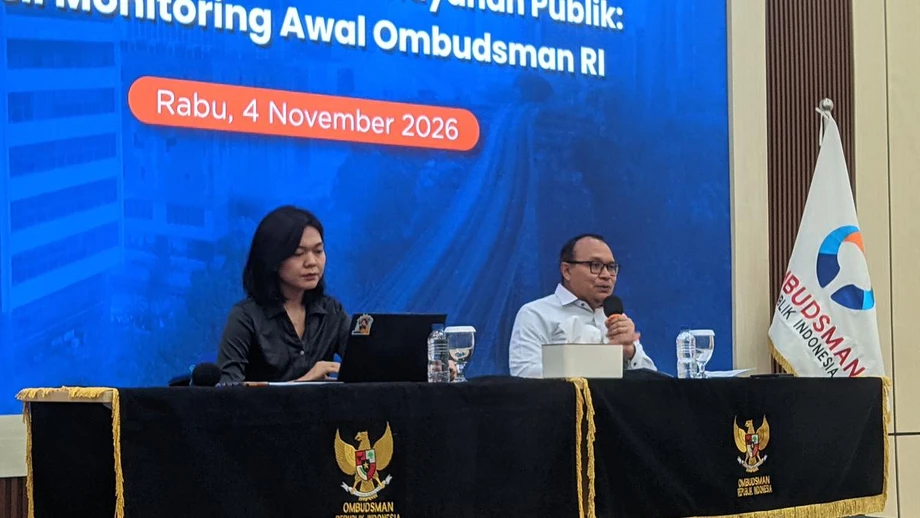
Fikri Yasin, an Ombudsman member working on forest governance, outlined the findings at an online press conference in Jakarta on 4 November 2026. The conference, titled Forest and Land Fires and Their Impact on Public Services: Initial Monitoring Results from the Indonesian Ombudsman, focused on weaknesses in the management of land used by businesses.
Fikri said much of the burned area was within forest land. His central concern was what happens after companies receive permission to use it: authorities should continue checking their activities, the area they occupy and the length of time they remain there.
According to the Ombudsman, those checks are frequently missing or insufficient. Companies can consequently continue operating without clear, regular evaluations of whether their actual use of the land matches the conditions attached to their permits.
The proposed response reaches beyond firefighting. The Ombudsman wants central and regional authorities to strengthen licensing, environmental enforcement and inspections before another fire exposes problems that have gone unchecked.
Where supervision breaks down
A permit gives a company permission to carry out specified activities under specified conditions. Monitoring is the continuing work of checking whether the company follows those conditions. The Ombudsman's concern is that authorities are treating the initial permission as the end of their task.
Fikri described the resulting gap in supervision during the press conference. Speaking in Indonesian, he said:
What we understand now is that once a company has started using forest land, there is no longer any supervision. There are no longer any audit limits, and then it is used for life.
His warning concerned the practical effect of weak oversight: a company may keep using land when nobody is regularly checking the boundaries or the expiry of its permission. The Ombudsman wants authorities to keep those conditions under review throughout the period of use.
Government agencies would therefore need to look beyond the existence of a permit. They would also need to establish whether the business operating on the ground is doing what the permit allows, within the area and time specified.
What the audits should examine
Fikri identified three connected subjects for regular inspection: the use of the land, the size of the area being used and the duration of that use. Together, these checks would allow authorities to compare a company's permission with its actual operations.
He set out the proposed scope in another statement, translated from Indonesian:
There must be regular audits of them, first concerning land use. Then the next issue is the limits on land use, both its area and the number of years.
An audit, in this context, means a structured examination of whether a company is meeting the conditions governing its activities. Checking the area matters because a business may occupy more land than it is permitted to use. Checking the duration matters because permission to use land has conditions about when that use should end.
The Ombudsman's demand also concerns the return of land to the state when the permitted period expires. For that to happen in practice, authorities need to know when the period ends and whether the company has complied.
No audit timetable, inspection frequency or deadline for government action was announced in the remarks. Those details would determine how the call for regular checks becomes a working system.
Why palm oil plantations are in focus
Fikri specifically raised oil palm plantations using forest land. He argued that their use of such land should be subject to continuing supervision, regular audits and limits on the period of operation.
His concern links two parts of a company's obligations that can otherwise be considered separately. A business must operate within the area it is allowed to use, and its permission must also be checked against the passage of time. Inspecting only one leaves the other unchecked.
The Ombudsman said large plantations and other businesses using forest areas require consistent evaluation. Without it, authorities have difficulty determining whether the land occupied and the activities taking place remain within the terms originally approved.
For the state, the issue is continued control over land made available for business use. For surrounding communities, the concern becomes especially immediate when poorly supervised land management increases exposure to recurring fires. The Ombudsman said both the public and the state bear the consequences when oversight fails.
Investigations show the scale of enforcement
Police have named 20 companies as suspects in forest and land fire cases. Four of those companies have foreign investment from Singapore, Malaysia and South Korea. That is one fifth of the companies named as suspects.
The Environment Ministry is also examining the roles of 335 corporations in the fires. The police figure concerns companies already given suspect status, while the ministry figure describes the broader group whose involvement is being examined. The two figures refer to different stages and types of official action.
The Ombudsman's criticism focuses on the timing of government intervention. Its evaluation found that the response remained reactive, with violations by permit holders coming to official attention after fires had occurred. The basis for that assessment was its finding that authorities generally identified suspected spatial-planning and concession violations only after the effects of fires had spread to communities.
Regular audits would bring scrutiny into the period before a fire. Authorities could examine whether land use matches permission and identify problems through inspections, instead of relying on a disaster to trigger a closer look at a company's operations.
The demand therefore adds a prevention question to the enforcement effort: how consistently are businesses being checked while they are operating, before police or environmental investigators become involved?
A large burned area adds urgency
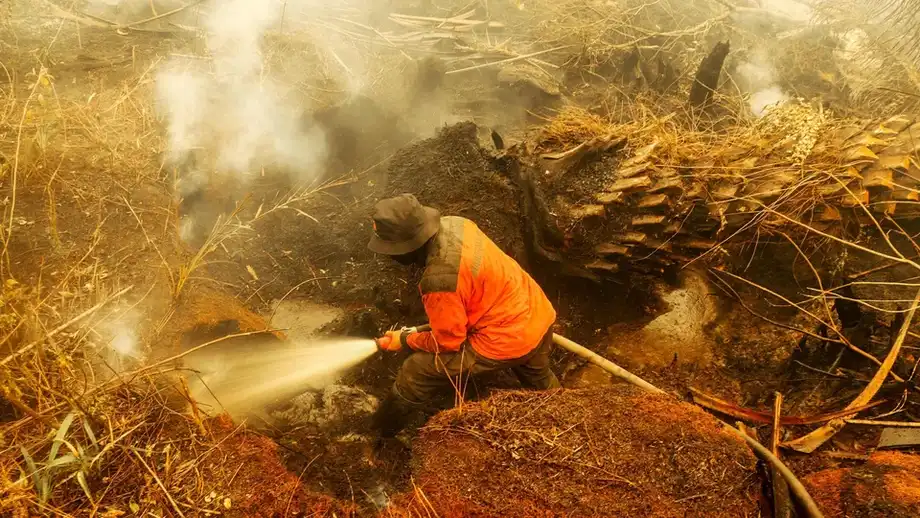
An estimate attributed to the Global Wildfire Information System, known as GWIS, puts Indonesia's burned forest and land area in 2026 at 8.6 million hectares. That is 86,000 square kilometres, using the standard conversion of 100 hectares to one square kilometre.
The figure is an estimate of burned area. The Ombudsman's findings focus on how forest land is governed, including the supervision of companies permitted to use it. Together, the scale of burning and the gaps identified in monitoring explain the urgency of the call for inspections.
Fikri said most of the areas affected by fire were forest land. His remarks placed responsibility on the agencies with authority over its use to keep checking permit holders, rather than allowing supervision to fade after approval.
The practical connection is straightforward. If authorities do not regularly inspect a company's activities and boundaries, they have fewer opportunities to identify breaches and require corrective action before a fire occurs. The Ombudsman wants prevention to become a continuing responsibility.
Central and regional authorities are urged to act together
The Ombudsman called on central and regional governments to conduct active, coordinated supervision. Its proposed reforms cover the licensing system, forest resource management and enforcement of environmental and forestry rules.
Those responsibilities are connected. Licensing sets the conditions a company must follow. Inspection checks compliance. Enforcement gives authorities a way to respond when those conditions are breached. The Ombudsman's findings describe a weakness in the continuing checks between permission and official action.
Audits focused on use, area and duration would give authorities concrete questions to answer for each business: what is happening on the land, how much land is being used and whether the permitted period is still running.
Fikri's warning about land being used indefinitely makes the final question particularly important. A time limit has practical force when authorities track it and act when it expires. The same applies to boundaries: approved limits need to be compared with actual occupation.
The Ombudsman's demand is for that work to happen routinely. Police investigations and the ministry's examination of corporate involvement address the fires already under scrutiny. Continuing inspections would address the management failures the institution says leave forest areas vulnerable to repeated burning.
Key Points
- Indonesia's Ombudsman called for regular audits of companies using forest land at a press conference on 4 November 2026.
- Fikri Yasin said supervision often stops after permits are issued, leaving company operations without consistent evaluation.
- The proposed audits would examine land use, occupied area and the duration of permission, including the return of land to the state.
- Police have named 20 companies as suspects in fire cases. Four have foreign investment from Singapore, Malaysia and South Korea.
- The Environment Ministry is examining the roles of 335 corporations.
- A GWIS estimate puts the area burned in Indonesia during 2026 at 8.6 million hectares.
- The Ombudsman wants central and regional authorities to make prevention and continuing supervision part of routine forest management.