A 5.2 GW expansion puts Indonesia's ambitions to the test
Indonesia is pursuing the world's largest installed geothermal power capacity by 2030, with a national expansion plan covering 5.2 gigawatts and a major producer seeking to more than double its own generating capacity by 2034. The challenge is turning heat underground into operating power plants quickly enough to overtake the United States.
Contents
- A 5.2 GW expansion puts Indonesia's ambitions to the test
- How close is Indonesia to overtaking the United States?
- A large resource base with limited development
- PGE's projects must deliver more than 1 GW of growth
- New plants show progress beyond the targets
- Record production gives PGE a stronger starting point
- Why electricity prices matter before drilling starts
- Remote sites and local concerns shape the pace
- The milestones from Kamojang to 2034
- Key Points
Ahmad Yani, president director of PT Pertamina Geothermal Energy (PGE), outlined the company's contribution at a media briefing in Jakarta on November 4, 2026. PGE plans to increase installed capacity from 727 megawatts to 1 gigawatt in 2028, then to 1.8 gigawatts in 2034, while pressing for electricity pricing changes to make investment more predictable.
Indonesia ranked second behind the United States in geothermal production in 2025, according to Ahmad. The government's numerical comparison focuses on installed capacity: how much power generators can supply at a given moment. Electricity production measures how much energy those generators actually deliver over time.
PGE's latest operating figures show growth on that second measure. Ahmad said facilities in areas operated directly by the company generated 4,114 gigawatt hours during January to September 2026, a company record and an increase of 9.79% from the same period a year earlier.
The expansion comes as Indonesia marks 100 years since geothermal exploration began at Kamojang in West Java in 1926. Ahmad sees the anniversary as an opportunity to turn the country's large resource base into international leadership. Achieving that ambition will depend on drilling results, construction, electricity purchase agreements and acceptance among communities around project sites.
How close is Indonesia to overtaking the United States?
Eniya Listiani Dewi, director general of New, Renewable Energy and Energy Conservation at the Energy and Mineral Resources Ministry, put Indonesia's installed geothermal capacity at 2.68 GW at the end of 2024, compared with 3.6 GW in the United States. Another ministry figure cited in June 2025 placed Indonesia's total at 2,638.8 MW, or about 2.64 GW.
Using Eniya's figures, Indonesia faced a gap of 920 MW. She proposed adding 1.1 GW within five years, which would bring national capacity to about 3.78 GW, above the US figure she cited. The eventual ranking will also depend on how much capacity the United States adds or retires during that period.
Eniya linked her optimism partly to President Donald Trump's shift toward coal. Indonesia's construction schedule, however, gives the target its practical meaning: enough new plants must be completed and connected to supply electricity.
The wider Electricity Supply Business Plan, known by its Indonesian abbreviation RUPTL, provides for 5.2 GW of additional geothermal capacity. Eniya described that expansion as taking place over 10 years through 2035, while the electricity plan discussed by Energy Minister Bahlil Lahadalia covered 2025 to 2034. The 2030 leadership goal is therefore an earlier milestone within a longer building programme.
A large resource base with limited development
Indonesia has geothermal potential of 23.74 GW across 368 locations, according to Eniya. Against her installed capacity figure of 2.68 GW, that means roughly 11% of the estimated resource has been developed into generating capacity.
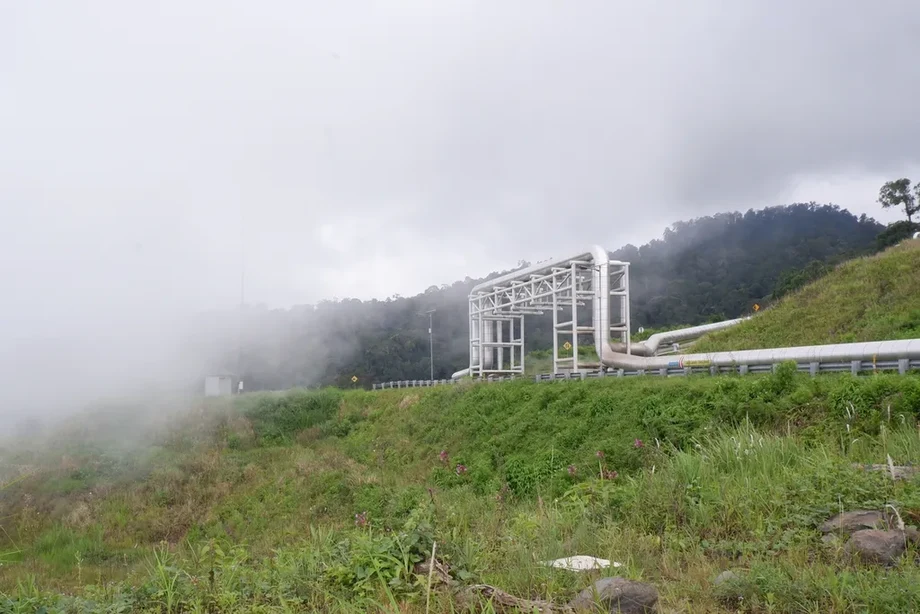
Geothermal plants use heat beneath the Earth's surface to produce electricity. Developers drill wells to reach hot fluids, then use that heat to drive generating equipment. Unlike solar generation, geothermal electricity can be produced through the night and is less dependent on daily weather conditions.
The ministry figures cited in June 2025 used a resource estimate of about 23,000 MW and described Indonesia's potential as approximately 40% of the global total. Both estimates show a much larger resource base than the capacity already operating.
A promising location still requires investigation. Developers need to establish whether underground temperatures, fluids and rock conditions can support a commercially useful plant. That work helps explain why a country with abundant geothermal resources can take decades to develop only a fraction of them.
PGE's projects must deliver more than 1 GW of growth
PGE is accelerating Lumut Balai Units 3 and 4, Hululais Units 1 and 2, and Lahendong Units 7 and 8. Ahmad presented these projects as part of the route toward the company's capacity targets and its ambition to become a world geothermal centre of excellence.
The first target requires adding 273 MW to PGE's stated 727 MW base, an increase of about 38%, to reach 1,000 MW in 2028. Reaching 1,800 MW in 2034 would require a total increase of 1,073 MW, leaving the company with nearly two and a half times its current capacity.
Another project, the 55 MW Ulubelu Gunung Tiga plant in Lampung, had begun construction by June 2025. Pertamina also announced an exploration investment allocation of US$36.62 million. Exploration spending addresses an early stage of development, when developers are still determining the quality and size of the underground resource.
A June 2025 account put the broader Pertamina geothermal portfolio at 1,877.5 MW, with annual generation of up to 4,827.22 GWh. The portfolio boundaries behind those figures were not detailed. Ahmad's later 727 MW capacity baseline and production figures for directly operated areas provide the stated basis for PGE's latest expansion plans.
New plants show progress beyond the targets
President Prabowo Subianto inaugurated three geothermal plants on June 26, 2025, alongside five projects entering initial construction with a combined planned capacity of 260 MW. The ceremony showed that part of the expansion programme had already moved from planning into operation or building work.
The three operating projects were Ijen in Bondowoso, East Java, Sorik Marapi Unit 5 in Mandailing Natal, North Sumatra, and Salak Binary in West Java. Their inauguration was described as adding 91.9 MW, although the individual capacities listed, 35 MW, 41.25 MW and 16.15 MW, total 92.4 MW.
Ijen was operating at 35 MW against a planned 110 MW, leaving 75 MW of its stated development still to come. That illustrates how a geothermal site can expand in stages rather than start at its full intended size.
Prabowo, who also inaugurated 47 solar plants at the event, connected the renewable projects to Indonesia's energy independence:
Renewable energy sources are available; we just need to manage them well. Today is proof of the capability of the Indonesian nation to achieve energy self-sufficiency, which is crucial for our future,
The operating plants add electricity now. Projects entering construction represent future supply, with further work required before they can contribute to national generation.
Record production gives PGE a stronger starting point
PGE generated 4,114 GWh from its directly operated areas during the first nine months of 2026, compared with a target of 3,801 GWh. Ahmad said the result reached 108.22% of the company's target and was its highest production figure.
The difference was 313 GWh, while the increase from the same period in 2025 was 9.79%. Those figures show PGE producing more electricity while it prepares a much larger expansion in generating capacity.
A megawatt describes generating power; a gigawatt hour describes electricity produced over time. A 1 MW generator operating at full output for 1,000 hours produces 1 GWh. For households and businesses, dependable generation matters alongside the size of the installed fleet because electricity must be available when it is needed.
PGE's operating performance and construction programme address different parts of the same task. Existing facilities need to keep delivering electricity while new wells, equipment and plants are developed to meet the later targets.
Why electricity prices matter before drilling starts
PGE is asking the government to revise tariff provisions in Presidential Regulation No. 112 of 2022. Ahmad said the company wants price adjustments and a feed-in tariff arrangement to give investors greater certainty.
A feed-in tariff sets a defined price or pricing framework for electricity supplied to the grid. For a geothermal developer, predictable sales income helps support decisions about spending on exploration, wells and generating equipment before electricity sales begin.
Surya Darma, chairman of the Indonesia Center for Renewable Energy Studies, said in June 2025 that geothermal projects require large initial investments, while some developers reported returns on investment below 10%. Return on investment compares the financial gain from a project with the money invested in it.
Surya also described the uncertainty involved in locating a commercially useful resource:
It is common knowledge that the risk level in discovering geothermal reserves in the upstream sector remains high. The lack of accurate geological, geochemical, and geophysical data can lead to uncertainty in determining the magnitude of the potential,
Ahmad did not give a proposed tariff rate or a date for a decision on the requested revisions. The pricing discussion matters because developers must decide whether expected electricity income can cover both exploration risks and the cost of building a plant.
Remote sites and local concerns shape the pace
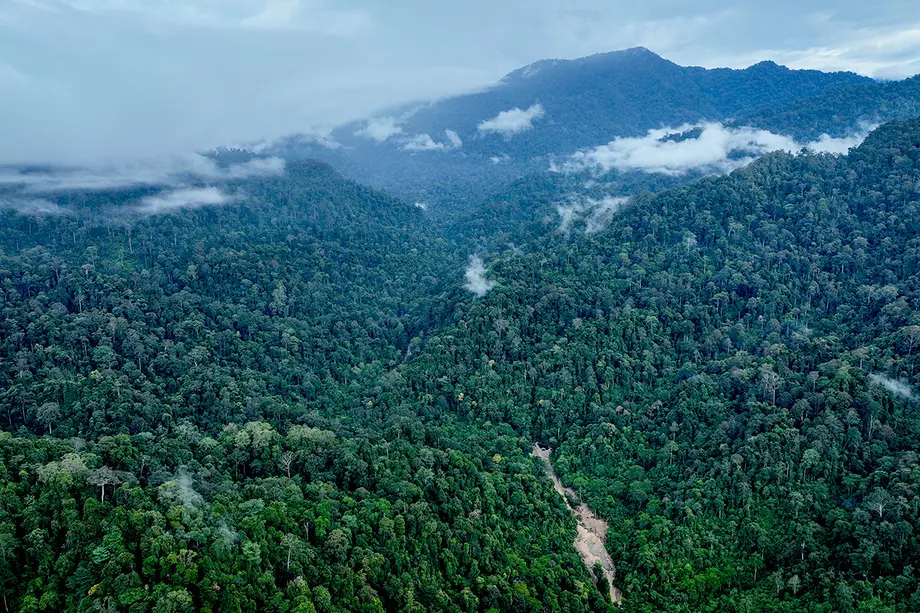
Surya identified difficult terrain, supporting infrastructure, licensing, legal uncertainty and community objections as obstacles to geothermal development. Many resources lie in remote areas, forests or active volcanic mountains, making it harder to transport heavy equipment and increasing the work needed before construction.
Communities around proposed sites also have concerns that developers and government agencies must address. Surya said his organisation planned an educational webinar with other participants in the sector. Local engagement sits alongside geological surveys and financial planning as part of getting projects built.
Maluku illustrates the connection between national ambitions and local electricity needs. During preparation of the 2025 to 2034 electricity plan, Bahlil said 40 MW of geothermal potential in Ambon had been included in the draft.
In North Maluku, the government awarded the Telaga Ranu concession in West Halmahera to PT Ormat Geothermal Indonesia on January 8, 2026. The site has potential capacity of up to 40 MW and a target of beginning operation by the end of 2030, with the aim of replacing electricity generated from diesel.
Telaga Ranu also brought scrutiny over public participation, environmental concerns and the developer's connections to Israel. Its development shows how an individual project can involve energy supply, local interests and wider political sensitivities at the same time.
The milestones from Kamojang to 2034
Indonesia's geothermal programme combines a century of exploration with several nearer deadlines. The main milestones are:
- 1926: Geothermal exploration begins at Kamojang in West Java.
- End of 2024: Indonesia has about 2.64 to 2.68 GW of installed geothermal capacity, according to the ministry figures cited in 2025.
- June 26, 2025: Prabowo inaugurates three operating geothermal plants and marks initial construction at five more projects.
- January to September 2026: PGE produces a record 4,114 GWh from directly operated areas.
- 2028: PGE targets 1 GW of installed capacity.
- 2030: The government aims for Indonesia to lead the world in geothermal capacity; Telaga Ranu is targeted to begin operating by the end of the year.
- 2034: PGE targets 1.8 GW, alongside a national programme described as adding 5.2 GW over a decade through 2035.
The nearer test is whether planned capacity becomes operating generation on schedule. PGE's 2028 target comes before the national leadership deadline, making its construction progress one concrete measure of how quickly the wider ambition is advancing.
Key Points
- Indonesia aims to become the world's leading geothermal power country by 2030.
- The national electricity programme includes 5.2 GW of additional geothermal capacity.
- PGE plans to grow from 727 MW to 1 GW in 2028 and 1.8 GW in 2034.
- PGE's directly operated areas generated a record 4,114 GWh in January to September 2026, up 9.79% from a year earlier.
- Exploration costs, electricity prices, infrastructure and community concerns will shape the speed of expansion.