Amur joins Umit in the Ile-Balkhash reserve
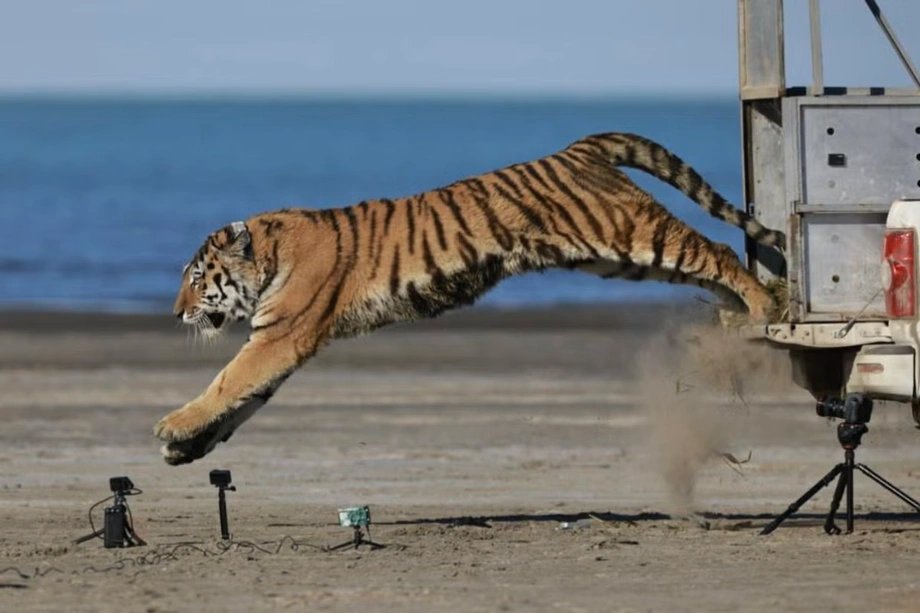
Kazakhstan released a male Amur tiger into the Ile-Balkhash State Nature Reserve on 31 October 2026, bringing the number of tigers returned to the wild there to two. The release advances a programme aimed at rebuilding a population of the predators in a country where the last confirmed sighting of its native Caspian tiger was recorded in 1948.
Contents
- Amur joins Umit in the Ile-Balkhash reserve
- What Amur had to demonstrate before release
- Umit is already hunting independently
- From two releases to a population of 50
- Two cubs could follow in spring 2027
- Why an Amur tiger is returning to Caspian tiger habitat
- Rebuilding the habitat and food supply
- How nearby villages will receive warnings
- The dates that shape the next stage
- Key Points
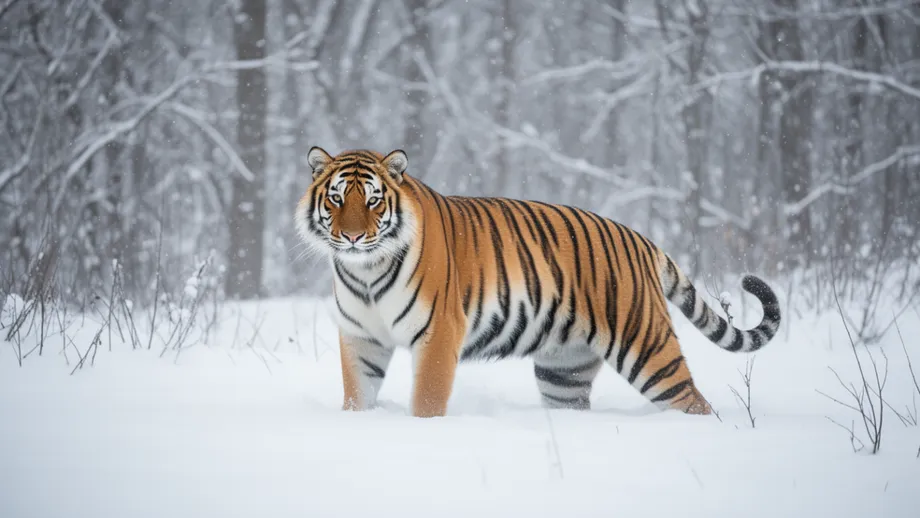
The male, named Amur, joins Umit, a female released on 31 July. Amur was brought from Russia and is about three to four years old. Both animals carry satellite tracking collars so specialists can follow their movements across the reserve in southeastern Kazakhstan.
Ecology and Natural Resources Minister Alibek Kuantyrov says Kazakhstan plans to release at least 10 tigers by 2033 and ultimately establish a wild population of around 50. Two cubs now under specialist supervision are being considered for release in spring 2027, depending on their readiness to survive independently.
The immediate task is to help the released animals settle, hunt and occupy territories while protecting nearby communities, where livestock farming is a main source of income. The longer task is to create conditions in which tigers can reproduce and sustain a population without people continually supplying new animals.
What Amur had to demonstrate before release
Kazakhstan's Ministry of Ecology and Natural Resources says Amur underwent veterinary examinations and behavioural assessments before entering the wild. Specialists checked his health, hunting ability, capacity to find food independently and response to human presence.
Daniyar Turgambayev, chairman of the Forestry and Wildlife Committee, explained why the release required an individual assessment:
Every tiger release carries significant responsibility. We must be certain that the animal is ready to live independently in the wild. That is why the decision is made only after a thorough assessment of its health, behaviour and hunting skills.
Amur's satellite collar allows conservationists to track where he travels as he adjusts to the reserve. Those movements will help the monitoring team follow his adaptation and respond if he approaches a settlement.
Umit is already hunting independently
Umit, the first tiger released, is reported to be adapting successfully and catching her own prey. Her movements are also being tracked through a satellite collar, giving specialists a continuing way to monitor her life outside an enclosure.
Independent hunting is central to the programme. A tiger must repeatedly find enough food across its territory, rather than depend on keepers to feed it. Umit's progress provides an early sign that a released animal can meet that immediate requirement in the reserve.
The programme's longer measure of success is natural reproduction. Amur and Umit now share the wider reserve, but establishing a population will require enough suitable habitat, prey and breeding animals over time. Researchers are still assessing how many tigers the ecosystem can support.
From two releases to a population of 50
Kuantyrov has set out two different goals: releasing at least 10 tigers by 2033 and eventually building a population of around 50. The first concerns animals introduced through the programme; the second depends on a population growing through births in the wild.
The minister described the timetable and its flexibility:
We plan to release at least 10 tigers into the wild by 2033, although this number may change depending on the progress of the program. Our ultimate goal is to establish a population of around 50 tigers, which would allow them to reproduce naturally without human intervention.
The two releases so far represent one fifth of the minimum 10 planned by 2033. Reaching 50 animals would require a much larger population than that initial release group, making survival and successful breeding central to the project's next stages.
Kazakhstan intends to continue working with Russian partners. The wider programme also involves the World Wide Fund for Nature, the United Nations Development Programme and other conservation partners.
Two cubs could follow in spring 2027
Two cubs brought to Kazakhstan alongside the adults remain under specialist supervision. They were captured in the wild in Russia's Khabarovsk region, and their release is planned for spring 2027, subject to their age, health and ability to survive independently.
Kazakhstan is also keeping tigers brought from zoos in special enclosures. These animals have a different role: breeding animals whose offspring may later be prepared for life in the wild.
Kuantyrov explained that approach:
We already have tigers brought in from zoos, but they will not be released into the wild. Instead, they will be used for breeding in Kazakhstan, with their offspring eventually prepared for release into their natural habitat.
The programme therefore has several tracks running at once: monitoring released adults, preparing the two cubs and maintaining a breeding group in captivity. Each requires different decisions about the animals' care and readiness.
Why an Amur tiger is returning to Caspian tiger habitat
The tiger that historically lived in Kazakhstan was the Caspian tiger, also called the Turan tiger. Its range included parts of Central Asia, northern Iran and the Caucasus. Genetic research established a close relationship between that extinct tiger and the surviving Amur tiger, which is also known as the Siberian tiger.
That relationship explains the choice of Amur tigers for Kazakhstan's restoration programme. The aim is to return a closely related tiger to a landscape where the Caspian tiger once lived.
Kazakhstan's last confirmed Caspian tiger sighting dates to 1948. Hunting, poaching, the destruction of forests along rivers and falling numbers of wild prey contributed to its disappearance. Restoring the predator therefore involves rebuilding parts of the habitat and food supply that were lost.
Rebuilding the habitat and food supply
The Ile-Balkhash reserve was established in 2018, eight years after Kazakhstan backed the tiger restoration initiative in 2010. Conservation work has included restoring tugai forests, the woodland that grows along rivers, and rebuilding populations of animals that tigers hunt.
Bukhara deer and kulans, or Asiatic wild asses, are among the animals involved in that work. In September, 30 kulans were relocated from Altyn-Emel National Park to the reserve, adding to the effort to restore wildlife before the tiger population grows further.
Kuantyrov says tigers should hunt for themselves and that their potential prey can include kulans and wolves. His comments place the returning tigers at the top of the local food chain, where they can affect other predators as well as animals that eat plants.
The practical requirement is a dependable food supply across enough space. As researchers assess the reserve's capacity, prey populations and the amount of suitable habitat will help determine how many tigers can live there.
How nearby villages will receive warnings
Communities near the reserve have expressed concern about livestock, a mainstay of village livelihoods. Some settlements are only tens of kilometres from the release site, making the animals' movements a matter of daily safety as well as conservation.
Kuantyrov says a dedicated team works around the clock in the reserve to monitor the tigers. Authorities have also established teams responsible for preventing and responding to conflict between people and the predators.
The monitoring system divides the area into zones. If a tiger leaves the designated green zone and enters the yellow zone, an alert is sent to specialists and the nearest village. Residents are also expected to receive automated warnings when a tiger comes within five kilometres of a village or farm.
The ministry's previously outlined system has three zones and provides for escalating action: warning residents, driving an approaching animal away from a settlement and, when necessary, sedating and relocating it. Specialists can also capture a tiger to fit another tracking device when needed.
For residents, the system is intended to turn a collar signal into an early warning and a response on the ground. For conservation teams, it creates a way to intervene while allowing the animals to continue living freely in the reserve.
The dates that shape the next stage
Kazakhstan's tiger return has developed over more than a decade, with habitat preparation preceding the releases. The next scheduled step is the possible release of the two cubs in spring 2027.
- 1948: Kazakhstan recorded its last confirmed sighting of a Caspian tiger.
- 2010: Kazakhstan backed the tiger restoration initiative.
- 2018: The Ile-Balkhash State Nature Reserve was established.
- 31 July 2026: Umit was released into the reserve.
- 31 October 2026: Amur became the second tiger released.
- Spring 2027: Two cubs are planned for release, subject to readiness.
- 2033: Kazakhstan aims to have released at least 10 tigers.
Between those milestones, specialists will continue tracking the adults and assessing the cubs. Their decisions must bring together the animals' ability to live independently, the reserve's food supply and the safety of neighbouring communities.
Key Points
- Amur, a male brought from Russia, was released into Ile-Balkhash on 31 October 2026.
- He joins Umit, a female released on 31 July who is reported to be hunting independently.
- Kazakhstan plans at least 10 releases by 2033 and ultimately seeks a wild population of around 50.
- Two cubs could be released in spring 2027; tigers brought from zoos will remain in a breeding programme.
- Habitat restoration, sufficient prey and natural reproduction are central to establishing a lasting population.
- Tracking collars, village alerts and response teams are intended to reduce risks near settlements.