Water inflows stabilize Balkhash as planning turns to 2040
Nearly 40 billion cubic meters of water have entered Lake Balkhash since the start of 2024, Kazakhstan's Ministry of Water Resources and Irrigation said on October 27, 2026, as the country and French specialists work on a conservation plan extending to 2040.
Contents
- Water inflows stabilize Balkhash as planning turns to 2040
- What the annual figures show
- How the reservoir connects the river and lake
- Understanding the lake's level measurements
- French and Kazakh specialists examine the basin
- What the conservation plan would put in place
- Why cooperation with China matters
- Past losses explain the focus on lasting conservation
- What changes for the basin now
- Key Points
The ministry recorded about 15.9 billion cubic meters entering the lake in 2024, about 13.9 billion in 2025 and more than 9.7 billion from the beginning of 2026. Together, those figures amount to approximately 39.5 billion cubic meters. The ministry credited the inflows with helping stabilize the lake's level.
Kapshagay Reservoir, which regulates water arriving along the Ili River before releases continue toward Balkhash, reached 98% of capacity in 2026. It had filled completely in both 2024 and 2025. The Ili crosses from China into Kazakhstan, making conditions upstream and cooperation between the two countries central to the lake's water supply.
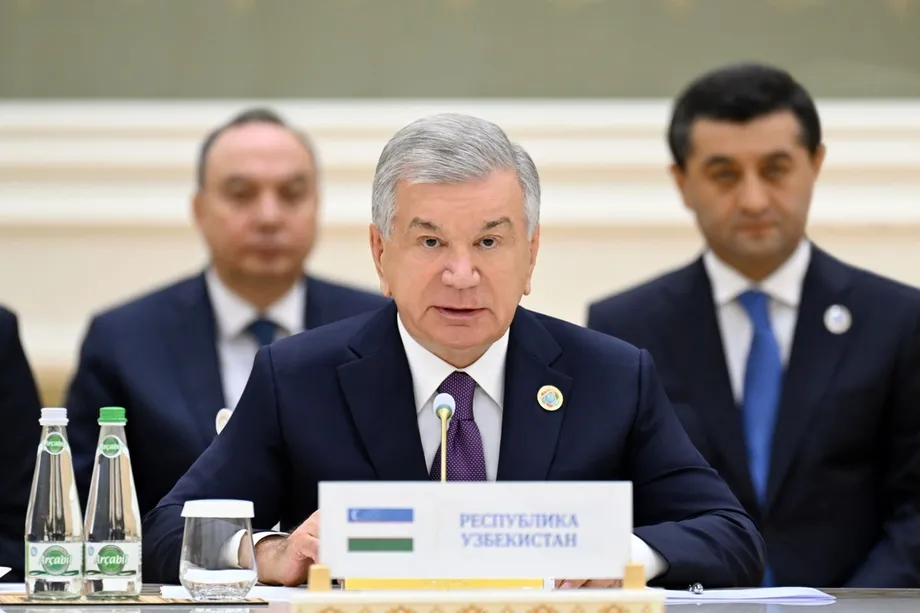
Water Resources and Irrigation Minister Nurzhan Nurzhigitov said the river was continuing to deliver water at its historical average rate.
"The inflow of water from the Ili River remains at its long-term average level. This helps maintain Lake Balkhash's water level at the optimal elevation of 341 meters according to the Baltic height system," said Water Resources and Irrigation Minister Nurzhan Nurzhigitov.
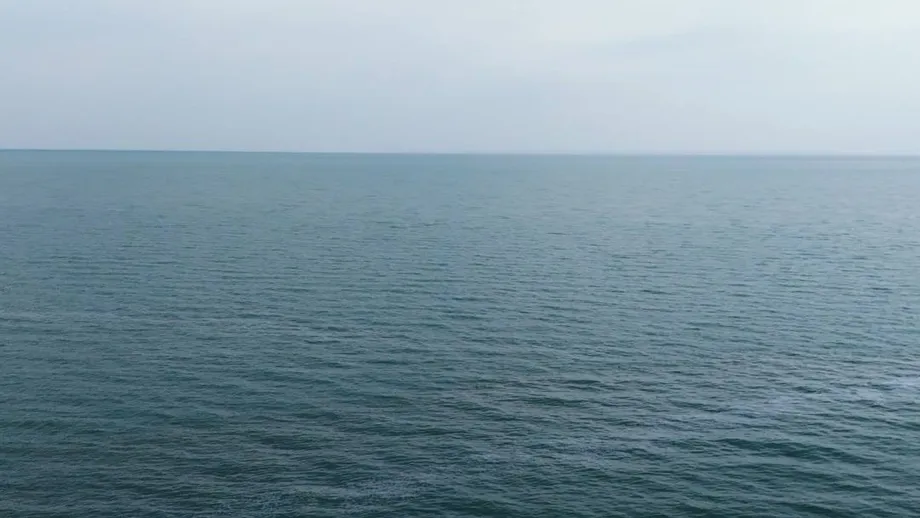
Balkhash, in southeastern Kazakhstan, is a closed lake, meaning it has no river carrying its water onward to the sea. Its western part is almost fresh, while its eastern part is brackish, or slightly salty. Keeping water flowing into the lake supports this unusual environment while farmers and other users also draw on the surrounding basin.
What the annual figures show
The ministry's figures trace a substantial flow of water across two complete calendar years and part of a third. The 2026 total covers only the period before the October announcement, so the next annual figure will cover a longer period.
- 2024: About 15.9 billion cubic meters entered Lake Balkhash.
- 2025: About 13.9 billion cubic meters entered the lake.
- 2026 through the October 27 announcement: More than 9.7 billion cubic meters entered the lake.
Inflows in 2025 were about 2 billion cubic meters below the 2024 figure, a decrease of roughly 12.6%. Both years nevertheless saw Kapshagay Reservoir reach full capacity, showing why the reservoir's filling percentage and the amount released toward the lake need to be followed separately.
The cumulative inflow measures water arriving over time. The lake's stored volume depends on the full water balance: water entering, water evaporating and water exchanged with the surrounding environment. A large inflow can therefore help maintain a lake even while substantial amounts leave through evaporation.
How the reservoir connects the river and lake
Kapshagay Reservoir provides a control point between the Ili River and Lake Balkhash. Operators can store incoming water and regulate releases downstream, connecting river conditions with decisions about when water moves toward the lake.
The reservoir's complete filling in 2024 was its first in a decade. It reached full capacity again in 2025, before reaching 98% in 2026. The latest figure is two percentage points below those earlier peaks.
By July 31, 2025, about 8.52 billion cubic meters had been directed downstream toward Balkhash since the start of that year. The ministry's later annual total of 13.9 billion cubic meters shows that substantial additional water reached the lake during the rest of 2025.
For people managing the basin, the practical task is to coordinate storage, releases and water use across the river system. A reservoir's filling level describes its stored supply at a particular stage; the lake depends on the water that continues downstream over the seasons.
Understanding the lake's level measurements
Nurzhigitov identified 341 meters on the Baltic height system as the optimal elevation supported by current inflows. The ministry also reported a more precise annual rise from 341.52 meters to 341.64 meters, an increase of 12 centimeters, alongside a gain of 2 billion cubic meters in stored water. The dates bounding that annual measurement were not specified.
The Baltic height system is a common reference used to describe elevation. A lake surface measured at 341 meters on that system is being located vertically against a standard reference, rather than being described as 341 meters deep.
A July 2025 update had recorded an average rise of 32 centimeters since January of that year. Tracking these measurements requires attention to their starting dates: a change since January and a change over a different annual interval describe different stretches of the lake's history.
The 12 centimeter increase also helps explain the scale of Balkhash. A small vertical rise across a very large surface can correspond to billions of cubic meters of additional water.
French and Kazakh specialists examine the basin
Kazakhstan's conservation project brings together the water ministry, the French Development Agency, known as AFD, and France's Geological and Mining Research Bureau, BRGM. The three parties signed an agreement in December 2024 to study the Balkhash basin jointly and prepare a conservation master plan.
A French scientific consortium participated in a major expedition in 2025 in Balkhash District, in Kazakhstan's Almaty Region. Researchers examined surface water, groundwater and irrigated farmland, collecting and checking measurements for a model of the basin's water balance.
The research program includes inspections of wells, river gauging stations and irrigated areas. Wells provide information about water underground, while gauging stations measure river conditions. Studying farmland helps researchers understand how irrigation fits into the movement and use of water across the basin.
Nurzhigitov said field studies had been completed and their results were being analyzed. The project roadmap also describes further data collection and inspections, placing the completed fieldwork within a broader research program.
What the conservation plan would put in place
The master plan has a planning horizon of 2040. Its roadmap includes a digital platform for monitoring Lake Balkhash's level, automation of water facilities and priority hydraulic structures, and analysis of the condition and quality of water resources across the Ili-Balkhash basin.
Surface water and groundwater are both part of that work. Rivers, reservoirs and the lake are the visible parts of the system; water stored beneath the ground also needs to be measured when researchers calculate how much water is available and how it moves.
A digital monitoring platform would bring measurements together so managers can follow changes. Automation would allow some measurements or equipment operations to take place without each action requiring a worker at the site.
The ministry has not announced a publication date for the completed master plan. The immediate task is analysis of the field results, which will inform proposals for managing the basin through 2040.
Why cooperation with China matters
The Ili supplies most of Lake Balkhash's incoming water. A 2025 ministry update put its contribution at nearly 70%, while an earlier basin analysis put it above 80%. Both estimates place the river at the center of the lake's water supply.
Kazakhstan received 10.2 billion cubic meters through rivers crossing from China during the first half of 2025, according to the water ministry. Of that total, 5.6 billion cubic meters arrived through the Ili and 4.6 billion through the Irtysh. The Ili share was about 55% of the combined amount.
Kazakhstan and China signed an agreement on cooperation in the use and protection of transboundary rivers on September 12, 2001. A further memorandum on water cooperation followed in March 2025.
Nagima Azhigulova, head of the ministry's Department of Water Cooperation with China and Russia, described the March agreement as covering sustainable water use, modern technology, alternative water sources, exchanges of experience and joint training for specialists.
For Balkhash, those arrangements connect diplomacy with a physical need: maintaining water along a river that crosses a national border before reaching the lake. Reservoir operations inside Kazakhstan and water use upstream in China are parts of the same basin.
Past losses explain the focus on lasting conservation
Balkhash has experienced much larger changes than the recent rises measured in centimeters. Between 1970 and 1987, its level fell by 2.2 meters and its volume declined by about 30 cubic kilometers, equivalent to 30 billion cubic meters. The lake reached a minimum elevation of 340.65 meters in 1987.
By January 2005, its level had risen to 342.5 meters. That history shows the scale of variation managers must consider when planning beyond a few favorable years.
Water demand comes from both sides of the border. Irrigated agriculture, including rice and cotton cultivation, uses basin water, as do reservoirs and industrial facilities. Climate conditions also affect evaporation and the supply of water from mountain snow and glaciers.
An Oxford University study examined 738 possible patterns of basin development against 80 climate scenarios. Nearly all of its results pointed to a need for substantial reductions in China's water use to preserve the lake. The findings connect future water availability with decisions about consumption, alongside changes in climate.
Kazakhstan's current research places irrigated land within that same calculation. By examining farms together with rivers, wells and monitoring stations, the project is building a picture of water demand as well as water supply.
What changes for the basin now
The ministry's October figures describe a lake whose level has stabilized with sustained incoming water. The conservation program adds a longer planning period, extending attention from annual reservoir filling to the basin's condition through 2040.
Farmers, water managers and communities around Balkhash depend on decisions made across this connected system. Better measurements can help identify how much water reaches the lake, how much is used along the way and how river flows vary through the year.
The next stage is to turn the field measurements into a water balance model and conservation proposals. Kazakhstan's cooperation with France addresses that technical work, while cooperation with China addresses the river supply crossing the border.
Key Points
- Lake Balkhash received approximately 39.5 billion cubic meters from the beginning of 2024 through the October 2026 update.
- Kapshagay Reservoir reached 98% of capacity in 2026 after filling completely in 2024 and 2025.
- The water ministry says Ili River inflows remain at their historical average and are helping stabilize the lake.
- Kazakh and French specialists are analyzing field research for a conservation master plan extending to 2040.
- The plan includes digital monitoring, automation and studies of surface water, groundwater and irrigated farmland.
- The Ili's dominant contribution makes cooperation with China central to Balkhash's water supply.