A Historic Trade Milestone
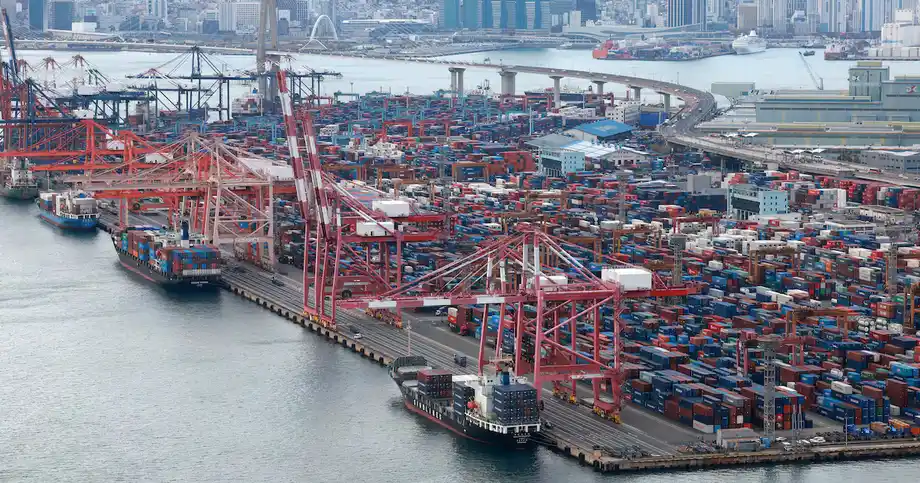
South Korea reached a major economic milestone on November 19, 2026, when its cumulative annual exports surpassed US$1 trillion for the first time. The provisional tally reached the threshold at 2:09:36 PM, according to data from the Ministry of Trade, Industry and Energy. This achievement makes South Korea the fourth country in the world to join the trillion-dollar export club, following the United States and Germany in 2006, and China in 2007. The country achieved this feat 19 years after China entered the group, doing so in an era marked by rising protectionism and shifting global trade rules.
Contents
The milestone reflects the extraordinary momentum of the country's manufacturing sector, which has grown 36,000-fold since 1948, when exports stood at just $20 million. South Korea's rapid rise has allowed it to surpass Japan in total export scale, a notable shift given that Japan previously dominated regional trade. The country's strong performance also narrowed gaps and pushed it ahead of the Netherlands to claim the fourth position among global exporting nations. The total annual export volume is expected to finish the year at $1.17 trillion, according to projections from the ministry.
The Artificial Intelligence Chip Boom
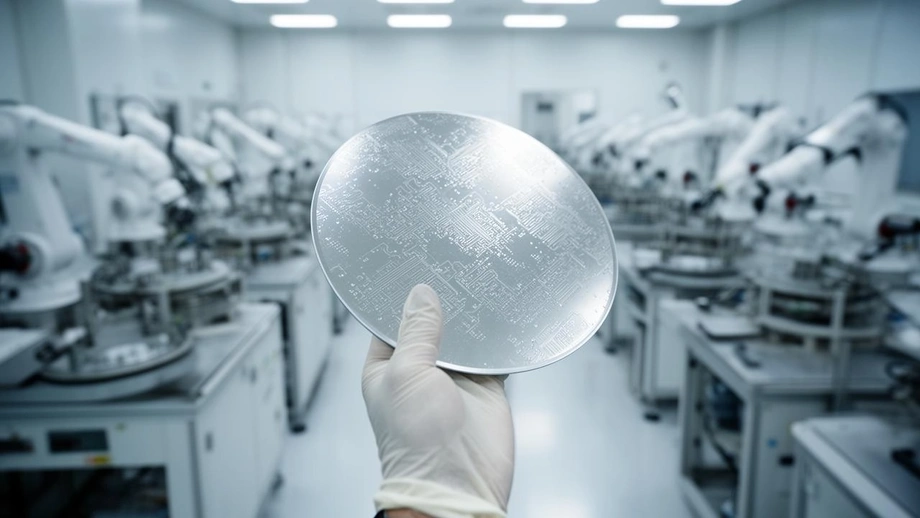
Semiconductors served as the primary engine behind the record-breaking export performance. Global investments in artificial intelligence infrastructure created unprecedented demand for advanced memory chips, servers, and data center components. South Korean chipmakers Samsung Electronics and SK hynix played a central role in supplying high-bandwidth memory, known as HBM, which stacks dynamic random-access memory chips vertically to transfer data at high speeds to the processors that train and run artificial intelligence models. SK hynix held 50 percent of the global HBM market by revenue in the second quarter of 2026, while Samsung held 33 percent, according to data from Counterpoint Research.
Government trade officials noted that chip exports surged 193.1 percent year-on-year to reach $396.8 billion in the first ten months of 2026. Semiconductors accounted for 42.7 percent of total exports during that period, reflecting a sharp concentration in technology hardware. Kang Gam-chan, director general for trade and investment policy at the Ministry of Trade, Industry and Energy, explained the pricing dynamics driving the surge.
Semiconductor prices were still rising through September, while shipment volumes were increasing even faster.
Fixed transaction prices for standard memory components, such as DDR5 16Gb DRAM, climbed significantly over the year, rising from $8.70 in October of the previous year to $50 by October 2026. This price appreciation, combined with surging shipment volumes, generated record corporate profits, including third-quarter operating profits of 107.44 trillion won ($80.5 billion) for Samsung Electronics and 83.33 trillion won for SK hynix.
Balancing the Wider Export Economy
While technology hardware dominated the trade data, other sectors also contributed to the expansion. Exports excluding semiconductors grew 20.2 percent in the first ten months of the year, marking the highest growth rate in two decades. Small and medium-sized enterprises achieved a record $107.6 billion in exports, driven by overseas demand for consumer goods such as K-beauty cosmetics and agricultural products. Shipbuilders secured orders for high-value vessels like liquefied natural gas carriers, and defense contractors expanded their international footprint through major arms export agreements.
Petroleum products also recorded high values due to rising energy costs linked to geopolitical tensions in the Middle East. The average export price for petroleum products climbed 62 percent, lifting total revenue even where physical shipment volumes remained constrained. This diverse manufacturing base helped drive the cumulative trade surplus to $294.9 billion in the first ten months of 2026, more than triple the previous annual record of $95.2 billion set in 2017.
Addressing Industrial Dependence and Risks
Despite the historic trade surplus, economists and government officials expressed caution regarding the country's heavy reliance on semiconductors. When chip shipments are excluded, South Korea's export ranking drops from fourth to eighth globally, trailing economies such as Mexico, Italy, and Japan. The concentration of nearly half of all export revenue in a single volatile sector exposes the broader economy to potential downturns in the global technology cycle.
Industry Minister Kim Jung-kwan raised concerns about future growth engines during a meeting with the heads of six major business associations. Lee Jae-min, a professor at Seoul National University School of Law, warned that rapid export growth could also invite increased trade restrictions from major economies. Analysts argue that the current tech boom provides a temporary window of opportunity to invest in emerging industries, including biotechnology, robotics, and system semiconductors.
Distributing the Benefits of Trade
The record export performance has not immediately translated into improved conditions for average households, as domestic consumption remains weighed down by high interest rates and persistent inflation. To address this disparity, the administration under President Lee Jae Myung announced plans to establish a Future Response Fund worth 162.3 trillion won (approximately $121.94 billion). The initiative will channel excess tax revenue generated by the semiconductor boom into education, regional development, and employment opportunities for young people.
Business associations and government officials have emphasized the need to strengthen the supply chain links between large technology conglomerates and smaller domestic suppliers. Expanding cooperation with local materials, components, and equipment companies is viewed as essential for ensuring that international trade revenue supports regional economies and creates sustainable domestic jobs.
A Broader Context in Regional Trade
The export milestone follows a series of recent trade developments, including a surge in service transactions that accompanied the milestone year. As noted in South Korea's Service Exports Surge, the country's service exports rose 15.5 percent in the first nine months of 2026 to reach $128.9 billion, supported by rising tourism and medical travel. Foreign visitor arrivals surpassed 20 million for the first time, helping offset long-running service deficits in travel and transport.
Technology shipments also drove exceptional records in related sectors, as detailed in South Korea's October ICT Exports Triple, where information and communications technology products reached $70.35 billion in October alone. Memory chips and solid-state drives accounted for the vast majority of that total as data center operators expanded their digital infrastructure. Meanwhile, ongoing regulatory reviews, such as those evaluated following South Korea Verifies Google Maps Security Measures, continue to shape how digital services and geographic data operate within the domestic market.
Timeline of the Export Milestone
- 1964: South Korea achieves its first major export target of $100 million.
- 2006: The United States and Germany cross the $1 trillion annual export threshold.
- 2007: China becomes the third country to surpass $1 trillion in annual exports.
- 2025: Annual exports reach a previous record of $709.3 billion, narrowing the gap with Japan.
- November 19, 2026: Cumulative exports surpass the $1 trillion mark at 2:09 PM, making South Korea the fourth global country to reach the milestone.
- November 22, 2026: Trade statistics confirm that annual shipments are on track to reach $1.17 trillion.
The Bottom Line
- South Korea became the fourth country globally to surpass $1 trillion in annual exports on November 19, 2026.
- Semiconductors drove the surge, accounting for 42.7 percent of exports in the first ten months of the year.
- Excluding semiconductors, South Korea ranks eighth globally in non-semiconductor export volume.
- The government plans to utilize a 162.3 trillion won Future Response Fund to support emerging industries and regional employment.