A 15 Billion Rupee Lawsuit Lands in Mumbai
Apple faces a patent infringement lawsuit in India seeking 15 billion rupees (Rs 1,500 crore, or about $161.86 million) in damages and potential sales restrictions on iPhones and Apple Watches. GG Technologies, a software startup based in Santa Monica, California, filed the Bombay High Court complaint spanning 781 pages in October 2026 after months of settlement talks collapsed.
Contents
- A 15 Billion Rupee Lawsuit Lands in Mumbai
- How NameDrop Shares Contacts Between Apple Devices
- The StayTouch App and the Founder Behind It
- Why Pretrial Talks Failed Before the Filing
- A Parallel Patent Fight in the United States
- Timeline of the Dispute From 2018 to 2026
- Why India Matters So Much to Apple
- What Happens Next in Court
- The Essentials
Lawyers for GG Technologies accuse Apple of copying patented proximity software inside NameDrop, a feature that lets iPhone owners trade contact details simply by holding two devices close together. GG Technologies holds Indian Patent No. 546169, titled "Method and System for Proximity Based Contact Transfer", which covers methods for nearby phones to swap contact data without manual pairing beforehand.
Mumbai judges have not yet listed the case for a first hearing, and Apple has not issued a public response to the allegations. No court has found Apple liable, leaving the dispute to be decided through upcoming hearings in India alongside a separate investigation underway in the United States.
How NameDrop Shares Contacts Between Apple Devices
Apple unveiled NameDrop in June 2023 at its Worldwide Developers Conference (WWDC) as a key feature of iOS 17 before rolling it out to compatible iPhones later that year. By October 2023, the watchOS 10.1 update extended the same capability to compatible Apple Watch models.
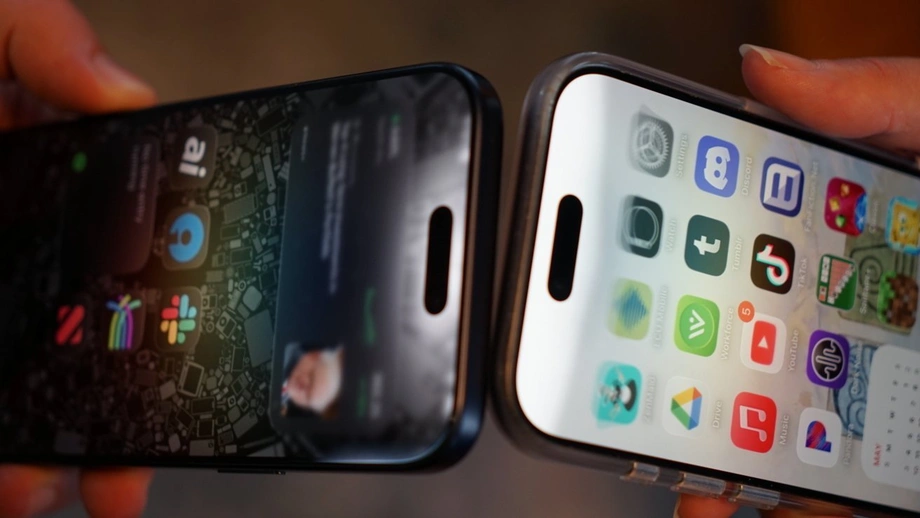
Users activate NameDrop by holding the top of an iPhone near another iPhone or an Apple Watch. Apple enables the tool by default without requiring extra setup, and a transfer can begin even without unlocking the handset, though users must tap to confirm before any phone numbers or email addresses move across.
Bluetooth and NFC (Near Field Communication) power that simple motion by letting wireless signals travel over short distances to detect a nearby phone, verify user consent, and send a contact card securely. Apple introduced the touch gesture alongside an updated AirDrop option in iOS 17 for sending files, while Google is developing a comparable Tap to Share feature for Android phones.
The StayTouch App and the Founder Behind It
Gaurav Goel, a graduate of the Indian Institute of Technology (IIT) Delhi and a former Goldman Sachs investment banker, founded GG Technologies in 2018. Goel came up with the idea after getting frustrated by exchanging and misplacing paper business cards while studying management at ESCP Europe in Paris.
In 2019, the startup released StayTouch on both iOS and Android as a digital alternative to paper business cards. StayTouch later expanded into a messaging platform for events and professional communities, backed by $3.2 million in funding from investors including Cyrille Bollore of Group Bollore, Prisca Clarins of Group Clarins, and Dentressangle.
GG Technologies argues that its software pioneered the direct contact exchange method years before Apple announced NameDrop in 2023. Technical reviews cited in its legal filings state that NameDrop duplicates core steps protected under the patent portfolio held by the startup without a licensing agreement or permission.
Software developers often refer to this kind of clash as sherlocking, a term used when a major platform owner adds a native feature that copies what an outside app already sells. Because a tool built into the operating system comes preloaded on millions of phones at no extra cost, independent apps offering the same function can lose their users almost overnight whenever iOS, macOS, watchOS, or iPadOS updates arrive.
Why Pretrial Talks Failed Before the Filing
Indian commercial law generally requires businesses to attempt formal mediation before bringing a corporate dispute into court. Under those rules, GG Technologies and Apple entered mediation proceedings in April 2026 to explore a settlement outside the courtroom.
Talks between the two companies broke down in September 2026 without an agreement, clearing the legal path for GG Technologies to file its full commercial lawsuit in Mumbai the following month. Alongside its demand for 15 billion rupees in financial compensation, the startup wants an injunction restricting how Apple deploys NameDrop inside iOS across India.
GG Technologies asked the Bombay High Court to block Apple from selling or importing iPhones and Apple Watches in India whenever those devices come with NameDrop already installed. Granting that request in full would reach far beyond a routine software update.
A Parallel Patent Fight in the United States
GG Technologies is pursuing Apple on two continents at the same time. In April 2026, the very month mediation opened in India, the startup filed a separate patent infringement lawsuit against Apple in the United States based on related claims.
By August 2026, the US International Trade Commission (ITC) opened its own formal investigation into Apple following a complaint from GG Technologies. Unlike regular federal district courts that focus mainly on financial damages, the ITC is a federal trade body with the authority to issue exclusion orders that stop imported electronics from crossing into the United States if they violate valid US patents.
Indian and American patent systems operate independently, so a decision in one country does not automatically bind judges in the other. GG Technologies is seeking import and sales restrictions in Washington just as it is in Mumbai, though neither the Bombay High Court nor the ITC has reached a final verdict.
Timeline of the Dispute From 2018 to 2026
Eight years of software development, patent applications across multiple countries, and failed negotiations sit behind the legal clash.
- 2018: Gaurav Goel founds GG Technologies.
- May 9, 2019: GG Technologies files a provisional US patent application and launches StayTouch on iOS and Android.
- May 2020: The startup submits an international patent application covering its proximity contact transfer method.
- 2021: GG Technologies files its patent application in India.
- June 2023: Apple introduces NameDrop at WWDC 2023 as part of iOS 17.
- October 2023: Apple adds NameDrop support to Apple Watch models through watchOS 10.1.
- July 27, 2024: Indian authorities grant Patent No. 546169 to GG Technologies.
- April 2026: GG Technologies sues Apple in the United States and enters mandatory commercial mediation in India.
- August 2026: The US International Trade Commission opens a patent infringement investigation into Apple.
- September 2026: Mediation in India ends without a settlement.
- October 2026: GG Technologies files its complaint spanning 781 pages in the Bombay High Court.
Indian patent records show GG Technologies secured its local patent roughly a year after Apple debuted NameDrop, even though the startup applied in India two years before WWDC 2023.
Why India Matters So Much to Apple
India occupies a central spot in Apple's global growth and supply chain strategy, raising the commercial stakes of any court order targeting iPhone imports or retail sales. While iPhones still account for less than 10 percent of total smartphone shipments in India, the country is expanding rapidly as a consumer market where Apple has been opening new Apple retail stores.
On September 30, 2026, Apple launched Apple Pay in India for Axis Bank Visa and Mastercard credit card holders, allowing customers to tap an iPhone or Apple Watch at checkout terminals alongside domestic payment networks. That rollout extended Apple's local services push into a crowded digital payments market.
Indian factories have also grown into Apple's largest manufacturing hub outside China. Indian suppliers exported a record $2.5 billion in Apple components and subassemblies to China during fiscal year 2026, roughly 2.7 times the $920 million recorded in fiscal year 2025, with projections for the full year reaching $3.5 billion.
Printed circuit boards, mechanical enclosures, and finished handsets now link India deeply into Apple's Asian production network. Any injunction restricting device sales or imports in Mumbai would hit both a priority consumer market and a country supplying key parts across Apple's global manufacturing lines.
What Happens Next in Court
Judges at the Bombay High Court have not yet scheduled an opening hearing date for the case. Once hearings begin, the court will need to examine the technical wording of Indian Patent No. 546169 and determine whether NameDrop actually carries out the protected steps without authorization.
Apple has several legal options once proceedings open, including arguing that NameDrop operates differently from the patented method or challenging whether the patent claims are valid and broad enough to cover iOS. Patent disputes over widely used smartphone features often turn on fine engineering details, such as how two phones discover each other over wireless channels and confirm consent before sending data.
Washington trade officials at the ITC continue reviewing the separate trade complaint filed by GG Technologies. Both proceedings remain at an early stage, with no timetable announced for a ruling in either Mumbai or Washington.
The Essentials
- Santa Monica startup GG Technologies sued Apple in the Bombay High Court in October 2026 over the iPhone and Apple Watch NameDrop feature.
- Founded in 2018 by IIT Delhi alumnus Gaurav Goel, the startup seeks 15 billion rupees (about $161.86 million) in damages and restrictions on selling or importing devices with NameDrop.
- The complaint alleges NameDrop infringes Indian Patent No. 546169, granted in July 2024 following a 2021 application and the 2019 launch of the StayTouch app.
- Apple introduced NameDrop in June 2023 with iOS 17 and expanded it to Apple Watch models in October 2023 via watchOS 10.1.
- The Indian lawsuit followed failed mandatory mediation between April and September 2026 and runs alongside a US lawsuit filed in April and an ITC investigation opened in August.
- No hearing date has been listed in Mumbai, Apple has not publicly commented, and no court has found Apple liable.