A new lead after rapid growth in 2026
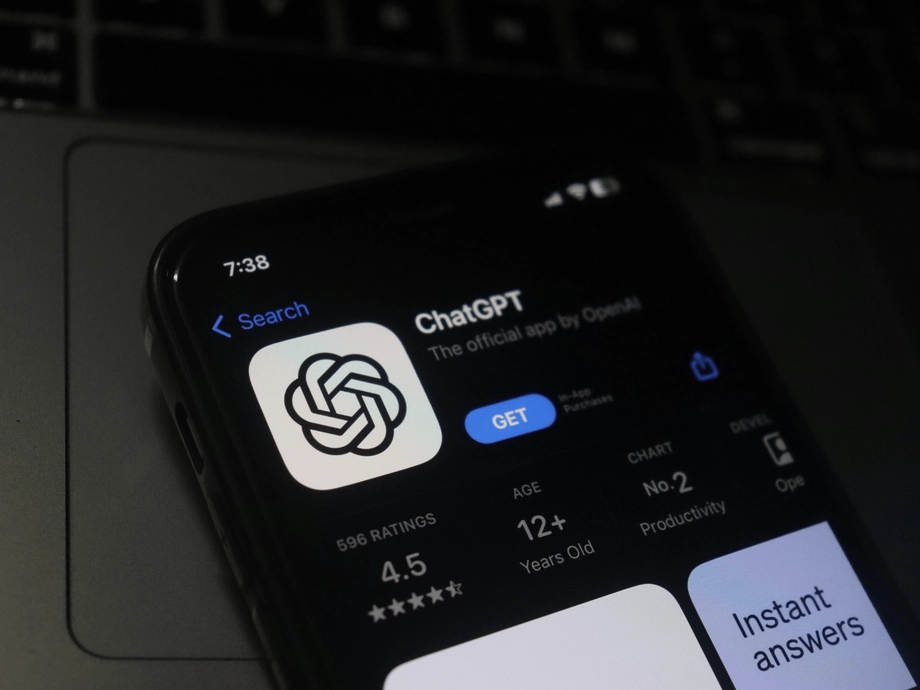
India has become ChatGPT's largest market by weekly active users, with its user base doubling since January 2026, according to OpenAI India managing director Prabhjeet Singh. The announcement, reported on November 3, marks a change from February 15, when OpenAI chief executive Sam Altman put India's weekly audience at 100 million and ranked it second behind the United States.
Contents
- A new lead after rapid growth in 2026
- How India moved into first place
- Voice and Indian languages shape the next expansion
- Affordability, students and the payment question
- Small shops and developers find practical uses
- Businesses move from trials to daily operations
- Computing capacity brings data processing closer
- Advertising adds a second route to affordable access
- Safety discussions accompany wider adoption
- Key Points
Singh attributed the growth to people bringing ChatGPT into everyday work and finding more tasks for it. OpenAI's response now stretches from voice features and Indian languages to advertising, payment plans and computing infrastructure for businesses.
A weekly active user is someone who uses the service during a particular week, whether through free access or a paid subscription. Singh's latest statement did not include an updated user count. The doubling comparison starts in January, while the 100 million figure comes from February, so a current total cannot be calculated from those two disclosures.
India's position gives it greater weight in the development of a product used for studying, writing, coding and business tasks. Choices about which languages work well, how much memory a phone needs and how users pay now affect OpenAI's biggest national weekly audience.
For OpenAI, the immediate challenge is making that audience broader and more useful to serve. Singh said the company expects subscriptions to grow as people find greater value in its products, while its current priority is expanding the impact of artificial intelligence.
How India moved into first place
OpenAI's expansion in India has combined rising consumer use with a larger local business presence. Altman described India during a visit in 2025 as the company's fastest growing market and its second largest by users. By February 2026, he was putting a public number on that demand.
The main milestones show how quickly the company's ambitions have widened:
- August 2025: OpenAI announced its first India office in Delhi NCR and began local hiring.
- February 15, 2026: Altman said India had 100 million weekly ChatGPT users, second only to the United States.
- February 2026: At the India AI Impact Summit, OpenAI announced plans for offices in Mumbai and Bengaluru and launched OpenAI for India.
- November 3, 2026: Singh's account of India becoming the largest weekly user market, with its audience doubling since January, was reported.
OpenAI for India brings together plans to widen access, build infrastructure and increase business adoption. Those priorities connect two different kinds of demand: individuals opening a chatbot and organisations needing computing capacity, security arrangements and tools that fit their operations.
Altman also said in February that India had the largest number of student ChatGPT users globally. Education therefore forms an important part of the country's audience, alongside the workplace uses highlighted by Singh.
Voice and Indian languages shape the next expansion
OpenAI is placing voice, Hindi and other Indian languages at the centre of its effort to reach people beyond major cities. Singh described users going directly to ChatGPT's dictation button, choosing to speak rather than type.
Singh, OpenAI's managing director for India, explained the language priority:
Most of India actually doesn't use English as a primary. So real big focus is on Hindi and vernacular,
Singh said work on Indian language capabilities during the year was beginning to show results. For someone who is more comfortable speaking Hindi or another Indian language, the practical issue is whether they can describe a task naturally and understand the answer without translating it themselves.
OpenAI is also prioritising Android phones and working to deliver the full model experience on devices with limited memory. Language support and device performance address different barriers: a service can understand someone's words yet still be difficult to use if their phone struggles to run the application.
Affordability, students and the payment question
ChatGPT Go is another part of OpenAI's approach to access. The subscription tier was introduced at a price below $5 and was later made free for a year for Indian users. Singh cited it as a measure designed with affordability in mind.
Students are an especially important audience in this competition. Altman's statement that India had the most student ChatGPT users globally sits alongside strong educational demand for rival products. Google vice president and general manager for education Chris Phillips said India accounted for the highest global usage of Gemini for learning.
Google also offered Indian students a free subscription to its AI Pro plan for a year in September 2025. Both companies have used temporary free access to bring more people into services that also have paid tiers.
OpenAI is expected to announce developments involving UPI and payments in the coming weeks. UPI, or Unified Payments Interface, is India's system for transferring money between bank accounts through participating applications. Details of the planned announcements have not been disclosed.
Singh's focus on access leaves OpenAI with a commercial task as well as a product task: serving a very large audience while building income from subscriptions, businesses and advertising.
Small shops and developers find practical uses
Singh's examples of everyday adoption extend beyond programmers and office employees. He described traders creating customised festive messages for customers and shops run by one person exploring marketing and inventory management.
These tasks show why language and voice matter to the business strategy. A shopkeeper can describe a promotion aloud, ask for versions in different languages or request help organising stock information. Larger businesses may have employees dedicated to such work; a person running a shop alone often handles it alongside sales and purchasing.
Singh gave no figures for how many small businesses use these tools or the savings they have achieved. His examples describe the kinds of work attracting interest, while the scale of that adoption remains unquantified.
Developers form another important group. Singh said India was among the largest and fastest growing markets for Codex, OpenAI's coding tool, with substantial use emerging from smaller cities commonly described as tier II cities.
The developer activity gives OpenAI a second route to reaching users. People can interact with ChatGPT directly, while software builders can incorporate its models into applications that customers use for a specific job.
Businesses move from trials to daily operations
Indian enterprises, startups and global capability centres are moving beyond pilots into production deployments, Singh said, citing JioHotstar and Cars24. A pilot is a limited test. A production deployment puts a tool into live operations, where staff or customers rely on it.
Global capability centres, often shortened to GCCs, are operations that multinational companies establish to carry out work such as technology development and business support. Their requirements can differ from those of an individual chatbot user because they handle company information and must meet internal security rules.
Singh identified privacy and returns on investment as important considerations for adoption. A business needs to know how its information is handled and whether the value of a tool justifies its cost. Moving into regular operations makes those questions part of purchasing and management decisions.
The same interest in local business support has shaped OpenAI's regional expansion. Its earlier Singapore hub expansion combined plans for a larger team with work involving enterprises, developers and governments, alongside a search for computing capacity in Asia Pacific.
Computing capacity brings data processing closer
OpenAI's partnership with TCS' HyperVault data centre business starts with 100 megawatts of capacity and could scale to 1 gigawatt. One gigawatt equals 1,000 megawatts, making the possible later scale ten times the starting capacity.
Megawatts measure power capacity, a useful way of describing data centres because the computers running AI models require large amounts of electricity. The figures describe the planned scale of the infrastructure, with Singh saying OpenAI would consider further capacity as it becomes available.
The capacity is intended to address enterprise requirements for data residency and security. Data residency concerns where information is stored or processed, something businesses may need to control under contracts, internal policies or regulatory obligations.
OpenAI models are also available through Amazon Web Services' Amazon Bedrock for local inference in India. Inference is the stage when a model processes a request and generates an answer. Local inference allows that request processing to take place within the country.
For companies deciding whether to use AI in live operations, the location of processing belongs alongside price, reliability and the handling of sensitive information. OpenAI's infrastructure plans address that business audience as consumer use continues to expand.
Advertising adds a second route to affordable access
OpenAI is expanding advertising on ChatGPT in India, with Singh saying ads can help support free access and subscriptions at lower prices. He said advertisers would not receive users' personal information and advertisements would not influence ChatGPT's responses.
The company has partnered with Razorpay to help Indian brands advertise through the service. Razorpay's growth marketing platform Engage helps businesses prepare product catalogues, launch and manage campaigns, and measure their performance.
Early participating brands include Tanishq, Fastrack, Traya, Tata Neu, Rivaah by Tanishq, Shaadi.com, Axis Max Life, Palmonas and the Narsee Monjee Institute of Management Studies, or NMIMS. The list spans jewellery, fashion, health, insurance, matchmaking and education.
The Indian push follows OpenAI's advertising expansion to 89 markets, announced on October 21. That expansion placed ads on Free and Go plans while keeping Plus, Pro and Enterprise subscriptions free of advertising.
India's lead in weekly users makes it a large potential advertising audience. Subscription demand is a separate measure: South Korea held the second largest paid market position behind the United States in June 2025. Singh's strategy in India draws on both payment models, asking some users to subscribe while using advertising to help fund access for others.
Safety discussions accompany wider adoption
OpenAI is engaging with Indian government agencies, banks and financial institutions on cybersecurity and the protection of critical infrastructure against misuse involving AI agents. An AI agent can carry out a sequence of tasks using software tools, which makes control over its permissions and actions important.
Singh also described discussions with the government covering data protection and model safety. He said the company was making models available at different levels of dialogue, without identifying the models, recipients or arrangements involved.
Clear AI regulation could strengthen confidence among consumers, businesses and developers, Singh said. His comments connect the company's ambition for wider use with the safeguards organisations need before allowing AI into sensitive work.
India's new ranking brings those decisions into sharper focus. OpenAI is pursuing more users through languages, voice and affordable access, while seeking business customers through local processing and infrastructure. The commercial results will depend on how much value those users and organisations find in regular use.
Key Points
- India is ChatGPT's largest market by weekly active users, according to OpenAI India managing director Prabhjeet Singh.
- Singh said the Indian audience doubled since January 2026; Altman had put weekly users at 100 million in February.
- OpenAI is prioritising voice, Indian languages, Android phones and affordability to widen access.
- The TCS HyperVault partnership starts with 100 megawatts of capacity and could expand to 1 gigawatt.
- Razorpay Engage is helping Indian brands launch and manage advertising on ChatGPT.
- OpenAI is discussing cybersecurity, data protection and model safety with Indian institutions.